Las Vegas airport traffic is down, but LAS is not empty
Here is the straight answer: passenger traffic at Harry Reid International Airport is running below 2025 levels in 2026. That can create a little more breathing room across the airport system, but it does not turn LAS into a private terminal. Las Vegas still moves millions of passengers per month, and a major convention, fight weekend, festival, holiday, or packed Sunday departure bank can light the place up fast.
The official numbers establish a real decline. In January 2026, LAS handled about 3.97 million domestic and international passengers, compared with roughly 4.29 million in January 2025. That was a drop of about 7.5 percent. February brought approximately 3.82 million passengers, down from about 3.95 million a year earlier. Across the first two months, traffic was about 5.7 percent lower than during the same period in 2025.
The trend continued into summer. Through July, the airport had handled approximately 30.2 million passengers, about 6.9 percent fewer than during the first seven months of 2025. Travelers who want to dig into the monthly reports can use the airport's 2026 aviation statistics.
That decline deserves context. LAS served nearly 55 million passengers in 2025, the third-highest annual total in airport history after two record-setting years. In other words, traffic is down from an enormous base. This is a softer year, not an abandoned airport.
What the passenger count does not prove
A lower annual or monthly passenger total does not guarantee a five-minute security line, an empty baggage carousel, a cheap airfare, or an instant rideshare pickup. Passenger statistics measure overall volume. They do not show how evenly those passengers are distributed across every hour, terminal, checkpoint, airline, and travel date.
Vegas traffic arrives in waves. A relatively quiet Wednesday can feel civilized, while the Monday morning after a blockbuster weekend can still be full throttle. Airline staffing, checkpoint capacity, weather disruptions, delayed flights, checked-bag volume, and simultaneous departures can all create bottlenecks even when the broader passenger trend is down.
The same caution applies to fares. Lower airport traffic does not automatically mean lower ticket prices. Airfare depends on the route, airline capacity, booking demand, competition, travel dates, and how close the purchase is to departure. The airport numbers are useful context, not a secret promo code.
How should you book a Las Vegas flight in 2026?
Use the traffic decline as an opening to compare more combinations, not as permission to book blindly. Start with your event calendar. If your trip lines up with a major convention, championship fight, festival, holiday, or stadium event, expect demand to behave like demand. Vegas can go from smooth to slammed in one headline.
Compare the full trip, not just the base fare
Check several departure times and, when your schedule allows, adjacent travel dates. Midweek flights may offer better value on some routes, but that is not universal. Compare the final cost after bags, seat selection, airport transportation, and an extra hotel night. A fare that looks elite can lose its shine after the add-ons hit.
Nonstop service also has real value in Las Vegas. A connection may save money, but it introduces another airport, another weather system, and another chance for a delay to eat your first night on the Strip. If the price difference is reasonable, arriving nonstop and on time can be the higher-value play.
Before booking, confirm which terminal your airline uses through the airport's airline directory. LAS has Terminals 1 and 3, and going to the wrong one is not the kind of plot twist anyone needs before a flight.
Can you arrive later because traffic is lower?
No. Do not shave your airport buffer based only on a year-to-date passenger decline. Follow your airline's check-in and baggage deadlines, account for the time of day, and leave room for traffic, parking, bag drop, and security. Missing a flight because the annual statistics looked favorable is not a Vegas story worth telling.
Check live conditions before leaving
LAS now publishes estimated security checkpoint wait times. Check them before heading to the airport, then remember that estimates can change as new passengers enter the line. The official MyTSA app also provides airport information and crowd-sourced wait-time data.
Travelers enrolled in TSA PreCheck should confirm that their Known Traveler Number appears on the reservation and that the PreCheck indicator is on the boarding pass. Expedited screening can help, but no program guarantees an empty lane or protects a traveler who arrives after an airline cutoff.
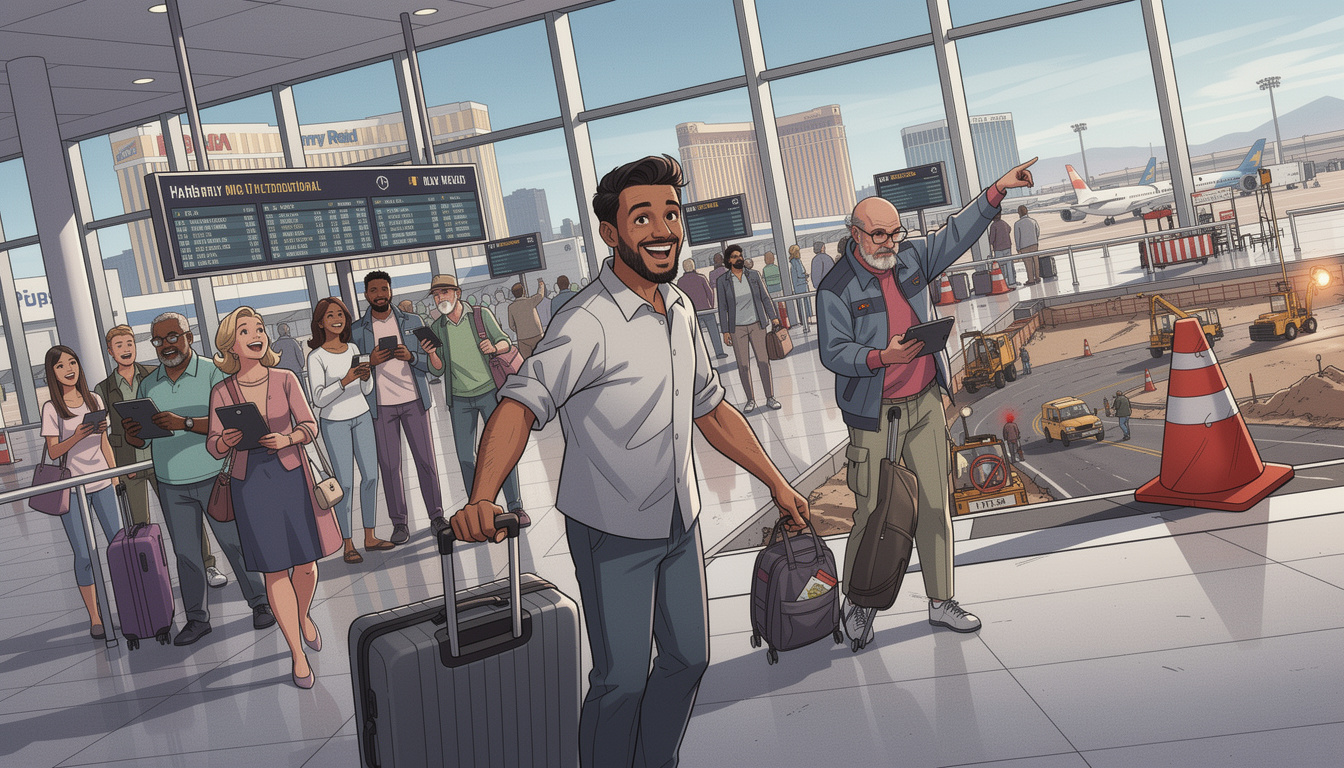
There is another 2026 wrinkle: access roads can be slower even when terminal traffic is lighter. The airport says pavement work in the Airport Connector tunnels is reducing lanes through December 2026, including overnight periods with more restrictive closures. Build extra road time into departures, particularly if a driver, taxi, or rideshare must use the tunnel.
What should arriving travelers expect?
A softer passenger year may reduce pressure on baggage claim and ground transportation at some times, but there is no reliable promise of a walk-up car or an empty taxi line. Bags can still take time, rideshare prices can still surge, and simultaneous arrivals can crowd pickup zones.
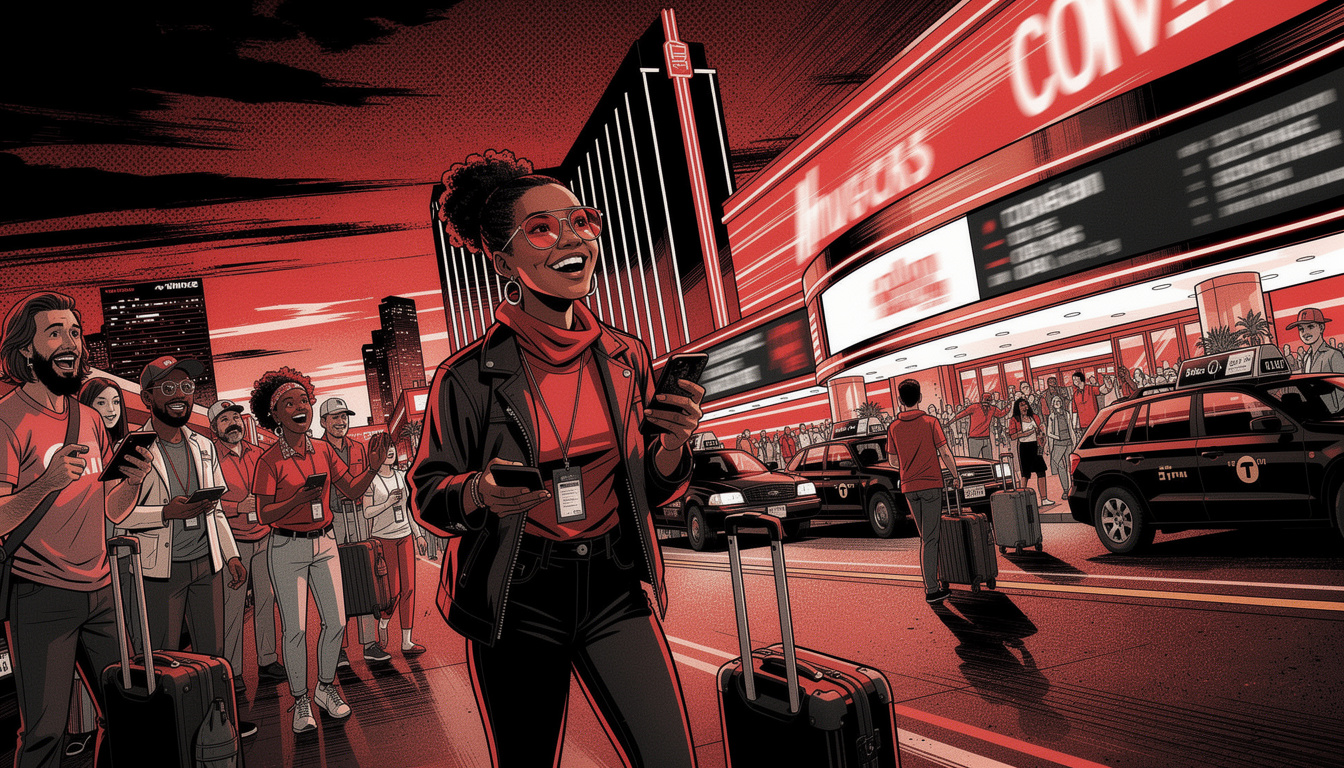
Know the setup before landing. According to the airport's taxi and rideshare guide, taxis wait outside baggage claim at both terminals. Rideshare pickups are in designated garage areas, on Level 2 at Terminal 1 and the Valet Level at Terminal 3. Following the signs immediately beats wandering outside and trying to summon a car from the wrong curb.
If several people are traveling together, compare the complete price of a taxi and rideshare before committing. Surge pricing, vehicle size, destination, and pickup demand can change the winner. The smart move is flexibility, not loyalty to one app.
The winning strategy for a 2026 Vegas trip
The passenger decline is real, and it can make parts of the airport experience feel less intense than the record-setting years. Take the win, but keep it in perspective. LAS remains one of the busiest gateways to a destination built around concentrated weekends, huge events, and dramatic surges in demand.
- Check the Las Vegas event calendar: A major event can outweigh the broader annual traffic trend.
- Compare nearby dates and flight times: Judge the final trip cost, not just the advertised fare.
- Confirm the terminal: Terminals 1 and 3 are separate, and starting at the wrong one wastes valuable time.
- Watch live wait estimates: Use current airport conditions instead of assuming that every 2026 travel day is quiet.
- Protect the departure buffer: Security, airline deadlines, traffic, parking, and connector-tunnel construction still matter.
- Know the pickup zones: Head directly to the correct taxi or rideshare location after collecting bags.
That is the real insider play. Lower passenger counts can give travelers more room to maneuver, but the advantage belongs to the person who checks the details. Book strategically, watch the weekend calendar, and keep enough time in reserve to handle one classic Vegas surprise. Then get out of the terminal and into the action!