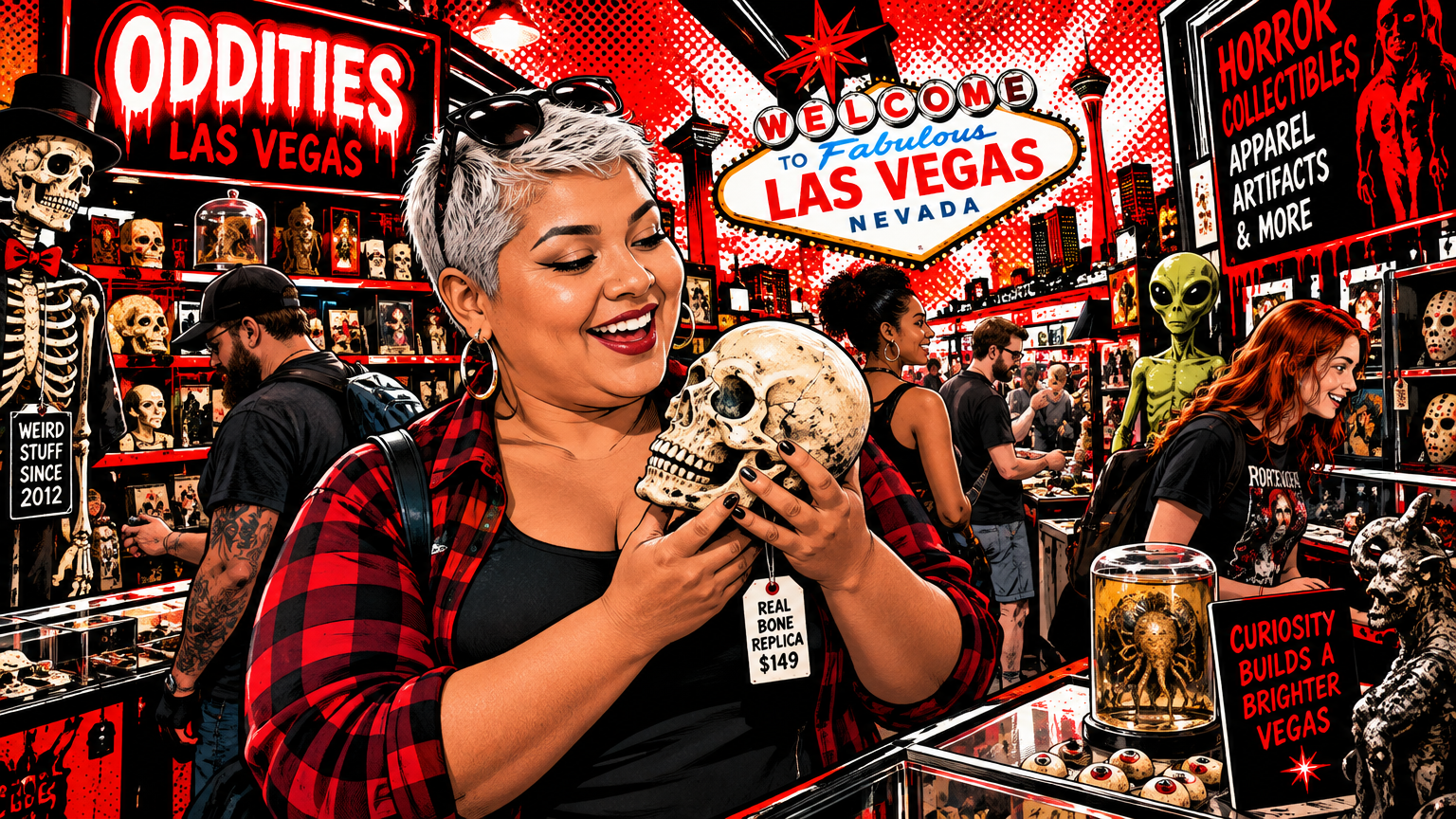
Las Vegas hospitality companies are building destinations that compete for more than a hotel booking or a night out. Resorts World Las Vegas combines lodging, gaming, dining, meetings and entertainment on one Strip property. Fontainebleau Las Vegas adds a major conference operation to its resort mix. Sphere sells a purpose-built immersive entertainment experience, while AREA15 brings attractions, dining and retail together in a district-style venue.
The business logic is straightforward, but the payoff is not automatic. Each added use gives an operator another product to sell and a chance to serve different visitors in one trip. It also adds costs, operational demands and another line of business that has to attract customers. These properties show the range of the strategy. They do not, by themselves, prove that every integrated destination will deliver stronger returns.
“Hybrid venue” is a useful description, not a formal industry category. The shared play is control of more of the visitor’s itinerary. The key question is whether the combined offer gives people enough reason to visit, stay and spend across multiple parts of a property.
What the integrated resort puts under one roof
Resorts World Las Vegas opened on the north end of the Strip in June 2021. The resort’s March 2025 fact sheet lists a reported development cost of $4.3 billion and 3,506 guest rooms and suites across three Hilton brands: Las Vegas Hilton, Conrad Las Vegas and Crockfords Las Vegas. The property also lists more than 50 food-and-beverage options, a 5,000-capacity theater and nearly 350,000 square feet of meeting and banquet space.
That footprint is a business platform, not simply a room inventory. The same campus can serve overnight guests, diners, theater audiences and convention groups. The resort’s location near the Las Vegas Convention Center gives its meeting space a direct connection to the city’s convention trade. Each business line has a different customer and sales cycle, even when those customers use the same property.
Fontainebleau Las Vegas offers another version of the integrated resort. Its current site describes more than 3,600 accommodations alongside dining, entertainment and nightlife. Its conference center page lists 57 flexible event spaces. That mix gives the property products for leisure guests and organized events, rather than relying on one attraction to drive demand.
The scale matters because it expands the range of offers a property can put in front of a visitor. A group arriving for a meeting can also book rooms, dine and use resort amenities. Leisure guests have a wider set of options without leaving the property. That is the commercial opportunity. It is not evidence, on its own, that customers will spend more or stay longer.
More revenue channels also mean more execution risk
A hotel, restaurant, event space and theater each need their own operating teams, upkeep and customer pipeline. Putting them together can make a destination more versatile, but it does not make every component successful by default. Operators still have to attract demand, manage costs and give visitors a coherent experience from one part of the property to the next.
The strategy also means capital is committed across a wide range of uses. That may help a company reach different customer segments, but it raises the bar for execution. Room demand, event bookings, restaurant traffic and entertainment audiences all matter. A strong showing in one area does not establish the performance of the whole property.
Not every hybrid destination is a resort
Sphere opened in Las Vegas on September 29, 2023, according to Sphere Entertainment. The company’s SEC filing describes the venue as a 17,600-seat facility with capacity for up to 20,000 guests. Unlike a hotel-casino, Sphere is centered on live events and immersive programming. Its position in the city’s visitor mix is built around a specific experience, not a room tower or casino floor.
That distinction matters. A venue can shape a trip without owning every part of it. Visitors attending a show may book elsewhere, eat elsewhere or add other attractions to their itinerary. Sphere creates a high-profile reason to visit, but the company’s public description of the venue does not establish how much surrounding spending it captures.
AREA15, just off the Strip, takes a district approach. Its official site describes a 35-acre destination for immersive attractions, live events, dining and retail. That puts a collection of experiences in one destination without following the conventional resort format. It broadens the range of places competing for visitor time beyond the casino-resort campus.
These are distinct operating models: an integrated resort, an event-led venue and an entertainment district. Grouping them together is useful for understanding the city’s visitor economy, but it should not blur their differences. Their real estate, customer mix and revenue sources are not interchangeable.
The wager is on the visitor’s full itinerary
Las Vegas has long paired hotels with gaming, restaurants and entertainment. The projects here show how that familiar combination can be packaged at different scales and for different audiences. Resorts World and Fontainebleau bring multiple business lines into large resorts. Sphere concentrates on a singular venue experience. AREA15 assembles varied attractions in a district setting.
For operators, the strategic advantage is a broader menu to sell. A property with rooms, restaurants, events and entertainment can target several reasons to visit. For guests, the test is simpler: does the combination make the trip more worthwhile? The answer depends on the quality, appeal and accessibility of each offering, not just the size of the development.
That is the market signal. Las Vegas continues to compete on the full experience, not only on beds, gaming or show tickets. The businesses that earn their position will be the ones that connect those pieces into a destination people choose, not merely a larger footprint on the map.