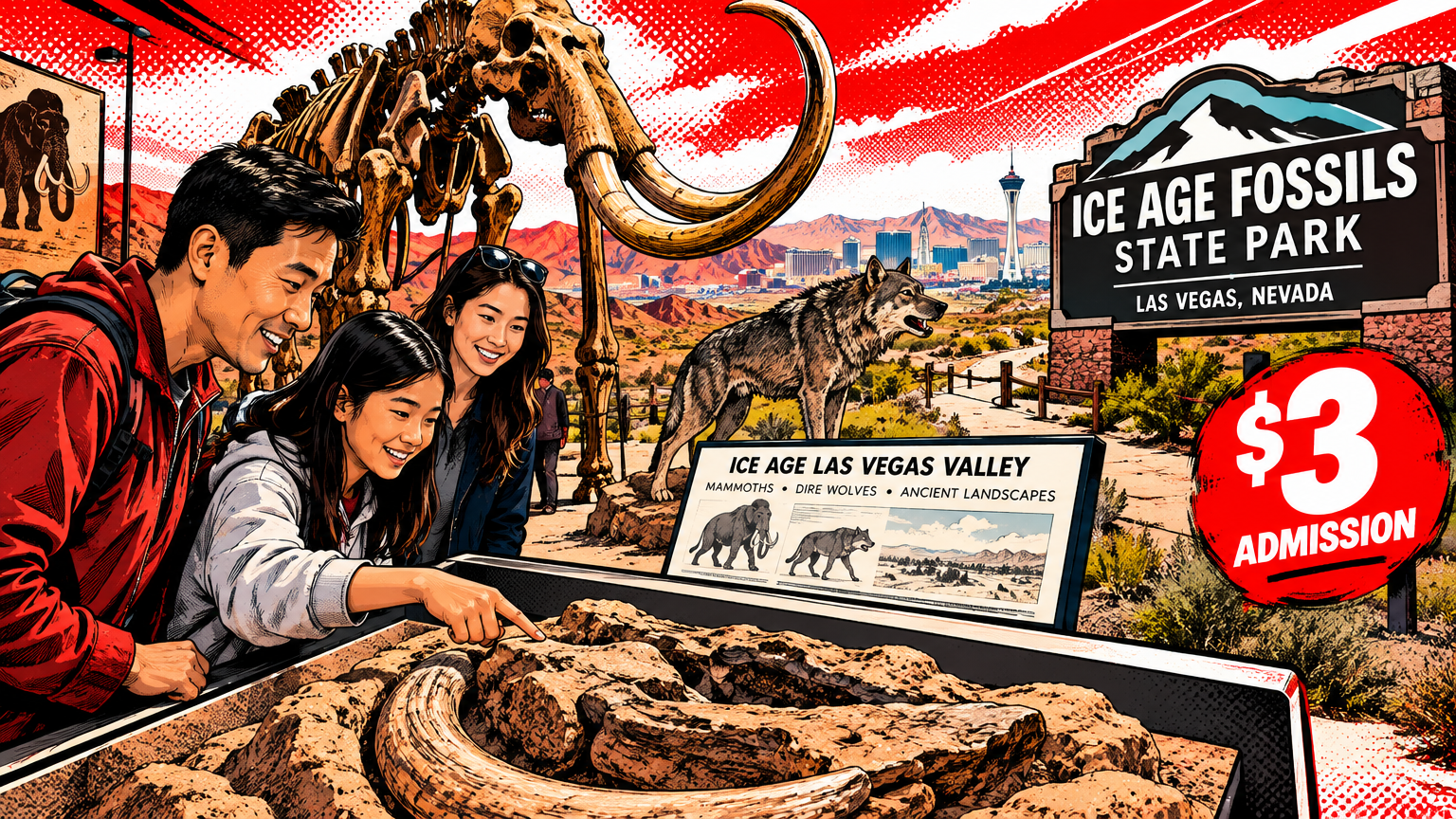
Las Vegas has an Ice Age story hiding in the north valley, and it comes with a seriously approachable price tag. At Ice Age Fossils State Park in North Las Vegas, $3 gets you into a 315-acre landscape where Columbian mammoths, dire wolves and other large mammals once lived. Children 12 and under enter free.
This is not a theme park with a giant animatronic mammoth out front. The real draw is better: a chance to connect the modern desert to the ancient world beneath it, with a visitor center, interpretive exhibits and trails that take you through the landscape. It is a different kind of Vegas outing, and one that deserves a spot on the list for curious locals and visitors who have already done the Strip.
Why isn’t it better known? It sits outside the usual casino-and-show orbit, and its appeal is more about looking, learning and imagining than chasing a big spectacle. That quieter energy is the point. Give the place a little time, and the valley starts to feel like a very different place.
What makes this patch of desert prehistoric?
The park occupies part of the upper Las Vegas Wash in North Las Vegas. During the Pleistocene, the period commonly called the Ice Age, this area offered wetter habitat than the arid landscape we see today. Nevada State Parks says the wash supported now-extinct animals including Columbian mammoths, American lions, camels, dire wolves and ground sloths.
Those names sound like they belong in a blockbuster, but they are part of the region’s real natural history. The fossils found here helped prompt decades of research. One major chapter was the 1962–63 Tule Springs Expedition, known as the Big Dig. It brought together researchers from different fields to investigate the area. The expedition did not establish its original question about early human inhabitants, but later research added to knowledge of the region’s fossil sites.
The park’s story is not just about a list of animals. Around 25,000 years ago, at the peak of the last Ice Age, the Las Vegas area was much wetter and greener, with marshlands across parts of the valley. Over time, that landscape shifted toward the desert environment we know now. It is a striking thought when you are standing in the open air, with the modern city just beyond the wider landscape.
What you can see on a visit
The visitor center offers natural-history exhibits, and the park’s trails provide context for the setting and its discoveries. The 0.3-mile Megafauna Trail features life-size sculptures of animals that once roamed Tule Springs. It is a good starting point, especially if you are visiting with kids or want a quick introduction before walking farther.
For a longer look at the landscape, the Las Vegas Wash Trail is listed at 1.5 miles. The 1.2-mile Big Dig Trail passes trenches associated with the Tule Springs Expedition and connects to the Megafauna Trail by a half-mile connector. These routes are about experiencing the terrain and the history it holds, not rummaging around for bones.
That distinction matters: fossils, artifacts and other park features are protected. Visitors must stay on trails and designated walking paths, and removing or disturbing fossils is prohibited. You are there to take in the story, not take home a piece of it.
Why it stays off so many Vegas itineraries
First, it is not part of the familiar visitor circuit. The Strip and downtown dominate most short-trip plans, while this park is in North Las Vegas. If a visitor has a packed weekend, a place that calls for a drive and a slower pace can easily miss the cut. Locals can overlook it for the same reason: there is always another restaurant, show or pool day competing for the calendar.
Then there is the headline itself. “Mammoths and dire wolves” sounds like a pitch for a big-ticket attraction. The park is more grounded than that. Its appeal comes from the real setting, exhibits and trails, not a staged fossil spectacle. If you arrive expecting a full-scale museum or an amusement park, you are bringing the wrong playbook. If you like history, the outdoors or a fresh angle on the valley, this is an easy recommendation.
The quieter experience also gives the place room to breathe. Vegas is very good at turning the volume up. Here, the payoff is noticing how the terrain, scientific work and deep history fit together. That is a different kind of FOMO: knowing there is a prehistoric world in your backyard and never making the trip to see the landscape for yourself.


Plan the visit before you go
Admission is $3 per person, with free entry for children 12 and under, according to the state park. The park’s main listing gives hours of Wednesday through Sunday, 8 a.m. to 4:30 p.m.; its park-rules page currently lists Saturday and Sunday only, also from 8 a.m. to 4:30 p.m. Because those official pages differ, check directly with the park before you head out, especially if you are planning a weekday visit.
Construction-related closures may also affect access around the visitor center and other facilities. Confirm current conditions and which areas are open rather than assuming every exhibit or amenity will be available during your visit. The park lists its phone number as 702-478-9300.
Bring water, wear comfortable shoes and plan for desert sun. The park’s trails cross open terrain, and conditions in the wash can change. Nevada State Parks advises visitors to check with staff about current wash and trail conditions. Keep children close, stick to designated paths and leave fossils, rocks and other natural or historic features where they are.
If you have the time, do more than a quick photo stop. Start with the visitor center if it is open, then choose a trail that fits your group and the day’s conditions. The shorter Megafauna Trail makes the animal story immediate; the longer routes offer more time with the landscape. Let the setting do its thing instead of rushing through like you are trying to make a dinner reservation.
A low-key stop with a giant backstory
Ice Age Fossils State Park is a welcome reminder that Las Vegas is more than casinos, headliners and late-night plans. This valley has a deep natural history, and North Las Vegas gives you a way to encounter it without a major ticket price or a full-day expedition.
At $3 for adults and free for kids 12 and under, it is an affordable outing for families, curious visitors and locals looking to switch up the weekend routine. Go for the mammoths and dire wolves, stay for the landscape and the story underneath it. Just check the current schedule and access conditions first. This is not the loudest attraction in Vegas, and that is exactly why it feels like a find.