A proposal package at The STRAT can cost $295 before tax and gratuity, or climb to more than $1,200 for a private balcony, photographer and dinner. That is the Las Vegas romance business in one transaction: price the moment, bundle the moving parts and make the big question easier to deliver.
In 2026, the city’s offer was not one sweeping new pop-up venture. It was a mix of short-run Valentine’s experiences and established businesses selling romance as a ready-to-book product. The distinction matters. Seasonal events create a reason to act now. Proposal and wedding packages turn planning into a defined purchase, often inside an existing resort or chapel.
That is a practical fit for a destination built around hospitality and experiences. But the play is not automatically profitable, and a themed room or holiday cocktail does not prove a citywide business trend. The stronger signal is how operators package the occasion: a clear setting, a limited window or a coordinated service, with the price and details available before the customer commits.
What Las Vegas Sold for Romance in 2026
Valentine’s season supplied the short-run version. Four Seasons Hotel Las Vegas announced its February “With Heart” program as a collection of culinary, wellness and in-room experiences. The hotel promoted a seasonal pastry assortment, cocktails and fireside options, among other offerings. It was a time-limited campaign, not a permanent romance venue.
At The Venetian, a Valentine-themed speakeasy called “A Close Company Valentine” added decorations and themed cocktails. Local station FOX5 reported on Feb. 13 that the experience would run through the end of the month. That window has passed. The example still shows the basic pop-up mechanics: give an existing venue a seasonal identity, build a reason to visit and keep the run finite.
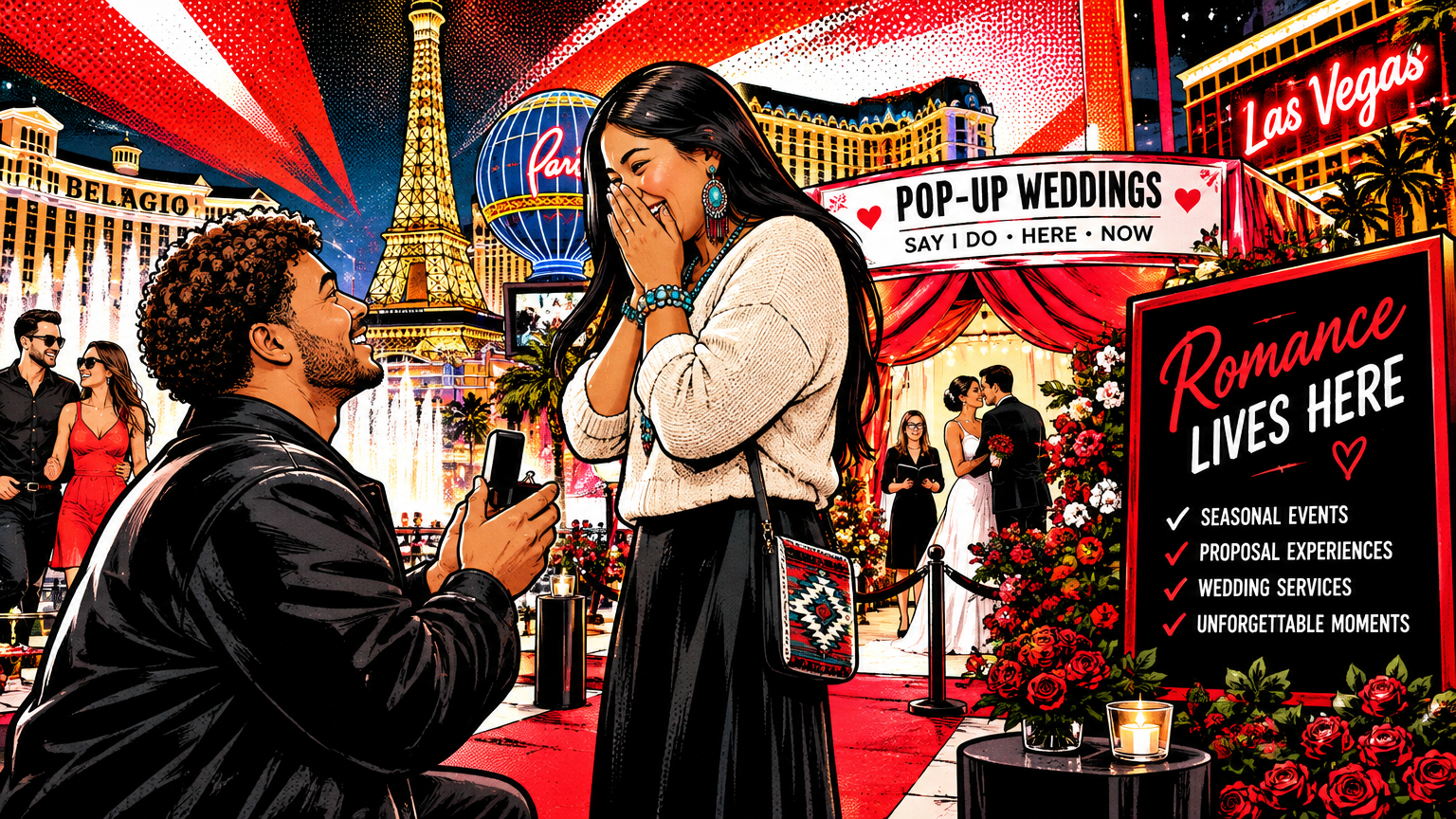
For a more personal milestone, The STRAT lists proposal packages built around its Tower Level 112 private balcony and SkyJump. Its “Proposal in the Sky” package is listed at $1,225 inclusive and includes 30 minutes on the balcony, a butler, champagne, a rose and professional photo and video services. A deluxe option adds a four-course dinner for two and is listed at $1,450 inclusive. The venue also lists a $295 “Romance Proposal Package” at Top of the World, with dinner not included, plus tax and gratuity.
These are not pop-ups in the strict sense. They are standing offers that sell a high-stakes moment in a package. That distinction matters to the buyer and the operator. A seasonal activation has a built-in deadline. A standing package can stay on the menu and compete on service, setting and convenience.
The Product Is the Moment, Not Just the Room
In each model, the room is only part of what the customer buys. The offer may coordinate a setting, food or drink, photography and a defined sequence of events. The value proposition is less about putting a heart-shaped decoration on a table and more about reducing the number of decisions the customer has to make.
That is where the business logic gets interesting. A hotel can use existing space and hospitality staff to create a seasonal reason to book. A proposal operator can assemble several services around one occasion. A chapel can offer a ceremony package instead of asking a couple to source every vendor separately. Those are business interpretations of the examples, not a guarantee of margins or demand. Operators still have to price labor, manage capacity and deliver what the package promises.
How Couples Can Read the Offer Before They Book
A polished package can make the decision feel simple. The contract still deserves a close read. Compare what is actually included with what you would need to arrange separately, then confirm the details in writing before paying a deposit.
- Get the full price. Ask whether tax, gratuity, service charges, photography, décor and food are included. The STRAT, for example, distinguishes its $295 Top of the World package from dinner, and notes that tax and gratuity are additional.
- Pin down the schedule. Confirm the date, arrival time, duration, location and who will coordinate the experience. For limited-run events, check the exact operating dates rather than relying on an old promotion.
- Read cancellation and change terms. Ask what happens if weather, a venue change or a scheduling problem disrupts an outdoor or timed plan. Do not treat a social-media booking image as a substitute for written terms.
- Keep the plan personal. A package can handle logistics, but it cannot decide what will feel meaningful to the person you are celebrating. Spend on the parts that matter to you, not just the biggest bundle.
Couples planning a wedding should separate the ceremony service from the legal paperwork. Clark County’s Clerk provides current instructions for getting married in Las Vegas, including the county process. Check those requirements directly and do not assume a chapel package covers every step.
Price points vary widely across the market. As one example, Vegas Weddings advertises chapel packages starting at $159 and drive-through ceremonies starting at $89 on its website. Those advertised starting prices are not like-for-like comparisons with a resort proposal package, and options, availability and terms can change. Treat the headline price as the opening number, then check what the specific booking includes.
The Business Case Depends on Execution
A short run gives an operator a clear window to test a theme. It can also leave little room for a weak concept. A Valentine’s offer has a calendar deadline. A proposal package has a narrow audience and a promise that carries emotional weight. If the service is late, the photographer misses the moment or the final bill surprises the customer, the experience fails where it matters most.
The best offers make the operating details part of the product. That means clear booking rules, dependable partners, a realistic schedule and a backup plan where weather or crowds can interfere. It also means resisting the urge to sell every occasion with the same bundle. A quiet proposal and a high-energy celebration are different purchases, even if both fit under the romance label.
Las Vegas has a deep roster of places couples can use to shape a proposal, from resort restaurants and the gondolas at The Venetian to the Bellagio Fountains. The destination’s official visitor guide also highlights proposal locations and planning ideas. That variety gives businesses room to compete on convenience, setting and service. It gives customers more choice, but it also makes comparison shopping essential.
The city’s romance offer is not one giant pop-up waiting to take over the market. It is a flexible sales strategy, visible in the short-lived Valentine’s activations and the proposal packages built for the long haul. For couples, the leverage is choice: buy only the pieces that make the moment yours. For operators, the mandate is execution. In Vegas, the memory may be the headline, but the business is won on the details.