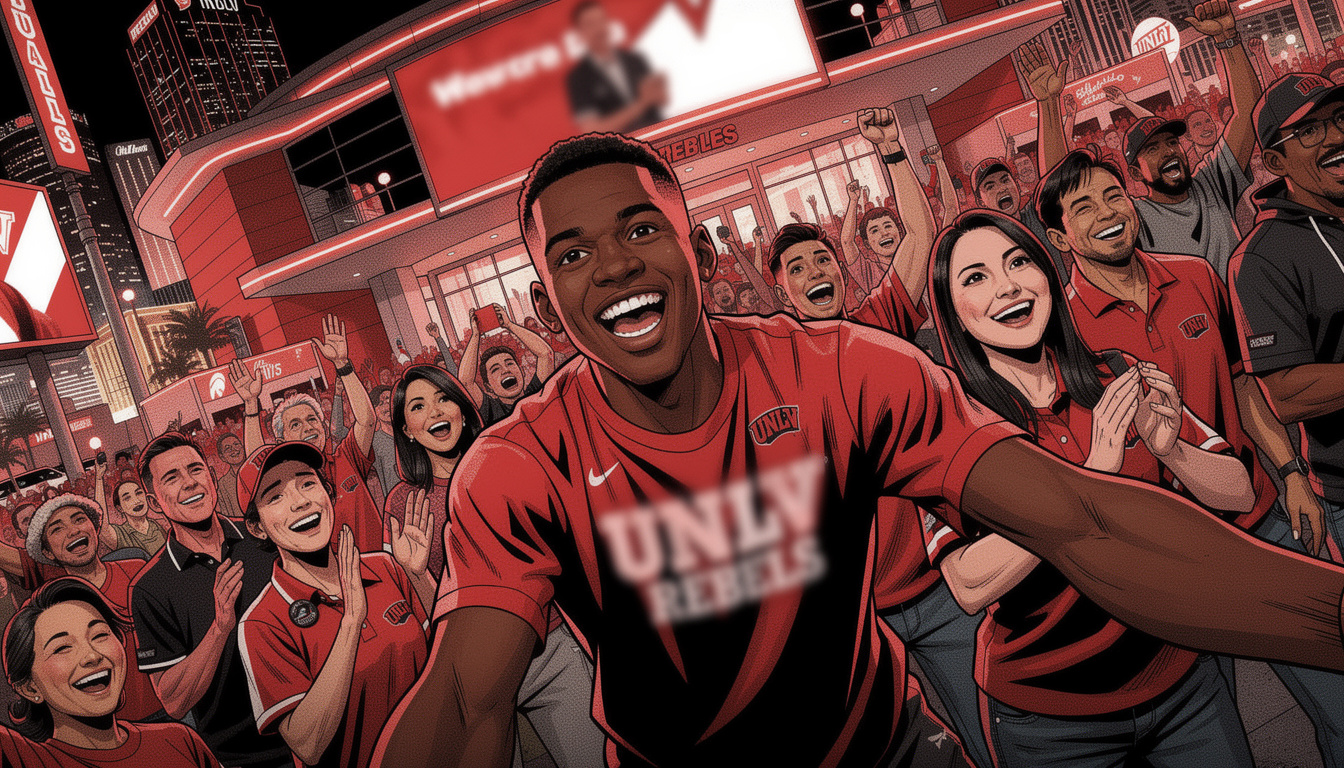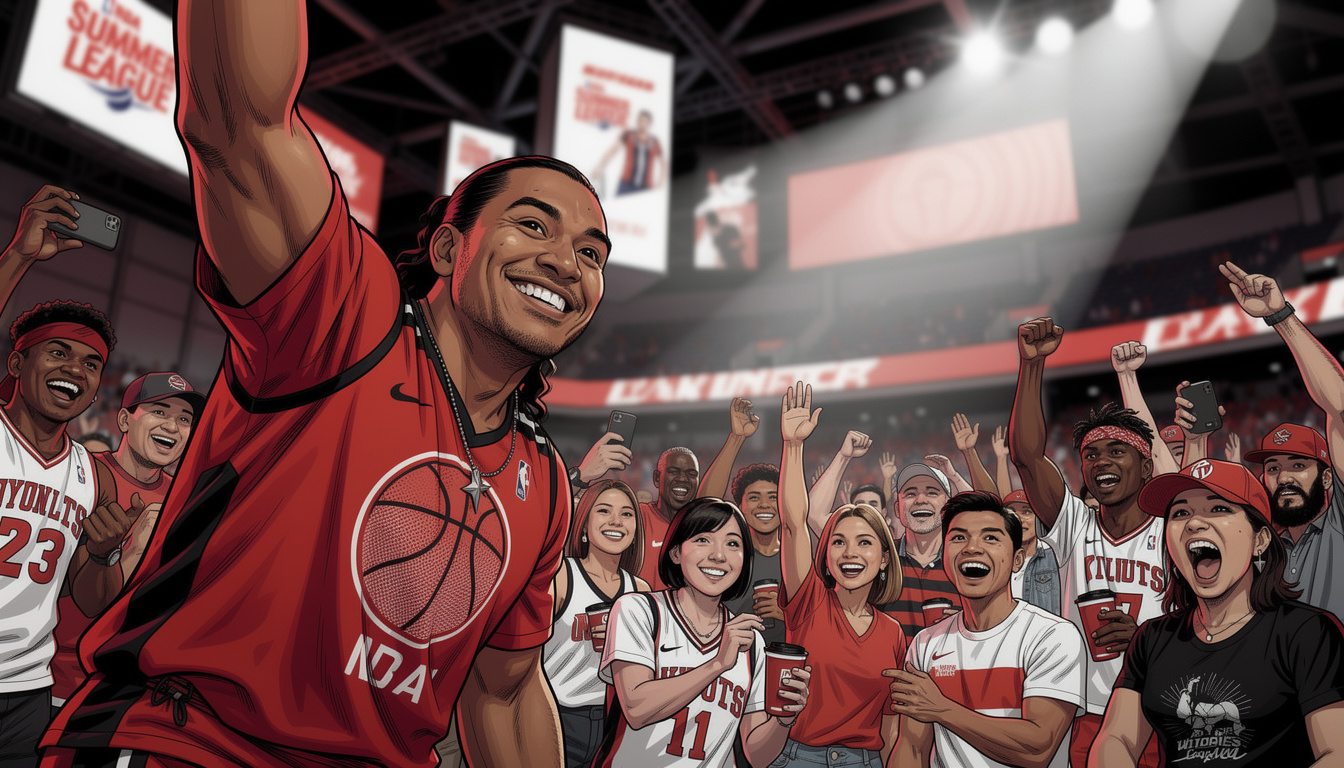
Las Vegas still does not have an NBA team, but the city just completed its strongest expansion audition yet.
The 2026 NBA Summer League brought all 30 teams to the UNLV campus from July 9 through July 19. It ended with record attendance, record merchandise sales and another clear signal that Las Vegas has become one of the league’s most important gathering places.
The timing could not have been better.
The NBA Board of Governors formally authorized the league to explore expansion into Las Vegas and Seattle in March. During Summer League, Commissioner Adam Silver said owners hope to decide the league’s expansion direction by the end of 2026.
No team has been awarded. No ownership group has been selected. No arena has been approved by the NBA.
But Las Vegas is no longer making a theoretical argument. The league just spent 11 days watching the city host its teams, players, executives, sponsors, media members and fans in real time.
The 2026 Summer League Set New Records
The strongest case for Las Vegas begins with the numbers.
The NBA announced that the 2026 Summer League attracted more than 156,000 attendees, the highest total in the event’s history. That represented a 12% increase over the previous attendance record set in 2018.
Merchandise sales also reached a new high, increasing 11% over the previous record set in 2024.
The championship game, a 94-90 Golden State Warriors victory over the Memphis Grizzlies, averaged 676,000 viewers on ESPN. That made it the most-watched Summer League championship since 2017 and produced a 61% increase over the 2025 audience.
Those figures do not automatically prove that Las Vegas can support 41 regular-season home games. Summer League attendance includes tourists, league employees, media members and fans following all 30 teams.
Still, records matter. They show that the event is not losing energy after more than two decades in Las Vegas. It is becoming larger, more valuable and more important to the NBA’s summer business.
Adam Silver Called Summer League Las Vegas’ “31st Team”
Silver did not treat Las Vegas like an unfamiliar expansion candidate when he addressed reporters during Summer League.
He described the event as the league’s unofficial “31st team,” noting that Summer League has operated in the city for 22 years.
That description says a great deal about the relationship.
Las Vegas does not merely rent arenas to the NBA. The city provides a permanent summer home where the entire league can gather after the draft and before training camp.
All 30 teams compete. Rookies receive their first professional opportunities. Undrafted players fight for contracts. Coaches experiment with lineups. Executives evaluate talent. Agents meet with teams. Sponsors activate around the event. Media organizations produce days of programming.
The games are the public attraction, but the larger NBA economy is operating throughout the city.
That makes Summer League one of Las Vegas’ strongest advantages over other potential expansion markets. The NBA already knows how its people, partners and customers operate here.
Expansion Has Moved Beyond Casual Conversation
For years, Las Vegas appeared in expansion rumors without a formal league process behind them.
That changed March 25, 2026, when the NBA Board of Governors authorized the league to explore potential expansion into Las Vegas and Seattle.
The NBA hired investment bank PJT Partners to help evaluate prospective markets, ownership groups, arena infrastructure and the broader economic effects of adding teams.
This does not guarantee that the NBA will expand. It also does not guarantee that Las Vegas will receive a franchise if the league adds teams.
It does mean Las Vegas has reached a more serious stage than general speculation.
During his July Summer League news conference, Silver said multiple groups interested in Las Vegas and Seattle had already presented ideas involving financing, arena plans and market strategy. He also emphasized that no expansion votes had been taken.
The city is now being evaluated as a real NBA market, not simply discussed as an interesting future possibility.
Summer League Shows That Las Vegas Can Host the NBA
Most cities trying to attract a professional team must explain how the league would fit into the market.
Las Vegas gets to demonstrate it every July.
The 2026 event placed games at the Thomas & Mack Center and adjoining Cox Pavilion, identified by the NBA as the Pavilion. Fans moved between the two buildings for a schedule that often ran from afternoon into late evening.
Outside the arenas, hotels housed teams, league officials, business partners and traveling fans. Restaurants handled meetings and group dinners. Resorts hosted private events. Transportation companies moved visitors between UNLV, the airport and the Strip.
The city’s tourism infrastructure makes that possible.
Harry Reid International Airport is close to the resort corridor. Las Vegas has extensive hotel capacity, large meeting spaces, national air service and a hospitality workforce accustomed to high-volume events.
For the NBA, that reduces operational uncertainty. The league already knows where to hold games, house visitors, stage meetings, entertain sponsors and conduct business.
The Event Has Become the NBA’s Summer Convention
Summer League is officially a basketball competition, but it also functions as one of the NBA’s largest annual business gatherings.
Team presidents, general managers, scouts, coaches, referees, trainers, agents, broadcasters, technology companies, apparel brands and job seekers can all be found in Las Vegas during the event.
That concentration creates business opportunities that do not appear in the final scores.
A player can earn a two-way contract. An assistant coach can make a career connection. A startup can demonstrate a sports product. An agent can introduce a client to several teams without crossing the country. A sponsor can reach representatives from the entire league in one city.
This is part of the value Las Vegas offers.
The city is not just capable of selling tickets. It is built to support the meetings, hospitality, entertainment and relationship-building that surround modern professional sports.
The Aces Have Already Proved Basketball Can Build Local Loyalty
The Las Vegas Aces provide another important part of the expansion argument.
The Aces have shown that professional basketball can build a strong local identity in Southern Nevada. Their success has brought national attention, championship celebrations and a growing community of fans around women’s basketball.
The team also offers something Summer League cannot fully prove: Las Vegas residents will support a basketball organization over an entire season, not only during a destination event.
The Golden Knights demonstrated the same principle in hockey. They became a community institution instead of relying entirely on visiting fans. The Raiders added another major league and showed the revenue power of combining local interest with sports tourism.
An NBA ownership group would still need to create its own culture, ticket base and community programs. It would not inherit the loyalty built by the Aces, Golden Knights or Raiders.
But those teams have weakened the old argument that Las Vegas is only a tourist market.
Southern Nevada residents have proved that they can embrace teams that invest in the community and give the city something that feels like its own.
Summer League Does Not Answer Every Question
The 2026 records strengthen Las Vegas’ case, but Summer League is not a complete test of an NBA franchise.
A permanent team would face a much different business challenge.
Forty-one home games: The team would need steady demand from fall through spring, including weeknight games against less popular opponents.
Season tickets: Ownership would need thousands of local customers and businesses willing to make long-term financial commitments.
Arena control: The franchise would need a venue arrangement that supports basketball operations, premium seating, sponsorships and scheduling.
Ownership capital: An expansion fee, arena expenses, staffing and team operations could require several billion dollars.
Local affordability: Ticket prices would need to balance tourism demand with access for Southern Nevada residents.
Community connection: The organization would need youth programs, nonprofit partnerships and year-round local involvement.
Summer League proves that Las Vegas can host the NBA. It does not by itself prove which ownership group should control a team, where that team should play or whether the economics will satisfy the league’s existing owners.
Those questions will decide the expansion process.
The Arena Question Remains Open
Las Vegas has multiple arena possibilities, but the NBA has not selected or endorsed one.
T-Mobile Arena already hosts major basketball games and sits inside a proven sports and entertainment district. Other developers and property owners have discussed new NBA-ready arenas at different locations around the valley.
An arena rendering is not enough.
The league will want to know who controls the land, who finances construction, how the building generates revenue, how fans reach it and whether the ownership group can complete the project on schedule.
A proposed venue must also account for parking, rideshare operations, public transportation, traffic, team facilities, broadcast infrastructure and premium hospitality.
Las Vegas has shown that it can build major sports venues. The unresolved issue is which arena plan creates the strongest long-term business for an NBA franchise.
An NBA Team Could Create Opportunities for Local Businesses
The expansion conversation is not only about team owners and arena developers.
A permanent franchise could create business opportunities throughout Southern Nevada.
Restaurants and bars could build game-night promotions. Local vendors could compete for contracts. Transportation companies could serve fans and team personnel. Small businesses could buy targeted sponsorships. Youth organizations could form partnerships with players and the franchise.
Hotels would benefit from visiting teams and traveling fans. Media companies would gain year-round basketball coverage. Local creators could produce team-related content. Retailers could benefit from merchandise and event traffic.
Summer League already produces some of that activity for 11 days. A permanent team could extend it across an entire season.
The greatest local value would come from an ownership group that deliberately includes Southern Nevada businesses instead of concentrating every contract and sponsorship opportunity among national companies.
Las Vegas does not simply need an NBA logo. It needs a franchise that becomes part of the local economy.
The NBA Cup Relationship Is Changing, but Las Vegas Remains Important
Las Vegas has also hosted the final stages of the Emirates NBA Cup at T-Mobile Arena.
The NBA held the 2025 semifinals and championship in the city. Beginning with the 2026-27 season, the higher-seeded teams will host the semifinals, while the championship will remain at a neutral site.
That change means Las Vegas will no longer automatically host the same three-game package it received during the tournament’s first years.
It also makes Summer League even more important as the city’s most established annual NBA event.
The relationship is not based on one tournament or one arena booking. Las Vegas has become useful to the NBA across player development, league business, major events, sponsorships and entertainment.
The 2026 Event Made the Case Stronger
The 2026 Summer League did not award Las Vegas a franchise.
What it did was remove several doubts.
The event attracted record crowds. Fans bought record amounts of merchandise. Television viewership increased. The city supported all 30 teams for 11 days. The league conducted business around the games, and its commissioner openly discussed Las Vegas as part of a formal expansion process.
That is a stronger argument than another arena rendering or celebrity endorsement.
Las Vegas showed that basketball attracts attention here. It showed that the NBA’s business community wants to gather here. It showed that the event can continue growing after more than 20 years.
The remaining questions are no longer about whether Las Vegas can host the league.
They are about ownership, money, arena strategy and whether existing NBA governors believe expansion will increase the value of every franchise.
The Bottom Line
Las Vegas wants an NBA team, and the 2026 Summer League made the case in real time.
More than 156,000 people attended. Merchandise sales reached a record. The championship audience climbed. All 30 teams competed, and the NBA treated the city like its summer headquarters.
None of that guarantees expansion.
But Las Vegas is no longer standing outside the league asking to be noticed. The NBA has formally placed the city under consideration, competing ownership groups are preparing proposals and the league’s owners expect to confront the expansion question before the end of 2026.
The city has completed the public part of its audition.
Now the decision moves into boardrooms, financial models and arena negotiations.