Las Vegas’ October convention calendar brings major industry events to the Strip and puts business travelers in front of local hotels, restaurants, transportation providers and event suppliers. The commercial opportunity is real. The payoff for individual businesses depends on what they sell, how they execute and whether they turn a short visit into a lasting account.
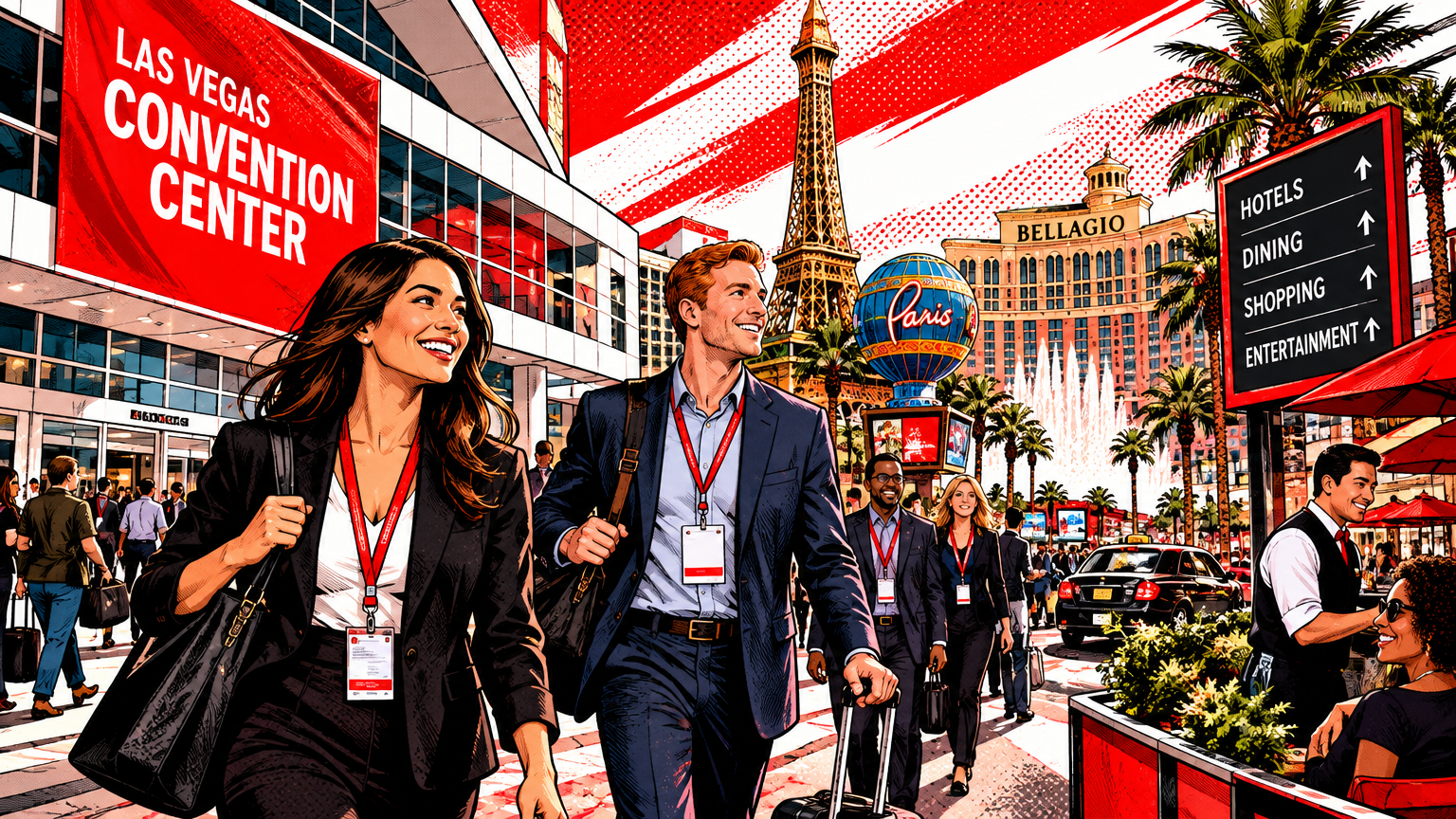
The latest annual figures set the market’s scale. The Las Vegas Convention and Visitors Authority reported 38.5 million visitors and 5,988,200 convention delegates in 2025. Separately, the authority said the Las Vegas Convention Center was on pace to host about 1.2 million trade-show attendees in 2026, up from 1 million in 2025. Those numbers signal substantial demand. They do not identify October’s share or establish how much revenue any one show generated for local businesses.
That distinction matters. A full calendar creates a bigger sales window, not a guaranteed win. For operators, the play is to convert event traffic into room nights, booked meals, service contracts and repeat business, then measure the results against the cost of delivering them.
What October’s Convention Calendar Brings to Las Vegas
October’s 2026 calendar included events serving different business sectors. The Global Gaming Expo ran September 28 through October 1 at The Venetian Expo, bringing together professionals from the regulated gaming industry. IMEX America, the meetings and events industry trade show, scheduled its exhibition at Mandalay Bay for October 13 through 15. Money20/20 USA, focused on financial technology and payments, ran October 18 through 21 in Las Vegas.
The shows do not serve the same customer. Their shared business feature is a schedule that concentrates professional meetings, exhibitors and attendees at local venues. That gives nearby businesses a chance to compete for spending tied to lodging, meals, transportation, meeting support and event production. It also puts prospective customers in town with a defined reason to meet suppliers and evaluate services.
The event dates and industry focus describe the calendar. They are not a tally of local sales. Without event-specific economic-impact figures or company disclosures, it would be a mistake to treat attendance as a direct measure of revenue or profit for Las Vegas operators.
The difference between traffic and a business win
Convention attendance is a volume measure. A business win is a transaction: a room booked, a group meal contracted, a production service sold or a new account secured. One does not automatically prove the other.
The LVCVA’s reported 2025 tourism economic impact of $80.9 billion reflects tourism across Las Vegas, not the measured contribution of October conventions alone. It establishes the weight of the visitor economy, but it cannot be used to assign a return to a single show, neighborhood or supplier.
Where Local Operators Can Compete
Hotels and resorts have the clearest connection to attendee demand. A guest may need a room near a show, but the broader sale can include meeting space, food and beverage, and other on-property services. The commercial advantage is in matching the offer to the group’s needs, not simply filling a room.
Restaurants and private dining venues can compete for team meals, client dinners and group bookings. Those sales depend on practical details: availability, the ability to serve a group on schedule and clear communication when plans change. A busy convention period can bring more potential customers through the market, but no single restaurant is guaranteed a share.
Event production and support companies operate behind the scenes. Exhibitors may need audiovisual services, staging, signage, freight handling, equipment rentals, catering or temporary labor. These are examples of services events can require, not a verified list of contracts awarded for the 2026 shows. For suppliers, a strong service record can strengthen a future pitch, but the value has to be measured in actual booked work and repeat orders.
Local firms also compete for attention from national buyers who may not otherwise consider a Las Vegas vendor. A trade show can provide a setting for introductions and conversations. It does not guarantee that a buyer will switch suppliers. Preparation, a clear offer and timely follow-up determine whether a conversation advances into a sales opportunity.

How Businesses Can Measure the Return
Attendance figures make the market visible, but operators need their own scorecard. Hotels can track room nights and group revenue. Restaurants can review contracted events and group sales. Suppliers can measure new accounts, booked projects and repeat work. In each case, revenue should be weighed against staffing, inventory and other costs required to serve the business.
That discipline is especially important during demand spikes. More bookings do not necessarily mean better margins if a company overcommits on labor or supplies, or takes on work it cannot execute reliably. Businesses need to price deliberately, confirm capacity and protect service quality. In a market where deadlines are fixed, execution is part of the product.
The broader figures still matter. The LVCVA’s convention-delegate count and its projection for Las Vegas Convention Center trade-show attendance show why event business holds a strategic place in the local economy. But they are market indicators, not a substitute for company-level results. Operators need to know which bookings came from a show, what those sales cost to deliver and whether the customer returned.
The Opportunity Beyond the Show Dates
The strongest return may come after the event closes. A hotel can pursue the next group booking. A local supplier can follow up on a project and compete for a customer’s next program. A restaurant can build a relationship that turns a one-time dinner into recurring business. Those outcomes are possibilities to pursue, not results that attendance totals can certify.
For Las Vegas, the strategic value of conventions is the pipeline they create between global industries and local service businesses. October puts that pipeline in motion. The operators that convert it into durable business will do more than serve a busy week. They will strengthen the city’s position as a place where meetings, hospitality and commerce work at scale.