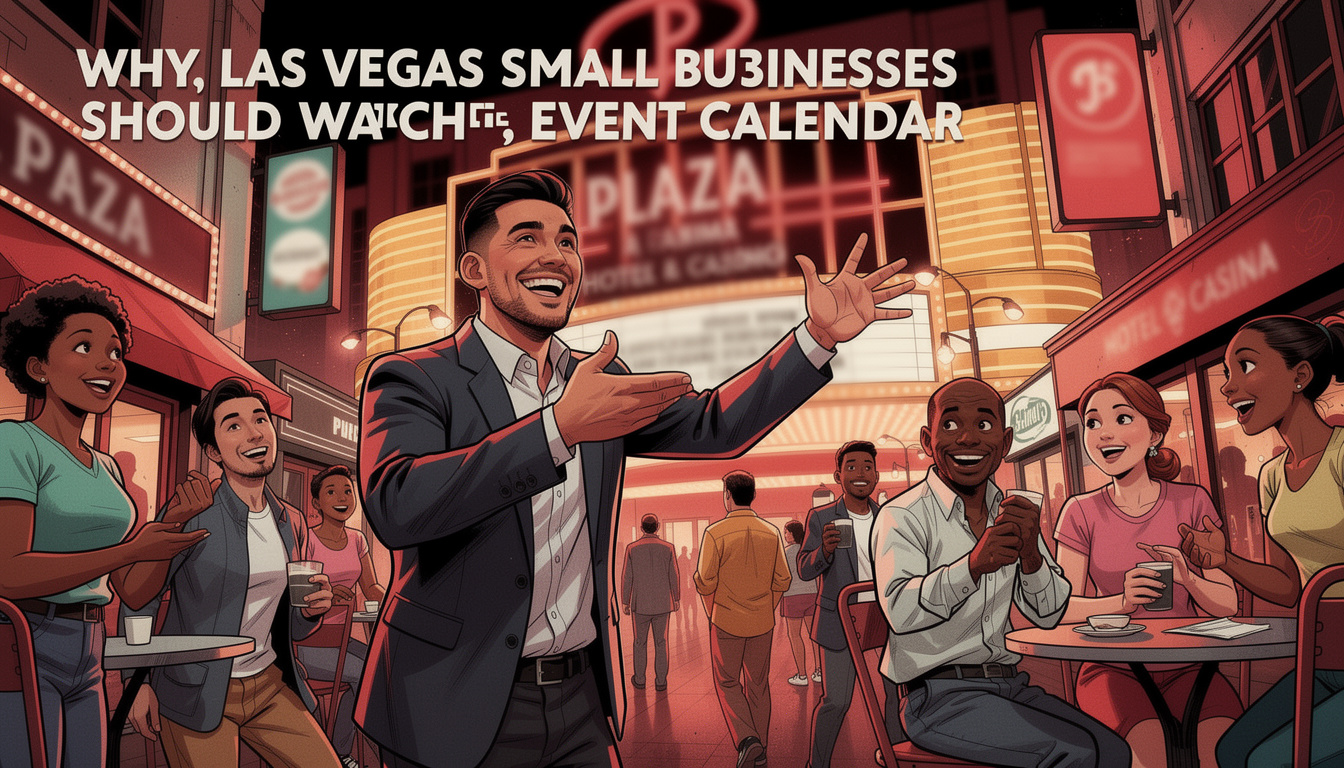
The Plaza Hotel & Casino is an active downtown meetings and events venue, not a newly announced “Plaza Expo.” Its convention facilities can host conferences, trade shows and other gatherings, and the hotel’s calendar includes events that may matter to local businesses. The opportunity is real, but so is the homework: owners need to check the dates, audience and access rules before adding staff or stock.
The Plaza’s meetings and conventions facilities are at 1 Main St., at the start of the Fremont Street Experience. The hotel says the space includes downtown’s largest ballroom, a 600-seat showroom and outdoor exhibit space. Those facilities give event organizers options. They do not guarantee a windfall for the shop or restaurant down the block.
For small businesses, the useful signal is the event schedule, not the size of the venue. A busy floor only helps if the people attending need what you sell.
What the Plaza’s event space means for downtown businesses
Conferences and trade shows can bring attendees, exhibitors and organizers to downtown. Depending on the event, people may need meals, transportation, printing, shipping, supplies or a place to meet. Businesses that offer those services have a reason to pay attention.
But event audiences are not interchangeable. A trade-only gathering may draw buyers and exhibitors with tightly planned schedules. A public event may attract a different mix of visitors. Some attendees may stay on site or head elsewhere after sessions. A full venue does not automatically mean full tills nearby.
Check the calendar before changing your plan
The Small Business Expo’s Las Vegas page lists the Plaza Hotel & Casino Convention Center as its venue and shows a Sept. 16, 2027, event. The organizer’s main website has also listed a Las Vegas event at the Plaza for Oct. 29, 2026. Because those pages show different dates, check the organizer’s current event information before making plans around either listing.
That is a practical reminder for any event: confirm the date and hours with the organizer, then find out whether the event is open to the public, who is expected to attend and whether vendors or local businesses can participate. Do not assume proximity gives a business permission to set up, advertise inside the venue or distribute offers.
How owners can prepare without overcommitting
Start with a calendar entry, not a big order. Compare confirmed event dates with your usual sales patterns, staffing and inventory. If the audience fits your business, try a small, measured adjustment. If the fit is unclear, observe first and use the experience to make a better call next time.
- Identify the audience. Check whether the event is trade-only or public, and what attendees are likely to need.
- Ask about access. Contact the organizer about vending, sponsorship, catering, advertising or services for exhibitors.
- Make the offer easy to understand. A clear menu, service package or event-day deal beats a complicated pitch.
- Keep the first move modest. Adjust staffing or stock carefully rather than treating projected attendance as guaranteed foot traffic.
- Measure the result. Track sales, costs, busy periods and customer questions, then compare them with an ordinary day.
There may also be business-to-business opportunities before an event opens. Exhibitors can need local printing, shipping, food or other support. A short inquiry to an organizer or exhibitor can help determine whether a real need exists. Guessing from the sidewalk is not a sales strategy.
Opportunity depends on the event, not the address
The Plaza’s convention facilities are one part of downtown’s event offering. Their size and location make them relevant to nearby businesses, but the benefit depends on which events are booked, who attends and whether local companies can connect with those visitors or exhibitors.
Owners should follow venue and organizer announcements, verify dates directly and ask specific questions before committing money. A relevant event can bring potential customers close. Turning that possibility into business takes a plan, and a way to tell whether it worked.