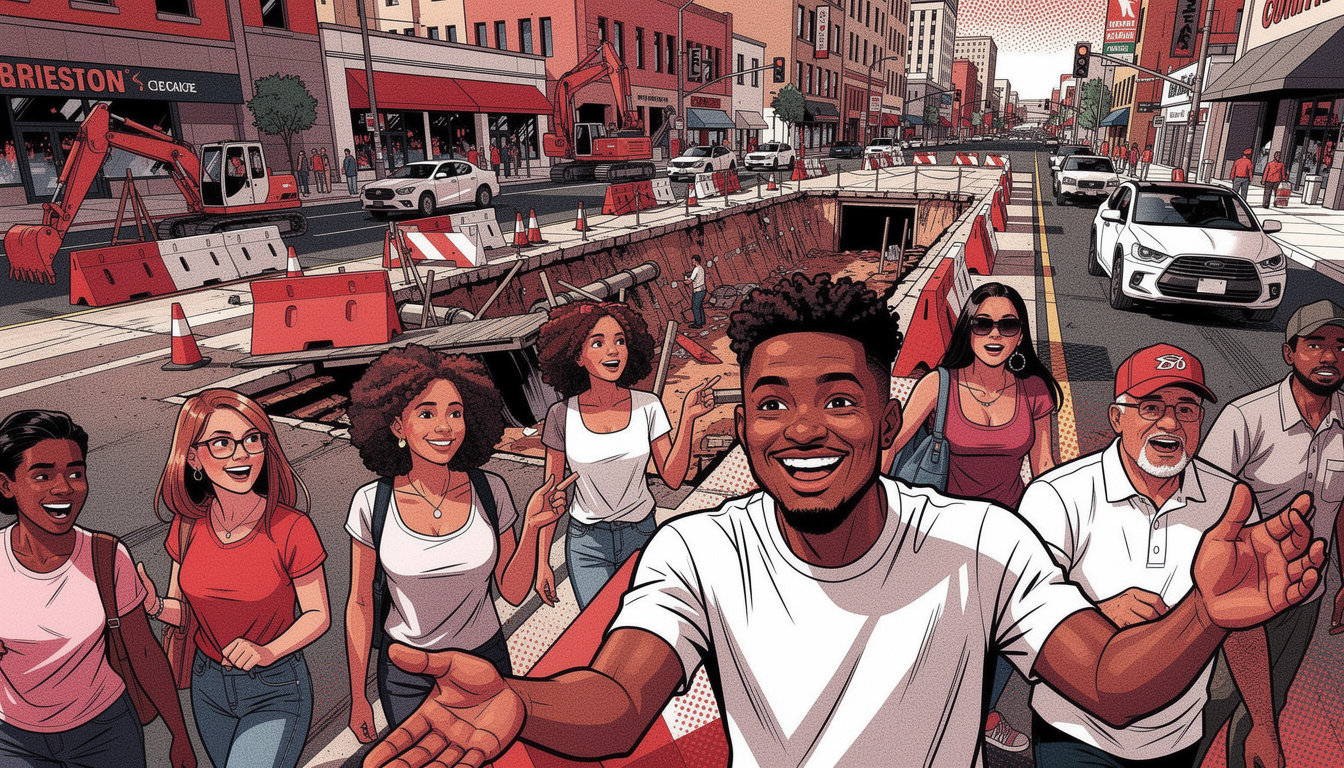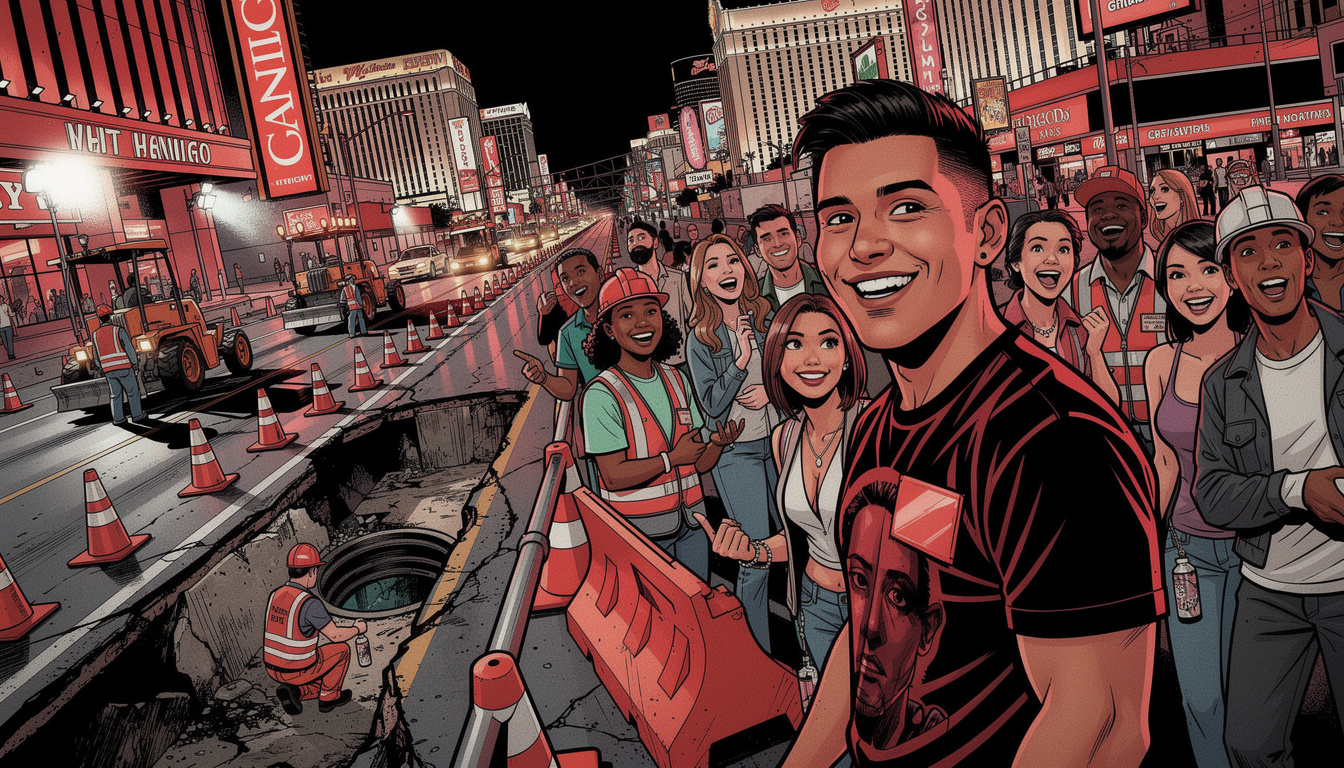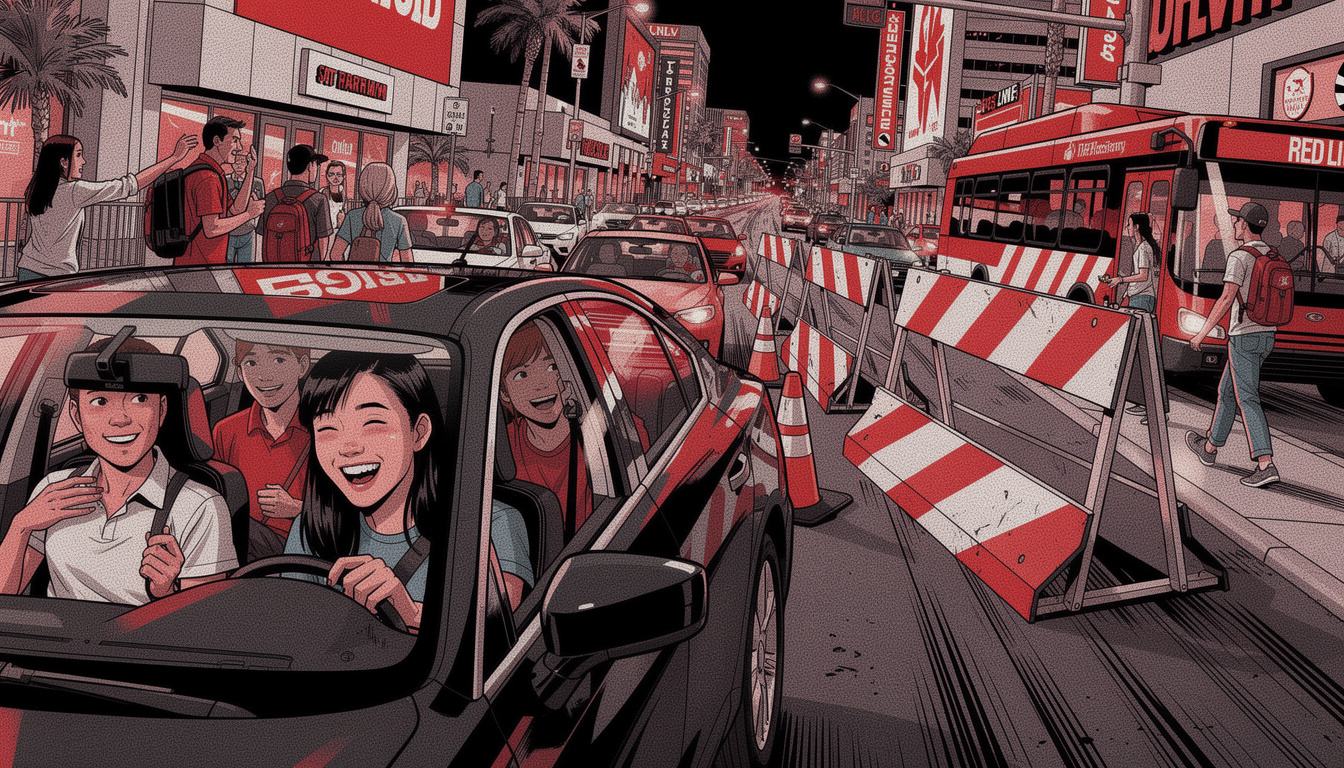
The new RED LINE is rolling, but Maryland Parkway is not finished with the orange barrels yet. Drivers around UNLV should continue to expect heavy traffic, lane shifts, utility work, and changing access conditions along one of central Las Vegas’ busiest corridors.
The Regional Transportation Commission of Southern Nevada launched RED LINE bus rapid transit service on Aug. 23, 2026. That was the marquee moment, but it was not the final construction whistle. According to the official Maryland Parkway project update, approximately four miles of the corridor between Sahara Avenue and Russell Road still require additional work because of utility issues, field conditions, and delays involving adjacent projects.
That remaining stretch runs directly through the UNLV zone. Translation: the buses have arrived, but anyone driving to campus, a Thomas & Mack Center event, a business on Maryland Parkway, or a nearby apartment complex still needs a traffic plan.
Why Maryland Parkway Is Still Under Construction
The Maryland Parkway project is much bigger than a routine paving job. The RTC’s 12.5-mile bus rapid transit corridor connects the South Strip Transit Terminal with downtown Las Vegas and the Las Vegas Medical District, passing Harry Reid International Airport and UNLV along the way.
The work has included roadway and utility improvements, upgraded crosswalks, wider sidewalks, new lighting, enhanced transit stations, and shared bus-bike facilities. The RED LINE itself replaced Route 109 and introduced dedicated transit lanes in parts of the corridor, larger stations with more shade and seating, and high-capacity hydrogen fuel-cell buses.
That is a serious transportation makeover, not a weekend cone drop. It also explains why completing the corridor requires more than opening the new bus service. Road surfaces, utilities, sidewalks, medians, signals, and station areas can move on separate schedules, especially when crews encounter underground conditions that were not obvious before excavation began.
What the remaining work means near UNLV
The RTC says motorists and transit riders should anticipate continued delays within the unfinished four-mile section. The project’s current construction guidance warns of lane shifts and says work hours may be extended to maintain the schedule. On-street parking can also be affected as crews move through individual sections.
Business and residential access is expected to remain open, but open does not always mean effortless. A driveway may be reachable from one direction while crews occupy another lane, and a familiar turn can become slower when traffic is compressed. Conditions can change as work advances, so last week’s smooth approach may not be this week’s winner.
The key distinction is simple: Maryland Parkway remains open as an active transportation corridor, not as a construction-free one. There is no single permanent detour that solves every trip because the work zones and lane configurations can move.
How to Handle a UNLV-Area Drive
This is where smart Vegas timing beats raw optimism. Do not leave home assuming the drive will take what it took before construction. Build in extra time, especially during weekday commuting periods, the start and end of campus classes, and major events at the Thomas & Mack Center.
The strongest route depends on where you are coming from. Paradise Road and University Center Drive can help with some trips west of campus, while Eastern Avenue may work for drivers approaching from the east. Swenson Street can also be useful for certain campus destinations. None of these roads is a magic escape hatch, and all can absorb displaced Maryland Parkway traffic.
Do not swing all the way to Decatur Boulevard unless your starting point or destination already makes that western route sensible. That is a major cross-valley detour for most UNLV trips, not a practical substitute for a short drive near campus.
Check conditions before committing to a turn
The RTC Maryland Parkway page directs travelers to current construction information and offers subscriptions for email or text alerts. The project also recommends using Waze to navigate active impacts. That is the move here: check live conditions before entering the corridor rather than trying to improvise after getting boxed into a slow lane.
Drivers should also watch temporary signs closely. A navigation app can help with congestion, but posted construction controls govern the road in front of you. Slow down around crews, expect uneven surfaces, and leave enough space for buses and other vehicles merging through shifted lanes.
- Add a buffer: Give yourself more time than the map’s best-case estimate, particularly for exams, appointments, flights, or ticketed events.
- Choose the correct side of campus: Approach from the direction closest to your actual building or parking area instead of crossing Maryland Parkway twice.
- Check parking before departure: On-street spaces may be affected, and campus demand changes with events and the academic calendar.
- Avoid blind shortcuts: Residential streets can have their own restrictions and should not be treated as high-speed detours.
- Keep businesses accessible: The RTC says business access will remain open, so look for posted entrance signs rather than assuming a storefront is unreachable.
What UNLV Students, Employees, and Visitors Should Know
Campus access is the part that demands the most attention because conditions can vary by entrance and parking destination. Rather than relying on an old recommendation for one specific driveway, consult the official UNLV campus maps and current Parking and Transportation information before leaving.
There is no confirmed blanket closure of the Maryland Parkway entrance near the Student Union, and UNLV has not established a general rule directing every driver to Cottage Grove Avenue or Tropicana Avenue. Those approaches may make sense for certain destinations, but construction conditions can shift. Follow current signs and campus notices.
The same caution applies to event parking. Do not assume regular campus parking areas are unavailable or being used as construction staging unless UNLV or an event organizer says so. For a Rebels game, commencement, concert, or other major event, use the parking directions issued for that event and arrive early. Big crowds plus active roadwork is exactly the combo that can turn a casual arrival into a fourth-quarter scramble.
Transit is now another serious option. The RED LINE serves the Maryland Parkway corridor and connects UNLV with downtown, the medical district, Harry Reid International Airport, and the South Strip Transit Terminal. Riders should still allow extra time because the RTC warns that continuing roadway and utility work can delay service.
The Big Picture for Maryland Parkway
The important milestone has happened: RED LINE service is operating. The unfinished business is the roadway and utility construction that remains between Sahara and Russell, including the UNLV area.
Earlier project schedules pointed to fall 2026 for completion, but the RTC’s latest public guidance focuses on remaining work rather than giving one firm date for every construction activity to end. With utility complications and adjacent projects affecting the corridor, drivers should treat weekly updates as more useful than an old finish date.
Long term, Maryland Parkway is getting a more substantial transit system, improved pedestrian infrastructure, refreshed roadway elements, and stronger connections between major Las Vegas destinations. Right now, though, the winning play is pure discipline: check the live update, pick the campus approach that fits your destination, and leave early.
The RED LINE may be the headliner, but construction still has an encore. Plan accordingly, Vegas.