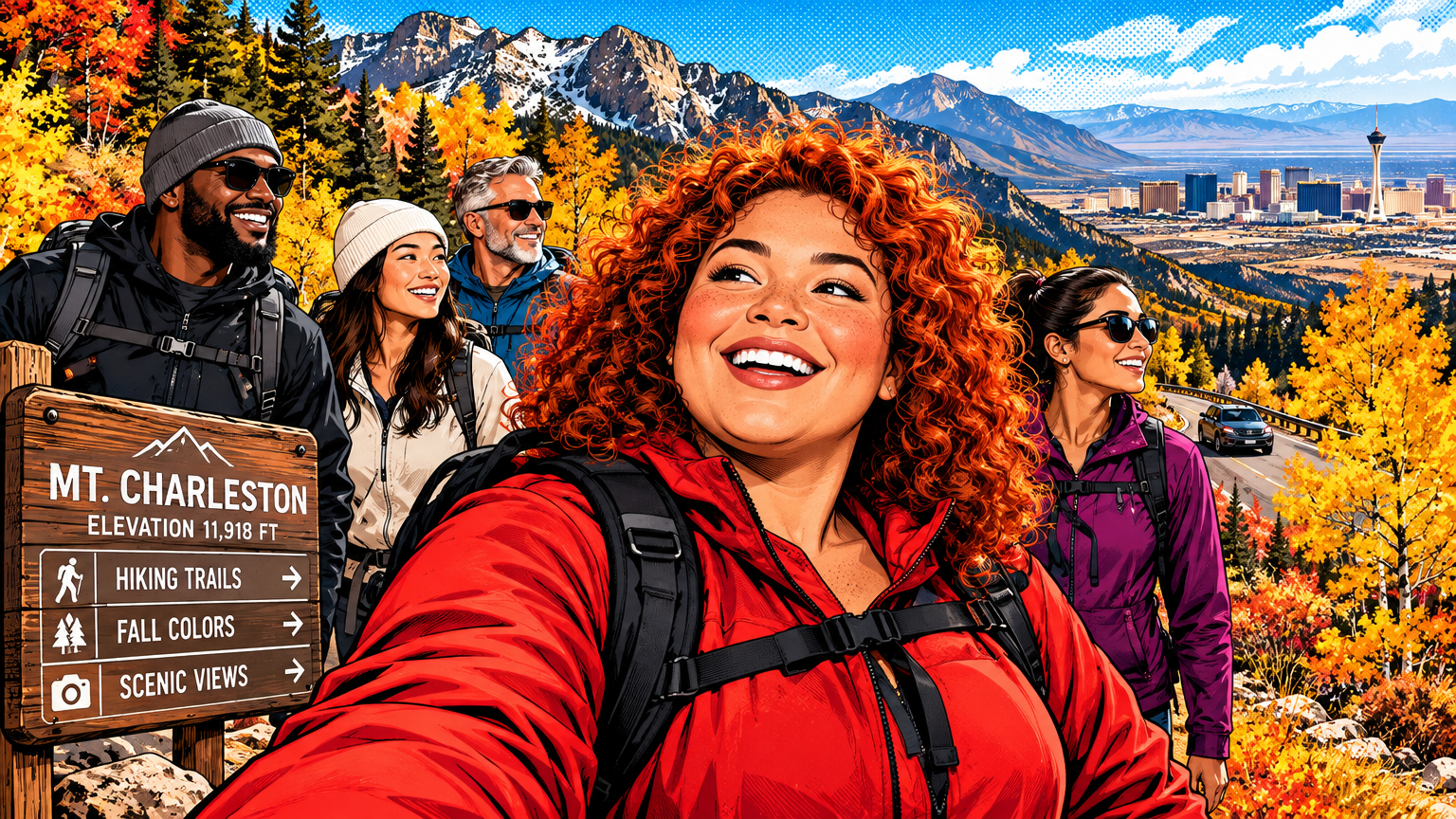
Las Vegas can still be doing its bright desert thing while Mount Charleston brings cooler air, pine-covered slopes and, for a brief stretch each year, golden aspen leaves. It’s a lovely change of scenery, and you don’t need to turn the outing into an extreme hike to enjoy it. Just keep the timing in perspective: Lee Canyon says its typical peak viewing window is late September to mid-October. By late October, the best color may have passed, though the exact display depends on the season and conditions.
So, is it still worth going? Absolutely, if you’re in the mood for a mountain drive and don’t need every tree to be at peak color. The Spring Mountains sit a short drive from the Las Vegas metro area, but the weather, road access and trails can feel very different from the valley. Check conditions before you leave, pick one canyon as your main plan, and let the scenery do its thing. No need to speed-run viewpoints like there’s a prize at the top.
What to Expect From Fall Color Near Las Vegas
Aspens are the stars of the autumn show, with leaves that turn yellow and gold against the darker greens of conifers. But fall color is not a synchronized performance. The timing can vary, and a photograph from another year is not a promise about what you’ll see on your visit. If vivid color is the whole point of the drive, check recent local updates and keep your plans flexible.
For Lee Canyon, the resort’s seasonal guidance puts the usual peak viewing opportunity between late September and mid-October. That’s a useful planning window, not a guarantee that every grove changes at once. If you’re heading up later, go for the broader mountain scenery and fresh air, and treat any leaves still holding color as a bonus. The Lee Canyon site is a helpful place to check for seasonal information before you go.
Choose Lee Canyon or Kyle Canyon
Lee Canyon and Kyle Canyon are different approaches into the Spring Mountains, not an automatic little scenic loop. Choose one as your main destination, then give yourself room to stop safely and enjoy the drive. Roads wind through the mountains, and your day will feel much better if you aren’t trying to squeeze in every trailhead and overlook.
Lee Canyon is a natural option if you’re hoping to see aspens, while Kyle Canyon offers its own high-country scenery. The best choice depends on your plans and what’s open that day. Before settling on a route, check the Forest Service’s Spring Mountains National Recreation Area page for alerts and current information.
Plan Around Roads, Weather and Trail Access
Check conditions before you drive
Mountain weather can differ sharply from the Las Vegas forecast. Wind, storms or snow can affect travel, even when the valley looks calm and sunny. Check road conditions for the routes you’ll use, especially State Routes 156, 157 and 158, and look for any closures or travel restrictions. Nevada 511’s road conditions page lists those highways and provides current road information. The local Go Mt. Charleston conditions and closures page also shares area updates.
Don’t treat a trail name you’ve heard before as proof that the route is open. Several popular Spring Mountains trails and recreation sites have been affected by closures and storm damage. Check the latest alerts for the specific trailhead you’re considering, follow posted restrictions and never try to bypass a closure. If access changes your plan, a scenic drive or a short walk on an open route can still make for a satisfying day.
Cell service may be limited in the mountains, so check directions and conditions before you leave town. Tell someone where you’re going, and don’t rely on being able to look up a new plan once you’re already on the road. If conditions look questionable, postpone the trip. The mountain will still be there, and a risky detour is not a personality trait.
Pack for the elevation, not the valley
Bring layers, water, snacks and shoes that are comfortable for walking. Cooler air is part of the appeal, but it doesn’t replace hydration or sensible pacing. If you plan to hike, choose a route that matches your group’s ability and the conditions that day. Give yourself time, take breaks and turn around if the weather or trail feels wrong.
Fuel up before heading out, and don’t assume every convenience available in town will be waiting in the mountains. Pack out your trash, stay on designated routes and leave plants where they are. The leaves are prettier on the trees anyway. This is a forest, not a souvenir shop.


A Relaxed Day-Trip Plan
- Before leaving: Check the forecast, road conditions, local alerts and the status of any trail or facility you plan to visit. Pick Lee Canyon or Kyle Canyon as your main focus.
- Morning: Head out with enough time to enjoy the drive at an unhurried pace. Stop only where parking is allowed and it’s safe to pull over.
- Late morning or midday: Take a short walk or hike if you’ve confirmed the route is open and conditions suit your group. Bring your own food and water so lunch doesn’t become a scavenger hunt.
- Afternoon: Enjoy one more viewpoint or an easy stop, then head back with daylight to spare. Mountain roads are less relaxing when you’re navigating them in the dark after a full day outside.
The Spring Mountains Visitor Gateway in Kyle Canyon can be another stop to consider. Check its current operating information before building your itinerary around a visit, since hours and access can change. And honestly, you don’t need a heroic hike or a medal-worthy step count to make the trip worthwhile. A scenic drive and a little time in cooler air count.
Go for the Mountain, Not a Calendar Promise
Mount Charleston is an easy way to trade the valley’s desert scenery for a higher-elevation landscape, but fall color follows its own schedule. Late September to mid-October is Lee Canyon’s typical peak-viewing window, and conditions vary from year to year. If you’re making the trip in late October, don’t count on peak color. Check recent updates, then decide whether the drive still sounds like your kind of day.
Bring a jacket, leave space in the schedule and enjoy whatever the mountains are offering. Maybe there’s still gold in the aspens; maybe the best part is the pine forest, the open views and that welcome shift in temperature. Either way, the drive can feel like a reset. The desert will be waiting when you get back.