Nevada officials have a blunt message for Las Vegas this week. Do not wait for the rain to start.
The Nevada Division of Insurance and the Nevada Office of Emergency Management released a joint statement on Monday, "urging Nevadans to create a plan of action now." The warning came during Nevada Floods Awareness Week, and it pointed to a developing "super" El Niño that could bring heavy rain and major flooding in the coming months.
The timing is not random. October was the second-wettest October in Las Vegas history, according to the Las Vegas Review-Journal, and that rain already caused minor flooding around the valley.
The Coverage Gap Most People Do Not Know They Have
Here is the fact that catches people off guard. Standard homeowners, renters and commercial insurance policies do not cover flood damage.
The Nevada Division of Water Resources says the same thing in its own Floods Awareness Week release. It lists buying flood insurance as a core preparation step, because regular home insurance does not cover flood damages.
Federal help is not a full backup plan either. The two agencies said disaster aid, even in a federal disaster, is typically offered as low-interest loans that must be paid back, and it is likely to cover only part of the costs.
- Your home, renters or business policy: no flood coverage under the standard policy.
- Your car: the comprehensive portion of auto coverage could pay for flood damage to a vehicle, the agencies said.
- A separate flood policy: the actual fix, bought on its own, before a storm is on the radar.
Insurance Commissioner Ned Gaines is encouraging residents to evaluate their flood risks and look into flood insurance options, according to the joint statement.
The 30-Day Clock Is Why This Cannot Wait
Here is the detail that makes this week matter. A policy through the National Flood Insurance Program takes 30 days to activate, according to the Review-Journal, and most plans cover up to $250,000.
Run the dates forward. A policy bought today, November 10, would not take effect for about 30 days, well into December and closer to winter storms.
There are two roads to coverage. The Division of Insurance said several insurers offer private flood policies, and residents can contact their insurance agent or visit FloodSmart.gov to learn about options and find a participating provider.
Start with your own address. The Division of Water Resources tells Nevadans to look up their address on FEMA's Map Service Center to discover the flood hazards in their area, and to use NevadaFloods.org for state resources.


Four Moves to Make This Week
This is the 13th annual Nevada Floods Awareness Week, running November 8 to 14, 2026. The Division of Water Resources calls flooding one of Nevada's most common and costly natural disasters, and it says floods are increasing in both frequency and severity.
- Check your address. Look it up on FEMA's Map Service Center, then check NevadaFloods.org for your area's risk and resources.
- Call your agent and ask one question. Ask what flood coverage would cost, through the National Flood Insurance Program or a private policy, and start the 30-day clock if you buy.
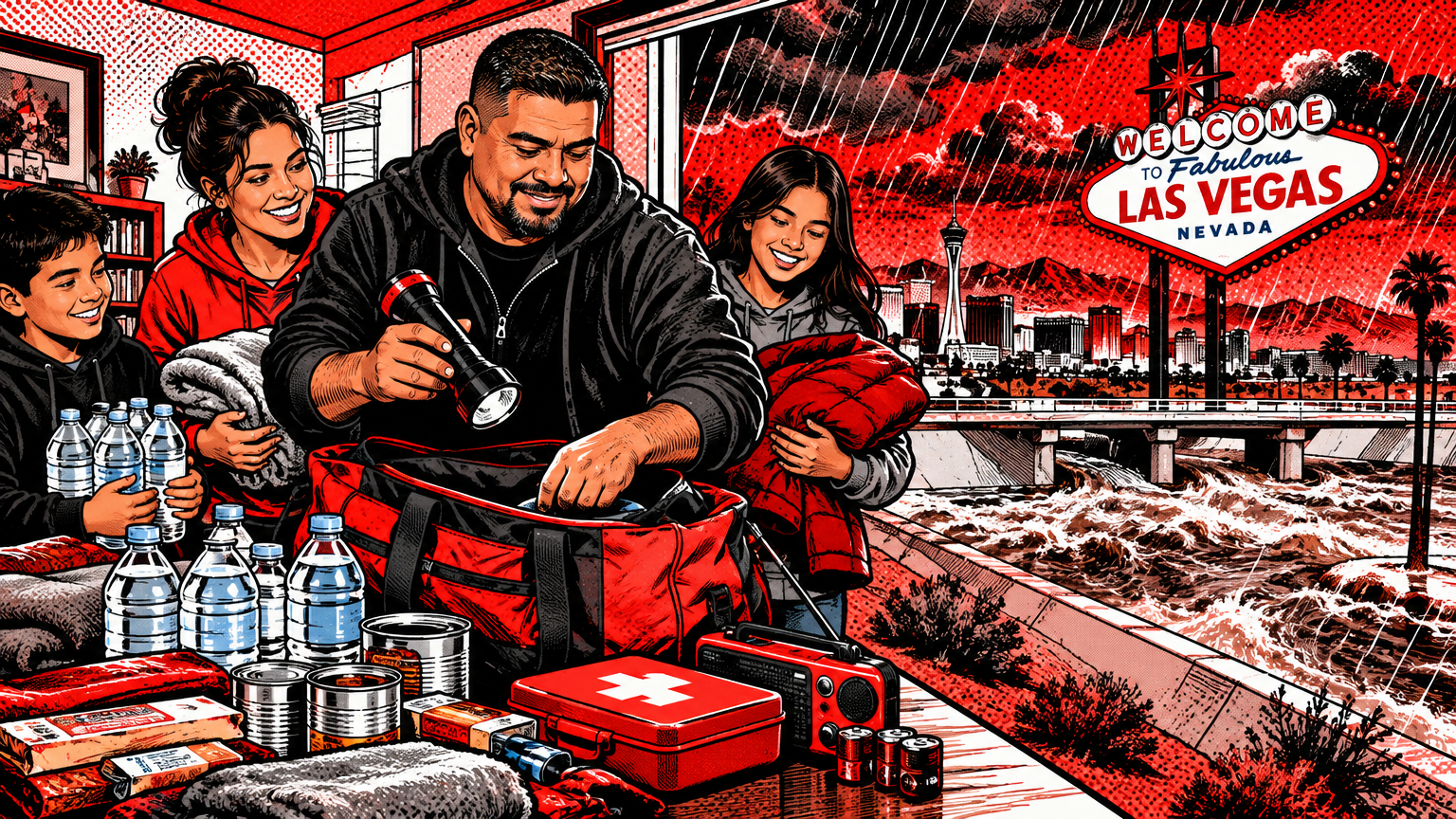
- Pack two kits, one for home and one for the car. Brett Compston of the Office of Emergency Management said kits should include flashlights, extra food, water and warm clothes. The state posts its full list of recommended supplies at oem.nv.gov/30-days.
- Know your ground. The agencies identified areas near recent burn scars as especially at risk of major flooding. If you live or drive near one, treat heavy rain warnings as personal, not general.
For Southern Nevada, the Clark County Regional Flood Control District provides flow monitoring, alerting and education on local flooding challenges, according to the Division of Water Resources.
Vegas is a desert city that floods fast. A plan, a kit and a policy started this week beat a scramble when the next storm is already here.