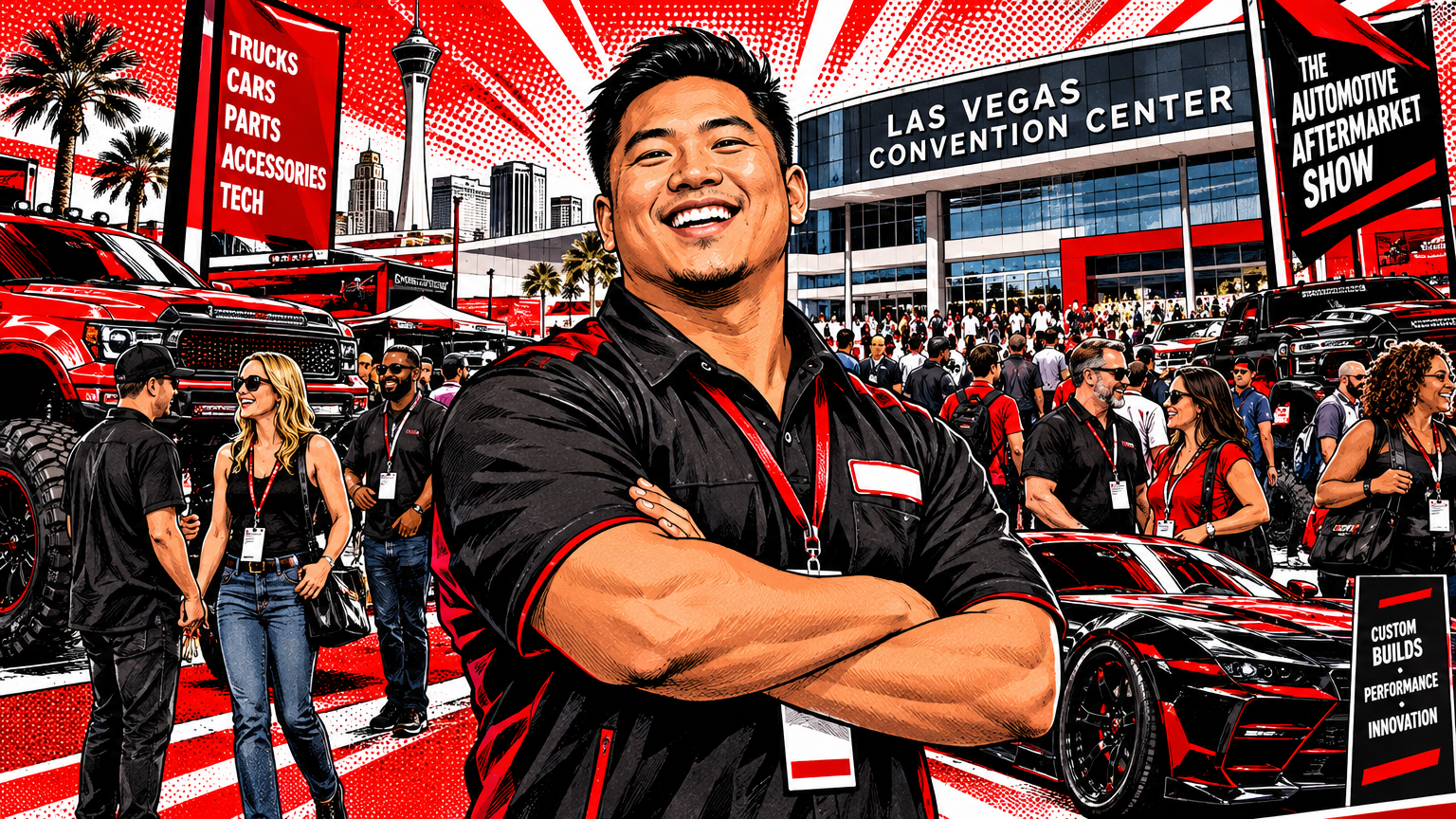
The doors opened this morning on the richest room in the automotive aftermarket. The 2026 SEMA Show runs November 3-6 at the Las Vegas Convention Center, and it arrives carrying fresh proof of how big the business behind it has become. A new economic impact study, commissioned by SEMA and conducted by John Dunham & Associates, puts the specialty-equipment industry's total annual economic impact at $383 billion. That is up 14% from $336.9 billion in the prior study, and it outran the 8-9% general inflation recorded over the same period. This is real growth, not just higher prices.
More than 2,000 brands are exhibiting across more than 1 million net square feet of exhibit space, and the factory names are on the floor too: Ford, Honda Racing Corporation, Mitsubishi, Mopar and Stellantis, Nissan, and Toyota. For Las Vegas, that means four days of buyers, builders, and shop owners filling hotel rooms, restaurants, and stores around the convention center corridor.
The Industry Behind the Show, by the Numbers
The study, released October 27, is the first update to SEMA's nationwide economic impact count in three years, and manufacturing is the bright spot inside it.
| Measure | Latest figure | Change |
|---|---|---|
| Total annual economic impact | $383 billion | Up 14% from $336.9 billion |
| Jobs supported | 1.25 million | Nationwide total |
| Total industry wages | $107.7 billion | Up from $104.3 billion |
| Direct manufacturing jobs | More than 118,000 | Up 8% since 2023 |
| Direct manufacturing output | $82.7 billion | Up more than $29 billion |
SEMA CEO Mike Spagnola put the headline plainly: "Our industry is still a big deal, contributing $383 billion to the American economy and supporting 1.25 million jobs." SEMA represents more than 7,000 member companies, and the industry generates nearly $53 billion in parts sales a year.
Where the Money Inside the Show Sits
The SEMA Market Report breaks the spending down, and three segments tell local shops where customer demand is moving:
- Pickup trucks are the biggest segment in the aftermarket. They generate $15.0 billion and account for 30% of all specialty-equipment spending. The dedicated Trucks, SUVs & Off-Road section anchors the West Hall.
- Mobile electronics is a $3.36 billion market, and it skews young. SEMA found that 55%-67% of spending in most mobile electronics segments comes from buyers under age 40. Shops that market to younger owners are fishing where the money is.
- Repair, refinishing, and restyling are a volume business. Repair and refinishing-related products represent roughly $9 billion in annual consumer spending, and exterior restyling alone exceeds $6 billion.
The insight most coverage misses: the aftermarket is not coasting on nostalgia. Its fastest energy sits with younger buyers and working trucks, and its manufacturing base grew 8% while much of American industry fought to stand still.


How Las Vegas Businesses Can Use SEMA Week
You do not need a booth to get value out of this week. Four moves matter:
- Know the access rules. Tuesday through Thursday is trade only. Friday, November 6, is the one day the show opens to the general public, for guests 16 and older, and a Show Friday ticket costs $130. Friday also brings the SEMA Cruise out of the convention center and SEMA Fest that evening.
- Watch the floor for free. SEMA Live presented by AutoZone streams 32 hours of coverage, 9:00 a.m.-5:00 p.m. PST each day, November 3-6, on the SEMA Show's YouTube and Facebook channels.
- Small shops, take the invitation seriously. Gavin Knapp, SEMA's director of market research, said the industry "remains a source of good-paying jobs and is rife with opportunity for small businesses to bring innovative products to market." A Las Vegas shop with a real product idea is looking at its industry's main stage, twenty minutes from home.
- Plan around the corridor. SEMA is steering attendees to free hotel shuttles, the Las Vegas Monorail, and the Vegas Loop because convention center parking is affected by construction. Businesses along Paradise Road and Convention Center Drive should staff for the surge at opening and closing hours.
The show closes Friday, November 6. The industry it represents, $383 billion strong and still growing faster than inflation, is the real story Las Vegas gets to host.