Waymo Opens Its Las Vegas Service to Invited Riders
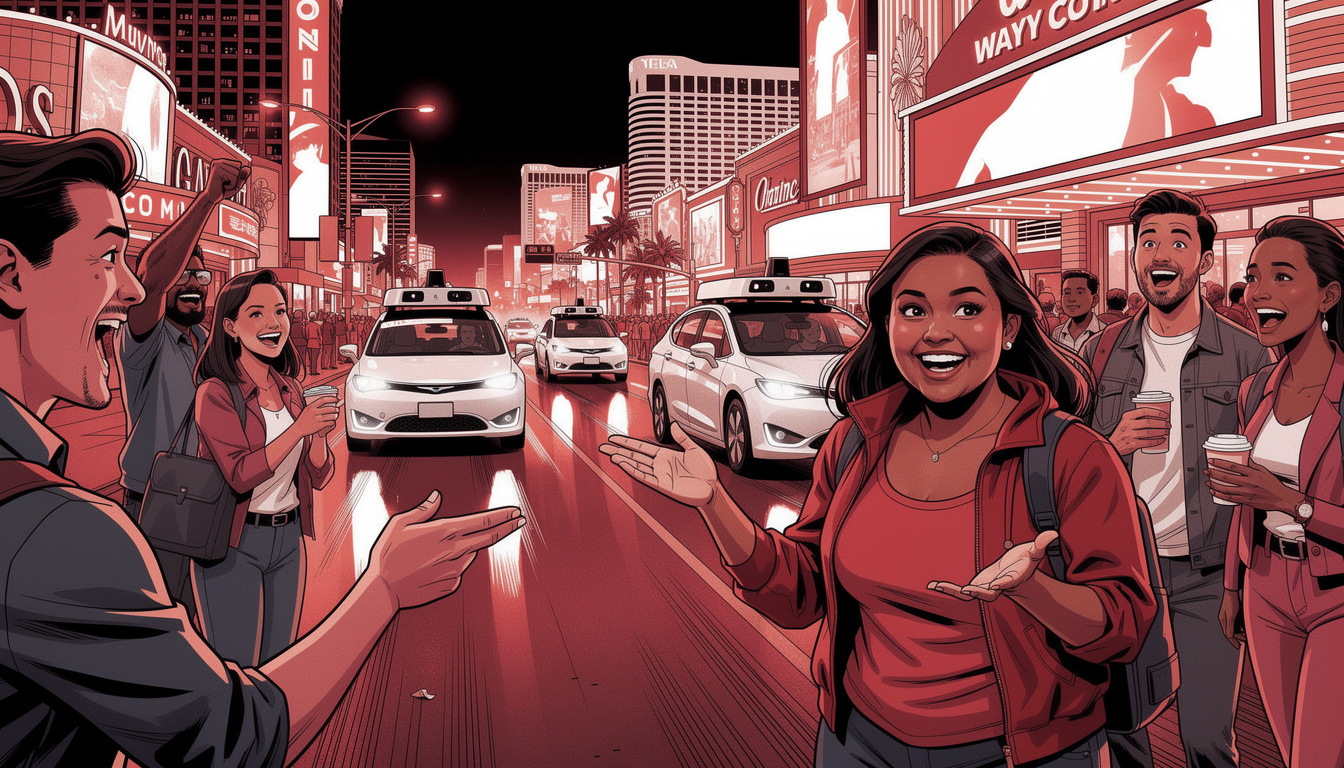
Waymo has begun carrying select public riders in Las Vegas, moving its robotaxi program from testing into a limited commercial rollout around the resort corridor.
The Alphabet-owned company welcomed its first Las Vegas public riders on Sept. 14, 2026. Access is being granted gradually to people who expressed interest through the Waymo app. The company says it plans to add riders steadily before opening the service to everyone.
This is a real launch, but it is not a valley-wide free-for-all. The opening service area covers nearly 24 miles and stretches from Boulder Junction through the Strip to Sahara Avenue, with connections from the edge of Spring Valley to Winchester. Waymo has not announced a date for unrestricted public access.
That makes the first phase most useful for trips within and around the Strip, including hotels, casinos, restaurants and major event venues. A ride from Henderson, Summerlin or Downtown Las Vegas is not part of the announced opening map. Neither is a robotaxi pickup at Harry Reid International Airport.
Vegas has a new player at the curb. For now, it is playing a tight table.
What the Launch Changes Around the Strip
Waymo’s arrival adds a driverless option to one of the busiest and most complicated transportation zones in Southern Nevada. The Strip mixes hotel traffic, rideshare queues, taxis, delivery vehicles, pedestrians, construction and major-event closures, often within the same few blocks.
Invited customers request rides through the Waymo app. The vehicles operate without a human driver behind the wheel, and passengers use the app and in-car controls to manage the trip. Waymo says Las Vegas will be among the first cities where most of its fleet uses the company’s newer Ojai vehicle and sixth-generation automated driving system.
The immediate effect on commuting will be narrow. The launch does not yet offer a direct substitute for long trips from the valley’s largest residential areas. It could, however, change shorter resort-corridor trips for hospitality workers, visitors and eventgoers who receive access.
The service also creates another choice for people weighing taxis, app-based rides, buses, private cars and walking. Whether it becomes a cheaper or faster choice will depend on each trip. Waymo has not published a standard Las Vegas fare schedule, and prices can vary by route and demand.
Allegiant Stadium Gets a Dedicated Waymo Zone
Waymo has a formal partnership with the Las Vegas Raiders and Allegiant Stadium. Under the stadium partnership announced in August, riders get a dedicated Waymo pickup and drop-off area with signs for games, concerts and other major events.
The company has also identified The Venetian as an opening destination partner. Those arrangements matter because resort and stadium access can be tricky in Las Vegas. A robotaxi still needs a legal, clearly marked place to stop. It cannot simply materialize beside the casino cage.
Event traffic will provide an early test of how the service handles packed streets, temporary closures and heavy pedestrian activity. It will also show whether dedicated loading areas can make autonomous pickups easier to find than a typical rideshare handoff after a game.
The Airport Is Not in the Opening Service
Harry Reid International Airport is the big missing piece. Waymo said when it announced its Las Vegas plans in November 2025 that it was working toward eventually serving the airport. Its September 2026 launch announcement did not add airport rides to the service area or provide a timeline.
That distinction matters. Airport pickups require operational coordination, designated loading areas and compliance with airport rules. Travelers should not assume a Waymo can collect them at a terminal merely because the app works elsewhere in the valley.
For now, airport passengers will still need another option for the full trip. A traveler with Waymo access might be able to use the service after reaching an eligible location inside the operating zone, but that is not the same as terminal service.
The launch map also stops short of promising coverage in Downtown Las Vegas, Summerlin or Henderson. Waymo says it intends to scale its fleet and operating area, but it has not released dates or boundaries for those expansions.
Nevada Approved the Operation, With Limits
The Nevada Transportation Authority approved Waymo to operate as many as 1,000 autonomous vehicles in the Las Vegas market in August, according to local reporting. That ceiling does not mean 1,000 vehicles are already on the road. Waymo began the public phase with dozens of vehicles and has said the fleet will grow over time.
Nevada regulates autonomous vehicles through a self-certification system. The Nevada Department of Motor Vehicles says manufacturers must satisfy registration, insurance, bonding and safety requirements. Companies seeking full deployment must certify that specific vehicle makes, models and years comply with state law.
The DMV does not test and certify the driving technology itself. It reviews the required filings and issues certificates of compliance for eligible vehicles. Passenger transportation approval is a separate part of the regulatory picture.
Safety Claims Need Real-World Scrutiny
Waymo says its automated driving system has been involved in fewer serious crashes than human drivers over comparable distances. Those figures come from the company’s broader operations and are not a Las Vegas-specific performance record.
The local rollout will test the technology against conditions that make Strip driving its own special sport. Think lane shifts, cones, huge crowds, late-night traffic and sudden street restrictions. Public access is widening, but performance in Las Vegas will need to be judged over time and across far more trips.
Riders should also know what “fully autonomous” means here. There is no safety driver seated behind the wheel during a public trip. Waymo provides in-car support features and remote rider assistance, but the vehicle’s automated system performs the driving.
What Comes Next for Las Vegas Riders
The next milestone is broader access. More than 100,000 people expressed interest before the launch, according to Waymo, so many prospective riders may not receive an invitation immediately. The company has not set a public deadline for clearing that list or eliminating the invitation requirement.
Airport access is another major marker to watch. So are expansion beyond the resort corridor, fleet growth and performance during major conventions, Raiders games and other events that can reshape Strip traffic in minutes.
The effect on taxi and rideshare drivers is not yet measurable. A limited fleet inside a restricted zone is unlikely to remake the market overnight. Wider access, airport service and expansion into residential communities would raise much bigger questions about jobs, fares and competition.
For now, Waymo has changed the Strip transportation conversation without settling it. Driverless rides are no longer a future promise in Las Vegas. They are carrying invited passengers today, inside a defined zone and with major gaps still on the map.
The robots have reached the Strip. The rest of the valley is still waiting for its ride.