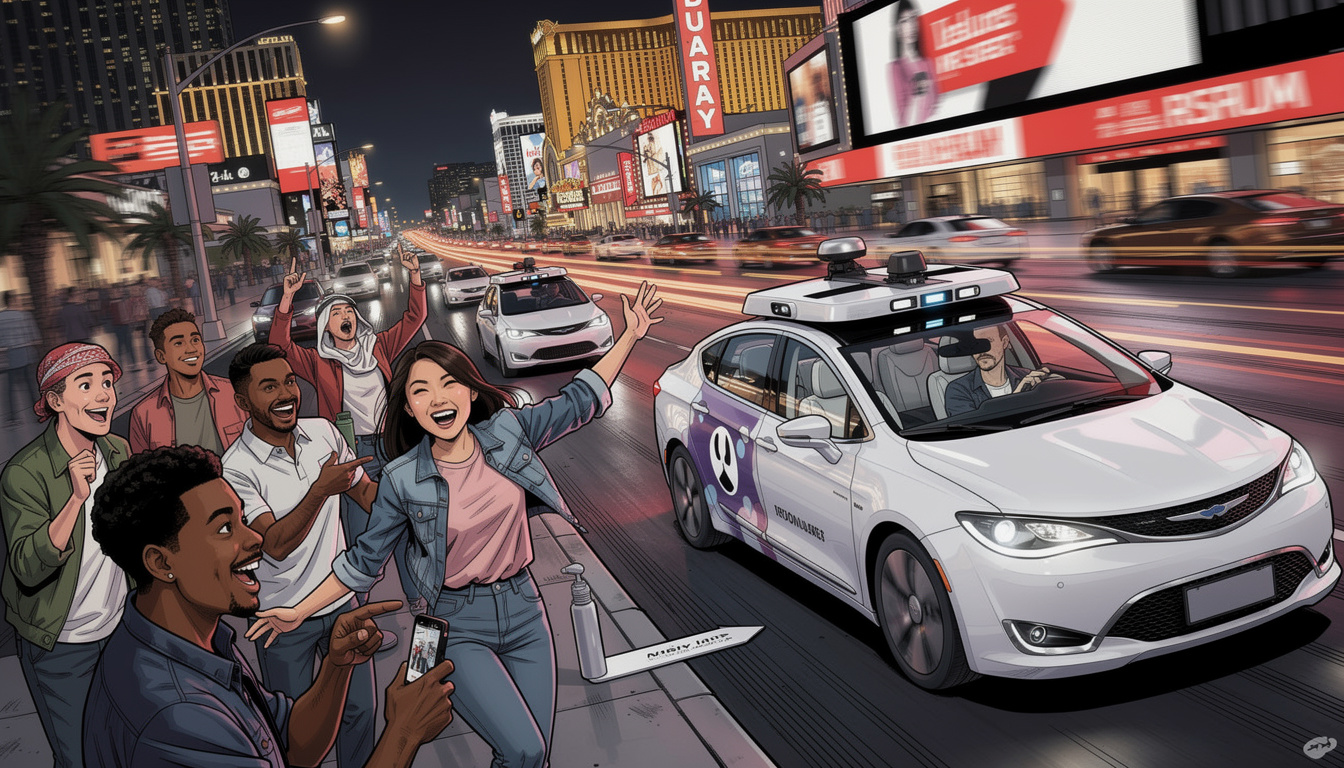
Waymo has officially entered the Las Vegas transportation scrum.
The Alphabet-owned company began offering fully autonomous rides to selected public passengers on Sept. 14, 2026. Its initial Las Vegas service covers a nearly 24-square-mile area that includes much of the Strip, Allegiant Stadium, parts of Spring Valley and areas east of Las Vegas Boulevard.
The launch gives residents and visitors another way to move around the resort corridor, but access is not wide open yet. Waymo said it will add riders gradually as it expands operations across Clark County. People can download the Waymo app and wait for access.
This is no longer a test run with a human driver behind the wheel. The first public trips are fully autonomous. Welcome to Las Vegas traffic, robot edition.
Where Waymo is operating in Las Vegas
Waymo says its opening service area runs from Boulder Junction through the Strip to Sahara Avenue, with coverage extending from the edge of Spring Valley to Winchester. The company specifically named The Venetian and Allegiant Stadium among the destinations available to riders.
That footprint puts Waymo inside some of the valley’s most demanding traffic. Las Vegas Boulevard mixes resort entrances, rideshare queues, taxis, buses, delivery vehicles, construction, pedestrians and major-event surges in a narrow corridor. A routine Tuesday can turn into gridlock with one lane closure. On a stadium night, all bets are off.
Waymo spent months studying local roads before opening the service. Earlier testing used trained human operators to gather information about the driving environment. The company then moved into fully autonomous operations before admitting its first public riders.
The first Las Vegas fleet looks different
Las Vegas is among the first Waymo markets to receive the company’s newer Ojai vehicle, which uses the sixth generation of the Waymo Driver. The electric vehicle has a larger cabin, passenger screens, sliding doors and a low, flat floor designed to make entry easier.
That is a major change from the Jaguar I-PACE vehicles closely associated with Waymo’s earlier service. Riders in Las Vegas should expect to see the newer Ojai vehicle playing the starring role.
The company has not announced how many vehicles are operating locally at launch. It also has not published neighborhood-by-neighborhood hours, average fares or wait times for the Las Vegas service. Those details may become clearer as more riders gain access.
What the launch could mean for Strip traffic
Waymo’s arrival changes the transportation mix, but it is too early to say whether it will reduce congestion. Autonomous vehicles do not make traffic disappear. They still occupy lanes, enter resort driveways and need places to pick up and drop off passengers.
The immediate impact may be most visible at the curb. Resorts, stadiums and shopping centers already manage separate zones for taxis, rideshare vehicles, limousines and buses. Driverless cars add another category that property operators and transportation officials must fit into that system.
Waymo’s partnership with Allegiant Stadium offers one early example. A defined pickup and drop-off location can help keep autonomous vehicles from searching for passengers in heavy event traffic. Similar arrangements with resorts could become important if the fleet grows.
The bigger traffic question is whether Waymo trips replace rides in taxis, personal cars and conventional rideshare vehicles, or simply add more vehicles to the road. No public Las Vegas operating data yet answers that question. The effect will depend on fleet size, demand, routing and how efficiently pickup areas work.
So, yes, Waymo could reshape how people move around the Strip. A congestion cure is not part of the confirmed package.
Airport rides remain a separate issue
Waymo’s launch announcement did not include passenger service at Harry Reid International Airport. Commercial ground transportation at the airport requires separate authorization from the Clark County Department of Aviation.
That distinction matters in a visitor-driven market. Airport trips are among the most valuable rides in Las Vegas, and access would make the service more useful to tourists. Until Waymo adds the airport to its public service information, riders should not assume they can summon a driverless trip from a terminal pickup zone.
Nevada’s rules for autonomous ride-hailing
Nevada has allowed autonomous vehicle testing for years. The Nevada Department of Motor Vehicles says the state was the first in the nation to authorize autonomous vehicle operation.
The DMV uses a self-certification system rather than testing autonomous driving technology itself. Developers must submit documentation, meet insurance and bonding requirements and receive a certificate of compliance. Nevada permits different levels of automation on public streets when vehicles satisfy applicable safety and registration rules.
Commercial ride-hailing also falls under the Nevada Transportation Authority. Waymo applied for authority to operate as an autonomous vehicle network company in June 2026. State regulators later approved the company to charge for rides in Clark County, subject to operating requirements.
Waymo was authorized for a fleet of up to 1,000 vehicles during its first year, according to the Las Vegas Sun. That figure is a regulatory ceiling, not the number of cars currently roaming the valley. The actual opening fleet has not been disclosed.
The company must also follow requirements involving vehicle inspections, insurance, maintenance records and incident reporting. In other words, Nevada opened the door, but the paperwork did not vanish in a puff of casino smoke.
What riders should know now
The public rollout is gradual. Downloading the app does not guarantee immediate access, and Waymo has said it will steadily admit more riders.
- Driverless means driverless: Public trips operate without a human driver behind the wheel.
- The Strip is included: The opening area covers much of Las Vegas Boulevard through Sahara Avenue.
- Allegiant Stadium is included: Waymo has identified the stadium as an available destination.
- Airport pickup is not part of the announced launch: Separate aviation approval applies to commercial terminal service.
- Expansion will take time: Waymo says it will add riders and broaden access gradually.
Waymo says more than 100,000 people expressed interest before the public launch. That gives the company a deep pool of potential first riders, but the real test starts now.
Las Vegas will show whether autonomous vehicles can handle resort entrances, stadium crowds, sudden closures and the glorious chaos of the Strip at full blast. The robotaxi era has arrived. Now it has to survive Saturday night.