What to Know
- Driving works best for most of the valley, especially off-Strip neighborhoods like Summerlin, Henderson, and Chinatown.
- The Las Vegas Monorail is one of the easiest ways to move along the east side of the Strip without traffic.
- Walking, rideshare, and The Deuce all work, but each has a catch: distance, surge pricing, or slower travel.
The best way to get around Vegas isn't one thing. That's the trap.
This city looks simple on a map. Then the heat hits, the Strip crawls, and one wrong turn eats 25 minutes.
Locals know the deal. The smartest move depends on where you're going, when you're moving, and how much walking you can tolerate.
Sometimes a car wins. Sometimes the monorail saves your sanity. Sometimes your own feet are the problem.
For Most Locals, Driving Is Still the Real Answer
If you're asking for the single best all-around way to get around Las Vegas, it's usually a car. The valley is wide, the blocks are long, and the useful stuff is spread out.
This isn't a city where everything stacks neatly together. Vegas makes short distances feel weirdly far.
If you're heading from Summerlin to Downtown, or from Henderson to Chinatown, driving usually wins on speed and flexibility. That's especially true once you leave the tourist core.
Locals already know. The Strip is not the whole city.
- Best for: crossing the valley, running errands, restaurant hopping, and anything off the Strip.
- Works especially well in: Summerlin, Henderson, Centennial Hills, Chinatown near Spring Mountain Road, and the Arts District.
- The catch: Strip traffic can drag, parking isn't always simple, and big event nights can get messy fast.
Roads like I-15, 215 Beltway, US-95, Flamingo Road, and Tropicana Avenue do most of the heavy lifting. Miss your exit near the resort corridor and you'll feel it immediately.
One wrong lane can become a whole side quest. That part's very Vegas.
Your Feet Are Lying to You
That casino looks close. It usually isn't.
Vegas distance is a magic trick. Newcomers learn that the hard way.
On the Strip, the Monorail Is a Quiet Little Lifesaver
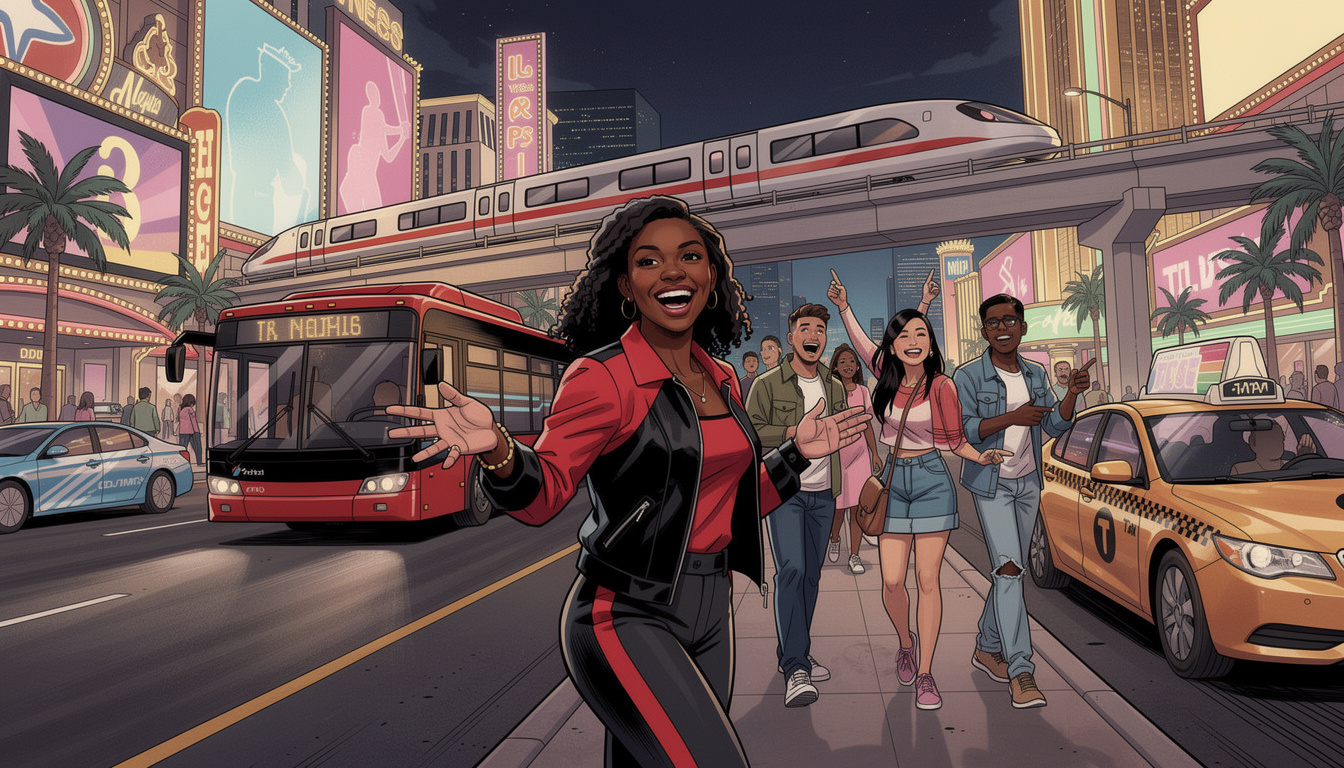
If you're staying or spending time on the east side of the Strip, the Las Vegas Monorail is one of the smartest moves in town. It runs from the area of MGM Grand north to Sahara Las Vegas.
No traffic. No surge pricing. No sitting in a car while three lanes fight over one driveway.
The line connects major resort areas near MGM Grand, Horseshoe/Paris, Flamingo/Caesars Palace, Harrah's/The LINQ, the Las Vegas Convention Center, Westgate, and Sahara. If you're bouncing between hotels or heading to a convention, it makes a lot of sense.
This is the move tourists often discover late. Locals spot it faster.
- Best for: convention days, Strip hotel hopping, and avoiding stop-and-go traffic.
- Big landmark win: it's especially handy near the Las Vegas Convention Center, where traffic can turn stubborn in a hurry.
- The catch: it doesn't cover the whole Strip, and west-side properties still require some walking.
If your day is mostly east-Strip stops, the monorail can feel almost too easy. That's rare around here.
The Desert Does Not Care About Your Cute Walking Plan
Summer heat changes the math. Fast.
What looks like a pleasant stroll at noon can turn into regret by the second pedestrian bridge.
Walking Works Best in Short Bursts, Not Heroic Missions
Yes, you can walk in Vegas. No, you probably shouldn't treat the Strip like a compact downtown grid.
That's where people get humbled. Quickly.
Walking makes sense for short hops inside a tight zone, like around Fremont Street Experience in Downtown Las Vegas, the Arts District along Main Street, or between neighboring Strip resorts. Those areas reward slow exploring more than cross-corridor marching.
But casino frontage is huge, pedestrian bridges add extra steps, and resorts sit farther apart than they look. Vegas loves visual deception.
- Best for: Fremont, the Arts District, and short resort-to-resort trips.
- Great landmarks for walking: Fremont Street Experience, Main Street in the Arts District, and compact chunks near Strip center.
- The catch: heat, distance, bridge detours, and sore feet by dinner.
If you're carrying bags, traveling with kids, or trying to cover the whole Strip on foot, think again. The city will win that argument.
Vegas doesn't just test your shoes. It tests your optimism.
Rideshare Is Easy Until Everyone Else Has the Same Idea
Uber and Lyft are everywhere in Las Vegas, and they're often the simplest option for point-to-point trips. For airport runs, dinner plans, or getting home after a show, they can be the cleanest play.
Open the app. Tap the button. Hope surge doesn't get funny.
They're especially useful if you don't want to park on the Strip or you're going from a resort to neighborhoods like Chinatown, Downtown, or Summerlin. They also help when one person in the group doesn't want to deal with driving at all.
But pickup zones at major resorts can be a maze, and busy nights can push prices up. If you've ever wandered through a casino garage looking for the right rideshare door, you know the feeling.
- Best for: direct trips, airport pickups, and nights when parking sounds annoying.
- Strong use case: getting between the Strip and off-Strip neighborhoods without renting a car.
- The catch: surge pricing, event traffic, and pickup points that feel hidden on purpose.
On a calm afternoon, rideshare feels smooth. On a packed weekend night, it's a different sport.
Your Driver Has Seen Everything
Vegas drivers know every shortcut, every bad turn, and every convention crowd wave.
Some of them can read traffic like weather. That's not a small skill here.
The Deuce and Public Transit Can Work, If You're Not in a Rush
The Deuce bus is one of the most recognizable public transit options for visitors. It runs along the Strip and to Downtown Las Vegas, making it useful for big tourist corridors.
It's affordable. It's practical. It's not what you'd call fast.
For riders with time and patience, it can connect major destinations without the cost of constant rideshares. That's a real benefit if you're staying near the Strip and planning simple up-and-down movement.
But buses stop often, traffic still matters, and travel time can stretch. If your schedule is tight, you'll feel every red light.
- Best for: budget-minded rides between the Strip and Downtown.
- Useful landmarks: resort corridor stops and access toward the Fremont Street area.
- The catch: slower trips, more waiting, and less convenience than direct car travel.
Public transit can absolutely get the job done. It just won't flatter your impatience.
Why Vegas Cares
Transportation shapes daily life here more than outsiders expect. Las Vegas isn't just the Strip. It's a spread-out valley with neighborhood routines, long arterials, resort traffic, and weather that can make a simple walk feel personal.
That's why locals think differently than visitors. They know a dinner in Chinatown, a meeting near the Convention Center, and a concert on the Strip might all need different game plans. In this city, getting around is part of the plan, not a footnote.
So What's Actually Best? Match the Method to the Mission
Here's the honest answer: the best way to get around Las Vegas depends on your map for the day. No single option dominates every part of town.
That's the whole game. Pick the right tool.
- Use a car if you're exploring the valley, eating across neighborhoods, or doing local-life errands.
- Use the monorail if you're working the east Strip or heading to the Las Vegas Convention Center.
- Use walking for short zones like Fremont Street or the Arts District, not fantasy marathons.
- Use rideshare when you want direct service and don't want to think about parking.
- Use The Deuce if budget matters more than speed.
Locals mix methods all the time. That's usually the smartest play.
The best Vegas transportation strategy isn't romantic. It's efficient.
If you want the short version, here it is: drive for the city, monorail for the east Strip, walk less than you think, and never trust Vegas distance at first glance. That's not a travel tip. That's local survival.