For nearly 80 years, the contents of Bugsy Siegel's pockets sat in a police evidence room. Starting Friday, November 13, anyone can see them in downtown Las Vegas. The Mob Museum opens "What Bugsy Left Behind," a new exhibit built around 22 of Siegel's personal effects that the Beverly Hills Police Department held as evidence after his murder. The museum says the collection has never been seen by the public before. It permanently acquired the pieces from Siegel's granddaughter, Wendy Rosen, after a judge ordered their release.
Here is the detail that changes the case: three documents, his Social Security card, his Nevada vehicle ownership certificate, and his Automobile Club card, all list the same address: the Flamingo Hotel. Siegel did not just build the Flamingo. On paper, he lived there.
What Is Actually in the Case: Paper, Photos, and a 50-Cent Cab Receipt
Police searched Siegel's wallet and pockets after he was shot on June 20, 1947, at the Beverly Hills home of his girlfriend, Virginia Hill, while she was traveling in Europe. He was 41 and was reading an early edition of the Los Angeles Times. Casino.org reports police collected about 30 effects that night, and the museum acquired 22:
- Meyer Lansky's business card, identifying Siegel's longtime associate as a Wurlitzer phonograph distributor in New York
- A wallet-sized photograph of Virginia Hill, with the handwritten message "Sweetheart Benny I love you Pup," on the back
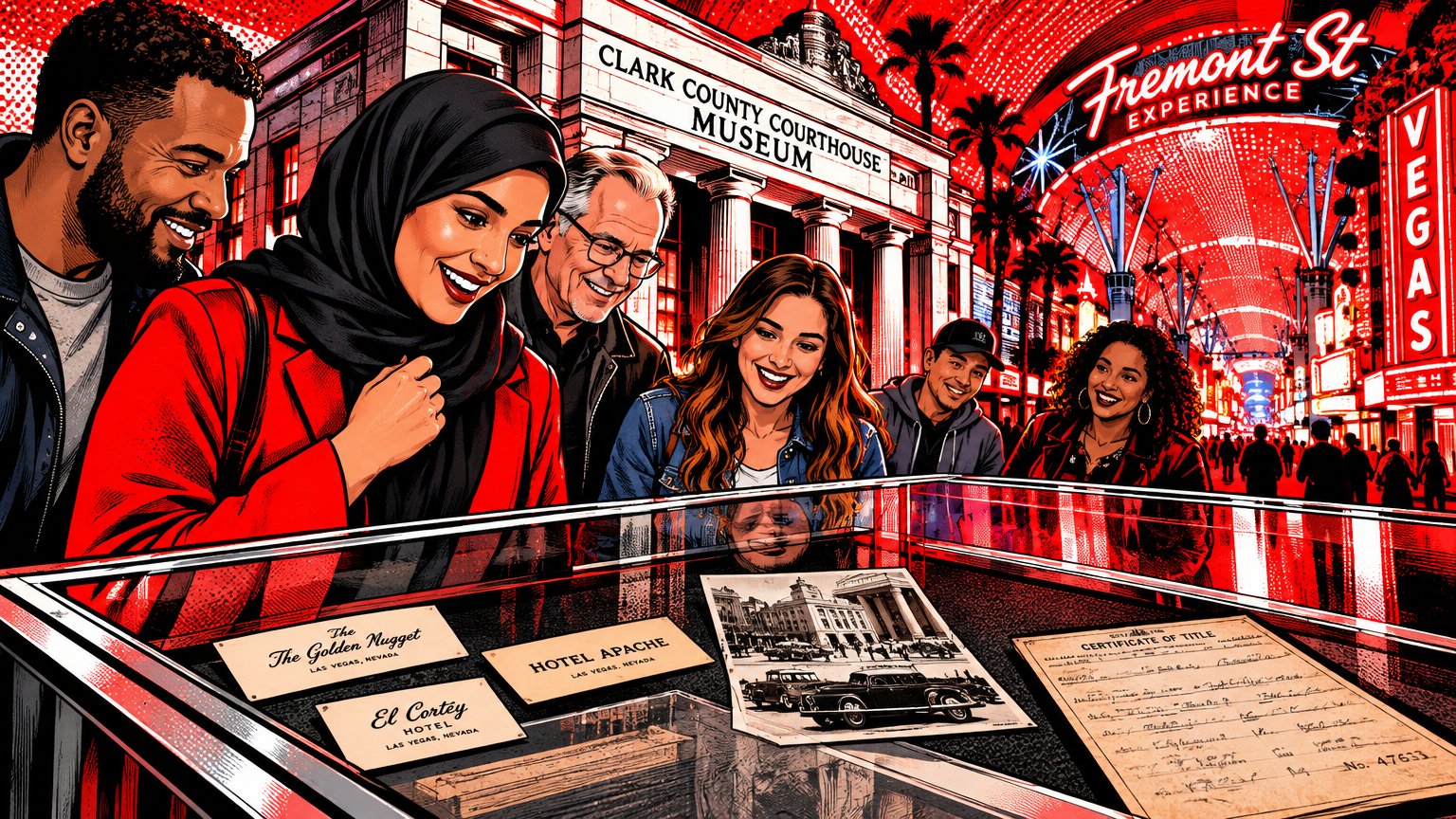
- A Nevada vehicle ownership certificate for a 1946 Chrysler Windsor convertible coupe, issued less than two months before his death and listing the Flamingo as his address
- Photographs of his daughters, Barbara and Millicent, plus a Red Cross card documenting a $500 donation, his calling cards, a note with the address of the house where he was killed, and a Yellow Cab receipt for a 50-cent fare
A promotional item from Jack's at the Beach, the restaurant Siegel visited just hours before his murder, ties the display to his final day. Geoff Schumacher, the museum's Vice President of Research, Collections and Programs, said, "For decades, these belongings were preserved as evidence in an unsolved murder investigation."
Three Theories, and the Flamingo Anniversary Right Behind It
The exhibit walks through the competing theories about who ordered the killing, still one of the Beverly Hills Police Department's oldest unsolved cases:
- The Flamingo money theory: Charles "Lucky" Luciano and other Mob figures ordered the killing over Siegel's handling of the Flamingo, where lavish spending, weak early returns and suspicions of skimming angered his investors.
- The race wire theory: a rival targeted Siegel to control the race wire, which supplied horse-racing results to bookmakers across California, Arizona and Nevada.
- The family revenge theory: one of Hill's brothers sought revenge for Siegel's abusive treatment of his sister.
The debut lands ahead of the Flamingo Hotel's 80th anniversary on December 26, 2026. Know this before you go: Siegel's watch, wallet and keys are not in this collection. Casino.org and the Vegas Daily Wire both report those pieces went to his brother soon after the killing, so what you see is specifically what police kept.


How to See It First, and How to Plan the Visit
| Move | What to know |
|---|---|
| Members' preview | Thursday, November 12, from 7 to 8 p.m., with Schumacher interviewing Wendy Rosen |
| Public opening | Friday, November 13, at The Mob Museum, 300 Stewart Avenue downtown |
| Membership | Annual memberships start at $55, the way into the November 12 preview |
| Tickets and hours | The museum is open daily; check themobmuseum.org for admission, hours and parking |
The museum sits inside the actual 1933 federal courthouse, a short walk from Fremont Street, so pair opening weekend with a downtown night. Siegel carried his whole life in his pockets, and Las Vegas now gets to read it first.