Why Neon Still Feels Like the Language of Las Vegas
The first nighttime drive into Las Vegas from California has a little drama built into it. You cruise through long stretches of desert, the horizon goes dark, and then the valley starts glowing like it has plans. Back on the coast, evening light is soft and golden. Vegas light arrives dressed for attention.
That contrast explains part of neon’s staying power. Las Vegas grew into an international destination by making arrival feel like an event, and illuminated signs became one of its clearest invitations. They advertised hotels, casinos, restaurants and shows, but they also sold a mood. Color, motion and oversized lettering told visitors that ordinary rules had been left somewhere out on Interstate 15.
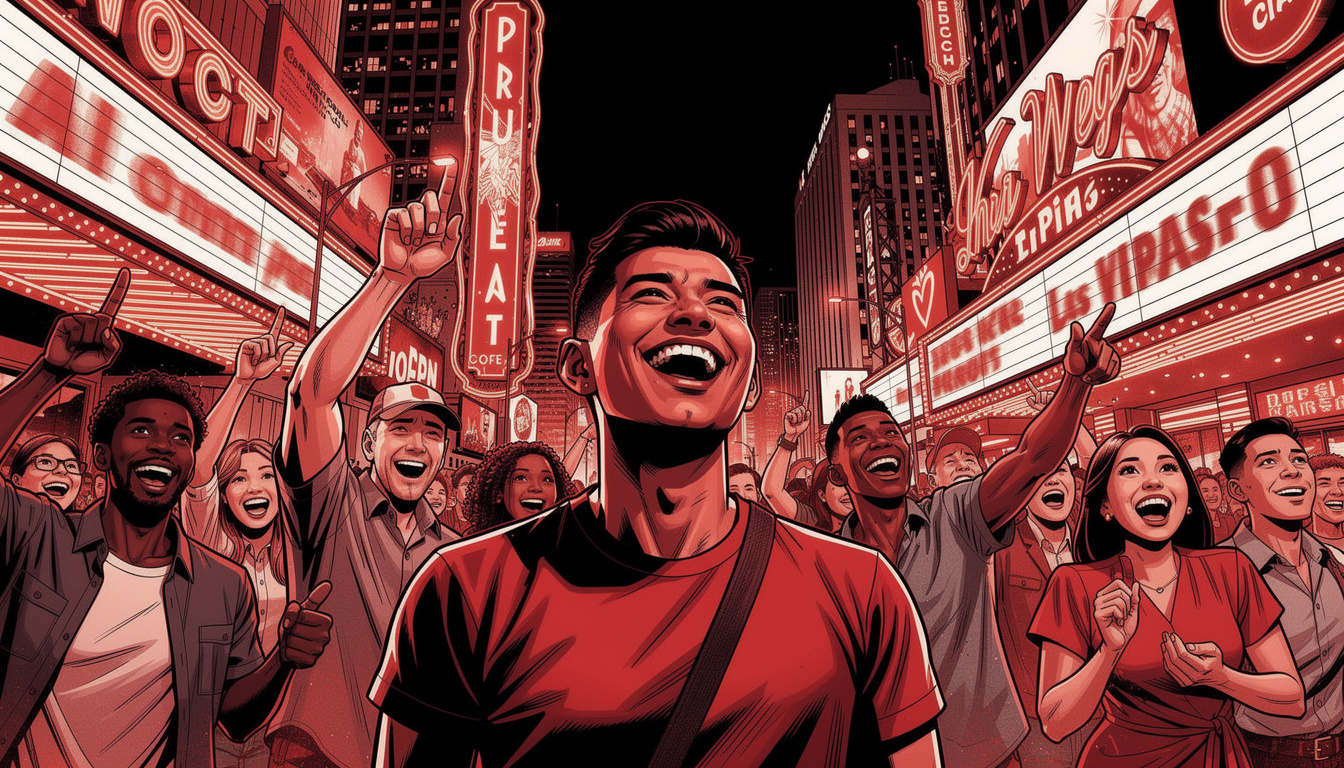
Today, plenty of the city’s brightest displays are LEDs rather than neon tubes. Still, “Vegas neon” remains useful shorthand for the whole glowing personality of the place. It describes the vintage signs downtown, the landmark welcome sign, casino marquees and even the giant digital canvases that now animate the skyline. The technology changes. The instinct to light up the night does not.
Neon Turns Advertising Into Architecture
A great Las Vegas sign does more than identify a building. It gives that building a character. Letterforms, arrows, stars, atomic shapes and saturated colors can make a roadside sign feel as important as the property behind it.
Traditional neon also carries the mark of a physical craft. Glass tubes must be heated and shaped, then assembled into a design that remains readable from a distance. During the city’s classic casino era, that craftsmanship helped transform practical advertising into public spectacle. The best signs did not politely ask for attention. They reached into the street and grabbed it, which is very Vegas and honestly kind of fabulous.
How Old Vegas and New Vegas Share the Glow
Las Vegas has never been precious about reinvention. Resorts are remodeled, names change and entire buildings disappear. Yet the city keeps returning to the visual idea that made it famous: light as entertainment.
The difference is scale and medium. Historic signs created movement through flashing bulbs, animated sections and glowing tubes. Newer attractions use programmable LEDs, projection and enormous digital surfaces. One approach feels handmade and nostalgic. The other can transform instantly. Both are designed to stop you in your tracks.
The Neon Museum Preserves the Signs and Their Stories
For the clearest look at the city’s illuminated past, start with The Neon Museum. Founded in 1996, the nonprofit collects and exhibits signs connected to Las Vegas history. Its 2.27-acre campus includes the outdoor Neon Boneyard, the North Gallery and a visitor center housed in the former La Concha Motel lobby.
The museum matters because casino signs are more than pretty backgrounds for photos. They can reveal changes in design, technology, tourism and the businesses that shaped different periods of Las Vegas. Museum interpreters provide historical context for the pieces, while restored signs show how color and animation once worked at street level.
Not every sign in the Boneyard is operational. Some restored examples illuminate, while other pieces receive ground lighting after sunset. The North Gallery’s audiovisual presentation uses projection mapping to animate nonworking signs. That mix is part of the appeal. You see glowing artifacts alongside weathered surfaces, exposed bulbs and old paint, all the details that make the collection feel human rather than overly polished.
The Sphere Extends the Tradition Without Using Neon
Sphere is not a neon sign, and pretending otherwise would be a little try-hard. What it does share with classic Vegas signage is the urge to turn a structure into a message.
The venue’s exterior, called the Exosphere, features 580,000 square feet of LEDs. Its visuals can make the building appear to become an eyeball, a planet or another animated object. Instead of attaching a marquee to the architecture, Sphere makes the architecture itself the display.
That is a natural evolution of the Las Vegas light philosophy: go bigger, make it visible and give people something they will talk about before they even walk through the door. Neon established the visual grammar. Programmable LEDs expanded the vocabulary.
Where to Experience Las Vegas Lights After Dark
You do not need to chase every glowing sign in the valley to understand the city’s relationship with light. A few locations show how the story developed and where it is going next.
Fremont Street and Downtown Las Vegas
Downtown delivers the richest collision of classic casino imagery and modern light technology. The Fremont Street Experience is a five-block entertainment district anchored by Viva Vision, a huge LED canopy suspended above the pedestrian mall. Its shows combine images, music and light on a scale that vintage signmakers could hardly have imagined.
At street level, familiar casino marquees and characters such as Vegas Vic preserve the district’s old-school personality. That contrast is the whole point. Look up and you get a digital sky. Look around and you still find the typography, cowboys and glowing facades associated with downtown Las Vegas. It is sensory overload, but at least it knows exactly what it is.
The Welcome to Fabulous Las Vegas Sign
The Welcome to Fabulous Las Vegas sign proves that a landmark does not have to be enormous to become unforgettable. Commercial artist Betty Willis designed it in 1959, using a stretched diamond shape, starburst and silver-dollar-inspired circles around the word “WELCOME.”
Its message is simple, but “fabulous” does a lot of work. The word captures the city’s preference for sparkle over understatement, while the sign’s compact design translates beautifully into photographs and souvenirs. It remains one of the destination’s signature selfie locations and a direct link to the roadside visual culture that helped build the Las Vegas image.
The Strip and Sphere
Walking the Strip after sunset reveals how broadly the idea of Vegas neon has expanded. Casino marquees compete with video screens, illuminated architecture, fountain lighting and animated facades. The result is not one coordinated design. It is a stack of individual spectacles trying to win the same glance.
Sphere adds a new focal point to that landscape. Its visuals are easiest to appreciate from a lawful, stationary viewpoint, not while trying to film through a windshield. Let someone else drive, or find a safe pedestrian perspective. The display changes, but its role remains consistent: it gives the night skyline a piece of visual theater.
The Arts District
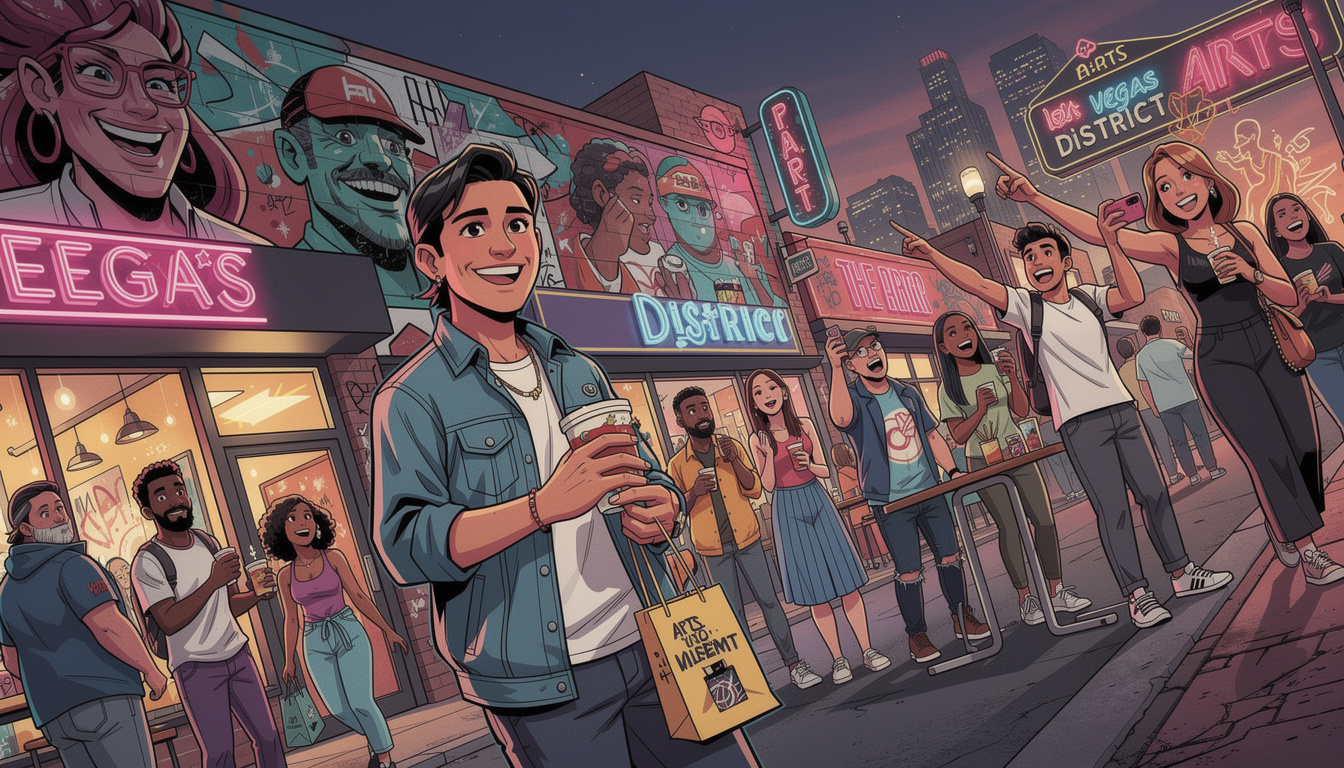
For a more relaxed local contrast, the 18b Las Vegas Arts District offers galleries, independent businesses, bars, restaurants and creative spaces north of the Strip. This is not a concentrated neon attraction like the museum or Fremont Street, so come for the neighborhood rather than a checklist of famous signs.
After dark, storefront lighting, murals and vintage-inspired design create a smaller-scale version of the city’s visual energy. It feels more personal and less choreographed, like Vegas loosened its ponytail for the evening.
Why the Las Vegas Glow Endures
Neon still defines Las Vegas because it expresses the city’s personality in one glance. It is direct, theatrical and impossible to confuse with restraint. Even as LEDs replace tubes and digital animation replaces mechanical flashing, the city keeps using light to promise transformation.
The historic signs also carry something new technology cannot manufacture overnight: memory. They recall vanished resorts, changing neighborhoods and generations of visitors who arrived looking for a story. Preserving those signs keeps part of the city’s design history visible, even when the buildings they advertised are gone.
Modern displays do not erase that heritage. They continue it with different tools. From the Boneyard’s restored lettering to Viva Vision and the Exosphere, Las Vegas treats darkness as an open canvas. The colors may shift and the screens may grow, but the message stays beautifully consistent: the night has started, and this city intends to be seen.