What to Know
The National Atomic Testing Museum sits just east of the Las Vegas Strip, making this history feel immediate and local.
Las Vegas was directly tied to nuclear testing conducted at the Nevada Test Site, about 65 miles northwest of the city.
The museum features an above-ground nuclear blast simulation designed to replicate the sensory experience of a real test.
Vegas sold glitter by night and watched nuclear fire by day. That is not a movie plot. That is real Las Vegas history.
For years, this city lived within viewing distance of atomic testing. People stood on rooftops and watched mushroom clouds rise over the desert.
The wild part is not that it happened. The wild part is how close it was to everything you recognize today.
Las Vegas has layers most visitors never see. This is one of the loudest, strangest, and most real.
Start With the One Place That Pulls It All Together
If you want to understand Las Vegas and its connection to nuclear testing, start at the National Atomic Testing Museum. That is the clearest entry point.
The museum is not hidden in some remote corner of Nevada. It is right here in Las Vegas, just off the Strip near the convention corridor. That matters.
This is not distant history. This is local history tied directly to the same city you are standing in.
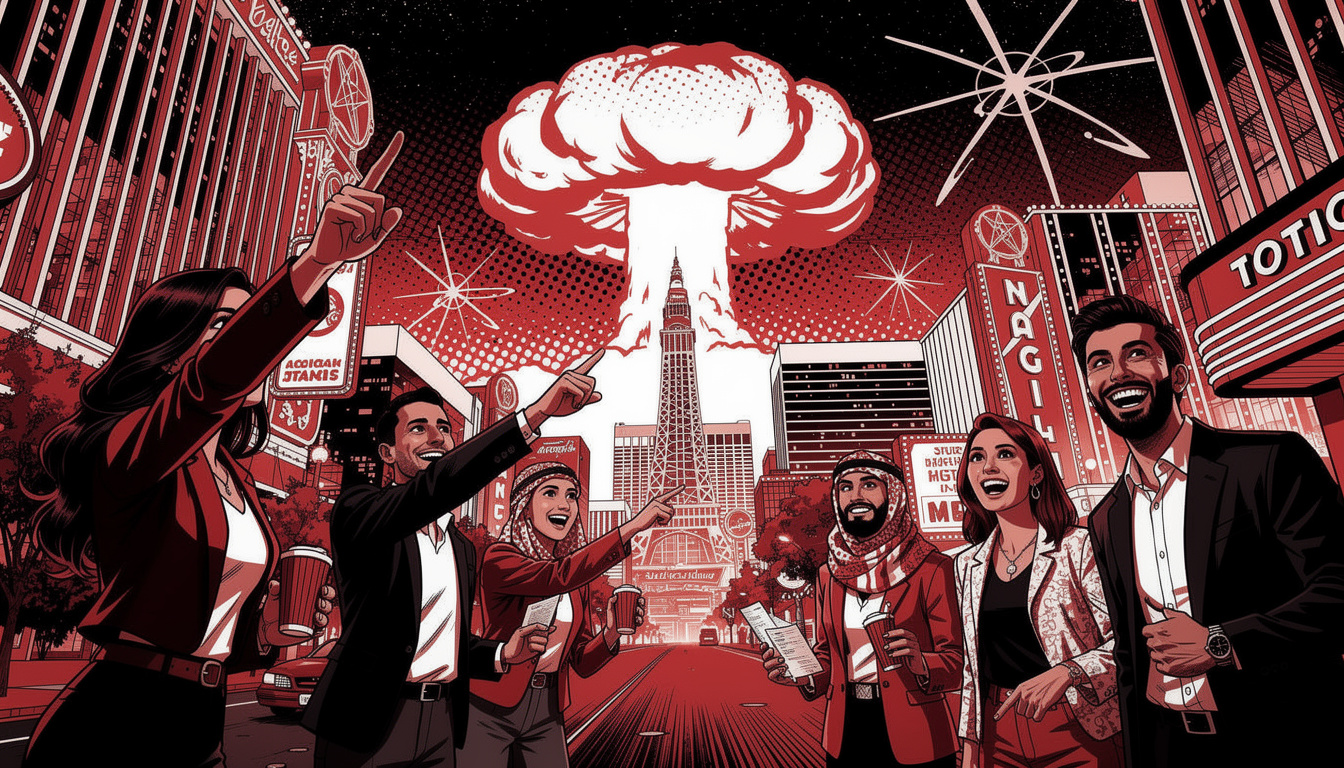
During the 1950s and early 1960s, nuclear tests were conducted at the Nevada Test Site. The explosions were sometimes visible from Las Vegas. Hotels even promoted “atomic viewing parties” as a tourist attraction.
Let that sit for a second.
The same city known for nightlife and entertainment once marketed nuclear blasts as part of the experience.
That contrast defines Las Vegas.
Start here first. The museum gives structure to a story that can feel overwhelming without context.
Give yourself time. This is not a quick stop. The subject deserves attention.
Stay curious. The deeper you go, the more the city starts to make sense.
Visitors often think Vegas history begins with casinos. It does not.
This chapter runs deeper than that.
The Strip Tells One Story
Lights, shows, and endless motion.
The real history is often sitting just one turn away.
What Nuclear Testing Meant for Las Vegas
The Nevada Test Site, now known as the Nevada National Security Site, became a primary location for nuclear weapons testing starting in 1951.
Las Vegas was the closest major city.
That proximity shaped everything.
At the time, atomic testing was framed as progress and national strength. It was part of the Cold War reality. But it also brought uncertainty, risk, and long-term consequences.
People in Las Vegas lived with that tension.
There was pride. The testing was tied to national defense.
There was curiosity. The visuals were unlike anything people had ever seen.
There was risk. Radiation exposure and environmental impact became long-term concerns.
This was not a background event. It was part of daily life.
That is why the museum matters. It brings that reality into focus without the distance of time softening it too much.
What You Will Actually Experience Inside
Once you step inside the National Atomic Testing Museum, the story stops being abstract. It becomes physical.
You are not just reading about history. You are standing in it.
The exhibits cover the full scope of nuclear testing in Nevada, from early atmospheric detonations to later underground tests.
But the real impact comes from how the story is told.
Geiger counters and instruments. These tools make radiation real instead of theoretical.
Cold War artifacts. They place Las Vegas inside a global conflict, not outside it.
Worker accounts. These stories come from people who were actually there.
The technology draws you in. The human stories stay with you.
Hearing from Nevada Test Site workers changes the tone. It is no longer just about explosions and science. It becomes about people who lived through it, worked in it, and dealt with the consequences.
That is where the visit shifts.
This Part Gets Real Fast
You can read about history all day.
Hearing someone who lived it hits different.
The Simulation That Sticks With You
The museum includes a simulation of an above-ground nuclear test. This is the moment most people remember.
It is designed to recreate the sound, light, and shockwave effect of a detonation.
It is not subtle.
It is not supposed to be.
For many visitors, this is the moment where everything clicks.
Nuclear testing can feel distant. It can feel like something that happened far away or long ago. The simulation pulls it into the present.
Take your time with it. Do not rush in and out.
Notice your reaction. People process it differently.
Use it as a reset. The rest of the exhibits often hit harder afterward.
This is not just a feature. It is a perspective shift.
And in a city built on spectacle, it is a reminder that not all spectacle is entertainment.
How to Explore the Story Without Overthinking It
You do not need to be an expert to understand this history. You just need a simple approach.
Focus on three things. Place, objects, people.
Place means recognizing that this happened right here in Nevada, close to Las Vegas.
Objects means paying attention to the tools and artifacts that made the testing possible.
People means listening to the stories of those who lived it.
That is enough.
If you want a clean way to structure your visit, use this:
Step 1: Start with location. Remind yourself how close the testing site was to Las Vegas.
Step 2: Focus on one or two key exhibits. Let them anchor your understanding.
Step 3: End with the simulation. Let it bring everything together.
Simple works best.
This city already throws enough at you.
Vegas History Does Not Always Stay in One Place
Sometimes it lives in museums.
Sometimes it lives in stories locals still tell.
What Most People Never Realize
Most visitors to Las Vegas have no idea this history exists.
They see the Strip. They see the shows. They see the version of the city that was built to be seen.
They do not see the layers underneath.
The nuclear testing era is one of the clearest examples of that hidden depth.
Las Vegas was not just entertainment. It was part of national defense history.
The desert was not empty. It was used for some of the most powerful tests ever conducted.
The city adapted. It turned something intense into part of its identity.
That ability to hold contradictions is what makes Las Vegas different.
It can be flashy and serious at the same time.
That is not a flaw. That is the city.
Why Vegas Cares
This story matters because it is tied directly to the identity of Las Vegas. The National Atomic Testing Museum is not just about science or war. It is about how this city existed during a time when nuclear testing was happening just beyond its edge.
Las Vegas is known for reinvention, spectacle, and escape. This history adds depth to that image. It shows that behind the neon, there is a more complex Nevada story that still deserves attention.
Tips for Locals and Visitors
If you live in Las Vegas, this is a reset on a part of the city’s story that often gets reduced to a quirky fact.
If you are visiting, this is one of the fastest ways to understand that Las Vegas has always been more than entertainment.
To get the most out of it:
Go when you can focus. This is not a background activity.
Take your time with the exhibits that feel heavy. Those are the ones that matter most.
Stay open to the contrast. Vegas can be light and heavy at the same time.
That contrast is the point.
And once you see it, you cannot unsee it.
Las Vegas has never been just one thing.
That is why this history belongs here, just off the Strip, waiting for people who are curious enough to look past the lights.
Because once you do, the city stops feeling like a performance.
It starts feeling real.