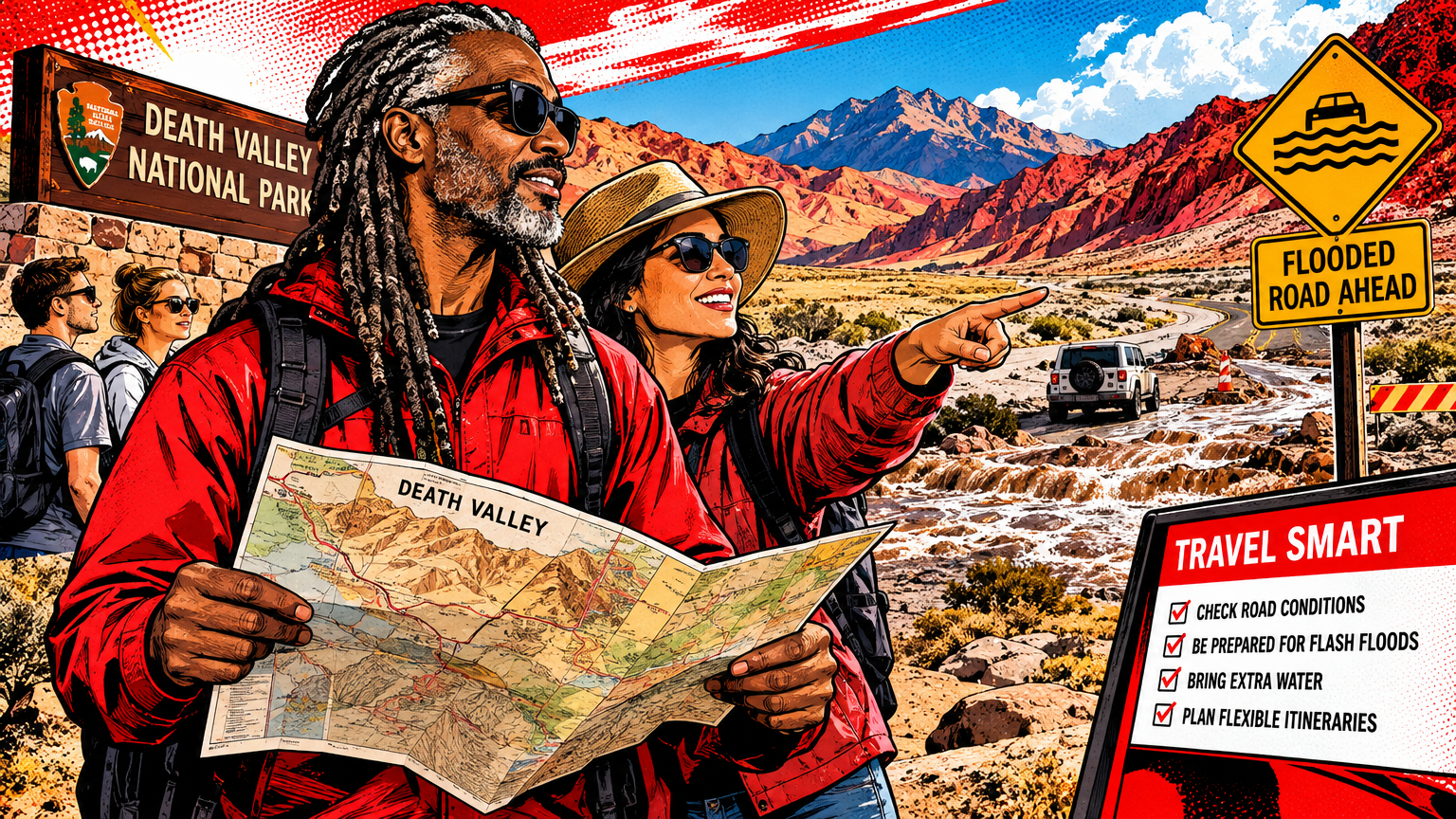
Fall through spring is generally the more comfortable stretch for exploring Death Valley, and late October can make the desert feel especially inviting after a Las Vegas summer. But cooler weather does not mean easy access. Recent storms have left roads closed in parts of the park, and the National Park Service warned that flooding can bring new closures. The sweet spot for a visit is here, but the smart itinerary starts with checking the roads, not picking a photo stop.
Death Valley is a big, remote park, so one closure can reshape the day. A route that looks tidy on a screen may depend on a road that is damaged or closed, and a detour can eat into daylight and supplies. The landscape is gorgeous, but it is not a place to wing it when the weather turns. Keep the plan loose, leave room to turn around, and let the open roads decide how much you see.
Why flood conditions matter, even in dry weather
Death Valley can look bone-dry while water is rushing through a wash or canyon. Rain can fall in another part of the park and send runoff downstream, where it carries rocks and debris. Floods can also wash out road shoulders, cover pavement or undermine a road. Damage may remain after the rain has stopped, and reopening one road does not mean every route is passable.
The park’s history makes that risk more than a theoretical desert warning. The National Park Service account of Hurricane Hilary’s impact describes flooding that damaged major roads and left some backcountry roads washed away. More recently, the park’s official alerts and conditions page reported flood damage after an Oct. 22, 2026, storm and listed road closures. Conditions can change again, so treat that page as a live planning resource, not a one-time pre-trip check.
Check the exact roads you plan to use
Before leaving Las Vegas, open the park’s conditions page and check both its alerts and road-status map. Look for the specific roads on your route, not just whether the park is open. The latest update visible on the page when checked was dated Oct. 25, and it reported closures following the Oct. 22 storm. That is useful context, but road conditions can change after an update, especially when more rain is in the forecast.
Check the forecast as well. The NPS notes that Death Valley can experience flooding and other kinds of weather, and recommends checking both weather and closures before a visit. A weather app can help you spot a storm risk, but it cannot confirm whether a road has been cleared or closed. Save the park’s information before you lose service, and check again close to departure. Cell coverage is limited or unavailable in parts of this remote park.
If the road to your planned stop is closed, skip it. Do not rely on a navigation app to route you around a barricade, and do not drive around a closure sign. Park staff and posted signs take priority over a digital shortcut. A missed viewpoint is a much better story than getting stranded on a damaged road.
Make a day trip that can flex
From Vegas, resist the urge to pack the day with far-flung stops. Choose one main area and a nearby backup that works on the same open route. Leave time for slower driving, breaks and a possible turnaround. The park is large, and a road closure can make two places that look close on a map much less convenient to reach.
Build your plan around daylight and the return drive, not just how many stops you can squeeze in. If an important road is closed, or storms could affect the area you’re visiting, consider changing the destination or postponing. There is no prize for keeping a pretty itinerary intact when the actual conditions say otherwise.
Pack for delays, not just the drive out
Bring plenty of water and food, sun protection, and layers for cooler temperatures. Carry a charged phone and car charger, but do not count on a signal everywhere or assume your phone’s map has current closure information. The park’s safety guidance recommends planning ahead for remote travel and bringing extra food, water and shelter in case you become stranded. Make sure your vehicle has enough fuel for the route you intend to drive, and know where fuel is available before you set out.
For summer visits, heat changes the equation. The NPS summer guide advises visitors to stay on paved roads, remain close to their vehicles and carry extra drinking water. The cooler season may feel far more forgiving, but a breakdown or delay can still become serious in a remote area. Being prepared is not overkill here. It is just good desert manners.


What to do if water is moving
Never drive or walk through moving floodwater. Water can hide a damaged road, and a crossing that looks shallow can still be dangerous. If water is flowing across your route, stop well back from it, turn around only when you can do so safely, and follow official instructions. Do not enter a canyon or wash during an active rainstorm or when heavy precipitation is likely. If you are caught in a flood, move to higher ground.
Keep your distance from washes during and after storms, too. The rain may have stopped where you are while runoff is still moving through the landscape. And, yes, the dramatic storm photo can wait. Desert views are lovely; becoming part of an emergency response is not the vibe.
Enjoy the cooler season without betting on the road
Fall through spring generally offers more comfortable conditions for spending time outdoors than the park’s extreme summer heat. That does not make any particular day, road or destination a sure thing. Storms and flood damage can affect access at different times of year, while summer heat adds its own serious safety risks. Let the current forecast and park road information shape the plan, whatever month you visit.
Death Valley can still be a spectacular escape from Las Vegas. Go for the wide-open views, choose a route that is confirmed open, carry the basics and give yourself permission to pivot. If a closure sends you back sooner than expected, that is not a wasted trip. It is the right call in a place that rewards people who slow down, pay attention and respect what the desert can do.