The Canary Was Wearing a Hospital Gown
This Is Not About Defending the Restaurant
The Heart Attack Grill has officially flatlined in Downtown Las Vegas.
That sentence sounds like a punchline, but I see something more serious hiding under the grease, gowns, paddles, and chaos.
This is not about defending the Heart Attack Grill as some sacred Vegas institution. It was crude. It was controversial. It built a business around obesity, medical danger, shock value, and public embarrassment. Plenty of people hated it, and they had reasons.
But serious operators do not study only clean signals. They study ugly signals too.
My read is simple: when a loud, visible, tourist-driven Downtown attraction leaves after a long run and blames corporate greed, rising costs, and the pricing out of middle-class tourists, that is not just restaurant news.
That is market intelligence.
The Heart Attack Grill closed its Downtown Las Vegas location inside Neonopolis after choosing not to renew its long-term lease. Local reporting said the restaurant had been in Las Vegas for about 15 years, with owner Jon Basso blaming corporate greed and the rising cost of visiting Las Vegas.
That is the official door closing.
The bigger question is what got trapped inside the room before the lights went out.
A Gimmick Can Still Be a Signal
I would not call Heart Attack Grill classy.
I would call it useful.
Not because the food was healthy. Not because the brand was noble. Not because every stunt deserved applause.
Useful because the restaurant sat at the exact collision point where modern Las Vegas is under pressure:
Downtown foot traffic
Middle-class tourist spending
Rising visitor costs
Corporate pricing power
Small business survival
Weird Vegas versus polished Vegas
Impulse spending versus budget anxiety
That is why this story matters.
The restaurant was a gimmick. No argument.
But gimmicks need customers. Customers need money. Money needs confidence. Confidence needs value.
Break that chain, and the weird places feel it first.
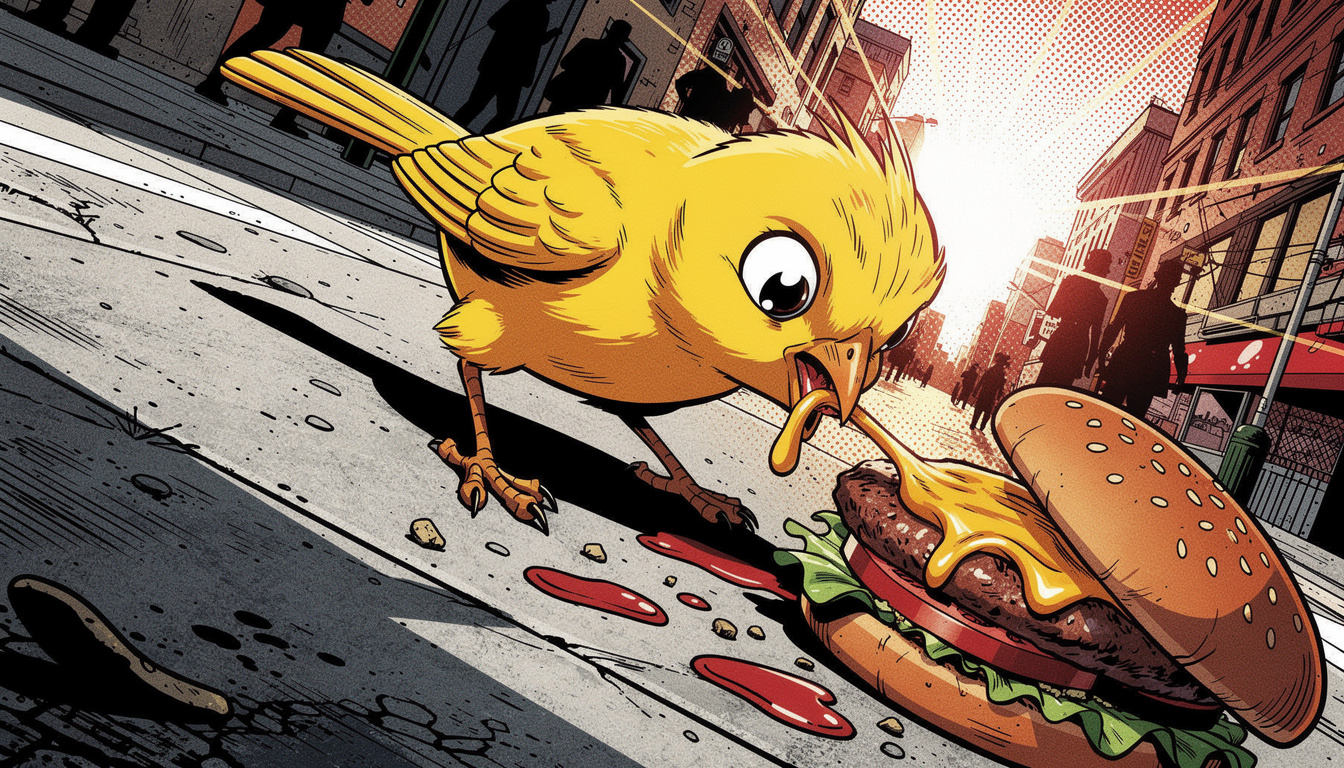
In my view, the canary in the coal mine was not singing.
It was wearing a hospital gown, standing on Fremont Street, and warning Vegas that the air is changing.
The Closure Data Tells a Bigger Story
The Basic Facts Are Not Complicated
The surface-level news is clean.
Heart Attack Grill closed. The lease was not renewed. Jon Basso says Las Vegas has become too expensive and too corporate for the restaurant’s customer base.
That is the basic frame.
But my issue is not the lease. The lease is the mechanism. The market is the diagnosis.
If a business with 15 years of visibility exits a major Downtown tourist zone and turns the exit into an economic manifesto, the correct question is not, “Do we like this restaurant?”
The correct question is, “Does the complaint match the market?”
Right now, the answer is uncomfortable.
The Las Vegas Convention and Visitors Authority reported that Las Vegas welcomed 38.5 million visitors in 2025, down 7.5 percent from 2024. The LVCVA described the year as shaped by shifting travel dynamics, economic uncertainty, and changing policy conditions.
That is not panic.
But it is pressure.
And pressure reveals weak points.
The Table Under the Headline
Signal | Reported Fact | My Read |
|---|---|---|
Heart Attack Grill Closure | The Downtown Las Vegas location closed after the long-term lease was not renewed. | The lease is the event. The market pressure is the story. |
Location | The restaurant operated inside Neonopolis near Fremont Street. | This was not a hidden corner. It was a visible Downtown attention zone. |
Owner's Explanation | Jon Basso blamed corporate greed and the pricing out of middle-class visitors. | The messenger is messy, but the complaint matches a larger Vegas conversation. |
2025 Las Vegas Visitors | 38.5 million visitors, down 7.5 percent from 2024. | Vegas still has scale, but the value-oriented customer is showing strain. |
Business Model | Shock-based, mid-priced, tourist-driven spectacle. | This kind of attraction depends on impulse, volume, and middle-class confidence. |
Brand Future | Basso has indicated interest in relocating the brand elsewhere. | The insult is that Heart Attack Grill may now look for a city that feels more like old Vegas. |
Corporate Vegas Has a Middle-Class Problem
Vegas Cannot Live on Whales Alone
Las Vegas loves high-end customers.
It should.
Luxury travelers matter. Convention traffic matters. Sports tourism matters. Big spenders matter. High-room-rate customers matter. Bottle-service customers matter. The city would be foolish to ignore them.
But my point is sharper than that.
Vegas cannot live on whales alone.
The city’s real power has always been volume. The couple from Phoenix. The bachelor party from California. The truck driver from Missouri. The nurse from Ohio. The family that saved for six months. The service worker who wants one reckless weekend. The regular guy who does not need luxury, but does need a story.
That middle-class visitor is not glamorous on a spreadsheet.
But that visitor is oxygen.
They fill sidewalks. They buy drinks. They grab late-night food. They tip bartenders. They walk into weird places. They make dumb impulse purchases. They keep the street-level economy alive.
Heart Attack Grill lived off that customer.
It did not need the private jet crowd.
It needed the person who still had enough cash left after the room, parking, rideshare, snacks, drinks, fees, and casino losses to say, “What the hell, let’s go in.”
That customer is the whole ballgame.
When the Middle Pulls Back, Weird Dies First
The luxury layer can survive longer.
A high-end restaurant can serve fewer guests at higher ticket averages. A luxury club can live off bottle minimums. A major resort can offset pain through conventions, loyalty programs, entertainment, and pricing power.
But the weird middle cannot hide.
A strange attraction needs walk-ins.
A mid-priced restaurant needs volume.
A gimmick needs curiosity.
A Downtown tenant needs movement.
A local business needs people who still feel loose enough to spend.
When visitors start calculating every decision, impulse dies.
And when impulse dies, Vegas gets quieter.
That is my warning.
The decline does not arrive wearing a sign that says, “The city has a middle-class problem.”
It shows up in smaller ways.
Tourists shorten trips.
Visitors skip add-ons.
Workers see tips shrink.
Small businesses lose foot traffic.
Mid-priced attractions feel soft demand.
Operators stop renewing leases.
Weird concepts quietly disappear.
The city looks polished, but feels less alive.
That is how market damage moves.
Slowly, then all at once.
Heart Attack Grill Was a Middle-Class Product in Freak-Show Clothing
The Price Point Mattered
The Heart Attack Grill looked outrageous, but economically, it was not a luxury product.
It was a middle-market experience with a giant visual hook.
People did not go there for elegance. They went for the story. Hospital gowns. Bypass Burgers. Public weigh-ins. Nurse-themed service. A meal that felt half restaurant, half stunt, half bad decision.
Yes, that is three halves.
That was the point.
The restaurant was known for “Bypass Burgers,” “Flatliner Fries,” customers dressed as patients, nurse-themed servers, and free meals for customers weighing more than 350 pounds. PEOPLE reported that Basso cited corporate greed and the rising cost of Las Vegas as reasons behind the closure, while saying the brand could reappear elsewhere.
That experience did not need to be tasteful to be valuable.
It only needed to be memorable.
And in Las Vegas, memorable is money.
Affordable Stories Built Vegas
My strongest opinion here is simple:
Vegas was built on affordable stories.
Not just luxury suites.
Not just celebrity chefs.
Not just high-limit rooms.
Affordable stories.
The cheap buffet. The ridiculous lounge act. The strange roadside attraction. The late-night burger. The neon photo. The weird museum. The downtown bar. The thing you could afford and never forget.
Heart Attack Grill belonged to that category.
It was not refined.
It was not healthy.
It was not a polished brand-safe experience.
But it gave regular people a story.
And regular people telling stories is how Las Vegas became Las Vegas.
The Ugly Messenger Problem
Jon Basso Is Not a Perfect Witness
Jon Basso is not a neutral economist.
He is a marketer.
I would say that first.
Basso knows how to package conflict. He knows how to weaponize outrage. He knows how to turn critics into unpaid media. He knows how to turn a lease decision into a city-wide accusation.
So no, his closing argument should not be swallowed whole without chewing.
There is self-interest here.
There is brand positioning here.
There is relocation marketing here.
There is a man protecting the mythology of his business on the way out.
But that does not make the warning useless.
Sometimes the wrong messenger delivers the right warning.
The Heart Attack Grill’s history included criticism from health advocates, controversy over its medical-themed branding, publicized customer medical emergencies, and a long record of shock-marketing tactics. My research describes the restaurant as operating a “controversy economy” that converted outrage, risk, and morbid aesthetics into attention.
That history makes the story dirtier.
It also makes the signal harder to ignore.
The City Does Not Get to Ignore Smoke Because It Hates the Person Yelling Fire
This is the moral gray area.
The Heart Attack Grill was offensive by design.
It joked about things many families take seriously. Heart disease. Obesity. Death. Public shame. Addiction. Overindulgence. The human body breaking down under bad choices.
Critics had plenty to work with.
But a controversial business can still reveal a real market problem.
A noisy owner can still point at a quiet truth.
A place people dislike can still be a warning sign.
That is the grown-up read.
I would not ask Las Vegas to mourn the Heart Attack Grill like a civic treasure.
I would ask Las Vegas to study why a 15-year attention magnet decided the math no longer worked.
The Corporate Vegas Pressure Test
The Model Has Changed
Old Vegas understood the loss leader.
Cheap food. Cheap rooms. Cheap drinks. Free parking. Low-friction fun. Get people into the city, keep them moving, let the gaming and entertainment machine do the rest.
Modern Vegas feels different.
The room rate is not always the room rate.
The parking is not always free.
The meal is not casual anymore.
The basic drink can feel like a punishment.
The snack counter can feel like a squeeze.
The visitor starts to feel less like a guest and more like a revenue unit.
That is a dangerous emotional shift.
Because Vegas can be expensive if the experience feels worth it.
But once visitors feel nickel-and-dimed, the emotional contract breaks.
SFGATE reported that Basso said rising costs had priced out middle-class patrons and that he was interested in moving Heart Attack Grill to another market. The restaurant’s closing statement framed the lease decision as part of a broader rejection of Las Vegas corporate greed.
My read: that is not just bitterness.
That is a customer-segment warning.
Pricing Power Can Become Pricing Arrogance
There is a difference between pricing power and pricing arrogance.
Pricing power means customers pay more because they still believe the value is there.
Pricing arrogance means customers pay more until resentment changes behavior.
The first one is strategy.
The second one is slow poison.
I would put the boardroom question like this:
Are Las Vegas operators maximizing revenue, or are they damaging demand?
That question matters because demand does not always collapse loudly.
It softens first.
It shows up as fewer repeat visits. Smaller tips. Fewer spontaneous purchases. More complaints. More locals avoiding tourist zones. More visitors comparing Vegas against other destinations.
And then one day, the market acts surprised by a trend that had been visible for years.
The Las Vegas Affordability Pressure Table
The Numbers Should Make Operators Pay Attention
Pressure Point | What It Means | Who Feels It First |
|---|---|---|
Visitor Decline | Las Vegas reported 38.5 million visitors in 2025, down 7.5 percent from 2024. | Restaurants, attractions, shows, rideshare drivers, and service workers. |
Rising Trip Costs | Higher total trip costs reduce discretionary spending once visitors arrive. | Mid-priced businesses that rely on impulse purchases. |
Fee Fatigue | Parking fees, resort fees, and inflated basics can damage the visitor mood. | Workers who depend on tips and small businesses that depend on foot traffic. |
Luxury Shift | More focus on affluent visitors can raise revenue per customer while weakening mass-market energy. | Downtown attractions, weird venues, casual restaurants, and local shops. |
Impulse Collapse | Visitors who feel squeezed stop saying yes to extra experiences. | The strange, fun, affordable businesses that make Vegas feel different. |
Neonopolis Is More than a Location
Downtown Cannot Afford to Lose Attention Magnets
Heart Attack Grill operated inside Neonopolis, near one of the most visible tourist corridors in Downtown Las Vegas.
That matters.
A business like Heart Attack Grill did not just occupy square footage. It produced attention. People pointed at it. People filmed it. People argued about it. People used it as a landmark. People brought friends just to watch the spectacle.
That kind of tenant has value beyond rent.
It creates movement.
It creates conversation.
It creates the kind of street-level energy that Downtown needs.
FOX5 reported that the restaurant was located inside Neonopolis and had shut down after choosing not to renew its lease. The same report said Basso was looking to relocate the brand elsewhere.
My view: Downtown should not shrug when an attention magnet leaves.
It should ask what that vacancy says.
Empty Space Can Become a Message
Every city has vacancies.
But not every vacancy carries meaning.
When a generic storefront closes, the market may shrug.
When a nationally known, controversy-powered restaurant closes after a long run and blames the economics of the city, the vacancy becomes a message.
That message may be uncomfortable.
It may be exaggerated.
It may be wrapped in self-promotion.
But it is still a message.
The wrong response is to say, “Good, that place was gross,” and stop thinking.
The smarter response is to ask:
What kind of visitor did this business depend on?
Is that visitor still coming?
Is that visitor still spending?
Are mid-priced Downtown attractions still healthy?
Is weird Vegas being replaced by expensive sameness?
Are small businesses being asked to survive inside a cost structure built for corporate operators?
Those questions matter more than the burger.
The Sanitized Sin City Problem
Cleaner Does Not Always Mean Stronger
A cleaner, more polished Las Vegas is not automatically bad.
I am not nostalgic for chaos just because it is chaos.
Better safety can be good. Better design can be good. Better restaurants can be good. Better hotels can be good. Better cultural offerings can be good.
But polish has a cost if it erases the thing people came for.
Las Vegas does not sell rooms first.
It sells permission.
Permission to spend.
Permission to stay out.
Permission to eat too much.
Permission to laugh too loud.
Permission to become a bigger, stranger, louder version of yourself for a few days.
Heart Attack Grill understood that emotional product.
Crude as it was, it understood the permission economy.
That is why it fit.
Weirdness Is an Economic Asset
Weirdness is not decoration.
Weirdness is traffic.
A weird business makes people stop. A weird sign makes people take photos. A weird attraction gives visitors a reason to walk another block. A weird story travels farther than a normal meal.
In a media economy, weirdness is currency.
That is why Las Vegas should be careful about sanitizing itself into sameness.
People can find expensive anywhere.
They can find polished anywhere.
They can find luxury anywhere.
They cannot find real Vegas anywhere else.
That is the market moat.
And if Corporate Vegas keeps trading weird middle-class experiences for expensive interchangeable ones, it risks weakening the very thing it cannot easily rebuild.
What Small Businesses Should Learn from This
The Lesson Is Not to Copy the Gimmick
Nobody should read this and think the answer is to open a hospital-themed taco shop or start spanking customers over unfinished nachos.
That is not the lesson.
The lesson is that attention, affordability, and identity matter.
Heart Attack Grill survived as long as it did because it had all three.
It had a visual hook. It had a price lane. It had a story. It had something people could explain in one sentence.
That is rare.
Most small businesses cannot explain themselves in one sentence. That is a problem.
My advice to Vegas small businesses would be blunt:
Know what makes people stop.
Know which customer keeps you alive.
Know whether your offer still feels affordable.
Know what story customers repeat after they leave.
Know when the market around you is changing before it changes you out of business.
The Middle-Class Customer Still Matters
Small businesses should not chase luxury just because the city is chasing luxury.
That lane is expensive.
It requires capital, polish, and margin for error.
The middle-class visitor still matters. Locals still matter. Repeat customers still matter. Value still matters. Simple offers still matter. A memorable experience still matters.
The danger is trying to look expensive while losing the customer who made the business viable.
Heart Attack Grill may have been an extreme case, but the principle travels.
If the customer starts asking, “Is this worth it?” too early in the journey, the sale gets harder.
Vegas has to protect the feeling of yes.
What Corporate Vegas Should Learn from This
The Customer Can Be Squeezed Only So Long
Corporate Vegas knows math.
But the city also needs to respect mood.
A visitor’s mood is an economic asset.
When visitors feel excited, they spend.
When they feel insulted, they protect themselves.
That protection shows up as fewer extras, fewer tips, fewer return trips, and more negative word of mouth.
I would not tell resorts to stop making money.
That would be childish.
I would tell them not to confuse short-term extraction with long-term market strength.
There is a point where every extra fee does not just increase revenue.
It reduces affection.
And Vegas runs on affection more than some executives want to admit.
The Warning Signs Are Already Visible
A smart operator watches for weak signals before they become headlines.
The Heart Attack Grill closure is one signal.
The visitor decline is another.
Complaints over costs are another.
Tipping pressure is another.
Locals avoiding tourist zones is another.
Downtown vacancies are another.
None of these alone means disaster.
Together, they deserve attention.
My boardroom version would sound like this:
If the market keeps telling you the value equation is strained, stop calling every complaint cheapness. Sometimes the customer is not cheap. Sometimes the product is losing its emotional deal.
That is the difference.
Good Riddance and Warning Sign Can Both Be True
The Legacy Is Messy
Heart Attack Grill leaves behind a legacy that cannot be cleaned up with one sentence.
It was offensive.
It was memorable.
It was exploitative to some.
It was funny to others.
It was a tourist attraction.
It was a public-health provocation.
It was a business.
It was a stunt.
It was a mirror.
The restaurant faced years of criticism for its branding and extreme menu, and media coverage has repeatedly noted the contrast between Basso’s satirical framing and the serious criticism tied to the restaurant’s treatment of health, obesity, and medical danger.
That complexity is the story.
The restaurant does not need to be innocent for the closure to mean something.
The Warning Is Bigger than the Restaurant
Vegas can survive without Heart Attack Grill.
That is obvious.
But can Vegas survive losing the layer of businesses that made the city feel strange, affordable, accessible, and alive?
That is the better question.
Because the city can always open another luxury restaurant.
It can always sign another celebrity chef.
It can always build another lounge.
It can always sell another VIP package.
But weird local texture is harder to replace.
Once that goes, the city can still be profitable.
It can still be impressive.
It can still be famous.
But it may feel less like Vegas.
And that is the risk.
Vegas Should Check the Air
My final read is not sentimental.
It is strategic.
The Heart Attack Grill closed. Some people are relieved. Some people are laughing. Some people never cared. That is fine.
But underneath the jokes is a serious question for Corporate Vegas:
How much can the city charge before regular people stop believing the trip is worth it?
That is the canary.
Not the burger.
Not the gown.
Not the paddle.
The customer segment.
The middle.
The people who made Vegas feel crowded, loud, impulsive, and alive.
If Las Vegas loses them, it does not just lose budget travelers.
It loses volume.
It loses street energy.
It loses tips.
It loses weirdness.
It loses small business oxygen.
It loses the part of the machine that made the whole thing move.
Heart Attack Grill may not be the hill anyone wants to die on.
But it may be the signal smart people should study.
The canary was wearing a hospital gown.
Vegas should still check the air.