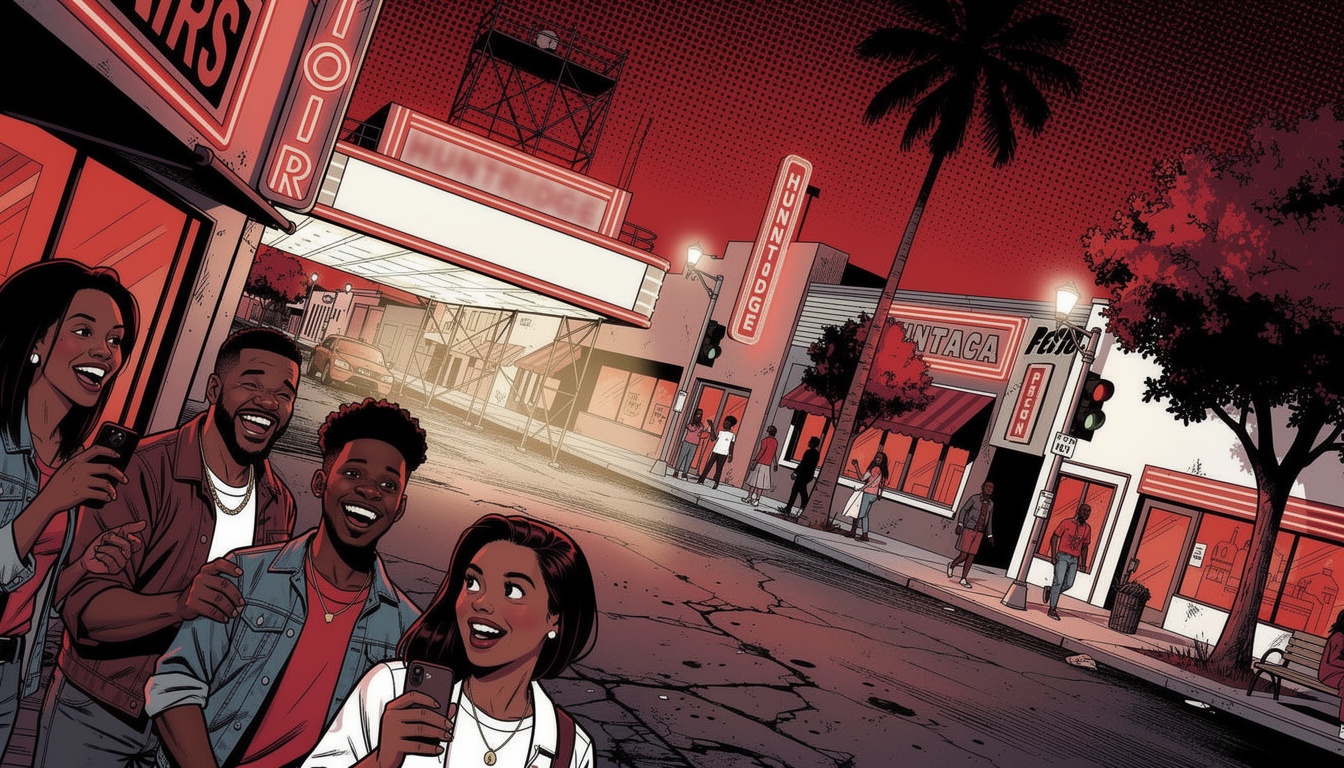
Welcome to Huntridge
Where Huntridge Sits in Las Vegas
Huntridge sits right in the heart of central Las Vegas. Not the Strip. Not the suburbs. Right in the middle of the real city.
It lives just east of Downtown Las Vegas, north of Charleston Boulevard, and tightly connected to one of the city’s most important corridors, Maryland Parkway. That location alone tells you everything. This is not a fringe neighborhood.
This is core Las Vegas.
Drive a few minutes west, and you hit Downtown. Head southwest, and you run into the Arts District. Move east, and you begin to transition deeper into East Las Vegas.
Huntridge sits in that exact crossroads where old Vegas meets new momentum.
That positioning is one of its biggest advantages today. What used to feel “in between” now feels central.
Why Huntridge Matters
Huntridge is not just another neighborhood. It is one of the earliest planned residential communities in Las Vegas.
This is where you start to understand how the city grew beyond casinos. Before master-planned mega communities, before gated suburbs, before luxury towers, there were neighborhoods like Huntridge.
It carries real architectural history. Real cultural layers. Real stories.
But it also carries something else. A reputation that has shifted hard over time.
At one point, it was desirable. Then it became overlooked. Then it gained a rough reputation. Now it is changing again.
Huntridge matters because it reflects the full cycle of Las Vegas itself. Growth. Neglect. Reinvention.
The Birth of Huntridge (1940s–1950s)
Post-War Expansion and Suburban Dreams
After World War II, Las Vegas started moving fast.
The city was growing. Jobs were increasing. Tourism was rising. And people needed places to live that were not right next to casinos.
That demand created the opportunity for early suburban-style neighborhoods. Huntridge was one of them.
At the time, this was forward-thinking development. A place where families could live with space, stability, and distance from the chaos of Fremont Street.
Huntridge represented a shift. Las Vegas was no longer just a destination. It was becoming a real city.
Original Development Vision
Huntridge was designed for middle-class families.
Simple idea. Clean streets. Modest homes. A place to raise kids.
Developers laid out streets, built single-family homes, and created a structure that felt organized and livable. Schools were nearby. Basic services were within reach. It was built for everyday life.
The marketing was clear. This was a good place to settle down.
At the time, that mattered. Because Las Vegas still carried a reputation as a transient city. Huntridge helped change that.
Early Residents and Lifestyle
The first wave of residents were working-class and middle-income families.
These were people building lives. Not chasing a weekend.
Neighbors knew each other. Kids played outside. People walked to nearby spots. It felt like a real neighborhood.
Small local businesses began to pop up. Basic shops. Services. Essentials.
Nothing flashy. But everything necessary.
Huntridge, in the early years, was stable. Predictable. Comfortable.
The Golden Era of Huntridge (1950s–1960s)
Peak Residential Appeal
This was the peak.
Homeownership was strong. People stayed for years. Properties were maintained. Lawns were kept. Streets looked good.
There was pride in ownership. Pride in the neighborhood.
Huntridge was not just functional. It was desirable.
At a time when Las Vegas was still forming its identity, Huntridge stood as a model of what a residential community could be.
The Rise of the Huntridge Theater
The Huntridge Theater changed everything.
Opened in 1944, it became the cultural heartbeat of the neighborhood.
This was not just a place to watch movies. It was where people gathered. Where families went on weekends. Where the community connected.
Later, it evolved beyond films. It hosted events. Performances. Live shows.
For decades, the theater gave Huntridge something powerful. Identity.
You were not just living in a neighborhood. You were part of something.
Community Identity and Culture
Life in Huntridge during this era was family-first.
Schools mattered. Churches mattered. Community events mattered.
People built routines. Morning coffee. Evening walks. Weekend outings.
And slowly, something else started forming. A version of Las Vegas culture that existed outside the Strip.
Real people. Real lives. Real community.
Huntridge was part of that foundation.
Urban Pressure and Transition (1970s–1980s)
Growth of Las Vegas Beyond Downtown
Las Vegas did what fast-growing cities do. It expanded outward.
Newer neighborhoods were built farther from the core. Bigger homes. Newer designs. More space.
That shift pulled attention away from older neighborhoods like Huntridge.
What was once central started to feel dated.
Aging Infrastructure and Housing Stock
Time started to show.
Homes aged. Systems got older. Repairs became more common.
Without major reinvestment, older neighborhoods begin to slip. Not collapse. Just slowly decline.
Huntridge entered that phase.
Property values flattened. Some homeowners held on. Others moved out.
Changing Demographics
As original residents left, new dynamics formed.
More rental properties appeared. Ownership patterns changed.
The neighborhood became less stable. Less consistent.
It was no longer the tight-knit environment it once was.
And that shift set the stage for what came next.
Decline and Reputation Shift (1990s–2000s)
Economic and Social Challenges
This was the hardest period.
Crime concerns increased in certain pockets. Property maintenance declined. Some landlords stopped investing.
Vacant homes. Neglected yards. Visible wear.
The neighborhood did not collapse completely. But it struggled.
And perception started to change fast.
Huntridge Theater’s Closure and Impact
When the Huntridge Theater shut down, it hit hard.
This was not just a building closing. It was the loss of a symbol.
For decades, it was the anchor. The identity. The gathering place.
Now it sat empty.
That visual alone changed how people felt about the area.
Public Perception of Huntridge
Reputation matters. And Huntridge’s reputation took a hit.
It became known as a rougher area. An older area. A place people overlooked.
Compared to newer suburban communities, it felt left behind.
Media narratives reinforced that perception.
And once a neighborhood gets labeled, it is hard to shake.
Cultural Undercurrent and Underground Identity
Rise of Alternative Culture
But something interesting happened.
As mainstream attention faded, underground culture moved in.
Punk shows. Indie gatherings. Creative energy.
Vacant or underused spaces became opportunities.
Huntridge developed a different identity. Not polished. Not mainstream. But real.
Grassroots Community Efforts
At the same time, residents who stayed never gave up.
They cared about the neighborhood. They wanted it to improve.
Small efforts began. Cleanups. Conversations. Early attempts at revival.
There was still pride. Even during decline.
That matters more than people realize.
Early Signs of Revival (2010s)
Downtown Renaissance Spillover
Downtown Las Vegas started coming back.
New investment. New businesses. New energy.
That momentum did not stay contained. It spread.
Huntridge, being so close, started to feel it.
Investor and Developer Attention
Investors noticed something simple.
Prices were low. Location was strong.
That combination attracts attention fast.
Fix-and-flip activity increased. Renovations started popping up.
Not massive development. But enough to signal change.
Shift in Buyer Demographics
New buyers began moving in.
Younger. More creative. More willing to take a chance on a neighborhood with history.
They saw potential.
They saw location.
They saw something others ignored.
The Huntridge Theater Comeback Narrative
Attempts at Restoration
Over the years, multiple attempts were made to bring the theater back.
Plans came and went. Developers stepped in. Then stepped out.
But the interest never disappeared.
Cultural Importance of Preservation
The theater means something.
It represents old Las Vegas. Community Las Vegas. A different era.
Saving it is not just about a building. It is about identity.
Modern Redevelopment Plans
Recent efforts have gained more traction.
There is real momentum behind restoring the theater and bringing it back as a live venue.
If it happens at full scale, it could change everything.
Foot traffic. Business growth. Neighborhood perception.
One building. Massive impact.
Huntridge in the 2020s – A Neighborhood in Transition
Real Estate Trends
Prices are rising.
Not exploding like luxury areas. But clearly moving up.
Renovations are happening. Buyers are interested.
Central location is becoming more valuable.
Gentrification Conversations
With growth comes tension.
Long-time residents worry about being priced out.
New buyers push for upgrades and change.
There is a balance that has not been fully figured out yet.
Business and Local Economy Growth
Nearby areas like the Arts District are booming.
That energy is creeping closer.
Small businesses are starting to see opportunity.
Huntridge is not fully developed commercially yet. But it is getting attention.
Architecture and Design Identity
Mid-Century Modern Influence
Huntridge homes have character.
Ranch-style layouts. Mid-century design. Larger lots than newer builds.
These are not cookie-cutter houses.
They feel different. And that matters to buyers today.
Preservation vs. Renovation
Some homes are preserved.
Others are flipped hard with modern upgrades.
The mix creates tension. But also opportunity.
The best outcomes blend old charm with modern comfort.
Crime, Safety, and Perception vs. Reality
Historical Crime Trends
Yes, there were real issues during the decline years.
That cannot be ignored.
And that history still affects perception today.
Current Safety Improvements
Things have improved.
Community involvement is stronger. Investment is increasing.
Is it perfect? No.
But it is not what people think it was.
Media vs. Local Experience
Talk to residents, and you get a different story.
Many say it is quieter than expected.
More stable than people assume.
Perception is catching up slowly.
Community Voices and Identity Today
Long-Time Residents
These are the backbone.
People who stayed through everything.
They remember what Huntridge was. And they want to see it thrive again.
New Residents
New buyers see opportunity.
They like the location. The price. The character.
They are willing to invest time and money into making the neighborhood better.
Community Organizations
Groups are forming. Events are happening.
People are trying to shape the future together.
That is how real neighborhood change happens.
Huntridge’s Role in the Future of Las Vegas
Strategic Location Advantage
Location is everything.
Huntridge sits near Downtown, major roads, and key areas.
That alone gives it long-term value.
Development Potential
There is room to grow.
Mixed-use development. Small business corridors. Walkability improvements.
It is not fully tapped yet.
Risk Factors
Growth can go wrong.
Overdevelopment could erase character.
Poor planning could create imbalance.
The next phase matters a lot.
How Huntridge Fits Into the Bigger Vegas Story
From Suburb to Urban Core
Huntridge started as a suburban edge.
Now it is part of the urban core.
That shift is powerful.
Symbol of Old Vegas
This is old Vegas.
Not casinos. Not mega resorts.
Real neighborhoods. Real people.
Modern Relevance
Today, people want authenticity.
They want local experiences.
Huntridge fits that demand perfectly.
Why Huntridge Is a Power Neighborhood
Local Business Opportunity
This is an underserved area.
That means opportunity.
Small businesses can stand out faster here than in saturated areas.
Content Goldmine
Huntridge is full of stories.
Before and after transformations. Resident interviews. history.
This is exactly the kind of content people watch.
Community Activation Potential
Events. Pop-ups. neighborhood features.
This is a place where energy can be built from the ground up.
Huntridge Is Not Done Yet
A Neighborhood That Refuses to Fade
Huntridge has been through everything.
Growth. decline. Reinvention.
And it is still here.
That says a lot.
The Next Chapter
The future is not guaranteed.
But the ingredients are there.
Location. History. Interest. Momentum.
Huntridge is not just coming back.
It might become one of the most interesting neighborhoods in Las Vegas again.
And if you are paying attention now, you are early.