What to Know
- North Las Vegas is the heavy hitter for big-box industrial, with scale, truck access, and room to run.
- The Airport and central valley zones win on speed and last-mile position, but land is tighter and costs usually reflect it.
- The best industrial address isn't the flashiest one. It's the one that saves turns, time, and labor headaches.
The Strip gets the photos. Industrial land gets the money.
That's the real Vegas growth story. It isn't glamorous, but it pays the bills and then some.
If you're looking at warehousing and distribution, zip codes matter more than slogans. One bad turn off I-15 can burn your whole day.
Locals know the pattern. Tourists chase fountains. Trucks chase freeway minutes.
And in this market, minutes are margin. That's the whole game.
Follow the Freeways, Not the Hype
If you're serious about warehousing in Southern Nevada, start with the map. Then start cutting away the nonsense.
The core industrial logic here is simple. Get close to I-15, US-95, the 215 Beltway, and major labor pools.
That's the play. Everything else is decoration.
Las Vegas works as a distribution city because it's a regional connector. It sits in reach of Southern California, Phoenix, Salt Lake City, and the broader Southwest freight network.
That doesn't make every parcel smart. Newcomers see desert and think every flat piece of land is equal. It isn't even close.
You can lose a deal in the last three miles. Locals already know.
The best industrial zones usually check the same boxes:
- Fast freeway access, because trucks don't make money sitting at long lights near retail driveways.
- Modern building stock, because low clear heights and awkward loading kill efficiency fast.
- Labor access, because a warehouse with no reliable workforce is just expensive concrete.
- Room to expand, because operators hate outgrowing a site right after signing a lease.
That sounds obvious. Yet every cycle, somebody pays premium money for a bad circulation pattern and acts surprised later.
The GPS Isn't Your Broker
A map app can show distance. It can't show friction.
One extra choke point at rush hour is how a clean pro forma turns ugly.
North Las Vegas Is the Big-Bay Power Zone
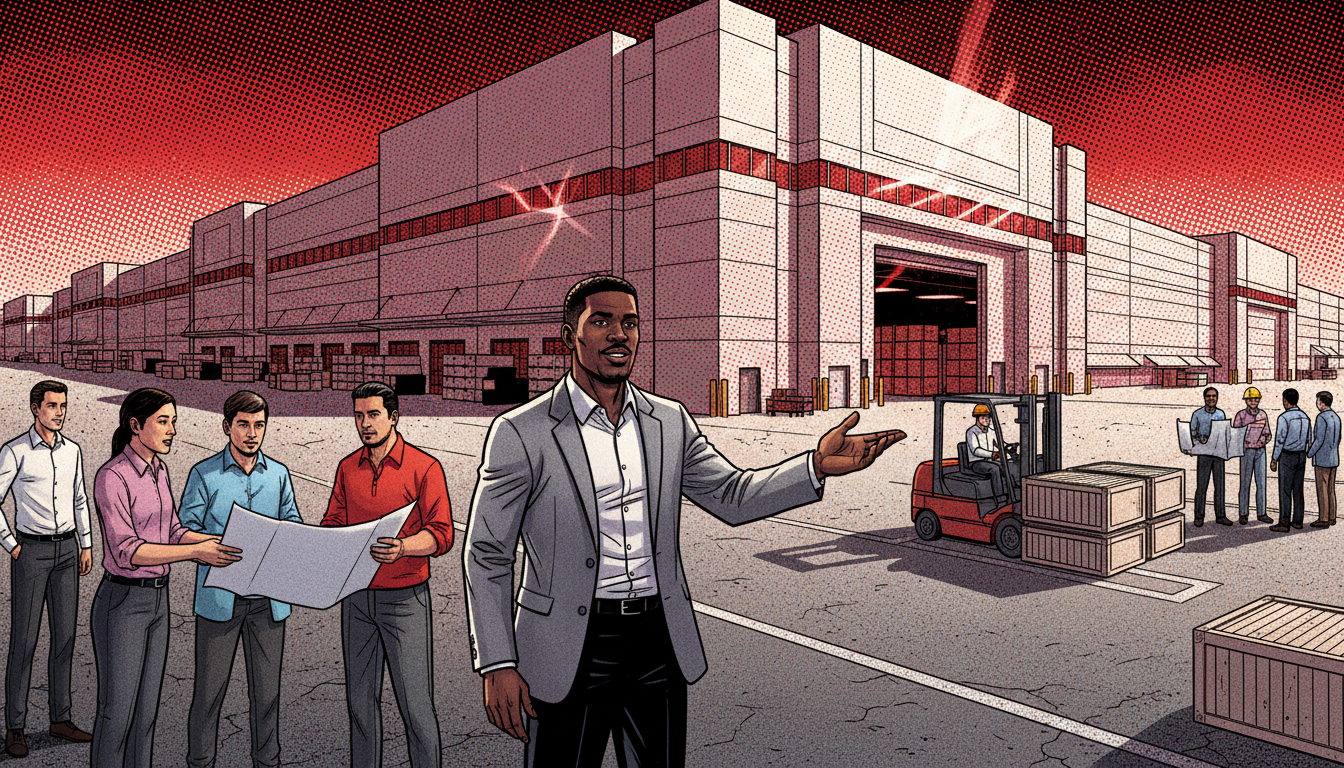
If you want scale, North Las Vegas is the first call. That's where the industrial machine really flexes.
This is the market's warehouse workhorse. Big sites, big boxes, big truck energy.
No glitter. All throughput.
The appeal is straightforward. North Las Vegas offers direct regional positioning with access to I-15, connections to US-95, and broad industrial clustering that makes operations easier.
Clusters matter more than amateurs think. When suppliers, carriers, mechanics, and neighboring users are already there, friction drops.
That's leverage. Smart operators buy time before they buy charm.
The area also benefits from land patterns that have supported larger-format industrial development. For warehousing, fulfillment, and distribution, that matters a lot more than having a pretty street frontage.
No one ever said, "Nice landscaping, let's move more pallets."
North Las Vegas isn't perfect, and no serious person says it is. Depending on the exact pocket, the labor commute, local traffic flow, and access design can make one site much better than the next.
That's why broad labels can fool you. North Las Vegas is strong, but the real question is which submarket and which interchange.
- Apex and farther north can offer land story and long-term runway, but operators need to measure distance with brutal honesty.
- Closer-in North Las Vegas nodes tend to win on usable access and established industrial momentum. That's where the math gets tighter.
- Sites near key freeway links usually carry stronger strategic value because every saved minute repeats all day long.
In plain English, this is where Vegas does bulk. If your business runs on trailers, turns, and square footage, North Las Vegas usually belongs on the shortlist.
The Desert Rewards Adults
Industrial real estate isn't a vibe contest. It's an execution contest.
The buildings that print value are usually the least exciting from the street. That's the joke.
The Airport and Central Valley Win the Last-Mile Fight
Now let's talk about the opposite play. Smaller radius. Faster service. Tighter land.
The industrial areas near Harry Reid International Airport and the central valley matter because they compress delivery times. In distribution, speed sells.
This is where position starts acting like profit. That's not poetry. That's routing.
Businesses that need quicker access to the Strip, resort corridor, central neighborhoods, and dense customer zones care a lot about these locations. Food service, event logistics, hospitality supply, and last-mile users usually think this way.
You don't warehouse champagne flutes for a casino banquet in the outer reaches if the route wrecks your day. Vegas runs on fast resets.
The trade-off is obvious. Central locations tend to mean tighter land availability, older inventory in some pockets, and fewer easy expansion options.
That's the tax for convenience. Everybody wants the short drive until it's time to pay for it.
Still, proximity has real value in Las Vegas because this city runs on compressed timelines. Conventions load in fast. Resorts restock fast. Events pivot fast.
- Airport-adjacent zones work for operators who need quick valley reach and tighter service windows.
- Central infill industrial pockets can be operational gold if the building works, even when the parcel looks awkward at first glance.
- Older stock isn't automatically bad stock. If the loading, layout, and location fit, it can still outperform.
That's a local truth outsiders miss. In Vegas, old and useful often beats new and far.
Southwest and Beltway Access Offer a Different Kind of Advantage
The southwest valley and areas tied into the 215 Beltway have their own case. They're not always the first place people picture for heavy industrial, but they matter.
Why? Because population growth and roadway access change the demand map.
Follow rooftops, follow labor, follow trucks. Same formula. Different corner.
Southwest-connected industrial sites can appeal to businesses serving newer residential growth, local service territories, and multi-point distribution patterns across the valley. Beltway access can shave time if your routes bounce around more than they run in one straight line.
That flexibility has value. Ask anyone who's had to cross town at 4:45 p.m.
These zones aren't a universal answer. If your operation depends on pure regional truck throughput, North Las Vegas may still hit harder.
But if your network serves valley-wide demand, the 215 changes the conversation. A lot.
- Beltway proximity helps businesses that need cleaner circulation around the valley instead of one-direction freight movement.
- Southwest labor access can be a quiet advantage for staffing, especially for daily operational roles.
- Mixed-use edges require care, because retail traffic and neighborhood patterns can slow what looked efficient on paper.
This is where discipline matters. If your routes are local and frequent, a beltway address can punch above its weight.
Every Minute Has a Rent Bill
People talk about lease rates like they're the whole story. They aren't.
A cheaper box with worse routing can cost more by lunch.
What Smart Operators Actually Judge Before They Sign
Here's the part that separates pros from people who just discovered industrial on a spreadsheet. They don't stop at square footage.
They judge function. Ruthlessly.
Pretty brochures don't move freight. Dock doors do.
In Las Vegas, the right industrial property usually comes down to five real-world questions:
- How fast can trucks get in and out? Not theoretically. Daily. During ugly traffic.
- Does the labor pool make sense? If the commute annoys workers, turnover starts writing your story for you.
- Is the building modern enough? Clear height, loading, and circulation still rule the room.
- Can the site scale with the business? Moving twice is how companies burn capital for no reason.
- What's the customer geography? Regional distribution and last-mile service aren't the same game, so stop pretending they are.
That's the checklist. Miss two of those, and the deal starts leaking value.
This city also forces a local reality check. Summer heat is brutal, distances look shorter than they feel, and valley traffic isn't one thing. It's pocket by pocket, hour by hour, and route by route.
Locals don't just ask, "How far?" They ask, "At what time?" That's when you know they've done this before.
My opinion is simple. The best industrial zone in Las Vegas isn't a single zone at all.
It's a match between building type, freeway logic, labor access, and delivery mission. That's the adult answer, even if it isn't as sexy as naming one winner.
The Strip will always sell the postcard, but warehouses write a lot of the city's serious business story. In Las Vegas, the smartest industrial move isn't the loudest one. It's the address that keeps trucks moving while everyone else is still stuck at the light.
Why Vegas Cares
Industrial real estate shapes more of daily Las Vegas life than most people realize. It affects how fast resorts restock, how local stores get inventory, how event gear moves, and how quickly packages reach homes from Summerlin to Henderson.
It also says something bigger about the valley's economic position. A stronger industrial base means Las Vegas isn't just a place that serves visitors. It's a place that moves product, supports operations, and builds more durable business muscle beyond the casino floor.