The Illusion Is Cracking in Las Vegas
Las Vegas still knows how to put on a show. The lights are bright. The fountains still dance. The billboards still scream luxury, freedom, and fun. From a distance, the city looks untouchable. But once you get a little closer, the illusion starts to wobble.
That's the uncomfortable truth more people are starting to feel in 2026. Las Vegas does not look dead. It looks polished. It looks expensive. It looks busy enough to fool a casual observer. But under that glossy surface, the city is fighting a deeper problem that many leaders, operators, and insiders do not seem eager to say out loud.
The Strip Still Looks Packed, But Something Feels Off
That is what makes this story so important. Las Vegas is not collapsing in some dramatic, obvious way. It is changing in a quieter, more dangerous way. The crowds are not always gone. The buildings are not empty from the outside. The problem is that the energy feels different, the value feels weaker, and the experience feels more transactional than magical.
For years, Vegas sold people on a feeling. You came here to escape, indulge, gamble, explore, and live bigger than you normally would. Now, more visitors are arriving with a different mindset. They are doing math. They are watching every charge. They are noticing the parking fee, the resort fee, the drink price, the dinner bill, and the higher table minimums. That emotional shift matters more than many people realize.
The Quiet Shift Tourists Are Starting to Notice
Tourists are still coming, but many are moving differently. They are staying for less time. They are gambling less. They are spending more carefully, even while prices around them keep climbing. That creates a strange atmosphere in a city built on excess. Las Vegas still wants people to feel reckless and free, but the modern visitor is showing up more cautious, more skeptical, and more financially alert.
This is where the real problem begins. A city like Las Vegas depends on emotional momentum. It depends on people feeling excited enough to say yes one more time. One more drink. One more night. One more show. One more bet. But when visitors start feeling nickeled, cornered, and priced from every direction, that momentum breaks. And once that break becomes widespread, the city does not just lose tourists. It loses part of its identity.
That is the conversation this article needs to have. Las Vegas may still look powerful, but appearance is no longer the full story. The bigger question is whether the city has slowly traded away the very magic that made people fall in love with it in the first place.
How Las Vegas Built Its Empire (And Why It Worked So Well)
Las Vegas did not become Las Vegas by accident. This city was built through timing, risk, spectacle, and a ruthless understanding of what people wanted when they wanted to escape normal life. Long before the mega-resorts, celebrity chefs, and giant LED screens, Vegas was already learning how to turn fantasy into an economic machine.
That machine got stronger because it kept evolving. Every era gave the city a new layer. First came legality. Then vice. Then glamour. Then corporate scale. Then full-blown entertainment dominance. If you want to understand why Las Vegas feels different today, you first have to understand why it worked so powerfully for so long.
From Desert Stop to Global Playground
The modern Las Vegas story starts in 1931, when Nevada legalized casino gambling and loosened divorce laws. That was not some small side policy. It created the foundation for an economy built on temptation, speed, and freedom. Add in the Hoover Dam construction boom and the flood of workers coming into Southern Nevada, and the city suddenly had fuel for a whole new identity.
Vegas offered something rare. It gave people permission. Permission to gamble, drink, celebrate, disappear for a weekend, and do things they could not easily do back home. That freedom became the product. The desert just happened to be where the product lived.
Mob Money Built the First Version of Vegas
The post-war years pushed that identity into overdrive. Organized crime figures saw what Vegas could become and moved quickly. Properties like the Flamingo helped establish the blueprint for the early Strip, combining gambling, nightlife, luxury, and celebrity appeal into one concentrated experience. This was not clean money, but it was effective money.
The mob-era version of Las Vegas was dangerous, glamorous, and unforgettable. That mattered. The city was not selling safety or polish yet. It was selling thrill. It was selling access to a world that felt slightly illegal, slightly elite, and completely different from everyday America. That edge became part of the brand.
Corporate America Took Over and Scaled Everything
Then came the corporate transition. Howard Hughes helped legitimize Las Vegas as an investment destination in the late 1960s, and over time the old mob structure gave way to regulated, professionally managed casino ownership. What organized crime helped ignite, corporate America industrialized.
This changed everything. The city became more stable, more scalable, and more attractive to serious capital. Public companies and institutional investors could now pour money into Las Vegas with confidence. The result was a stronger business model, bigger development cycles, and a Strip that could expand with far more precision than before.
The Mega-Resort Explosion Changed Everything
By the late 1980s and through the 1990s, Las Vegas stopped being just a gambling city and became a spectacle city. The Mirage proved that non-gaming attractions could drive traffic and profit on their own. After that, the floodgates opened. Themed mega-resorts turned the Strip into a global showcase of scale, fantasy, and engineered excitement.
This was the genius of old-growth Vegas. It understood that people were not just paying for a room or a blackjack table. They were paying to step into a larger world. Volcanoes erupted. Pyramids glowed. Castles rose out of the desert. The city gave visitors something they could not stop talking about, and that made Las Vegas feel bigger than a destination. It felt like an event.
That is why Vegas dominated for so long. It was never just selling tourism. It was selling transformation. And for decades, it delivered that feeling better than almost any city in America.
The Golden Era of Modern Vegas (2000–2019)
By the time Las Vegas entered the 2000s, the foundation was already set. The city had scale, infrastructure, global recognition, and a clear identity. What came next was refinement. This was the era where Vegas stopped experimenting and started optimizing. It knew exactly who it wanted, how to attract them, and how to make them spend.
This period became the peak of modern Las Vegas. Visitor numbers climbed. Revenues expanded. The Strip evolved into a high-performance machine built to extract maximum value from every guest. It was not just busy. It was efficient, strategic, and extremely profitable.
Tourism Numbers Exploded to Record Levels
The growth during this period was not subtle. Las Vegas consistently pulled in tens of millions of visitors each year, eventually reaching over 42 million annually before the pandemic. That level of sustained traffic turned the city into one of the most visited destinations in the United States.
What made this even more impressive was the consistency. Year after year, Vegas delivered strong numbers, even after setbacks like the 2008 financial crisis. The city proved it could take a hit, adjust, and come back stronger. That resilience became part of the brand.
Vegas Reinvented Itself as a Luxury Experience
The family-friendly experiment of the 1990s did not last. By the early 2000s, Las Vegas made a calculated pivot back to an adult-focused identity, but this time with a luxury twist. The new target was not just anyone looking for fun. It was people willing to spend for a higher-end experience.
Resorts upgraded everything. Rooms became more upscale. Pools turned into dayclubs. Lounges became curated environments instead of simple hangouts. Vegas was no longer chasing volume alone. It was chasing higher-value visitors who would spend more per trip.
Nightlife, Food, and Experiences Took Over
This is where the real transformation happened. Gambling started to take a back seat as the primary driver of revenue. In its place, Vegas built an ecosystem of experiences designed to capture attention and money from every angle.
Nightclubs exploded into global attractions. Top DJs became headline acts. Bottle service turned into a major revenue stream. At the same time, the dining scene leveled up fast. Celebrity chefs opened flagship restaurants, and food became a central reason to visit, not just a side activity.
Vegas understood something critical. People were not just coming to gamble anymore. They were coming to feel something. To be seen. To experience status, energy, and exclusivity. The city leaned into that shift hard, and it worked.
The Convention Machine Became a Powerhouse
While nightlife and luxury drove weekend traffic, conventions quietly became the backbone of the weekday economy. Massive trade shows and business events filled hotel rooms, restaurants, and meeting spaces on a consistent schedule.
This gave Las Vegas stability. Even when leisure travel slowed, business travel kept the engine running. Millions of convention attendees flowed through the city every year, creating a reliable stream of revenue that balanced out the volatility of tourism.
By the end of 2019, Las Vegas had fully matured into a diversified entertainment and business hub. Gambling was no longer the only game in town. In fact, non-gaming revenue had taken the lead. That shift made the city stronger in the short term, but it also set the stage for the challenges that would come next.
The Turning Point… When Vegas Got Too Expensive
Las Vegas did not collapse overnight. It crossed a line. Quietly. Gradually. Then all at once.
For decades, the city ran on a simple but powerful strategy. Get people in cheap, then make money once they are inside. Cheap rooms. Free parking. Affordable food. Easy gambling. That model created volume, energy, and repeat visitors. It built loyalty without needing to say the word.
Then the model flipped. And once it flipped, everything started to feel different.
The Death of “Cheap Vegas”
The old system treated amenities as bait. Rooms, buffets, and perks existed to pull people toward the casino floor. Profit came later. That thinking is gone.
Modern Las Vegas operates like a precision revenue machine. Every square foot must produce. Every experience must pay. Every guest interaction is monetized. The goal is no longer to get you in and keep you playing. The goal is to maximize your value at every step.
The Rise of Fees That Broke Trust
This is where frustration started turning into resentment. Visitors were not just paying more. They were paying in ways that felt deceptive.
Resort fees became standard. Parking went from free to expensive. Charges appeared after booking, not before. What looked like a deal online quickly turned into something else once guests arrived.
That shift matters. People will pay high prices if they feel respected. They push back when they feel tricked.
Food, Drinks, and Entertainment Prices Exploded
The cost of being in Las Vegas did not just rise. It accelerated.
Basic meals started hitting numbers that surprised even experienced travelers. Casual dining turned into premium spending. Drinks became luxury items. Shows and events pushed into price ranges that forced people to think twice before saying yes.
What used to feel like a playground started to feel like a high-end transaction zone.
Gambling Itself Became Less Accessible
Even the core of Vegas changed. The casual gambler began disappearing.
Low-stakes tables became harder to find. Minimum bets climbed. Payouts tightened. The environment shifted toward players who could afford larger risks. For the average visitor, the barrier to entry increased across the board.
That change removed one of the most important parts of the Vegas experience. The ability for anyone to walk in, sit down, and feel part of the action.
The Moment Tourists Started Feeling Ripped Off
There is always a tipping point in markets like this. Las Vegas found it.
Visitors began sharing the same message across platforms. The city felt expensive, crowded, and less rewarding. The phrase “overpriced” started showing up more often. The feeling of being taken care of was replaced by the feeling of being squeezed.
That perception shift is powerful. Once it spreads, it changes behavior. People hesitate. They compare. They reconsider. And when enough people do that at the same time, the entire system starts to feel the pressure.
This was the moment Las Vegas stopped being an automatic yes for millions of people. And once that happened, the next phase became unavoidable.
COVID Changed Everything… But Not in the Way You Think
When COVID hit Las Vegas in 2020, the shutdown was immediate and brutal. The Strip went dark. Casinos closed. Tourism collapsed. For a city built entirely on movement, energy, and volume, it was a full stop.
But the real story is not the shutdown. The real story is what happened after everything reopened. Because the recovery looked strong on the surface, but underneath, it permanently changed how people experience Las Vegas.
The 2020 Collapse That Shocked the System
Visitor volume dropped more than 50 percent almost overnight. Billions in spending disappeared. Hotels sat empty. Workers were sent home. For the first time in modern history, Las Vegas was forced to confront what happens when tourism vanishes completely.
This was not a slowdown. It was a shock to the entire system. And it exposed just how dependent the city is on a constant flow of visitors.
The “Revenge Travel” Boom That Hid the Problem
When restrictions lifted, people rushed back. Demand surged. Hotels filled up. Prices climbed fast. This was labeled “revenge travel,” and it created the illusion that Las Vegas had not only recovered, but become stronger than ever.
But that surge was temporary. It was fueled by pent-up demand, stimulus money, and people desperate to get out of their homes. It masked deeper issues that were already forming beneath the surface.
Tourists Came Back Different
The new Vegas visitor did not behave like the old one.
Trips became shorter. Gambling declined. People spent less time on the casino floor and more money on food, shopping, and experiences. The emotional connection to gambling as the core activity weakened.
This created a new spending pattern. Visitors still spent money, but they spent it differently. That shift quietly changed the economics of the entire city.
The Labor Crisis Behind the Scenes
When the city reopened, many workers did not come back. Hospitality jobs faced massive shortages. Wages had to rise. Conditions had to improve. Unions gained leverage.
This increased the cost of running every property on the Strip. And when costs go up in Las Vegas, they do not get absorbed. They get passed on.
Automation Quietly Took Over
At the same time, operators started making long-term moves. Self-check-in kiosks replaced front desk staff. Digital systems reduced human interaction. Automation began spreading across the property floor.
This was not just about convenience. It was about cost control. With higher wages and tighter margins, technology became the solution.
But something else happened along the way. The experience became less personal. Less human. More transactional.
And in a city that built its reputation on energy, service, and connection, that subtle shift started to matter more than anyone expected.
2025 Was the Wake-Up Call Nobody Wanted
For a while, Las Vegas looked like it had pulled off the perfect comeback. Crowds returned. Prices surged. Revenue held strong. From the outside, it felt like the city had beaten the odds again.
Then 2025 hit. And the numbers stopped playing along.
The Numbers Finally Dropped… Hard
Visitor volume fell by roughly 7.5 percent. That may not sound catastrophic at first, but in a city built on scale, that drop is massive. Millions of fewer people walking the Strip. Fewer bookings. Fewer casual spenders filling in the gaps.
Even more telling, the decline was not a one-month fluke. It stretched across the entire year. Month after month, numbers came in lower. That kind of consistency signals something deeper than a seasonal dip. It signals a shift.
The Strip Looked Busy… But Revenue Told a Different Story
Here is where things get strange. Casinos still made money. In fact, gaming revenue stayed strong, even hitting record territory.
But that money came from a smaller group of people. High-end players. Big spenders. Not the everyday visitor who used to make up the majority of the crowd.
This created a dangerous illusion. On paper, things looked fine. But on the ground, the mix of people had changed. And when the mix changes, the long-term stability of the system starts to weaken.
Tourism Metric 2024 2025 Change Total Visitor Volume 41.68 million 38.5 million -7.5% Hotel Occupancy 83.6% 80.3% -3.3 points Average Daily Room Rate $193.36 $183.52 -5.1% Revenue Per Available Room (RevPAR) $161.50 $147.30 -8.8%
This data shows the clear shift in Las Vegas tourism, where fewer visitors, lower occupancy, and declining room performance confirm that demand is weakening despite the city still appearing busy on the surface.
The “Ghost Town” Effect Inside Billion-Dollar Resorts
Walk through certain areas of the Strip in 2025, and you could feel it. Not everywhere. Not all the time. But enough to notice.
Empty tables during hours that used to be busy. Quiet sections of massive casino floors. Restaurants with open seats where there used to be waitlists. Even brand-new properties showed signs of uneven traffic.
This is what makes the situation so unsettling. Las Vegas did not suddenly stop working. It started working differently.
Fewer people. Higher prices. Bigger bets on fewer guests.
And once that model becomes the norm, the city is no longer chasing mass appeal. It is chasing margin. That may look smart in the short term. But it changes the entire identity of Las Vegas in the process.
Why Tourists Are Walking Away from Las Vegas
Las Vegas did not lose tourists by accident. It pushed them.
Not all at once. Not loudly. But consistently enough that by 2025, the pattern became impossible to ignore. People were not just visiting less. They were choosing differently. They were thinking twice. And in many cases, they were simply going somewhere else.
Price Fatigue Finally Hit
For years, visitors tolerated rising prices. They justified it. They adapted. They told themselves it was still worth it. But there is always a breaking point, and Las Vegas found it.
Inflation hit the entire country. Everyday expenses climbed. At the same time, Vegas kept raising its own prices on top of that. Hotel rates, resort fees, food, drinks, parking, entertainment, all moving in the same direction.
Eventually, the math stopped making sense for the average traveler. What used to feel like a fun splurge started to feel like a financial mistake.
International Visitors Started Disappearing
Las Vegas has always relied heavily on international tourists, especially from Canada. These visitors tend to stay longer and spend more, making them extremely valuable to the city’s economy.
In 2025, that pipeline weakened. Political tension and global uncertainty triggered a noticeable drop in international travel. Canadian visitors, one of the most consistent groups, began pulling back in significant numbers.
When that group disappears, the impact is immediate. Hotels feel it. Casinos feel it. The entire system feels it.
Airlines Pulled Back… Making It Worse
Airlines respond quickly to demand. When bookings slow down, they cut capacity. That is exactly what happened.
Flights into Las Vegas were reduced. Fewer seats. Fewer routes. Less flexibility. This created a feedback loop. Lower demand led to fewer flights, and fewer flights made it harder for demand to recover.
This is how a slowdown turns into a real problem. Not because people cannot visit, but because the system becomes less efficient at bringing them in.
Las Vegas is still a destination people recognize. It still has global awareness. But awareness alone is not enough. When cost, convenience, and perception all shift at the same time, even the strongest brands start to feel the pressure.
The Most Shocking Truth… Vegas Is Making More Money Than Ever
This is where the story takes a turn most people do not expect.
Las Vegas is seeing fewer tourists. Hotels are not as full. Foot traffic is down in key areas. And yet, the money keeps flowing. In some cases, it is flowing at record levels.
That is not a coincidence. It is a strategy.
Record Gaming Revenue with Fewer Visitors
Even during the 2025 slowdown, Nevada recorded its highest gaming revenue ever. Billions of dollars were still being pulled from the casino floor, despite the clear drop in total visitors.
This tells you everything you need to know about what has changed. Las Vegas no longer needs massive crowds to hit big numbers. It just needs the right customers.
High-end gamblers. Big spenders. Players who can absorb higher limits, bigger losses, and premium pricing across the board.
Vegas Doesn’t Need the Masses Anymore
This is the quiet shift that is reshaping the entire city.
For decades, Las Vegas depended on volume.
Busloads of tourists.
Budget travelers.
Weekend warriors.
People chasing deals, cheap rooms, and low-stakes fun.
Today, the model is different. Fewer people, but each one spending more. That is easier to manage. Easier to control. And often more profitable.
From a business standpoint, it makes sense. But from a brand standpoint, it changes everything.
The Dangerous Trade-Off Nobody Is Talking About
When you build a system around fewer, wealthier customers, you gain efficiency. But you lose something else.
You lose energy. You lose accessibility. You lose the wide-open feeling that made Las Vegas what it was.
The middle-class visitor, the casual gambler, the spontaneous traveler, those people are not just customers. They are the atmosphere. They are the reason the city felt alive at all hours.
Remove enough of them, and the experience starts to thin out. It becomes quieter in the wrong places. Slower in the wrong moments. Less unpredictable.
This is the risk Las Vegas is now taking. It is betting that high-value visitors can replace mass appeal.
That may work for now. But if that balance ever breaks, the consequences will hit fast and hit hard.
The $460 Million Gamble to Bring People Back
When the numbers started slipping in 2025, Las Vegas did what it has always done. It went big.
No quiet adjustments. No small tweaks. The response was a full-scale push backed by hundreds of millions of dollars, designed to reignite demand and reshape the narrative around the city.
Because when your entire economy depends on people showing up, you do not sit still when they stop.
Inside the Tourism Board’s Massive Budget
The Las Vegas Convention and Visitors Authority approved a massive $460 million budget for 2026. A large portion of that money is aimed directly at marketing, promotion, and visibility.
This is not just about advertising. It is about influence. The goal is to put Las Vegas back in front of as many eyes as possible and remind people why they should come back.
Campaigns, partnerships, promotions, all designed to rebuild momentum and counter the growing perception problem.
The Push to Win Back Domestic Travelers
With international travel showing signs of weakness, the focus has shifted heavily toward domestic visitors. People who can drive in. People who can book quickly. People who can fill rooms without the complications of international travel.
This is a strategic pivot. Replace lost global demand with strong domestic volume. Keep the pipeline moving. Keep the city active.
But that strategy only works if those domestic travelers feel like the trip is worth it.
Big Events as the Lifeline
Las Vegas is doubling down on events as a core solution.
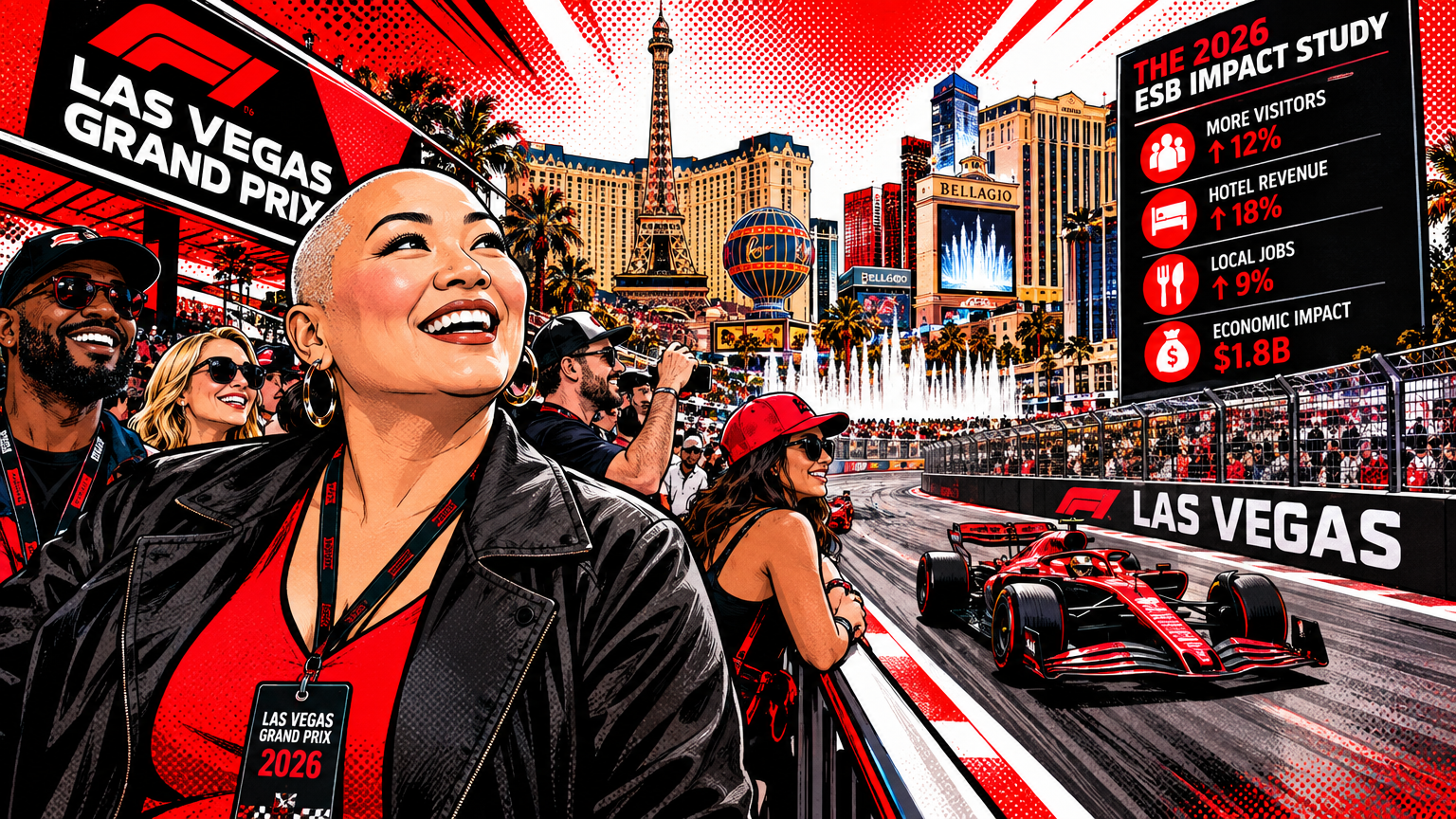
Major sporting events, large conventions, and global attractions are being used to pull people back into the city. Formula 1, professional sports, massive trade shows, all designed to create urgency and drive bookings.
These events bring spikes of activity. They fill rooms. They generate headlines. They create moments.
But they are not a permanent fix. They are bursts of energy in a system that still needs consistent demand.
Why Marketing Alone May Not Be Enough
This is the tension no one can ignore.
You can spend hundreds of millions telling people Las Vegas is still a great value. But if the experience on the ground does not match that message, the campaign loses power.
Visitors do not just listen to ads. They compare notes. They read reviews. They remember what they paid last time.
If the core issue is pricing, perception, and overall experience, then marketing becomes a temporary solution to a deeper structural problem.
Las Vegas is betting that visibility and demand generation can overcome that gap. The question is whether the city can fix the experience fast enough to make that bet pay off.
What Happens If Tourism Keeps Falling?
Las Vegas is not just a tourist city. It is a tourist economy. That difference matters.
When tourism slows down, it does not just affect hotels and casinos. It spreads through the entire system. Jobs, wages, small businesses, and everyday life all start to feel the pressure. That is why even a small drop in visitors can create a much bigger impact than most people expect.
Vegas Depends on Tourism More Than You Think
Tourism is the backbone of Southern Nevada. It drives a massive portion of the local economy, supporting a large share of jobs and generating billions in revenue every year.
When visitors come to Las Vegas, they are not just spending inside casinos. They are paying for transportation, food, entertainment, retail, and services across the entire region. That spending fuels everything from government budgets to local paychecks.
Remove enough of that traffic, and the system starts to tighten quickly.
The Ripple Effect on Everyday Workers
This is where the real impact shows up.
When hotel occupancy drops, shifts get cut. Dealers work fewer hours. Servers earn fewer tips. Housekeeping teams get reduced schedules. Ride-share drivers see fewer rides. Small business owners see fewer customers walking through the door.
It does not take long for that reduction to turn into real financial strain. Less income means less spending. Less spending means slower business across the city. That cycle can build momentum in the wrong direction if it is not corrected.
The large casino operators can absorb short-term declines by leaning on high-end customers. But the everyday worker does not have that cushion. They feel the change immediately.
That is the part of the story that often gets overlooked. When tourism drops, it is not just a headline. It is a paycheck problem for hundreds of thousands of people who keep the city running.
The Growing Divide Between Locals and Tourists
Las Vegas used to feel like one shared experience. Tourists came in, locals participated, and the entire city moved together. That connection is breaking.
What has replaced it is a clear divide. Two different versions of Las Vegas now exist at the same time. One built for visitors with money to spend. Another built for locals trying to survive rising costs in a city that no longer feels designed for them.
Locals Are Being Priced Out of Their Own City
The cost of living in Las Vegas has climbed fast. Rent has surged. Everyday expenses have increased. But wages, especially in service-based jobs, have not kept pace at the same level.
That gap is creating pressure. People who work in the tourism industry are finding it harder to afford the city that depends on them. The same system that brings in billions is also pushing many residents to the edge financially.
That tension builds quietly, but it changes how a city feels. It shows up in attitudes, service, and overall energy.
The Rise of “Local Vegas” vs “Tourist Vegas”
Locals are adapting by pulling away from the Strip.
Instead of dealing with high prices, paid parking, and crowded tourist zones, many residents are spending their time and money in local casinos, neighborhood restaurants, and off-strip entertainment spots.
These places offer better value, easier access, and a more relaxed environment. Over time, they have created a separate ecosystem that operates almost independently from the main tourist corridor.
A City Split Into Two Different Worlds
This is where the divide becomes obvious.
The Strip is built for high-spending visitors. Premium prices, curated experiences, controlled environments. Everything is designed to maximize revenue.
Local Vegas operates differently. It is more practical. More affordable. More grounded in everyday life.
When those two worlds drift too far apart, the city loses cohesion. The people who live there feel disconnected from the place they call home. And the visitors who arrive feel like they are stepping into something that is less authentic than it used to be.
That split may not show up in tourism ads, but it is real. And it plays a major role in why Las Vegas feels different today.
Can Las Vegas Get Its Magic Back?
Las Vegas has been counted out before. More than once. And every time, it found a way to reinvent itself.
That is what makes this moment so important. The city is not out of options. But the path forward is not as simple as flipping a switch or launching another ad campaign. The next version of Las Vegas is already forming, and it looks very different from what built the city in the first place.
The Bet on Sports and Mega Events
Las Vegas is going all-in on sports.
The arrival of the NFL, NHL, and soon Major League Baseball is not just about entertainment. It is about consistency. These leagues bring scheduled demand, repeat visitors, and built-in audiences that can fill rooms across the calendar.
Events like Formula 1 and major championship games create global attention. They turn Las Vegas into a must-visit destination for specific moments. That strategy is designed to replace some of the lost spontaneity with structured demand.
The High-Speed Rail That Could Change Everything
Transportation has always been a bottleneck for Las Vegas, especially for travelers coming from Southern California.
The planned high-speed rail connection aims to change that. Faster travel times, easier access, and a more consistent flow of visitors could bring a new wave of traffic into the city.
If it works as planned, it will not just increase volume. It will increase frequency. More short trips. More repeat visits. More flexibility for travelers who might otherwise stay home.
The Biggest Risk Vegas Faces Moving Forward
The biggest challenge is not competition. It is positioning.
If Las Vegas continues to move further into a high-price, high-end model, it risks losing the middle of the market completely. That middle group is what gave the city its energy, its unpredictability, and its scale.
Rely too heavily on wealthy visitors, and the system becomes fragile. One economic shift, one market correction, and demand can drop quickly.
Las Vegas has always thrived because it balanced access and aspiration. Anyone could come, but everyone could feel like they were part of something bigger. If that balance disappears, the city may still make money, but it will not feel the same.
And that feeling is what built Las Vegas in the first place.
The Real Reason Las Vegas Feels Different Now
At this point, it is easy to blame prices alone. But that is not the full story.
What has changed in Las Vegas goes deeper than cost. It is the feeling. The rhythm. The way the city interacts with people the moment they arrive. Something subtle, but powerful, has shifted.
It’s Not Just Prices… It’s the Entire Experience
Las Vegas used to feel loose. Open. Full of possibility.
You could wander. Discover things by accident. Sit down at a table without thinking too hard. Grab a meal without calculating every dollar. The city encouraged movement, spontaneity, and curiosity.
Now, the experience feels more controlled. More structured. More transactional. Every step has a cost attached. Every decision feels more deliberate. That changes how people move through the city.
When everything is optimized for revenue, the natural flow starts to disappear. And when that flow disappears, so does part of the magic.
The Magic Was Built on Value… And That’s Gone
Old Las Vegas was not just about low prices. It was about perceived value.
People felt like they were getting more than they paid for. Bigger experiences. Better access. More freedom. That created excitement. That created stories.
Today, many visitors feel the opposite. They feel like they are paying more and getting less. That perception changes everything. It turns excitement into hesitation. It turns impulse into calculation.
And once that shift happens at scale, the entire identity of the city starts to evolve.
The Question Nobody Wants to Answer
This is where things get uncomfortable.
Las Vegas is still making money. In some cases, more than ever. But it is doing it with fewer people, higher prices, and a different kind of customer.
So the real question is not whether Las Vegas is successful right now. It is whether this version of success is sustainable.
Can the city continue to thrive without the mass audience that built it? Can it maintain energy, excitement, and relevance while narrowing its focus to higher-end visitors?
No one has a clear answer yet. But the direction is clear.
Las Vegas did not lose its magic overnight. It slowly traded pieces of it away. And now, for the first time in a long time, people are starting to notice.
The Truth About Las Vegas in 2026
Las Vegas is not dead. It is evolving. But that evolution is creating tension across the entire system.
Visitor numbers are down, yet revenue remains strong. Prices have climbed to levels that are forcing people to reconsider the trip. The experience has shifted from spontaneous and free-flowing to structured and heavily monetized.
The city is now relying more on high-end visitors while slowly losing the broad base that once gave it energy and scale. At the same time, locals are separating themselves from the Strip, building a parallel version of Vegas that feels more grounded and affordable.
A massive effort is underway to reverse the decline. Hundreds of millions are being spent to bring people back. New strategies are being built around sports, events, and infrastructure. But the core issue remains unresolved.
Las Vegas still has the brand. It still has the attention. It still has the ability to adapt.
The question is whether it can restore the feeling that made people fall in love with it in the first place.