One of Las Vegas’ most famous unsolved killings now has a jury verdict. On Aug. 31, 2026, a Clark County jury found Duane “Keffe D” Davis guilty of first-degree murder in Tupac Shakur’s 1996 killing. Davis is scheduled to be sentenced Oct. 13.
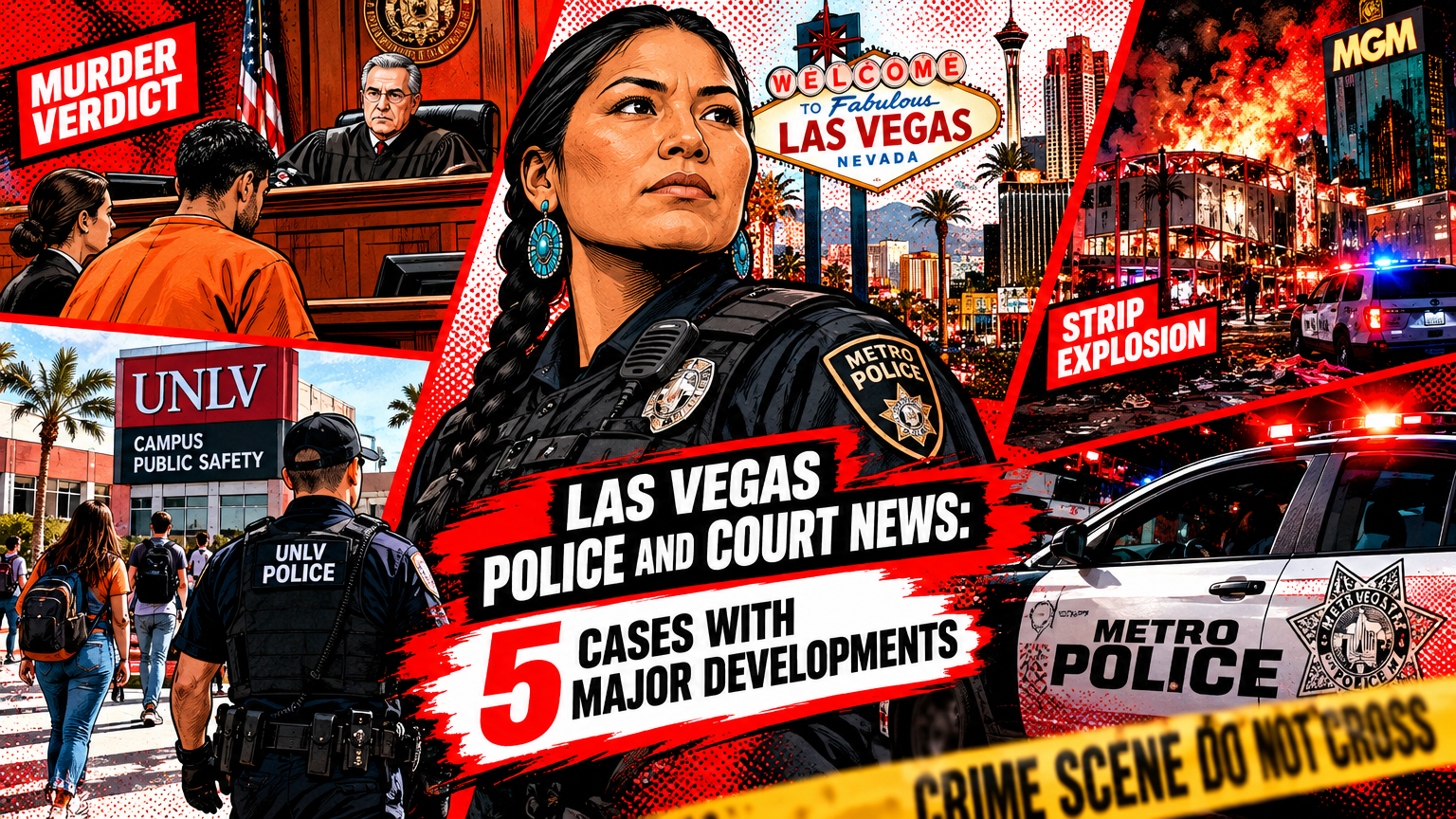
That verdict is the newest turn in a group of high-profile cases that have shaped local police and court news. The five stories below are not all active investigations. Some have ended in convictions or plea deals. Others ended without a criminal trial because the suspected shooter died. Here is what is known, and where each case stands.
Five cases, five different paths
1. A jury convicts Duane Davis in Tupac Shakur’s killing
Shakur was shot in Las Vegas in September 1996 and died days later. Nearly three decades after the shooting, Davis was tried in Clark County for his role in the killing. A jury convicted him of first-degree murder with a deadly weapon after an 11-day trial, according to Reuters’ report on the verdict.
Prosecutors argued Davis helped organize the attack. Davis’ lawyer disputed the prosecution’s account and said the evidence was unreliable. Davis told the judge he planned to appeal. His sentencing is set for Oct. 13, and he could face life in prison without the possibility of parole.
The verdict is a major development in a case that sat unresolved for years. It is also a reminder to keep the legal distinction clear: Davis has been convicted, but sentencing and any appeal remain separate steps.
2. Four teenagers pleaded guilty in Jonathan Lewis’ death
Jonathan Lewis Jr., 17, died six days after a beating near Rancho High School in November 2023. Four teenagers accused in the attack admitted to voluntary manslaughter through plea deals in 2024. Their cases moved into the juvenile system rather than going to a murder trial in adult court, the BBC reported.
The agreements drew criticism from Lewis’ mother, Melissa Ready, who said publicly that she opposed the deal. The outcome marked a significant shift from the original adult-court murder charges. It did not make the loss any less devastating for his family or classmates.
Several young people were arrested in connection with the attack, and the four plea agreements do not describe every person’s legal status. The key point is that the four teenagers took responsibility for manslaughter under negotiated agreements, not that every allegation in the case received the same outcome.
3. Robert Telles was convicted in journalist Jeff German’s killing
Las Vegas Review-Journal reporter Jeff German was found stabbed to death outside his home in September 2022. Robert Telles, who was then Clark County’s public administrator, was convicted of murder by a jury in August 2024 and sentenced to 28 years to life in prison.
The case drew attention because German had reported on Telles’ public office. Telles has challenged his conviction in the Nevada Supreme Court. In 2025, he filed additional documents in the appeal, arguing, among other things, that a witness was wrongly excluded. FOX5 Las Vegas reported on those filings.
German’s killing shook the local journalism community. The jury’s verdict resolved the question of guilt at trial, while Telles’ appeal is a separate legal challenge to that conviction.
4. Police released the final report on the UNLV shooting
On Dec. 6, 2023, Anthony Polito opened fire inside Beam Hall at the University of Nevada, Las Vegas. He shot four faculty members, killing three and wounding one. Two university police officers engaged Polito as he left the building. He died at the scene.
Because the gunman died, the case did not proceed to a criminal trial against him. The Las Vegas Metropolitan Police Department said its homicide section investigated the deaths of Patricia Navarro-Velez, Jerry Cha-Jan Chang and Naoko Takemaru. The department released its final investigative report on Feb. 7, 2025.
The report marked an important milestone in the investigation. It cannot undo the loss or the fear experienced across campus that day. Three faculty members were killed, and a fourth was wounded.
5. A Cybertruck explosion outside a Strip hotel killed the driver
A Tesla Cybertruck exploded outside Trump International Hotel Las Vegas on the morning of Jan. 1, 2025. The driver died, and seven other people suffered minor injuries, authorities said at the time. The FBI investigated whether the blast was an act of terrorism, while local police responded at the scene. Reuters reported on the explosion and the initial investigation.
The blast happened at the hotel’s covered entrance, close to one of the Valley’s busiest visitor areas. Investigators said the vehicle contained fireworks or a bomb, and they examined evidence from the scene. The driver’s death meant there would be no conventional criminal prosecution against him.
That is what the initial public account established. The explosion was dramatic, but early questions about motive or broader danger should not be treated as settled findings unless investigators release evidence to support them.
What the cases tell us
These five cases did not follow one path through the justice system. Davis was convicted by a jury, with sentencing still ahead. Four teenagers admitted manslaughter through plea agreements. Telles was convicted and is appealing. The UNLV gunman died at the scene, and police later released their final report. The Cybertruck driver also died, ending the possibility of a criminal trial against him.
Keep the legal status straight
A charge is not a conviction. A plea agreement is not the same as a jury verdict. An appeal is not a new finding of guilt or innocence. Those distinctions matter, especially when a case is still moving through court.
Las Vegas headlines can move fast. The legal record moves on evidence, rulings and verdicts. That is where the next meaningful update will come from.