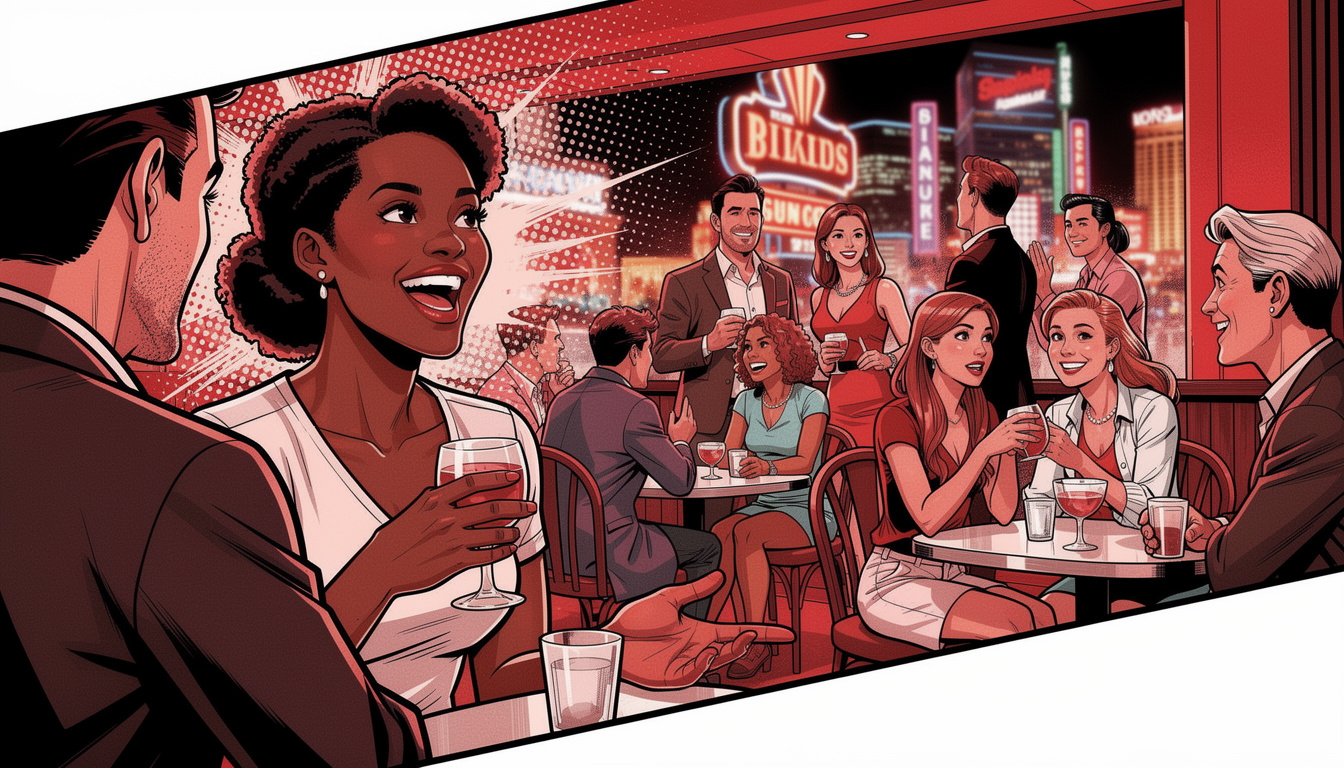
The Expo Was Business, but the Chemistry Test Was Real
Las Vegas Small Business Expo 2026 was not a singles mixer, and there is no reason to pretend the exhibitor floor suddenly became a rom-com. The real story is subtler and honestly more useful. The event turned professional networking into a full day of introductions, compatibility checks, awkward openings, promising conversations, and decisions about who deserved a follow-up.
So yes, it accidentally became a networking date story. Just not the candlelit kind.
The Las Vegas stop in the national Small Business Expo series was held September 10 at the Plaza Hotel & Casino Convention Center in Downtown Las Vegas. The event was promoted as a combination of exhibitors, workshops, education, and networking for entrepreneurs and small-business owners. Registration opened in the morning, and the program ran through the afternoon.
That setup matters. This was not one long cocktail hour where everyone floated around waiting for destiny to hand them a referral. Attendees had an actual business agenda: meet service providers, hear from speakers, compare resources, and find people who might help solve a problem. Still, nearly every part of that process carried a little first-date energy.
You approach someone because their company catches your attention. You trade the polished version of your story. You listen for common ground. Then, somewhere between “What do you do?” and “Who do you serve?” you decide whether the conversation has legs.
Coming from Southern California, I know the difference between chill and vague. Vegas business owners generally do too. They may be friendly, but they are also evaluating whether the person across from them understands deadlines, budgets, customers, and the sacred art of replying to an email. Cute branding can start a conversation. Competence gets the second meeting.
Why Networking Feels So Much Like Dating
The resemblance starts with the first impression. At a business expo, your booth, introduction, posture, and attention span all communicate something before the serious questions arrive. A person who can explain a company clearly without trapping a stranger inside a seven-minute monologue already has an advantage.
Then comes compatibility. A marketing consultant may meet dozens of owners but only click professionally with businesses that match the consultant’s specialty, pricing, and working style. A founder looking for financing might collect several contacts, yet only one or two may offer the right product for the company’s stage. That is not rejection. It is filtering, which is healthier than forcing chemistry where none exists.
The expo format made that filtering easier by putting different kinds of conversations in one place. Exhibitors could present services directly, workshops offered educational value, and structured networking gave attendees a reason to introduce themselves without inventing an opening line beside the snack table.
The Speed-Networking Version of a First Date
Speed networking is the clearest example. The goal is not to close a major deal in one tiny conversation. It is to learn enough to decide whether another conversation makes sense.
A useful introduction answers three things quickly: who you help, what problem you solve, and what kind of connection you want. “I run a business” is technically information, but it gives the other person nothing to grab. “I help independent restaurants reduce food waste, and I’m looking to meet operators with multiple locations” creates an actual path forward.
The same rule applies to listening. If you spend the entire exchange waiting to deliver your pitch, you miss the details that reveal whether there is a fit. Maybe the person does not need your service but works with five companies that do. Maybe you share an audience and could build a workshop together. Maybe the only honest conclusion is that you are not a match. That is still a successful conversation because nobody has to perform fake enthusiasm for three months.
The Exhibitor Floor Was the Profile, Not the Relationship
Exhibitor booths function a little like highly produced profiles. They show the cleanest version of a company through signage, demonstrations, offers, and talking points. That presentation can open the door, but small-business owners still need to ask what sits behind it.
Before committing money or company data, ask about pricing, contract length, cancellation terms, implementation, support, and measurable results. If the service touches payroll, taxes, legal compliance, financing, or cybersecurity, the questions should get even sharper. Vegas loves sparkle, but a glossy booth is not due diligence. We can enjoy the look and still read the agreement, babe.
The strongest expo conversations are usually specific. Instead of asking whether a vendor can “help grow the business,” ask how the service would work for your industry, team size, and current systems. Request examples that resemble your situation. Find out what happens after the sale. Business compatibility is not about whether someone seems impressive for five minutes. It is about whether the relationship still works when a deadline moves and somebody has to solve a real problem.
The Follow-Up Is Where the Story Actually Goes Somewhere
Anyone can collect a stack of cards. The meaningful part starts afterward.
A clean follow-up should arrive while the conversation is still recognizable. Mention where you met, identify the topic you discussed, and propose one reasonable next step. That might be a 20-minute call, a request for pricing, an introduction to another owner, or permission to send more information. There is no need to write a memoir.
Something as simple as, “It was great meeting you at the Las Vegas expo. I enjoyed our conversation about improving online booking for service businesses. Are you available next week for a short call?” does the job. It is direct, personal, and easy to answer.
The opposite approach is blasting every new contact with the same sales email before they have made it home. That is not follow-up. That is turning a human interaction into a mailing-list ambush, and the energy is deeply unattractive.
- Sort contacts by next step. Separate potential clients, vendors, collaborators, mentors, and general community connections.
- Add one useful detail. Record what you discussed so the relationship does not restart from zero.
- Make a focused request. Suggest one action rather than offering a foggy promise to “connect soon.”
- Respect a quiet response. One polite reminder is reasonable. Endless pursuit is not a strategy.
- Protect sensitive information. Verify companies and review terms before sharing financial records, customer data, or account access.
What the Expo Says About Doing Business in Las Vegas
Las Vegas rewards introductions. This is a city where hospitality, entertainment, technology, construction, professional services, food, retail, and creative work constantly overlap. A person you meet in one context may reappear as a client, referral source, vendor, or collaborator months later.
That does not mean every handshake is secretly a deal. It means local business relationships rarely stay inside tidy little lanes. The owner looking for accounting software may meet a designer. The designer may know a photographer. The photographer may need a venue. The useful connection can sit one or two steps away from the original conversation.
That is why the dating comparison works without inventing an expo-floor love story. Both dating and networking require enough confidence to approach, enough curiosity to listen, and enough judgment to recognize fit. Both also punish desperation. If every interaction carries the weight of needing an immediate sale, people feel it.
The smarter move is to arrive prepared but relaxed. Know what you offer. Know what you need. Ask good questions. Leave room for the conversation to surprise you. Then follow up like a person who paid attention.
Las Vegas Small Business Expo 2026 offered the setting, but attendees still had to create the connection. That is the whole accidental date-story lesson: the introduction is only the opening scene. The real relationship, business or otherwise, depends on what happens next.