Every city has a front door. Las Vegas has a diamond.
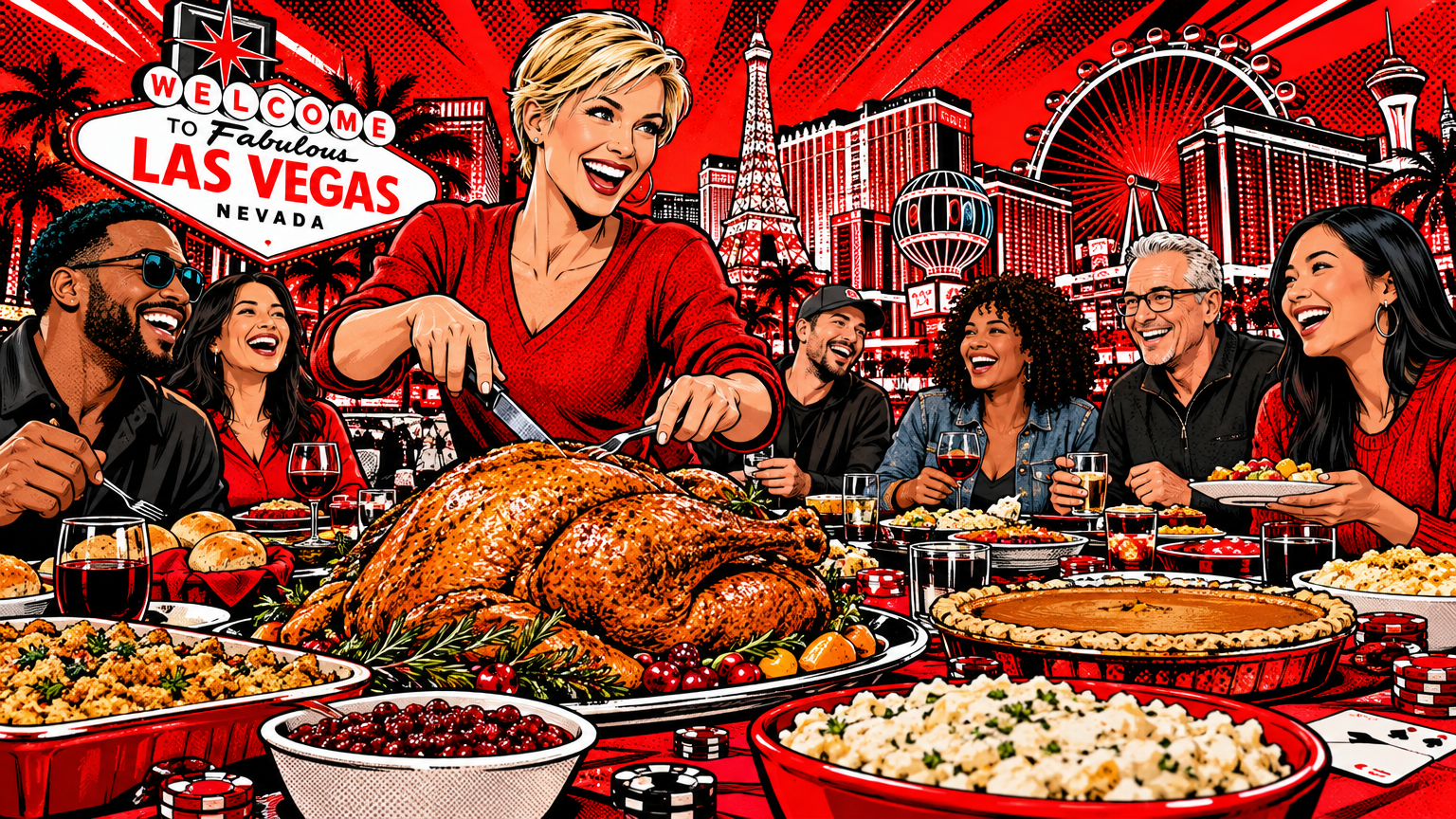
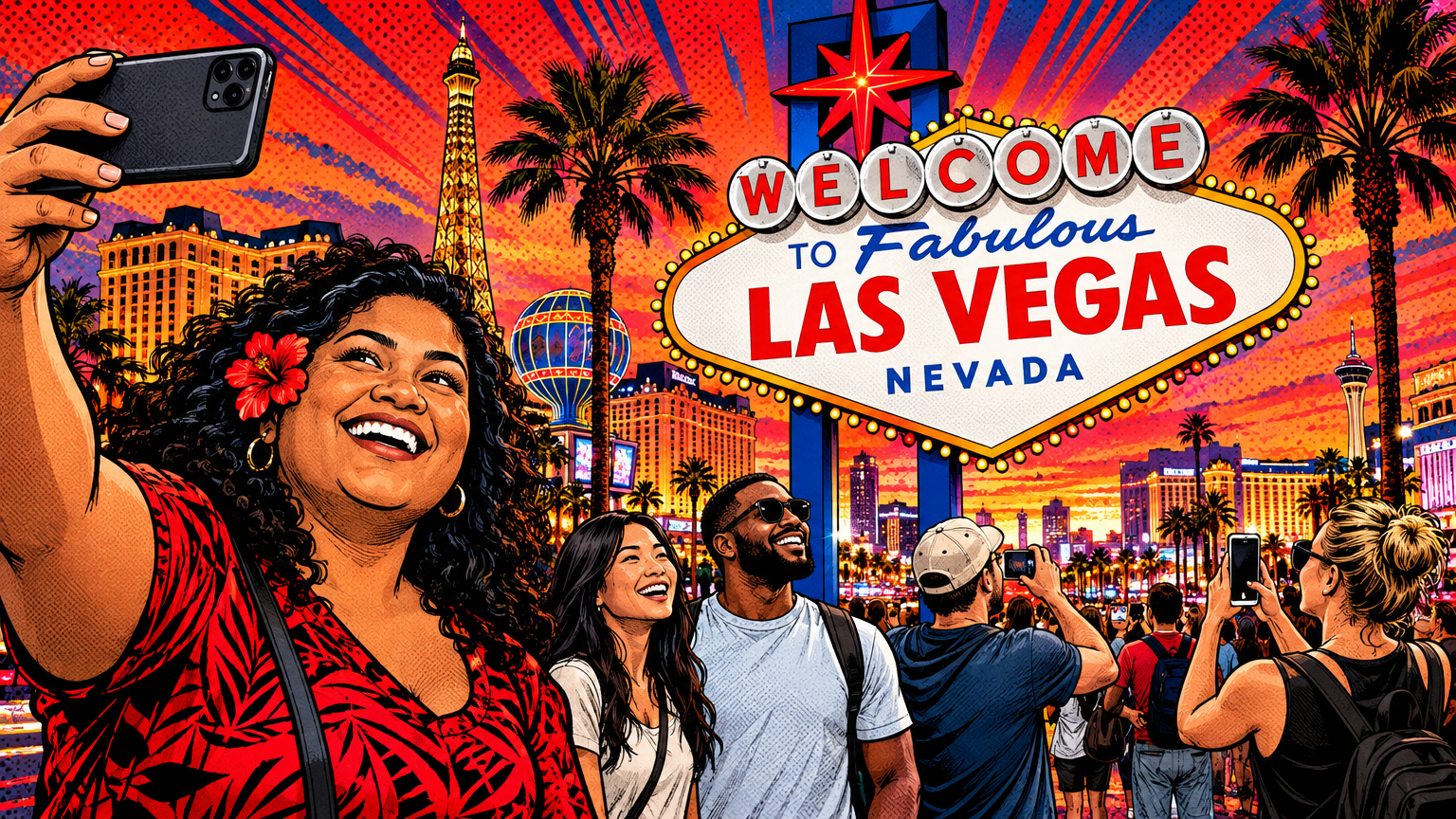
The Welcome to Fabulous Las Vegas sign has greeted drivers on Las Vegas Boulevard since 1959. It stands 25 feet tall in the median at 5100 Las Vegas Blvd S, Las Vegas, NV 89119, and Clark County says it now welcomes nearly 38 million visitors to Clark County each year.
Here is the part most people in the photo line never hear. The most copied image in Las Vegas cost $4,000, was drawn by hand by one of the first women in neon, and was never copyrighted on purpose.
A $4,000 Sign That Refused to Stay Small
In the mid 1950s, salesman Ted Rogich at Western Neon pitched Clark County and the Las Vegas Resort Association on a simple idea. Las Vegas needed a welcome sign that could hold its own next to the giant casino marquees, according to UNLV.
The county bought the idea. The sign was funded in May 1959 and erected soon after by Western Neon, for $4,000.
That was it. No casino paid for it, and no resort brand owned it.
A county welcome sign became the face of a global city anyway. Its image now sits on key chains, shot glasses, shirts, mugs, posters and license plates, and almost none of that happened by licensing deal.
It happened because the design was free to travel. That freedom was the designer's gift, and it is the first reason this sign could only be a Las Vegas story.
Betty Willis Drew It by Hand, in a Trade Run by Men
Betty Whitehead Willis was born in Overton and raised in Las Vegas. Clark County records that she graduated from Las Vegas High School in 1941 and then pursued art studies in Los Angeles.
She came home and broke into a male-dominated neon industry. Clark County calls her a trailblazing commercial artist, and the Las Vegas Convention and Visitors Authority calls her one of the first female commercial artists to work on neon signs.
At Western Neon, she was the company's lone artist, UNLV reports. When the welcome sign assignment landed, she drove up and down Las Vegas Boulevard studying the other signs, determined to build something unique.
Willis already had serious work on the board. She designed the sign for the Moulin Rouge, which UNLV identifies as Las Vegas' first integrated casino, and the Blue Angel Motel sign, a legacy Clark County also credits to her.
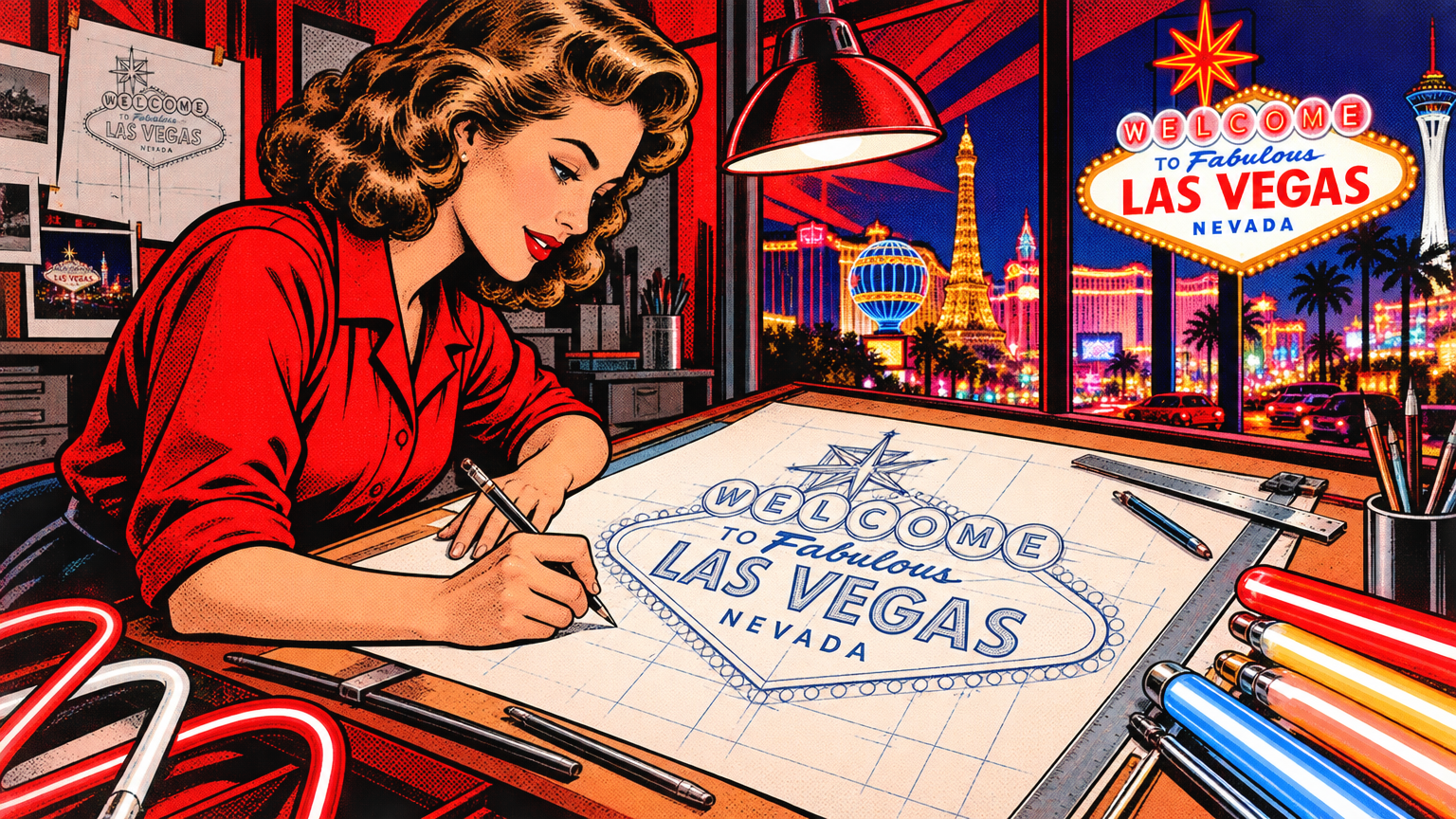
Her method was pure 1950s craft. The Nevada Women's History Project recounts her describing the process: lay the shape on tracing paper, make a blueprint, draw the design with a silver pencil on black mat board, outline the lettering in white paint where the neon would go, then airbrush color over it so the drawing itself seemed to glow.
No software. No stock library. A pencil, paint, and an eye trained on the Boulevard.
Read the Sign Closely: Every Detail Is Doing a Job
Stand in front of the sign and read it like a piece of engineering, because that is what it is. Willis picked a horizontal diamond shape, drawn from Googie architecture, so the sign would be instantly recognizable at road speed, UNLV reports.
The seven white circles behind the word WELCOME are not decoration. The LVCVA's history of the sign explains that the silver circles represent silver dollars, a salute to Nevada as the Silver State.
Then there is the ring of yellow bulbs, the red star on top, and the word Fabulous in script, set against block letters. Willis labored over every one of those details, from the Welcome lettering to the bulb ring, her daughter told UNLV.
- Height: 25 feet tall, mounted in the Las Vegas Boulevard median
- Shape: a horizontal diamond, in the Googie roadside style
- WELCOME letters: backed by silver-dollar circles for the Silver State
- Back side: a second message, Drive Carefully, Come Back Soon
- Owner: YESCO, which bought Western Neon in the early 1960s and leases the sign to Clark County
- Status: listed on the National Register of Historic Places on May 1, 2009
That back side is the detail locals love most. Clark County points out that departing travelers get their own message, Drive Carefully, Come Back Soon, a farewell built into the same sign that welcomed them in.
One sign. Two jobs. Hello on one side, come back on the other.
The Sign That Welcomes You to Las Vegas Is Not in Las Vegas
Here is the twist that surprises even longtime residents. The sign does not stand inside the City of Las Vegas at all.
It stands in Paradise, the unincorporated part of Clark County that also holds most of the famous Strip resorts. The historical marker at the site puts it about four miles south of the Las Vegas city limits.
That is not a mistake or a later move. The sign has stood on its original southern gateway site since 1959, when drivers rolled in on the highway from California and this median was the natural place to meet them.
So the world's most famous welcome to Las Vegas is really a Clark County welcome, delivered in Paradise. In this valley, the welcome mat has always sat just outside the city line, and it has never mattered one bit.
For more stories that could only happen here, browse our Only In Vegas coverage, from the Neon Museum Boneyard to the Flamingo at 80.
She Gave It Away, and That Is Why It Conquered the World
Willis never copyrighted the design. She sold it to Clark County for that $4,000 and called it her gift to her hometown, a line the LVCVA, UNLV and the Nevada Women's History Project all record the same way.
Her daughter, Marjorie Holland, told UNLV the family never considered copyrighting it and never looked into what legal standing Willis had. Holland called the sign, in her mother's story, the little sign that could.
Willis herself saw the trade clearly. UNLV records her saying: "If I had copyrighted the sign, it probably wouldn't have been used as much and wouldn't be as famous. But, it would be nice to have a dime for every time it's been used."
Read that again. The designer of perhaps the most reproduced welcome sign on Earth understood exactly what she gave up, and she would not take it back.
UNLV law students study this sign for that reason. One student in professor Marketa Trimble's 2015 seminar put it plainly: the sign is iconic now because using it was so easy.
Recognition came late, and that delay is part of the story too. Holland told UNLV it was not until The New York Times wrote about Willis in 2005, during the Las Vegas centennial celebration, that she started to get widespread recognition for her contribution to the city's iconography.
Think about that timeline. For more than four decades, millions of people photographed, wore, and carried home her design while almost nobody knew her name.
The welders and glassblowers who built the sign got about as much credit as she did at the start, UNLV notes, which is to say not much at all. The fame belonged to the sign first, and only later to the woman who drew it.
Willis died on April 19, 2015, at age 91. By then, the gift she drew at a drafting table had become the visual shorthand for an entire city, recognised on sight on every continent.
From Dodging Traffic to Solar Power and a Place of Healing
For its first decades, getting a photo at the sign meant taking your chances. The LVCVA recalls visitors racing across Las Vegas Boulevard to reach the median, long before there was a parking area or a grassy photo spot.
UNLV reports Clark County has spent nearly $1 million building parking around the sign so visitors would stop risking their lives crossing the Boulevard. Site improvements completed in December 2008 gave the public official access to the sign for the first time.
The sign kept evolving after that. In 2014, Clark County installed solar panels by the sign that provide enough energy to illuminate it all day and night, according to the LVCVA.
Then came the chapter nobody wanted. After the October 1, 2017 tragedy on the Strip, Clark County says the sign transformed into a destination of healing, serving as a temporary memorial for those who lost their lives.
The Clark County Museum preserves an archive of the items people left at that memorial. A welcome sign had become the place a grieving city gathered, which tells you how deep this $4,000 diamond runs in local life.
How to Visit It Right
The sign is free, it is open around the clock, and it is one of the easiest wins on a Las Vegas trip. Do it right and it takes 20 good minutes instead of a stressful hour.
- Go early or go late. Sunrise and after dark beat the midday photo line, and the bulbs and neon show best at dusk.
- Use the median parking lot, and enter from the southbound side of Las Vegas Boulevard. Never stop in a traffic lane or run across the Boulevard.
- Read the back. Walk around and find Drive Carefully, Come Back Soon, the half of the design most visitors never see.
- Spot the silver dollars. Count the circles behind WELCOME and remember they stand for the Silver State.
- Pair it with the south Strip. The sign sits just south of Mandalay Bay, so fold it into a south-end day instead of making a special cross-valley trip.
Most welcome signs are furniture. This one is a biography.
It carries a hometown artist who outdrew an industry, a county that bought a masterpiece for $4,000, a silver-dollar salute to Nevada, a farewell written on its back, and a city that gathered under it in its hardest week. That is why a 25-foot diamond in a highway median belongs in a category of one, and why it could only be in Vegas.