The Las Vegas Arts District offers something increasingly valuable in a city built around enormous attractions: a neighborhood that is best experienced one small discovery at a time.
Known as 18b after its original 18-block footprint, the district sits between the Strip and the Fremont Street corridor. Its mural-covered streets bring together galleries, working artists, vintage stores, independent restaurants, breweries, coffee shops, cocktail bars and creative businesses that feel connected to the surrounding neighborhood.
You can visit for one meal, spend an afternoon shopping or turn the district into a full evening of art, drinks and people-watching. The area has grown rapidly, but its strongest appeal remains simple: it gives locals and visitors a version of Las Vegas that feels personal, walkable and largely powered by independent businesses.
The Arts District Shows a More Personal Side of Las Vegas
The Arts District is not trying to compete with the Strip’s scale. It offers an entirely different type of experience.
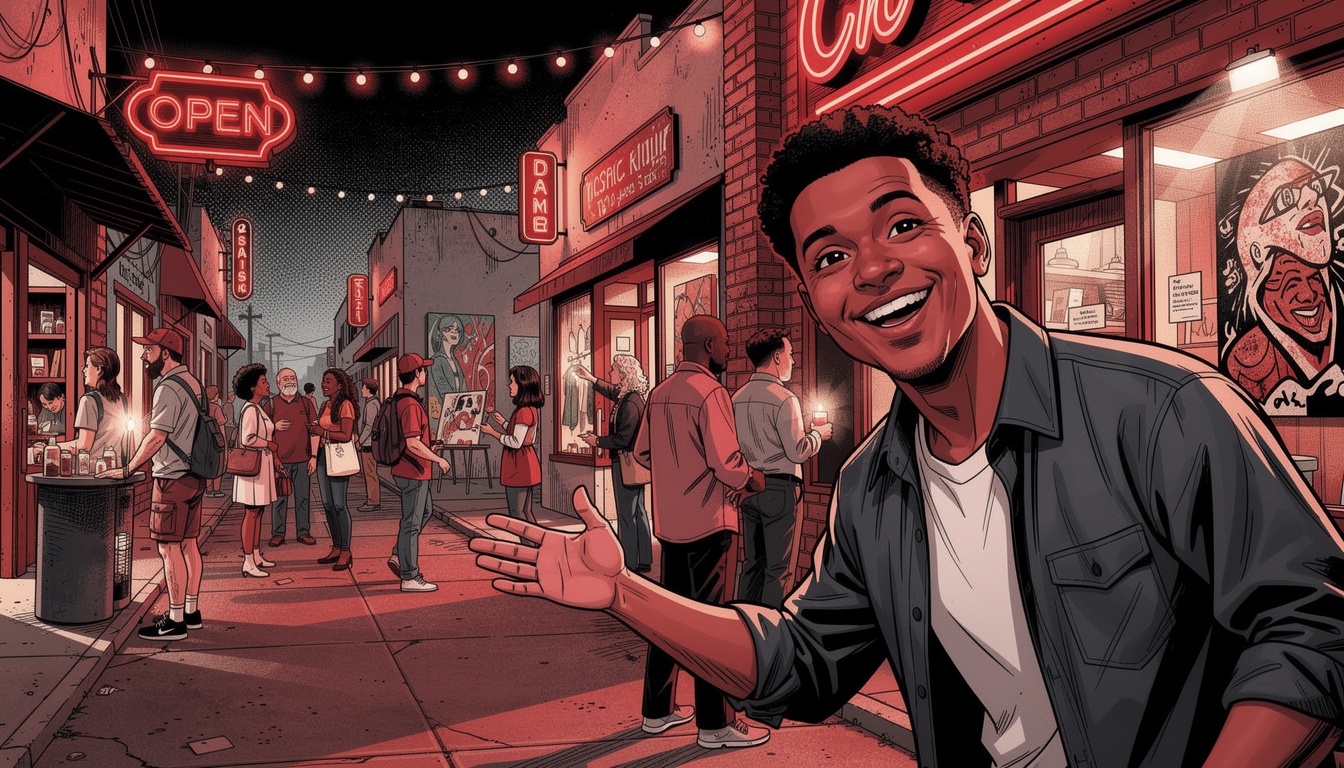
Instead of resort towers, giant marquees and casino floors, visitors find low-rise buildings, converted industrial spaces, patios, antique stores, artist studios and independent storefronts. The district rewards people who slow down enough to notice what is happening inside each building.
One block might include a gallery, a cocktail bar, a furniture store and a restaurant making pasta from scratch. The next could bring a mural, a record shop, a brewery and a rack of vintage clothing outside a small boutique.
That variety makes the neighborhood feel less programmed than a resort attraction. You do not need one major destination to justify the visit. The experience comes from combining several smaller stops.
Visitors planning a larger Downtown outing can also use ESB’s Downtown Las Vegas neighborhood guide to connect the Arts District with Fremont East, Symphony Park and other nearby areas.
Art Still Gives the Neighborhood Its Identity
Restaurants and nightlife now generate much of the district’s attention, but art remains the foundation.
The 18b Las Vegas Arts District organization supports artists, cultural programming and the neighborhood’s creative identity. Its name refers to the district’s original 18 blocks, although the community has expanded well beyond that early footprint.
The Arts Factory, near Charleston Boulevard and Art Way, remains one of the neighborhood’s best-known creative anchors. The converted commercial building houses galleries, studios and independent creative businesses.
Nearby Art Square adds more galleries, workspaces, shops and performance activity. Smaller studios and exhibition spaces are distributed throughout the surrounding streets, making it important to check current hours before visiting. Many galleries do not operate on the same schedule as restaurants and bars.
The district’s art calendar changes throughout the year. Exhibitions open and close, artists rotate through residency spaces and special events bring studios to life outside their usual hours. The official 18b event calendar is one of the best places to check what will be happening during a specific visit.
The Murals Turn the Streets Into an Open-Air Gallery
Visitors do not have to enter a formal gallery to find art.
Murals appear on building walls, garage doors, alleys, utility boxes and other surfaces throughout the district. Some are bold and playful. Others address local history, politics, identity or the changing character of Las Vegas.
The collection is not frozen in place. New works appear, buildings change and older murals may eventually be covered or replaced. That gives repeat visitors something different to find each time.
The murals also make the Arts District one of the city’s strongest neighborhoods for casual photography. The backgrounds feel distinctly Las Vegas without depending on familiar casino signs or Strip landmarks.
Visitors should remember that the murals often sit beside active businesses, homes and workspaces. Avoid blocking entrances, climbing on private property or interfering with customers while taking pictures.
First Friday Shows the District at Full Volume
First Friday is the neighborhood’s signature recurring event.
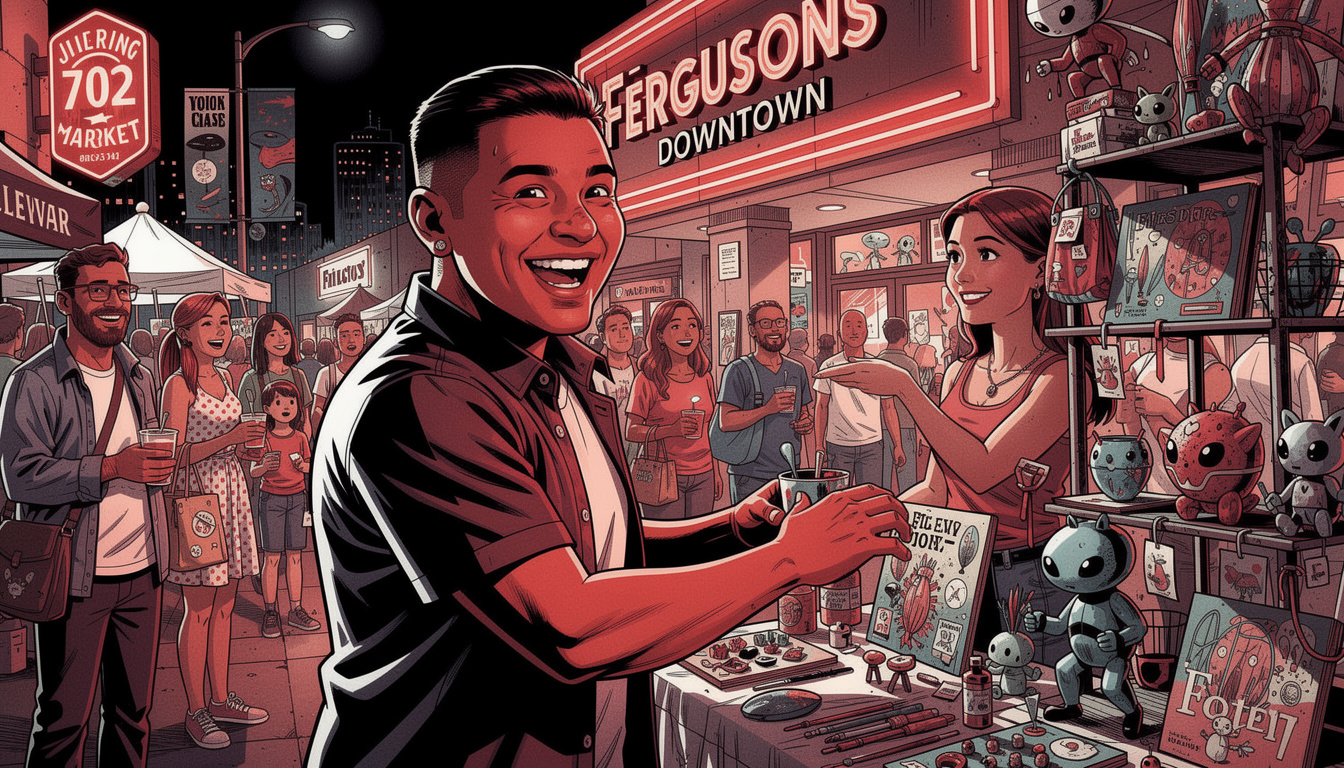
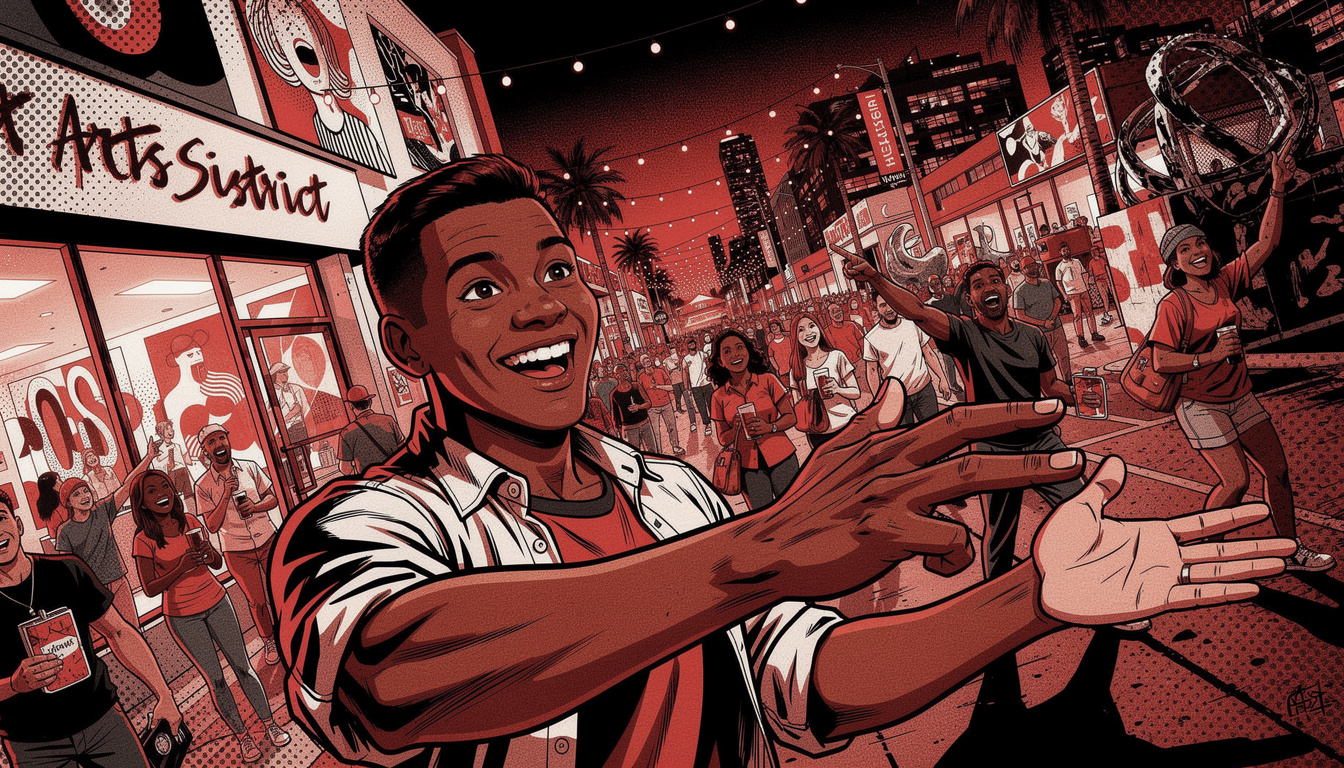
On the first Friday of each month, the Arts District fills with artists, makers, food vendors, live music, gallery activity and large crowds moving through the streets. The event has been part of Las Vegas’ local arts culture since 2002.
The next First Friday is scheduled for August 7, 2026. The current format includes an Art Walk around Boulder Avenue, the Arts Factory and First Street, with more than 100 participating artists and makers advertised by organizers.
Live painting, music, food trucks and extended business hours help turn the broader district into an evening festival. Admission to the neighborhood event is free, although food, drinks and vendor purchases cost extra.
Review the current event listing and footprint before arriving because street closures, construction and vendor areas can change.
First Friday is an excellent introduction for visitors who want energy and variety. It is not necessarily the best time for someone seeking a quiet gallery visit or easy restaurant access.
People who prefer a calmer experience should return on a regular weekday or weekend. The district’s restaurants, bars, shops and galleries deserve attention beyond one crowded evening each month.
The Restaurant Scene Has Become a Destination of Its Own
The Arts District has developed into one of Las Vegas’ most active independent dining neighborhoods.
Its restaurant scene works because it offers several levels of commitment. Visitors can make a dinner reservation, grab coffee and pastries, order a slice of pizza, sit at a brewery or move between several businesses for a course-by-course evening.
Current neighborhood standouts include:
Esther’s Kitchen: Chef James Trees’ seasonal Italian restaurant is known for house-made pasta, sourdough bread, pizza and a dining room that regularly fills with locals and visitors.
Makers & Finders: A lively Latin-inspired café serving coffee, brunch, cocktails and comfort food along Main Street.
1228 Main: A bakery, café and restaurant offering pastries, coffee, breakfast, lunch and evening service.
Good Pie: A Brooklyn-style pizza restaurant serving slices, full pies and several regional pizza styles.
Main St. Provisions: An independent restaurant focused on modern American cooking and a frequently changing menu.
Bar Boheme: A French restaurant and bar from the team behind Esther’s Kitchen.
Palate: A polished dining room from chef Sterling Buckley with a menu that draws from several culinary influences.
Jammyland: A reggae-influenced cocktail bar and kitchen serving food inspired by the African and Caribbean diaspora.
The list continues to grow, which is why visitors should avoid trying to cover the entire district in one night. Choosing two or three places within a small walking area usually creates a better experience.
The Bars and Breweries Give the District a Nightlife Identity
The Arts District becomes a nightlife neighborhood after the galleries and vintage stores begin closing.
The energy is generally more relaxed than a major Strip nightclub. Many businesses focus on craft cocktails, beer, music and conversation rather than bottle service or large dance floors.
ReBAR: A bar and antique store where much of the furniture, glassware and decoration is available to purchase.
Velveteen Rabbit: An intimate cocktail bar known for seasonal menus, original drinks, art and a backyard patio.
Able Baker Brewing: A local brewery with more than 30 taps and an in-house kitchen.
Nocturno: A cocktail-focused lounge with a large drink menu and a food program designed for late-night visits.
Echo Taste & Sound: A listening-room concept combining cocktails, food, vinyl and live music.
Jammyland: A colorful bar with rum drinks, reggae music, Caribbean-inspired food and a large outdoor patio.
The close spacing between businesses makes it possible to visit several places without moving a car. That is one of the neighborhood’s biggest advantages for adults planning a night out.
Anyone drinking should use a designated driver, rideshare or the city’s transportation options rather than moving a vehicle between stops.
Vintage Stores and Antique Shops Reward Browsing
Shopping in the Arts District feels different from shopping inside a resort mall.
Main Street and the surrounding blocks contain antique dealers, vintage clothing stores, furniture showrooms, record sellers, collectible shops, boutiques and businesses specializing in unusual home décor.
Inventory changes constantly. One visit might turn up a vintage casino ashtray, midcentury furniture, an old Las Vegas postcard, a western shirt or a piece from a local designer.
The appeal comes from the search. Visitors may not know what they want until they find it.
Buying from these stores also supports the independent operators that give the neighborhood its personality. A purchase does more for the district than simply photographing a storefront and leaving.
The Neighborhood Is Walkable, but Plan for the Heat
The district’s most active sections are concentrated around Main Street, Commerce Street, Casino Center Boulevard, Charleston Boulevard, Art Way and the surrounding side streets.
That makes the neighborhood relatively walkable once visitors arrive. It does not make Southern Nevada’s summer heat any less serious.
During August, daytime temperatures can make even a short walk uncomfortable. Visit earlier in the morning for coffee and shopping or begin exploring in the late afternoon and evening.
Wear comfortable shoes, carry water and avoid leaving children or animals inside parked vehicles. Distances that look small on a map can feel much longer without shade.
Cooler months provide the best conditions for long walks, patios and unplanned wandering. Summer visitors will have a better experience by building a route around air-conditioned stops.
Road Construction Is Affecting Access in Summer 2026
Active construction around Charleston Boulevard is affecting some of the usual driving routes into the district.
As of August 1, the city recommends using Oakey Boulevard to reach Main Street and businesses south of Charleston. Bonneville Avenue can provide access to businesses north of Charleston.
Casino Center Boulevard has also experienced restrictions south of Charleston during work connected to the Charleston Boulevard Storm Drain Project.
Conditions can change as construction advances. Drivers should review the city’s current Arts District access guidance before visiting during major construction periods.
The important message is that the district remains open. Restaurants, galleries, retailers and bars still need customer traffic while road work continues nearby.
A New Parking Garage Is Coming This Fall
Parking has become one of the district’s biggest growing pains.
A new city-owned garage at 1421 S. Casino Center Blvd. is scheduled to open September 29, 2026. The $25 million facility will add approximately 500 parking spaces near the center of the neighborhood.
The city plans to charge $3 per hour with a $15 daily maximum. The building will also include ground-floor commercial space and a large mural.
Additional street-parking changes are scheduled to begin October 1:
Monday through Friday: Free metered street parking from midnight through 1 p.m., followed by paid parking from 1 p.m. to midnight.
Saturday and Sunday: Paid street parking from 8 a.m. to midnight.
Garage passes: Qualified district residents and employees will have access to discounted monthly options.
Until those changes take effect, visitors should read the signs and meter instructions at the exact location where they park. Do not assume a vacant private lot is approved event parking.
The Free Downtown Loop Can Simplify the Visit
The city’s Downtown Loop provides free shuttle service between several Downtown attractions, including an Arts District stop near Art Way and Boulder Avenue.
The shuttle currently operates Sunday through Thursday from 11 a.m. to 6 p.m. and Friday and Saturday from 3 to 10 p.m.
A special First Friday route also operates between the City Hall parking garage and the Arts District during the monthly event.
The Loop can be useful for visitors combining the Arts District with Fremont Street, the Mob Museum, Symphony Park or other Downtown destinations. Check the current route and hours before depending on it for the return trip.
How to Build a Strong Arts District Visit
The district works best with a loose plan rather than a rigid minute-by-minute schedule.
A Daytime Visit
Start with coffee or brunch, visit the Arts Factory and nearby galleries, then browse the vintage and antique businesses along Main Street. Finish with a late lunch before the neighborhood becomes busier.
An Evening Visit
Arrive before dinner to see murals and shops while there is still daylight. Make one dinner reservation, then walk to a cocktail bar, brewery or live-music venue.
A First Friday Visit
Arrive early, expect crowds and identify an official parking or shuttle option before driving into the district. Explore the Art Walk, buy something directly from an artist and make time for the surrounding permanent businesses.
A Quick Introduction
Choose one anchor restaurant or gallery and walk the nearby blocks for 60 to 90 minutes. Even a short visit can reveal a side of Las Vegas that many tourists never experience.
Supporting the District Means Spending With Its Businesses
The Arts District is frequently described as a place to take pictures, but it survives through transactions.
Artists need people to buy prints and original work. Restaurants need reservations and repeat customers. Galleries need visitors who attend openings. Vintage stores need shoppers. Bartenders, servers and musicians need patrons who tip.
That support matters as the neighborhood becomes more valuable and attracts larger developments. Growth can bring customers, housing and infrastructure, but it can also increase rents and put pressure on the independent operators that made the district appealing.
The best way to help preserve the neighborhood is to participate in its economy. Buy coffee. Order dinner. Take home a piece of art. Shop locally. Return on a regular day instead of appearing only for First Friday.
Why the Las Vegas Arts District Is Worth Exploring
The Las Vegas Arts District is worth exploring because it combines art, food, nightlife, shopping and local business within a neighborhood that still feels open to discovery.
It can be quiet on a weekday afternoon and packed during First Friday. It can deliver a serious dinner, an inexpensive slice, an original artwork, a vintage treasure or a cocktail on a patio.
Most importantly, the district offers a fuller picture of Las Vegas.
The city is not only resorts, casinos and giant entertainment venues. It is also artists working inside converted buildings, chefs betting on independent restaurants, shop owners preserving old objects and residents building a neighborhood culture one block at a time.
The Arts District keeps changing, but that creative energy remains the reason to visit.