Primm May Need a Better Stop, Not a Bigger Dream
The Next Primm May Not Look Like the Old One
The next Primm may not be saved by trying to become a casino destination again.
It may be saved by becoming a better stop.
That’s the practical business shift sitting underneath the entire Primm story. For decades, the town was built around destination thinking. Pull travelers off Interstate 15. Get them to slow down. Get them inside a large property. Get them to spend time, not just money.
That model doesn’t match the corridor the way it used to.
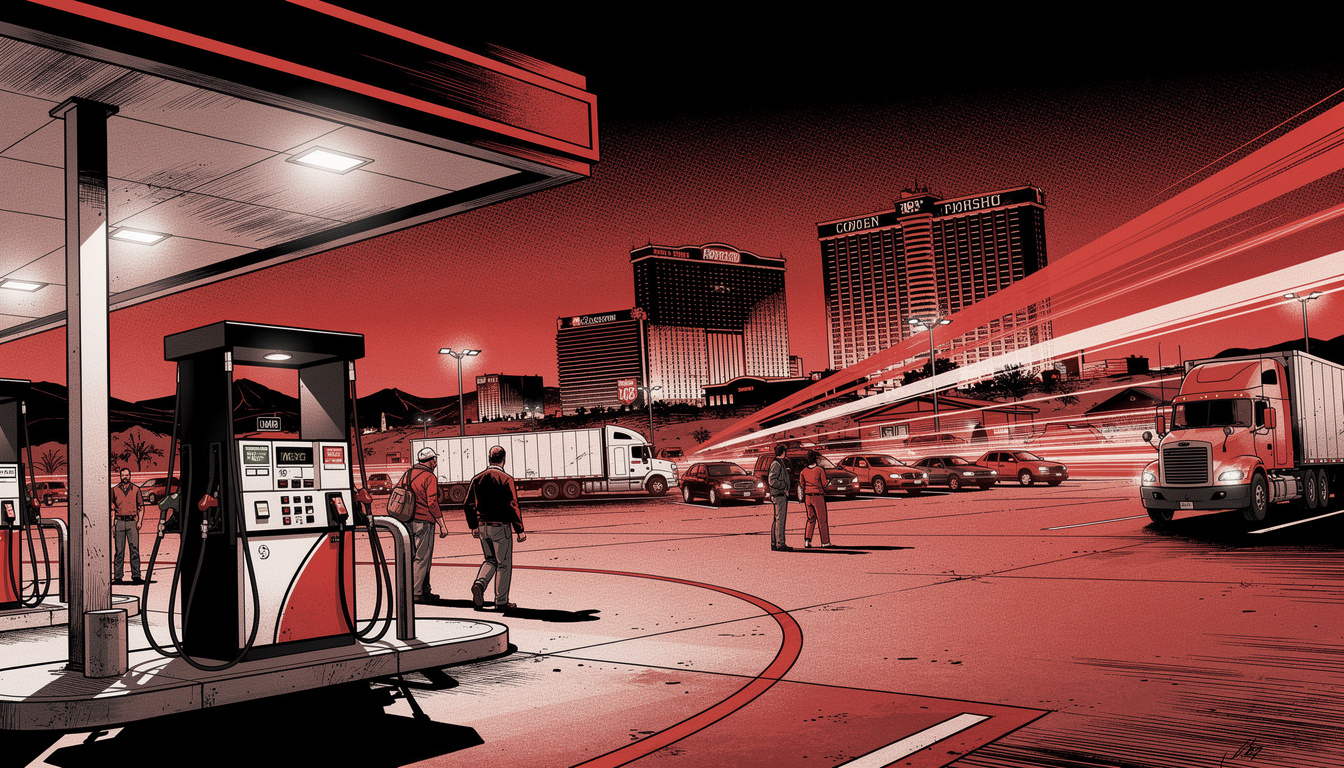
The modern I-15 traveler is moving differently. Families want food, fuel, bathrooms, and speed. Truckers need diesel, parking, showers, lighting, and safe access. Tourists want clean convenience before getting back on the road. Freight operators need infrastructure, not fantasy.
That’s why truck stops and travel centers may offer Primm a more realistic future than another attempt to revive the old border-casino model in full.
Primm doesn’t need to become a smaller Las Vegas again.
It may need to become the most useful stop between Southern California and Las Vegas.
The Business Model Has to Match the Road
Primm’s old model depended on convincing travelers to stay longer than they planned.
A travel-center model doesn’t need that.
It only needs travelers to stop, spend quickly, and keep moving. That’s a very different business. It’s less romantic, but it may be more durable. It fits a corridor where the traffic is still real, but the customer’s mission has changed.
Drivers still pass Primm.
That’s not the issue.
The issue is what kind of business can convert that traffic now.
A massive destination model needs dwell time. A truck-stop model needs throughput. It needs volume, speed, consistency, basic services, and clear execution. That may be exactly where Primm’s next life starts.
The Old Primm Needed Dwell Time
The Problem With Asking Travelers to Stay
The old Primm sold time.
The new corridor sells speed.
That’s the mismatch. Casino resorts need customers to linger. They need people to park, enter, sit down, eat, gamble, book rooms, shop, watch events, and spend across multiple areas. That kind of business model depends on time on property.
It’s not built for the customer who wants to be back on I-15 in 12 minutes.
Large properties also carry large obligations. Hotel rooms need staff. Restaurants need steady traffic. Gaming floors need players. Parking lots need security. Utilities keep running whether the rooms are full or empty. Maintenance doesn’t stop because Tuesday is slow.
That’s why Primm’s old model became exposed.
Weekend traffic can create life. It can create lines, noise, and the appearance of demand. But weekend bursts aren’t always enough to carry daily overhead. A big resort property doesn’t only have to win on Friday night and Sunday afternoon. It has to survive the quiet middle of the week too.
That’s where the old Primm struggled.
Massive Buildings Need a Different Customer
A massive property needs a customer who wants a larger experience.
That customer still exists in Las Vegas.
It’s less reliable in Primm.
The modern traveler heading between Southern California and Las Vegas often has a different mindset. They may already have a hotel booked. They may want to get home. They may need to make good time. They may only be looking for gas, coffee, food, or a restroom. They may not be interested in turning a stop into an event.
That’s why the old model became harder to defend.
The buildings were designed for an era when Primm’s border advantage had more force. The customer could be convinced to stop early and stay. But once the corridor shifted toward speed and utility, those same buildings became harder to support.
Primm’s old model needed travelers to linger.
The modern corridor rewards businesses that help them move.
Travel Centers Match What I-15 Already Does
Utility Beats Nostalgia
Interstate 15 still moves people and freight.
That’s Primm’s most important remaining advantage.
The road carries tourists, families, truckers, delivery vehicles, commuters, construction traffic, and long-haul freight. A travel center doesn’t have to fight that motion. It can monetize it.
That’s the difference.
A travel center doesn’t need to make Primm the destination. It only needs to make Primm the best stop on the route. That’s a cleaner, sharper, more practical pitch.
The customer needs are obvious:
Fuel
Food
Coffee
Restrooms
Truck parking
Showers
Convenience goods
Safe lighting
Easy freeway access
Fast reentry to the road
Those needs don’t only show up on weekends. They exist every day. They exist in the morning, at night, during holidays, during freight runs, and during ordinary travel.
That’s why the model fits.
A travel center doesn’t need nostalgia.
It needs execution.
The Best Stop Can Beat the Biggest Property
Primm doesn’t have to win by being big.
It can win by being useful.
That’s a major strategic change. The old resort model competed for attention. A travel-center model competes for reliability. Is it clean? Is it fast? Is it safe? Is there parking? Is the food easy? Can a trucker get what they need? Can a family stop without hassle? Can a driver fuel up and get back on the road quickly?
Those are not glamorous questions.
They’re bankable questions.
The future of Primm may depend on answering them better than anyone else near the state line.
I’d argue that’s a stronger path than pretending the old customer is coming back in the old way. The corridor has already told the market what it wants. Primm’s next operator needs to listen.
Freight Could Be Primm’s Most Honest Customer
Freight Doesn’t Need to Be Entertained
Freight is less glamorous than tourism.
It may be more honest revenue.
Commercial drivers don’t need a themed resort. They don’t need a roller coaster. They don’t need a massive lobby or a full entertainment calendar. They need practical services that work every time.
They need diesel.
They need parking.
They need food.
They need restrooms.
They need showers.
They need safety.
They need speed.
That’s a very different demand profile from leisure traffic. It’s more functional. It’s less emotional. It’s tied to movement, schedules, routes, logistics, and daily operations.
That’s exactly why it matters.
Freight traffic can create steadier activity than weekend tourism. It doesn’t depend on people feeling like taking a mini-trip. It depends on trucks moving goods across a major Western corridor.
Primm sits on that corridor.
That position still has value.
Commercial Traffic Rewards Practical Infrastructure
Truck-stop economics are built around serving repeatable needs.
A commercial driver may not care about Primm’s old identity, but they’ll care about access, parking, food quality, lighting, safety, and whether the stop saves time. That’s the kind of demand Primm should be studying.
The old model asked: How do we make people stay?
The freight model asks: How do we make movement easier?
That’s a smarter question for the current corridor.
It also creates a more realistic foundation for daily activity. Freight doesn’t solve every problem. It won’t automatically fill hotel towers or restore every old asset. But it can keep the exit active. It can support fuel, food, maintenance, parking, and service operations.
In a place fighting vacancy, daily function matters.
Freight may not be flashy.
But flashy isn’t what Primm needs first.
Food and Fuel May Matter More Than Rooms
The New Math Is Smaller, Faster, and More Repeatable
The old Primm depended heavily on room nights, gaming spend, restaurants, shopping, and entertainment.
The next Primm may need a different math.
Fuel. Coffee. Quick-service food. Convenience items. Parking. Showers. Snacks. Fast transactions. Repeat stops. These are smaller transactions than a hotel stay, but they can happen more often and with clearer customer intent.
That’s the travel-center logic.
It’s not one big spend.
It’s many practical transactions.
That can matter more in a corridor where people are moving quickly. A customer may not want to spend the night, but they may need fuel. They may not want a sit-down meal, but they may buy coffee, a sandwich, or fast food. They may not want a casino floor, but they may need a clean bathroom and a safe place to stop.
That’s still business.
It’s just not the old business.
Food Brands Could Become New Anchors
Food may become one of Primm’s most important future anchors.
Not fine dining.
Not destination dining.
Roadside food.
Reliable, branded, fast, familiar, and easy food.
The modern traveler often makes quick decisions based on certainty. A known food brand can create a stop. A clean travel center with strong food options can pull traffic that might otherwise keep moving. For truckers, food quality and access can be part of choosing one stop over another.
That makes food more than a side offering.
It can become part of the core revenue model.
The same applies to fuel. A strong fuel operation creates traffic. That traffic supports food. Food supports convenience retail. Convenience retail supports repeat behavior. Parking supports freight. Lighting supports safety. Safety supports trust.
That’s how a practical ecosystem gets built.
The future may be less about room nights and more about register rings.
Limited Gaming Could Still Fit, but Not as the Engine
Gaming as an Amenity, Not the Whole Bet
Primm doesn’t necessarily need to remove gaming from its future.
It may need to demote it.
That’s the smarter distinction. Limited gaming can still make sense inside a travel-center ecosystem. A smaller slot area or quick-play option could serve travelers who want a short stop. It could add revenue without forcing gaming to carry the whole town.
The mistake would be making gaming the entire model again.
The old formula put too much weight on the idea that Primm could operate as a destination. That idea has weakened. A travel-center future could still include gaming, but gaming would support the larger utility model instead of defining it.
That’s a healthier role.
It matches the customer who stops for fuel, food, or parking and may spend a little extra time.
It doesn’t require every visitor to behave like a resort guest.
The Smart Move Is Not All or Nothing
The debate shouldn’t be framed as gaming versus truck stops.
The real question is hierarchy.
What sits at the center of the business model?
If gaming sits at the center again, Primm risks repeating the old mistake. If travel services sit at the center, gaming can become one supporting layer. That’s a more right-sized approach.
The smartest move may not be removing gaming.
It may be making gaming smaller, simpler, and more honest about its role.
Worker Housing Could Become Strategic Infrastructure
You Can’t Reopen the Exit Without Labor
Any future model still needs workers.
That includes a travel center. It includes food. It includes fuel. It includes parking operations, maintenance, limited gaming, convenience retail, logistics support, and any future airport-adjacent development.
Primm’s labor issue isn’t separate from its redevelopment issue.
It’s part of it.
Remote operations need nearby workers. If the existing workforce is displaced and housing becomes unstable, reopening gets harder. Operators can have capital, brands, land, and equipment, but they still need people to run the place.
That’s why worker housing may become strategic infrastructure.
Not charity.
Not a side issue.
Operating leverage.
Housing Stability Supports the Business Case
A travel-center model needs reliable staffing.
That’s harder in a remote area without nearby housing. If workers have to commute long distances, transportation becomes a cost. If workers don’t have reliable cars, the labor pool shrinks. If housing disappears, recruitment gets more expensive.
That matters to any serious operator.
Primm’s existing worker housing could support a restart if it’s preserved and tied to a workable employment model. It could help stabilize labor, reduce friction, and keep the exit from losing the people needed to operate the next version of the town.
In a remote corridor, housing isn’t charity.
It’s operating leverage.
A Travel-Center Model Could Keep Primm From Going Dark
Daily Function Is the Bridge
Darkness is dangerous for a remote commercial corridor.
Once an exit goes quiet, the damage compounds. Customers change habits. Workers leave. Vendors move on. Buildings deteriorate. Security costs rise. Public confidence weakens. The place starts feeling abandoned, and abandoned places become harder to restart.
That’s why Primm needs a bridge model.
It doesn’t need a perfect 20-year solution tomorrow. It needs enough daily function to keep the corridor alive. Fuel, food, restrooms, parking, lighting, and basic travel services could preserve activity while the larger land and redevelopment questions get sorted out.
Even a partial restart could matter.
The first win may not be revival.
It may be preventing vacancy from becoming permanent.
Activity Protects Long-Term Value
Daily activity protects more than revenue.
It protects habit.
That’s important. If drivers still know Primm is open, clean, safe, and useful, the exit keeps a place in the customer’s mind. If truckers can still rely on it, freight behavior can form. If food and fuel remain available, the corridor keeps a reason to stop.
Those habits are valuable.
Once they disappear, they’re expensive to rebuild.
That’s why a travel-center model could be more than a short-term patch. It could protect long-term redevelopment value by keeping Primm relevant while the next chapter takes shape.
The Airport Makes the Travel-Center Bet More Interesting
The Airport Is Optionality, Not a Rescue Plan
The proposed Southern Nevada Supplemental Airport gives Primm a long-term reason to stay in the conversation.
It doesn’t solve the current crisis by itself.
That’s an important distinction. The airport is years away, uncertain, and tied to major planning, environmental, transportation, water, funding, and development questions. Primm can’t wait around for it while buildings go dark and workers leave.
But the airport does create optionality.
If the project moves forward, the broader area between Jean and Primm could become much more important. Construction demand, worker movement, fuel, food, freight, logistics, maintenance, housing, and airport-support services could all matter more.
A travel-center strategy fits that possibility.
It can make money now while preserving optionality for later.
Primm Needs a Bridge Before the Long Game Arrives
The airport story is the long game.
The travel-center story could be the bridge.
That’s why the model is interesting. It doesn’t require the airport to open tomorrow. It doesn’t require Primm to gamble everything on one uncertain future. It creates a practical use based on existing traffic while positioning the town for future growth if the airport eventually changes the corridor.
That’s how strong real estate strategy often works.
Make the current land useful.
Preserve the upside.
Avoid waiting for one giant project to rescue everything.
Primm’s next move should follow that logic.
The Risk Is Thinking Too Small or Too Big
The Right Model Has to Fit the Real Corridor
A travel-center model isn’t automatic salvation.
It still has to be executed well.
Operators would need capital, staffing, maintenance, strong food options, reliable fuel service, clean operations, safety, lighting, parking management, and enough customer trust to rebuild habits. A weak travel center won’t save Primm. A sloppy operation won’t fix the corridor. A half-plan won’t stabilize the town.
But the opposite risk is just as serious.
Thinking too big could recreate the old mistake.
Primm has already paid for oversized assumptions. The next model has to be right-sized. Too small, and it won’t stabilize enough of the town. Too big, and it risks repeating the same mismatch between asset size and actual demand.
The winning strategy has to fit the real corridor.
Not the past.
Not the fantasy.
The corridor.
Discipline Matters More Than Hype
Primm doesn’t need another oversized dream that sounds impressive and fails slowly.
It needs disciplined execution.
That means building around actual customer behavior. Drivers need speed. Truckers need infrastructure. Workers need housing. Operators need manageable overhead. The land needs productive use. The corridor needs safety and services. Future airport optionality needs to be preserved without becoming the only plan.
That’s the model.
It’s not as dramatic as trying to bring back the old Primm.
It’s more serious.
And serious is what the town needs now.
Primm Doesn’t Need to Be a Destination to Matter
The Next Primm Can Win by Serving the Road
Primm doesn’t need to be a destination to matter.
That may be the most important idea in the entire redevelopment conversation.
The old Primm tried to make travelers stay. The next Primm may win by helping them move. That’s a different role, but it’s still valuable. It may even be more aligned with the modern corridor than the old model was.
The I-15 border corridor still matters.
Southern California still connects to Las Vegas through it.
Freight still moves through it.
Families still drive it.
Tourists still use it.
Workers may eventually support new development around it.
The question is whether Primm can become useful enough to convert that movement into daily revenue again.
The Most Useful Stop May Be the Strongest Future
The smartest future for Primm may not be about bringing back the past.
It may be about accepting a new job.
Serve the road.
Serve the driver.
Serve the trucker.
Serve the worker.
Serve the corridor.
If that means fuel, food, parking, restrooms, fast service, safe lighting, limited gaming, logistics support, and worker housing, then that’s the path. It may not carry the same mythology as the old Primm, but it could carry the town further.
The casino era made Primm recognizable.
A travel-center future could make it useful again.
That’s what matters now.
If Primm becomes the stop that serves the road better than anyone else, it won’t need to become what it used to be.