Las Vegas has entered a capital-intensive fight for attention. The prize is bigger than a show ticket. Operators want the hotel night, the cocktail order, the dinner check, the merchandise sale and several hours of a visitor’s limited time.
Follow the money and the strategy comes into focus. Sphere is selling technological spectacle at arena scale. AREA15 is building an off-Strip district around immersive attractions. Universal has planted a year-round horror business inside that district. Atomic Golf is packaging gameplay with food and nightlife. Fontainebleau is using entertainment to strengthen an entire luxury resort. Formula 1 turns public streets and resort inventory into a premium event platform.
These are not identical businesses, and not all of them operate independently of casinos. They are competing for the same scarce asset: visitor attention. That makes Las Vegas the proving ground for a new entertainment economy built around premium pricing, intellectual property and experiences that cannot be replicated in a conventional theater.
Sphere Sets the Capital Benchmark
Sphere opened on September 29, 2023, with U2. The venue cost approximately $2.3 billion and has 17,600 seats, with total capacity reaching 20,000. Those figures put it in a class of its own. This is not a showroom with upgraded screens. It is a technology platform wrapped around a live-entertainment business.
The operating thesis has several layers. Sphere can sell concert tickets, run its own cinematic presentation, collect sponsorship revenue and monetize the Exosphere as an enormous exterior advertising surface. That diversified model matters because a building with this much capital behind it cannot live on a few residency weekends.
U2’s 40 sold-out performances established the venue as a global destination. Phish, Dead & Company and the Eagles then demonstrated that the room was not tied to a single opening act. Continued programming, including the Backstreet Boys at Sphere, shows how the venue can rotate audiences while keeping the building itself at the center of the sale.
The Real Test Is Utilization
Sphere’s power metric is not novelty. It is utilization. Management must keep enough premium content on the calendar to spread fixed costs across concerts, films, corporate events, sponsorships and advertising.
The venue has leverage because artists can offer fans an experience unavailable on a standard arena tour. It also carries concentration risk. Production must be adapted to the room, pricing must support the economics, and the calendar needs acts with destination-level demand. Sphere has already proved it can command attention. The next phase is proving that the platform can produce durable returns across multiple content cycles.
AREA15 Is Building a District, Not a Single Attraction
AREA15 opened in 2020 and has evolved beyond its original building. The company now describes a 35-acre district with more than 40 experiences, plus dining, art and live events. Its current site promotes more than 600,000 square feet of shows and attractions.
The model is closer to a privately controlled entertainment neighborhood than a traditional attraction. Visitors can move among separately ticketed experiences, restaurants, bars, retail concepts and events. That creates multiple points of sale without requiring one operator to carry the entire programming burden.
Meow Wolf’s Omega Mart supplied an anchor with recognizable creative credibility. The larger business play is the cluster around it. Each additional attraction gives customers another reason to visit while improving the district’s ability to capture longer stays and repeat business.
Universal Brings Intellectual Property and Operating Scale
Universal Horror Unleashed opened at AREA15 in August 2025. The 110,000-square-foot attraction contains four haunted houses, themed food and beverage operations, and live entertainment. It is also the anchor tenant in AREA15’s expansion.
This is an important market signal. Universal took a concept associated with seasonal theme-park events and converted it into a permanent Las Vegas business. The company gains a lower-footprint position in the market without developing a full theme park. AREA15 gains a globally recognized operator capable of driving dedicated trips.
The arrangement shows where immersive entertainment is heading. Original concepts still have a place, but established intellectual property brings built-in demand, marketing reach and merchandise potential. In a market crowded with spectacle, recognition lowers the cost of explaining the product.
There is also a warning in the district’s history. Illuminarium Las Vegas has closed its public attraction while its operator says the space is being reimagined for a new immersive concept. That turnover exposes the pressure inside the category. Expensive projection systems and attractive rooms are not enough. Content needs renewal, and the proposition must remain strong after the first wave of curiosity passes.
Participatory Entertainment Chases Group Spending
Atomic Golf opened beside The STRAT in March 2024. The four-level, 100,000-square-foot venue combines golf games with bars, food and event space. Reported development cost was $75 million.
The economics differ sharply from a theater. A performance venue sells a fixed seat for a fixed program. A golf-entertainment venue sells time by the bay, then layers in food, alcohol, parties and corporate bookings. The game starts the transaction. Hospitality expands the margin.
That formula is attractive because groups solve several problems at once. They book in advance, order collectively and stay longer than an individual attraction customer. The risk sits in execution. Atomic Golf confirmed layoffs within months of opening, an early reminder that a large footprint and a strong concept do not guarantee sufficient traffic.
Las Vegas rewards operators that can turn participation into a social occasion. It punishes businesses that confuse opening buzz with a stable customer base. For Atomic Golf, the durable metrics are bay utilization, food and beverage spending, event bookings and repeat local traffic.
Resorts and Events Still Control the Biggest Wallets
Fontainebleau Las Vegas opened in December 2023 with 3,644 rooms and suites. Its entertainment business belongs to a broader resort strategy. A concert or nightclub booking can produce room revenue, gaming activity, restaurant spending and premium-table sales across the property.
That gives Fontainebleau a structural advantage over a standalone venue. Entertainment does not need to carry the full return on invested capital by itself. It can function as customer acquisition for the resort. The property’s scale also gives it inventory to package around major weekends.
The trade-off is complexity. A luxury resort must keep its rooms, casino, restaurants, nightlife, meetings business and entertainment calendar working together. One strong venue cannot compensate for weak execution elsewhere. Fontainebleau’s play is integration, not a single blockbuster attraction.
Formula 1 Monetizes the Entire Destination
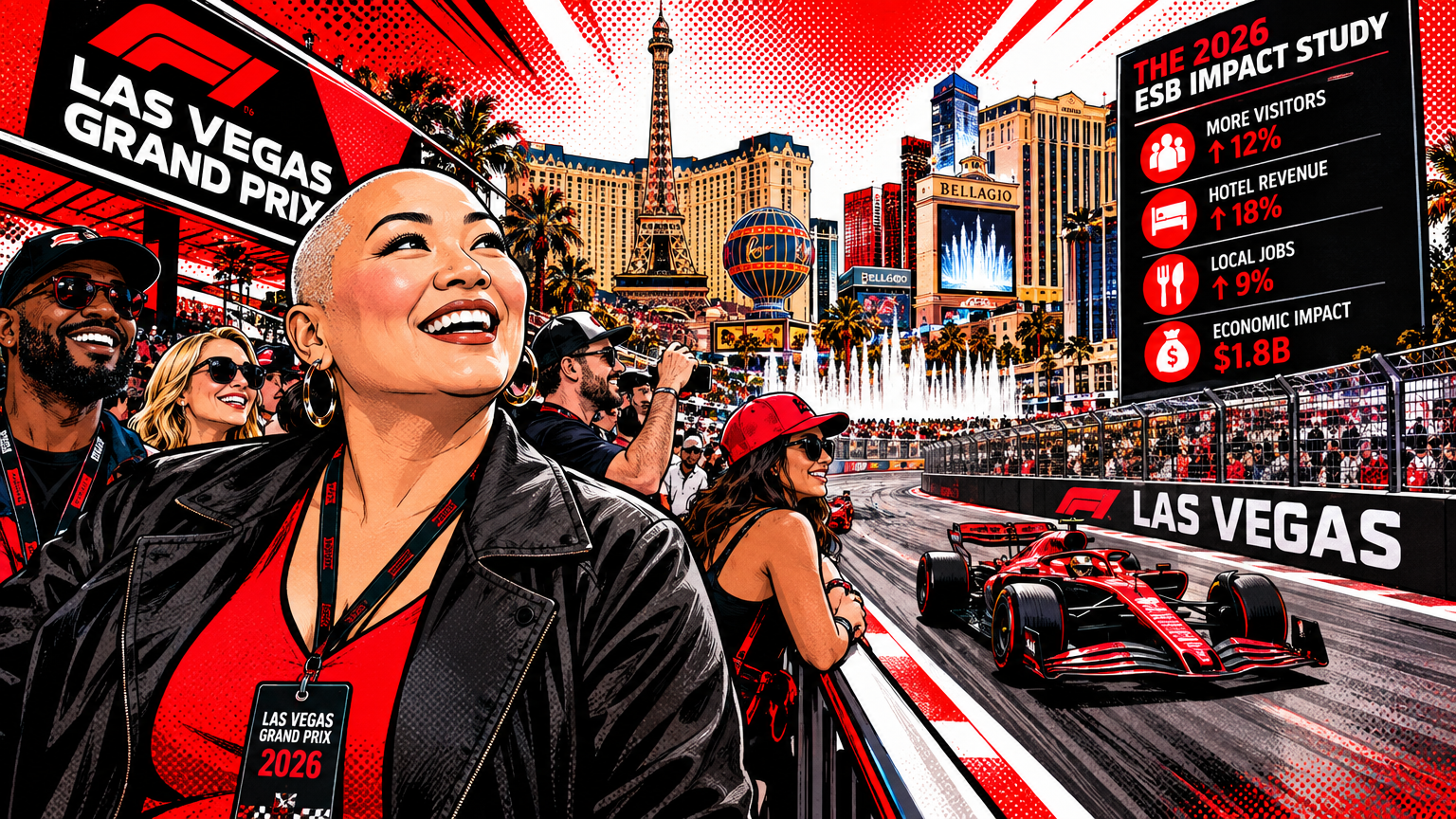
The Formula 1 Las Vegas Grand Prix represents the event-driven version of the same strategy. An economic-impact analysis estimated that the inaugural 2023 race generated nearly $1.5 billion in regional activity. Economic impact is not organizer profit, but the number explains why resorts, sponsors and public agencies treat the race as more than a sporting event.
Formula 1 sells tickets and hospitality. Las Vegas resorts sell the surrounding weekend. High room rates, dining, nightlife and casino spending turn the event into a citywide revenue platform. The permanent paddock complex also gives the operator a physical base beyond race weekend.
The pressure point is value. Street disruption, infrastructure demands and premium prices raise expectations for residents, visitors and commercial partners. Repeat editions need to deliver compelling racing and enough demand to justify the operating burden. The first race sold the novelty. The long game sells an annual institution.
Who Is Positioned to Win?
There will not be one winner because these operators are pursuing different pools of money. Sphere owns the strongest technological differentiator. AREA15 has the district strategy and tenant network. Universal brings intellectual property and global operating muscle. Atomic Golf targets group play and hospitality spending. Fontainebleau can cross-sell through a full resort. Formula 1 concentrates premium demand into one major weekend.
The strongest businesses share three traits. They control something difficult to copy. They have more than one revenue stream. They give visitors a reason to plan the experience before arriving in Las Vegas.
The weak position is the generic middle, attractions with heavy capital costs, limited repeat value and no recognizable brand. Vegas customers have endless alternatives. A business that cannot explain its edge in one sentence has already lost leverage.
Las Vegas is no longer using entertainment merely to fill casino floors. Entertainment has become the investment thesis. The next winners will own the experience, control the customer relationship and turn attention into revenue across the entire visit. That is the power play shaping Vegas’ future.