Convention Traffic Is Holding the Line
Follow the money. Las Vegas convention traffic matters more in 2026 because it is doing work that leisure travel cannot always do on its own. It fills rooms during the week. It puts corporate expense accounts inside restaurants. It moves exhibitors, contractors, transportation operators, production crews, and event workers through a business cycle that starts months before the doors open.
The strongest signal came from 2025. Las Vegas welcomed 38.5 million visitors, down 7.5 percent from 2024, according to the Las Vegas Convention and Visitors Authority. Convention attendance, by contrast, reached almost 6 million and nearly matched the prior year. In a softer tourism market, meetings and trade shows provided stability.
The power metric is resilience
That performance changes the conversation. Convention traffic is not simply another slice of the visitor pie. It is a hedge against volatility in discretionary leisure demand. Corporate travel budgets, exhibitor commitments, multiyear contracts, and fixed trade-show calendars operate on a different timetable from a weekend getaway.
The distinction matters because Las Vegas tourism operates at massive scale. LVCVA figures for 2025 show approximately 150,300 hotel rooms, 14.5 million square feet of meeting space, $50.8 billion in direct visitor spending, and an $80.9 billion total tourism economic impact. Those spending figures cover the broader visitor economy, not conventions alone, but they establish the size of the platform that convention delegates help support.
There is also fresh runway in 2026. The LVCVA said the Las Vegas Convention Center was on pace to host approximately 1.2 million trade-show attendees during the year, up from 1 million in 2025. That projection applies to the convention center rather than every meeting venue in the valley, but a 20 percent increase at the city’s flagship facility is still a major market signal.
The Capital Has Already Been Deployed
Las Vegas is not treating convention demand as a side business. The Las Vegas Convention Center completed a $600 million renovation of its legacy campus in time for CES 2026. The wider facility now covers 4.6 million square feet. That is serious public-sector positioning, built around the belief that face-to-face events will remain a durable economic engine.
The business case is straightforward. Better exhibit halls, upgraded technology, stronger connectivity, and a more consistent campus experience make the building easier to sell. They also protect Las Vegas against competing convention destinations investing in their own facilities. In this business, standing still means losing leverage.
Hotels are selling more than beds
The resort side is playing the same game. Fontainebleau Las Vegas, positioned next to the convention center, combines 3,644 rooms with more than 30 conference spaces, ballrooms, and venues. Its scale shows how tightly the hotel product and convention product are now integrated on the north end of the Strip.
The key asset is not simply room inventory. It is the ability to capture an organization’s entire trip. Guest rooms, exhibit space, executive meetings, private dining, entertainment, and sponsorship activations can all sit under one commercial umbrella. That gives a resort more ways to monetize each corporate group without depending on the casino floor.
Convention demand also strengthens the middle of the week. Las Vegas hotel occupancy averaged 80.3 percent in 2025, with weekend occupancy at 88.8 percent and midweek occupancy at 76.6 percent. A strong convention calendar attacks that gap directly. When thousands of badge holders arrive from Monday through Thursday, operators gain pricing leverage on rooms, restaurants, meeting space, and transportation during nights that are harder to fill with leisure travelers alone.
Transportation Has Become Business Infrastructure
A city can book the event and still lose the experience in transit. That is why movement around the resort corridor has become part of the convention sales pitch.
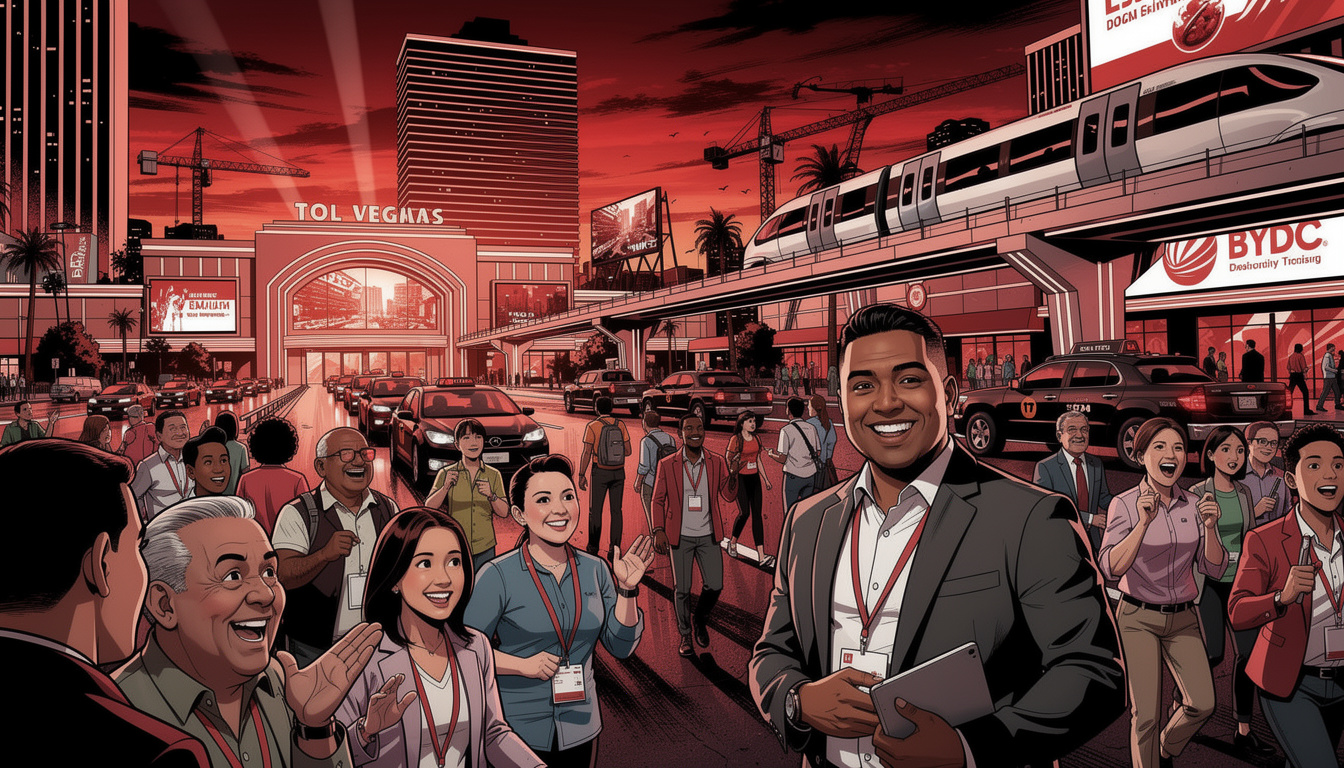
The Las Vegas Monorail connects the convention center with six other stations along its 3.9-mile route. During major conventions, the operator says trains arrive every four to five minutes, each train can carry 222 passengers, and the trip to the convention center takes no more than 10 minutes from any point on the line. The operator also reports carrying more than 5 million riders annually and approximately 67,000 passengers during citywide trade shows and conventions.
Below the convention center campus, the LVCC Loop adds another layer. Its approximately two miles of tunnels connect five stations using electric vehicles. The system is designed to move more than 4,400 attendees per hour, with a typical trip between West Hall and the North and Central halls taking about two minutes. The important word is designed. Public claims about maximum capacity are not the same as independently measured daily performance. The strategic value is still clear: less time crossing a 200-acre campus means more time on the show floor.
What Operators and Investors Should Watch
Not every crowd produces the same return
Raw attendance is only the opening number. The higher-value questions involve room nights, group rates, food and beverage commitments, exhibit spending, repeat bookings, and how much business stays inside the destination after the show closes.
Operators should watch three metrics. First, midweek hotel occupancy. Second, average daily rate during major show periods compared with normal weekdays. Third, the pace of future bookings at the convention center and resort meeting venues. Together, those numbers reveal whether attendance is translating into durable pricing power.
Real estate players should watch the blocks surrounding the convention center and north Strip. Large events create demand for hospitality, dining, logistics, storage, production services, and transportation access. They do not automatically support every proposed project, but they can improve the economics of well-located assets that serve recurring business traffic.
There are limits. Convention strength does not erase weaker leisure demand, international travel pressure, rising operating costs, or price resistance from visitors. It does, however, give Las Vegas a broader revenue base. That diversification matters when consumers become more selective.
The Bigger 2026 Play
The convention story is bigger in 2026 because Las Vegas has reached the point where attendance, capital spending, hotel strategy, and transportation infrastructure reinforce one another. Nearly 6 million convention attendees held steady during a down year for total visitation. The flagship convention center entered 2026 with a completed $600 million renovation and a projected increase in trade-show attendance. Resorts continue to package rooms, meetings, dining, and entertainment as one high-margin product.
This is not about crowded sidewalks. It is about economic leverage. Convention traffic gives Las Vegas recurring midweek demand, a pipeline of corporate customers, and a reason to keep investing through softer cycles. Leisure built the brand. Business traffic is strengthening the balance sheet. That is the position Las Vegas is taking into its next era.