The Money Is Moving Through the Convention Center
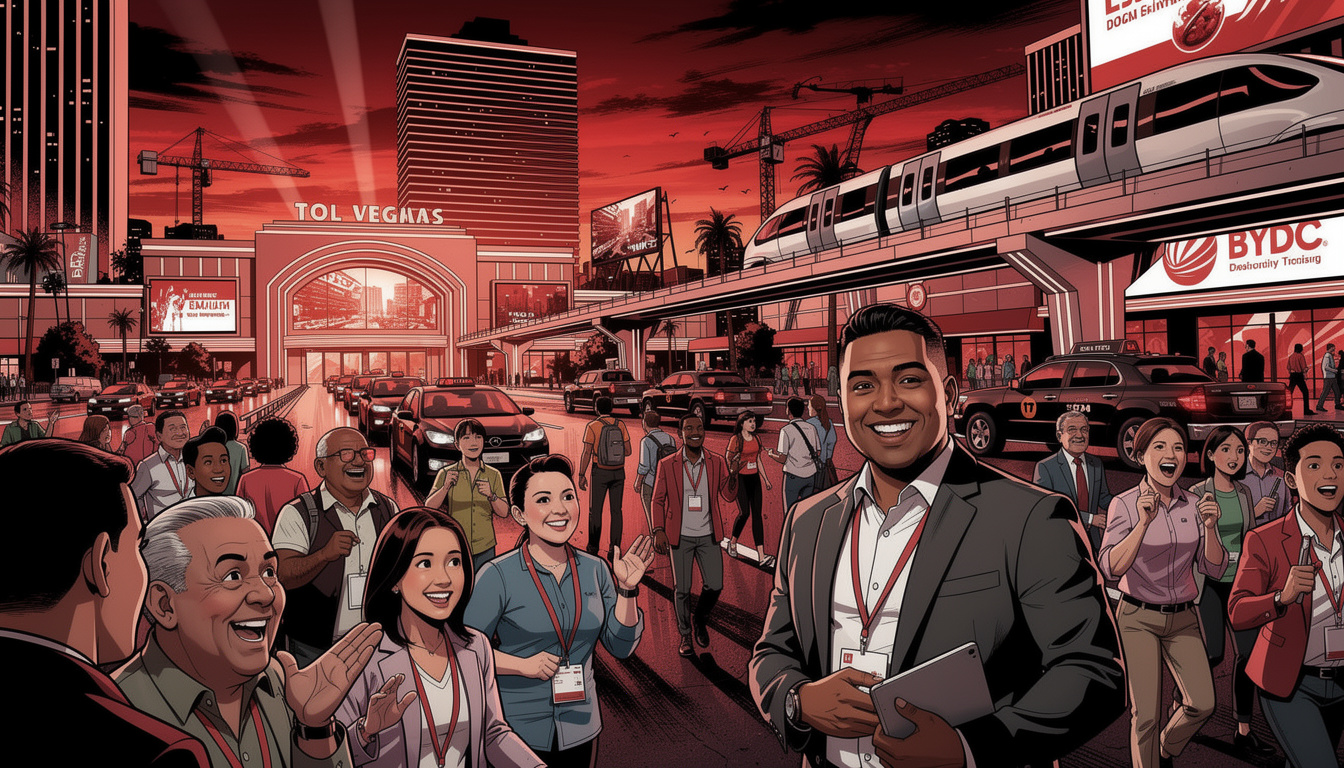
Las Vegas built its 2026 business strategy around one simple calculation: Fill the city’s rooms from Sunday through Thursday, and the entire tourism machine runs harder.
The Las Vegas Convention and Visitors Authority began the year projecting that the Las Vegas Convention Center would host upward of 48 trade shows and 1.23 million trade-show attendees in 2026. That would represent an increase from approximately 1.06 million attendees in 2025.
The broader market is backing up that bullish outlook. Through July 2026, Las Vegas had recorded 3.91 million convention attendees, an 11.2% increase from the same period in 2025. Convention attendance over the trailing 12 months reached 6.38 million, up 5.2% year over year.
That is the market signal. Las Vegas is not relying on one blockbuster weekend or a temporary spike in leisure demand. It is using recurring business events to strengthen the middle of the week, when hotel rooms, restaurants, transportation companies and entertainment venues have the most inventory to monetize.
Three Shows Demonstrate the Scale
CES 2026 opened the year with 148,392 verified attendees from 141 countries, regions and territories. The January 6 through 9 show included 86,679 industry professionals, 54,676 exhibitor personnel and 7,037 media representatives. More than 4,100 exhibitors participated across 2.6 million net square feet at 13 official venues.
CES alone shows why Las Vegas keeps investing in convention infrastructure. The 2025 edition generated an estimated $381.2 million in economic impact for Southern Nevada, according to the LVCVA. This is high-value business travel operating at citywide scale.
Then came CONEXPO-CON/AGG, held March 3 through 7. The construction industry show attracted more than 140,000 attendees from 128 countries, brought together more than 2,000 exhibitors and occupied over 3 million square feet of exhibit space. Heavy equipment demands serious acreage, freight access and operating discipline. Las Vegas had the platform to handle it.
The fall brings another anchor. The 2026 SEMA Show is scheduled for November 3 through 6 at the Las Vegas Convention Center. The automotive aftermarket event is set to use the campus for exhibits, education and product launches, with Friday access available to the public under the organizer’s announced format.
CES, CONEXPO-CON/AGG and SEMA represent different industries, but the business case is identical. Large shows need scalable floor plans, deep hotel inventory and enough transportation capacity to move tens of thousands of people. Las Vegas has built leverage in all three categories.
A $1.6 Billion Convention Campus Comes Online
The convention center is winning because the capital was deployed before the demand arrived.
The LVCVA opened the $1 billion West Hall in 2021, adding 1.4 million square feet to the campus, including roughly 600,000 square feet of exhibit space. In January 2026, the authority completed a separate $600 million renovation of the center’s legacy campus. That work modernized the Central Hall lobby, added an enclosed concourse between the North and South halls, rebuilt the South Hall entrance and extended the West Hall’s architectural design across the property.
The result is a 4.6 million-square-foot Las Vegas Convention Center with approximately 2.9 million square feet of exhibit space, 225 meeting rooms and more than 390,000 square feet of meeting-room inventory.
Those numbers matter because organizers do not buy architectural renderings. They buy capacity, flexibility and execution. The campus can accommodate multiple events in different stages of setup, operation and teardown. That creates more usable booking windows and gives the LVCVA a stronger hand when negotiating with major show producers.
West Hall Was the Expansion, the Renovation Finished the Job
West Hall gave Las Vegas more runway. The legacy-campus renovation tightened the entire operation.
The enclosed North-to-South concourse improves movement through the property. Redesigned entrances and registration areas sharpen arrival logistics. Digital displays create additional branding inventory. Updated meeting rooms and public areas bring older sections of the building closer to the standard established by West Hall.
This is not cosmetic spending. Convention facilities compete on the attendee experience, freight movement, technology, meeting-room quality and the ability to control traffic across an enormous campus. A show may occupy millions of square feet, but its reputation can still turn on registration lines, navigation and how quickly exhibitors can move equipment.
Las Vegas now has a modernized campus positioned within a destination offering about 150,000 hotel rooms and nearly 15 million square feet of meeting and exhibition space. That citywide inventory is the moat. The convention center is the flagship asset inside it.
The Payoff Extends Beyond Paradise Road
The convention center captures the booking, but the spending moves across the valley.
Las Vegas welcomed 6 million convention attendees in 2024, and the convention segment supported an estimated $16 billion in economic impact, according to the LVCVA. Those dollars reach hotels, restaurants, nightlife, transportation providers, production crews, exhibit contractors and thousands of workers who support major events.
The timing is just as important as the total. Business events help fill rooms during the week, protecting pricing power when leisure demand is softer. Through July 2026, midweek hotel occupancy stood at 77.7% for the year, essentially level with the comparable 2025 period. Overall Las Vegas occupancy reached 81.3%, while the Strip averaged 84.4%.
Room rates also held their ground. The average daily room rate across Las Vegas was $188.04 through July, up 3% year over year. On the Strip, it reached $201.82, up 3.5%.
No single show owns those numbers. The power comes from stacking demand across the calendar. A technology convention lands in January. Construction follows in March. Automotive takes over in November. Smaller meetings and trade shows fill the spaces between them. That is portfolio management, Vegas style.
Why the Convention Center Wins in 2026
The winner is the asset sitting at the center of the transaction. The Las Vegas Convention Center entered 2026 with a completed renovation, a 4.6 million-square-foot footprint and a lineup capable of putting every phase of that investment to work.
The calendar does not support claims that every hall is occupied every week, and event details remain subject to change. It supports something more important: The convention center is handling major shows at a scale few facilities can approach, while citywide convention attendance is running ahead of 2025.
Follow the money. Las Vegas invested $1 billion in expansion, followed with $600 million in modernization and built a convention platform designed to produce repeat business for decades. In 2026, that platform is not sitting idle. It is carrying the deal flow.
This is how Las Vegas protects its position. Build the capacity. Control the calendar. Convert delegates into room nights, restaurant checks and long-term contracts. The convention center is more than a building. It is the city’s business engine, and 2026 is showing exactly what that engine can do.