EDC Is Back in Las Vegas, and This Year Is Bigger Than Usual
EDC Las Vegas is back, and this is not just another festival weekend.
The 2026 edition of Electric Daisy Carnival lands at the Las Vegas Motor Speedway from Friday, May 15 through Sunday, May 17. This year also marks the festival’s 30th anniversary, built around the theme #kineticJOURNEY. That alone makes this weekend feel bigger than normal. But in Las Vegas, “bigger than normal” means something different. It means traffic changes. It means hotel demand. It means late-night food lines. It means beauty appointments, rideshare spikes, shuttle stress, packed clubs, and a whole city moving around one massive event.
For three nights, the Speedway becomes its own neon world. The official festival location is Las Vegas Motor Speedway at 7000 North Las Vegas Boulevard, and the party stretches deep into the morning. Friday runs from 5:00 PM to 5:30 AM. Saturday and Sunday run from 7:00 PM to 5:30 AM. That means EDC is not just a night out. It is a full-body, all-night Vegas mission.
The scale is wild. This year’s event is expected to bring more than 500,000 festivalgoers across three days. That kind of crowd does not just fill a venue. It bends the city around it. The research points to major pressure on highway traffic, hotel occupancy, late-night demand, and local services across the valley.
And that is why this story matters even if you are not going to EDC.
For festivalgoers, this weekend is about music, lights, stages, outfits, friends, and surviving until sunrise. For locals, it may be about avoiding I-15, dodging traffic near the Speedway, or figuring out where to eat without getting trapped in the madness. For small businesses, it is a rare chance to catch a wave of visitors who need food, glam, recovery, transportation, last-minute supplies, and something to do before and after the festival.
That is the real story.
EDC is not just happening in Las Vegas. EDC is hitting Las Vegas.
It hits the Strip. It hits downtown. It hits Chinatown. It hits hotels, clubs, restaurants, salons, IV hydration clinics, convenience stores, smoke shops, and rideshare lanes. It hits locals trying to move through their own city. It hits visitors who have no idea what kind of weekend they just walked into.
So before we talk about the lineup, the traffic, the outfits, the afterparties, and the 5:00 AM food hunt, we need to understand how EDC became this big in the first place.
Because EDC did not start as a Vegas takeover.
It started as something much smaller, much louder, and much more underground.
The Origin Story: EDC Started Before It Became a Vegas Monster
Before EDC became a giant neon city at the Las Vegas Motor Speedway, it had a much smaller beginning.
Electric Daisy Carnival started in 1997 as a warehouse party in Los Angeles, produced by Insomniac founder and CEO Pasquale Rotella. Insomniac describes EDC today as its largest event brand, but the beginning was not about mega-stages, massive hotel packages, or hundreds of thousands of people flying into Las Vegas. It started with underground dance music energy, people chasing sound, lights, freedom, and a place where the night felt bigger than regular life. (Insomniac)
Insomniac’s own history also points to the Shrine Expo Hall in Los Angeles as the place where its signature Electric Daisy Carnival event debuted in 1997. That matters because it shows how far the festival has traveled. EDC did not begin as a polished tourism machine. It came out of a scene built on DJs, dancers, sound systems, late nights, and people who wanted something different from the normal concert experience. (Insomniac)
From the beginning, EDC was not just about standing in front of a stage and watching a performer. The idea was bigger than that. It mixed music, lights, performers, costumes, rides, art, and crowd energy into one full-blown world. The point was not just to hear songs. The point was to step inside a different universe for the night.
That is the secret sauce.
A regular concert gives you a show.
EDC gives you a world.
That is why the name lasted. That is why the fans kept showing up. That is why the festival could grow from a Los Angeles warehouse party into an internationally known live music experience that has attracted millions of fans worldwide. (Insomniac)
And it also explains why Las Vegas eventually made so much sense.
Vegas already understands escape. Vegas already understands lights. Vegas already understands fantasy, crowds, nightlife, music, and people showing up ready to become a different version of themselves for a few days.
EDC did not need Las Vegas to make it exciting.
But Las Vegas gave EDC the room, the hotels, the nightlife system, the airport, the tourism engine, and the massive stage it needed to become something far bigger than its early underground roots.
The warehouse party became a movement.
The movement became a festival.
And eventually, the festival came to the one city built to handle spectacle at full volume.
How EDC Grew Into a Massive Dance Music Institution
EDC grew because it understood something powerful before a lot of mainstream entertainment brands did.
People do not just want to watch the show.
They want to feel like they are inside the show.
That is what made EDC different. It was not built like a normal concert where the artist is the only thing that matters. It was built like a full experience. The music mattered. The lights mattered. The costumes mattered. The people mattered. The stages mattered. The walk from one sound to another mattered.
Every piece helped create the feeling that you had stepped out of regular life and into something electric.
As electronic dance music became bigger in the United States, EDC became one of the strongest symbols of that rise. It gave dance music fans a place where the culture did not feel hidden, small, or misunderstood. It felt massive. It felt proud. It felt like the whole world had finally caught up to what the underground already knew.
And the fans were not treated like background noise.
They became part of the identity.
EDC calls its fans “Headliners,” and that word says a lot. The festival is not just saying the DJs are the stars. It is saying the people in the crowd are part of the show too. The outfits, the energy, the dancing, the friendships, the signs, the lights, the sunrise moments, and the crowd reactions all become part of the EDC story.
That is how a festival becomes more than a ticket.
It becomes a ritual.
People plan for it months ahead. They build outfits. They organize groups. They study set times. They book hotels. They buy shuttle passes. They create meet-up points. They fly across the country. Some come for the biggest names in dance music. Some come for the underground stages. Some come for the lights. Some come because EDC feels like the one weekend where they can fully let go.
That emotional connection is why EDC kept growing.
The festival did not only follow the rise of EDM. It helped shape it. It became a place where superstar DJs, rising artists, longtime fans, first-timers, and global dance music culture could all collide in one place.
By the time EDC became a true Las Vegas force, it already had the thing every major event wants but cannot fake.
It had believers.
The Big Move: How EDC Became a Las Vegas Event
Then came the move that changed everything.
In 2011, EDC shifted from Los Angeles to Las Vegas, and the festival’s entire future got bigger overnight.
That move mattered because Las Vegas was not just another host city. Las Vegas was already built for spectacle. It had the hotels. It had the airport. It had the nightlife. It had the tourism machine. It had the restaurants, clubs, pool parties, lights, performers, and 24-hour energy that made EDC feel less like an outside event and more like something the city was born to hold.
The Las Vegas Motor Speedway gave EDC the space to expand into something massive. Instead of trying to squeeze the experience into a traditional venue, the festival could build a temporary world. Bigger stages. Bigger crowds. Bigger production. Bigger traffic problems. Bigger everything.
And that is where EDC found its modern identity.
The Speedway was not on the Strip, but the festival still became a Strip-level event. People flew into Harry Reid International Airport. They filled hotel rooms. They packed casino floors. They hit pool parties during the day. They went to clubs before and after the festival. They booked beauty appointments, bought outfits, ordered late-night food, and turned the entire weekend into a full Vegas trip.
That is the part people sometimes miss.
EDC is not only a festival at the Speedway.
It is a citywide takeover.
The main event happens under the electric sky, but the money, movement, and madness spread everywhere. The Strip feels it. Downtown feels it. Chinatown feels it. North Las Vegas feels it. Rideshare drivers feel it. Restaurants feel it. Local salons feel it. IV hydration clinics feel it. Convenience stores feel it. Small businesses with the right offer at the right time can feel it too.
That is why Las Vegas did not just give EDC a new home.
Las Vegas gave EDC a bigger engine.
The city turned the festival into a full weekend economy. A person can land in Vegas, check into a hotel, buy an outfit, get their hair braided, hit a pool party, take a shuttle to the Speedway, dance until sunrise, grab ramen at 5:00 AM, sleep half the day, and do it all again.
That cycle is pure Vegas.
And once EDC found that rhythm, it became hard to imagine the festival anywhere else.
Los Angeles gave EDC its roots.
Las Vegas gave EDC its empire.
EDC Las Vegas Today: A Temporary City Under the Electric Sky
EDC Las Vegas today is not just a stage, a lineup, or a weekend party.
It is a temporary city.
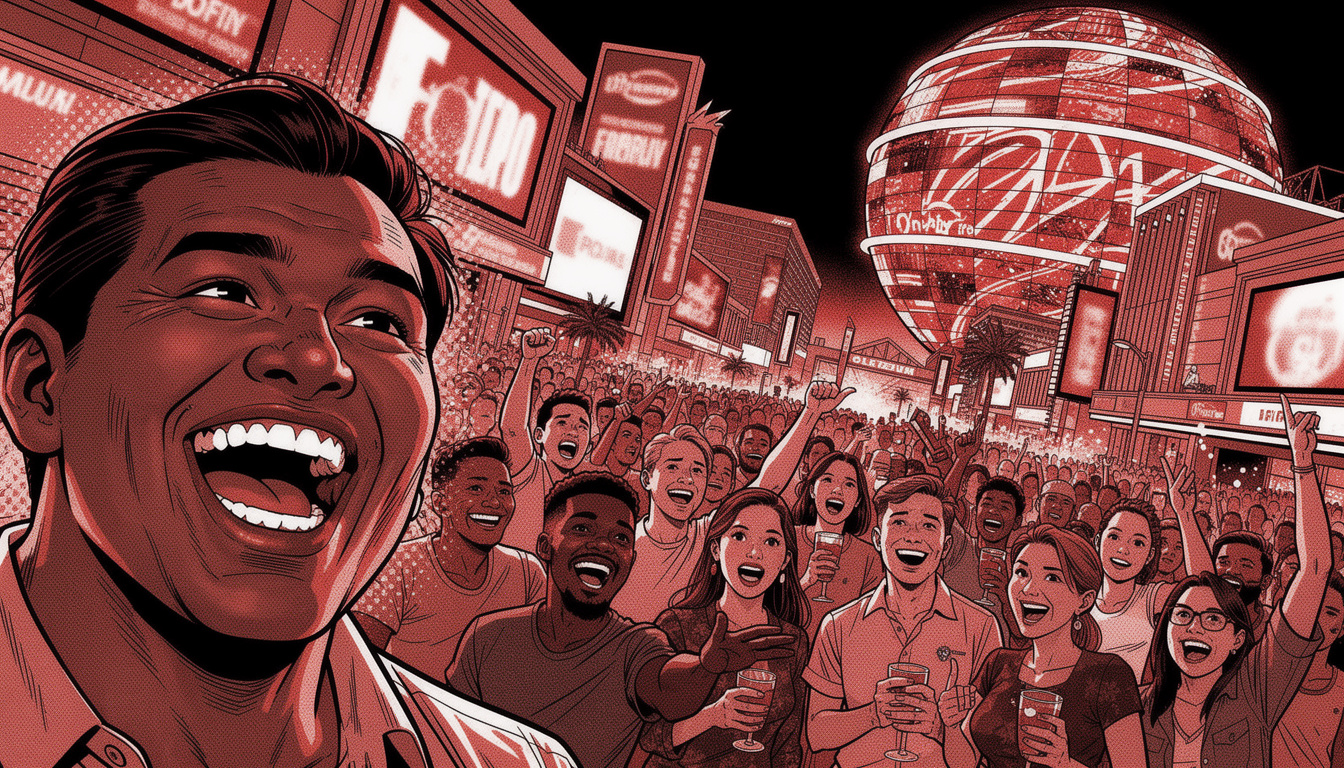
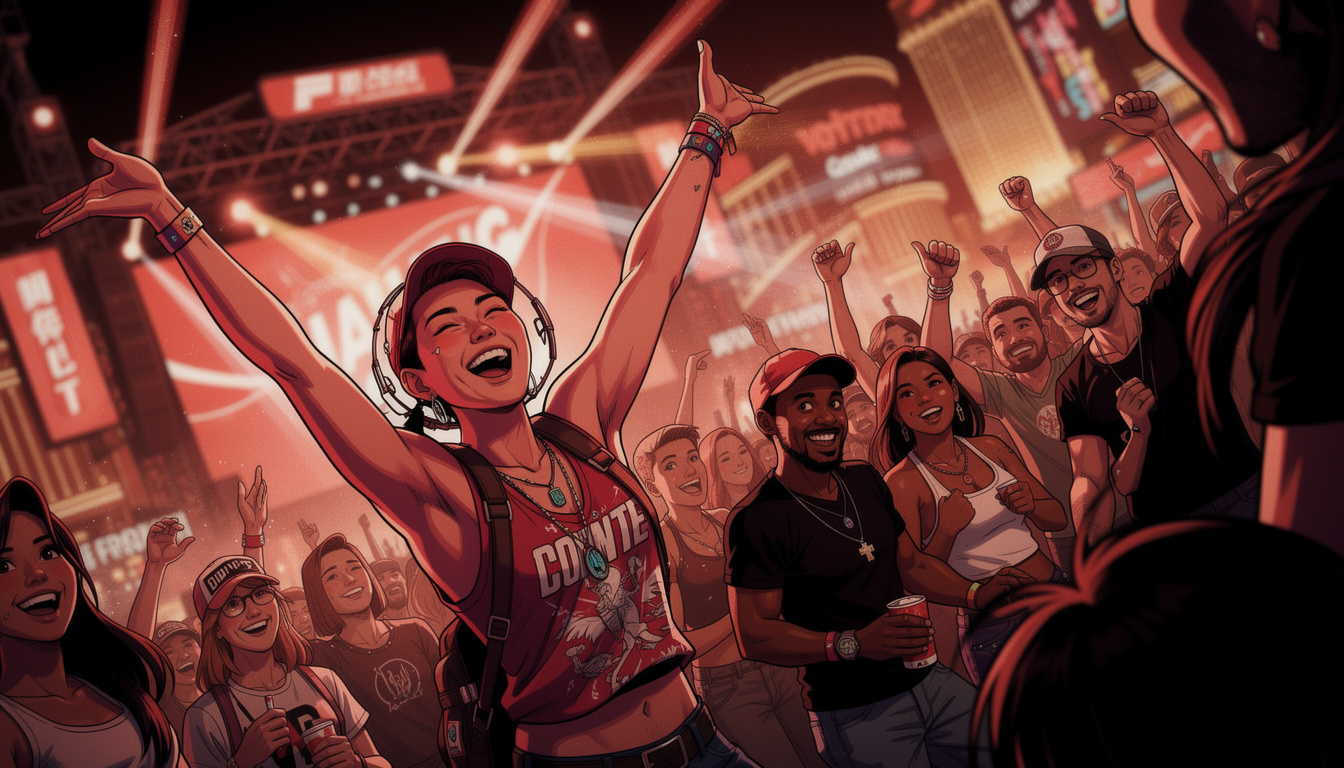
For three nights, Las Vegas Motor Speedway transforms into a glowing world of music, lights, stages, art, rides, costumes, food, movement, and nonstop sound. People do not just walk into EDC. They enter a full environment built to feel separate from normal life.
That is why the festival has so much power.
The Speedway becomes its own world with its own map, its own rules, its own neighborhoods, its own traffic flow, its own medical system, its own food stops, its own meeting points, and its own sunrise rhythm. Once you are inside, the outside city feels far away.
And that is wild, because the outside city is Las Vegas.
This year, EDC Las Vegas 2026 takes over the Speedway from Friday, May 15 through Sunday, May 17. Friday runs from 5:00 PM to 5:30 AM. Saturday and Sunday run from 7:00 PM to 5:30 AM. That means the festival does not just happen at night. It pushes straight through the dark and into the early morning.
That is a different kind of endurance.
You are not just choosing which artist to see. You are choosing how to survive the full mission. When to arrive. What to wear. Where to park. What bag to bring. How to find your friends. How to save your phone battery. How to stay hydrated. How to keep your legs alive. How to leave when thousands of other people are trying to leave too.
That is the modern EDC experience.
The festival is built around nine primary stages: kineticFIELD, circuitGROUNDS, cosmicMEADOW, quantumVALLEY, bassPOD, wasteLAND, neonGARDEN, stereoBLOOM, and bionicJUNGLE. Each one has its own sound, crowd, visual style, and energy.
Some stages are built for giant main-stage moments.
Some are built for bass.
Some are built for trance.
Some are built for techno.
Some are built for the people who want to wander away from the biggest names and find something darker, stranger, heavier, or more underground.
That is part of the fun. EDC is not one show. It is many shows happening at once.
One person may go for Kaskade, Zedd, The Chainsmokers, Fisher, Porter Robinson, Armin van Buuren, Above & Beyond, Alison Wonderland, Sofi Tukker, or Illenium. Another person may barely care about the biggest names and spend the whole night chasing harder sounds, hidden sets, smaller stages, or weird moments they cannot explain later.
That is how EDC keeps its identity.
It can be massive and personal at the same time.
For first-timers, the scale can feel overwhelming. For veterans, that scale is the point. The long walks, the lights, the stage jumps, the outfits, the random conversations, the sunrise crowd, the tired feet, the dust, the bass, the cheers, and the shared feeling of “we made it” are all part of the ritual.
And that is why EDC still matters after all these years.
It is not just a music festival anymore.
It is part music event, part Vegas nightlife engine, part tourism machine, part fashion runway, part endurance test, part social media factory, and part escape hatch from regular life.
For one weekend, the Speedway becomes a city inside the city.
And under the electric sky, normal Vegas somehow gets even louder.
This Weekend’s EDC Las Vegas 2026 Lineup Snapshot
Now let’s talk about the names.
EDC Las Vegas 2026 is not bringing a small lineup to the Speedway. It is bringing a full electronic music universe. This year’s artist list stretches across house, techno, bass, trance, drum and bass, hardstyle, melodic sounds, underground energy, and massive main-stage moments.
For casual fans, the big names jump out fast.
Kaskade. Fisher. Zedd. Porter Robinson. The Chainsmokers. Sofi Tukker. Armin van Buuren. Above & Beyond. Alison Wonderland. Illenium. John Summit. Martin Garrix. Steve Aoki. Hardwell. Charlotte de Witte. Tiësto.
That is the kind of lineup that can pull in different generations of dance music fans at the same time.
Some people are coming for the emotional trance and progressive sounds. Some are coming for house music that feels built for huge crowds. Some are coming for heavy bass that shakes your chest. Some are coming for techno that gets darker the later it gets. Some are coming for names they have followed for years. Some are coming to discover someone they have never heard before.
That is one of EDC’s biggest strengths.
It does not force every fan into one lane.
Kinetic Field is where many casual fans will recognize the most names. This is the giant main-stage world with artists such as Above & Beyond, Armin van Buuren, The Chainsmokers, Charlotte de Witte, Fisher, Hardwell, John Summit, Kaskade, Martin Garrix, Porter Robinson, Sofi Tukker, Steve Aoki, Subtronics, and Zedd.
That stage is built for the huge moments. The big drops. The phone-in-the-air crowd shots. The sets that make people say, “This is why I came.”
But EDC is bigger than Kinetic Field.
Cosmic Meadow brings a different kind of energy. It has names like Alison Wonderland, The Prodigy, Seven Lions, Underworld, San Holo, MEDUZA, Black Tiger Sex Machine, Dabin, and William Black. That stage can move from emotional to chaotic to nostalgic to heavy in one night.
Circuit Grounds is another monster. It brings artists such as ANNA, Boys Noize, Chris Stussy, I Hate Models, Peggy Gou B2B KI/KI, Solomun, Tiësto, Vintage Culture, Wooli, Sammy Virji, and Ray Volpe. This is where the crowd can get big, sleek, intense, and serious fast.
Then there is Neon Garden.
That is the darker room inside the big bright carnival. It leans deep into techno and underground dance energy, with artists such as 999999999, Adriatique, Eli Brown, Frankie Bones, Indira Paganotto, Joseph Capriati, Klangkuenstler, Luciano, Peggy Gou, Prospa, and MËSTIZA.
Not everybody starts the night at Neon Garden.
But a lot of people eventually find their way there.
Basspod is for the people who want the harder hit. This is the annual meeting ground for bass lovers, headbangers, rail-grabbers, and people who like their music heavy. The lineup includes names such as Adventure Club, ATLiens, Doctor P B2B Flux Pavilion B2B FuntCase, Getter, Kai Wachi, Virtual Riot, Whethan, AHEE B2B Liquid Stranger, and Black Tiger Sex Machine.
If Kinetic Field is the big postcard moment, Basspod is where the night gets physical.
Quantum Valley brings the trance world. Wasteland brings the hardstyle crowd. Stereo Bloom gives house, tech house, bass music, and up-and-coming sounds room to breathe. Bionic Jungle brings its own dance-floor flavor. Together, these stages make EDC feel less like one festival and more like several different festivals stacked inside the same Speedway.
That is why the lineup matters.
It is not just a list of DJs.
It is a map of different moods.
You can build a night around nostalgia. You can build a night around pure chaos. You can build a night around techno. You can build a night around trance. You can build a night around radio-friendly names your whole group knows. You can build a night around wandering until something grabs you.
And this weekend, that is exactly what hundreds of thousands of people will do.
They will enter the Speedway with a plan.
Then EDC will probably destroy that plan.
Some friend will hear a beat from a stage you were not walking toward. Somebody will want to stop for food. Somebody will get pulled into a crowd. Somebody will insist on catching a sunrise set. Somebody will vanish for 20 minutes and return with the best story of the night.
That is the beauty of it.
The lineup gives EDC its structure.
The chaos gives EDC its soul.
What EDC Means for Las Vegas This Weekend
EDC does not stay inside the Speedway.
That is the thing people need to understand.
The main event happens at Las Vegas Motor Speedway, but the impact spreads across the valley. Once hundreds of thousands of festivalgoers arrive, the whole city starts to feel the shift. Hotels get tighter. Traffic gets heavier. Rideshare prices move. Late-night food spots fill up. Clubs pack their calendars. Salons, beauty pros, outfit sellers, smoke shops, convenience stores, and recovery services all get pulled into the weekend economy.
This is what makes EDC different from a regular concert.
A normal concert may affect one venue for one night.
EDC changes the rhythm of Las Vegas for several days.
The first major impact is traffic. Anyone moving around North Las Vegas, the Speedway area, Las Vegas Boulevard North, Craig Road, Apex, or I-15 needs to pay attention. This is not the weekend to casually guess your route and hope for the best. Festival traffic can create long delays, especially when people are arriving at night and leaving near sunrise.
For festivalgoers, transportation is part of the event whether they like it or not.
Shuttles, parking, rideshare, private cars, and group transportation all come with trade-offs. The wrong choice can add hours of stress to the night. The right choice can save your legs, your patience, and maybe your whole mood before you even hear the first set.
But traffic is only part of the story.
EDC also pushes late-night demand into overdrive. When the festival ends around sunrise, thousands of people are hungry, tired, thirsty, wired, and looking for something open. That is when 24-hour restaurants, Chinatown spots, downtown food counters, diners, pizza places, ramen shops, and hotel cafés become part of the EDC experience.
For some people, the post-EDC meal is almost as important as the final set.
That is where Las Vegas shines. This city knows how to feed people at strange hours. It knows how to handle crowds that are not ready to go to sleep. It knows how to turn 5:00 AM into a second dinner.
The beauty and fashion economy also gets a huge boost. EDC is a festival where people dress for the camera, the crowd, and the fantasy. That means hair braiders, makeup artists, nail techs, boutique sellers, rave fashion brands, and last-minute outfit suppliers all become part of the weekend machine.
Somebody forgot their hydration pack.
Somebody needs glitter.
Somebody needs space buns.
Somebody needs a jacket because they dressed for daytime heat and forgot the desert gets cold at night.
Somebody needs comfortable shoes because they made a terrible decision.
That is money moving through the city.
Then comes the recovery market. After three nights of walking, dancing, sweating, waiting, and barely sleeping, people start looking for ways to feel human again. IV hydration clinics, wellness spots, massage services, coffee shops, juice bars, pharmacies, and breakfast restaurants all have a chance to catch that wave.
For small businesses, this weekend is a reminder that Las Vegas is not just powered by casinos and mega-resorts.
Local businesses can win too.
A smart restaurant can promote late-night recovery food. A salon can offer festival prep. A transportation company can market group rides. A boutique can push last-minute rave looks. A coffee shop can target exhausted Monday travelers. A local creator can cover the scene. A photographer can capture the outfits. A small brand can ride the energy if it moves fast enough.
That is why EDC matters to Extra Super Big.
It is music, but it is also movement.
It is culture, but it is also commerce.
It is entertainment, but it is also a citywide stress test.
For visitors, EDC is a wild weekend under the electric sky.
For locals, it is a weekend to plan around.
For small businesses, it is a window.
And for Las Vegas, it is one more reminder that this city does not just host events.
It absorbs them, amplifies them, and turns them into something bigger.
Why EDC Still Works After All These Years
EDC still works because it sells something bigger than music.
It sells escape.
That is the real product.
People can hear songs anywhere. They can stream mixes at home. They can watch DJ sets online. They can scroll clips on TikTok. They can follow artists on Instagram. But none of that feels like standing in the middle of a massive crowd at 3:00 AM while the lights explode, the bass hits, your friends are yelling, and the whole Speedway feels like another planet.
That feeling is hard to replace.
EDC gives people permission to step out of regular life for a weekend. Regular clothes disappear. Regular sleep disappears. Regular schedules disappear. People become louder, brighter, bolder, and freer than they might be on a normal Monday morning.
That is powerful.
For some, EDC is about the music.
For others, it is about the outfits.
For others, it is about friendship.
For others, it is about being seen.
For others, it is about getting lost in a crowd and somehow feeling less alone.
That is why the festival keeps pulling people back. It gives different people different reasons to care. One person may be chasing the biggest artist on the main stage. Another may be chasing a trance set that feels emotional. Another may want bass that shakes the ground. Another may just want to dance with friends until the sun comes up.
EDC gives all of them a place.
That is not easy to build.
A festival can book famous artists and still feel cold. It can have expensive production and still feel empty. It can have a huge crowd and still feel like a cash grab. EDC has lasted because it created an identity people want to belong to.
The word “Headliner” matters because it makes the fan part of the story.
At EDC, the crowd is not just watching the show. The crowd helps create the show. The costumes, signs, lights, kandi, flags, totems, dancing, hugs, and wild little moments between strangers all become part of the atmosphere.
That is why photos from EDC never look like normal concert photos.
They look like evidence from another world.
And Las Vegas makes that world feel even bigger.
This city already understands fantasy. It understands scale. It understands lights, nightlife, crowds, spectacle, risk, reinvention, and strange hours. Vegas is one of the few cities where a festival like EDC does not feel out of place. It feels like the city turned one of its wildest instincts into a weekend.
That is the perfect match.
EDC brings the electric sky.
Vegas brings the engine.
Together, they create a weekend that feels ridiculous, exhausting, expensive, beautiful, chaotic, and unforgettable all at once.
That is why EDC still works.
Not because it is easy.
Because it is not easy.
It is a mission. It is a marathon. It is traffic, dust, walking, heat, cold, crowds, planning, waiting, and total sensory overload.
But when it hits right, people forget the pain.
They remember the lights.
They remember the drop.
They remember the sunrise.
They remember the friend who grabbed their hand and pulled them toward a stage they had no plans to see.
They remember the moment when the whole crowd moved together and normal life felt far away.
That is the magic EDC has been selling for decades.
And this weekend, Las Vegas gets it all over again.
What to Read Next on Extra Super Big
EDC is too big for one article.
That is why Extra Super Big is breaking this weekend down from every angle that actually matters. Not just the music. Not just the outfits. Not just the party clips. The full Vegas effect.
Start with the practical stuff.
If you are going to the festival, read the EDC Las Vegas 2026 Survival Guide before you pack anything. That is where you need to check bag rules, allowed items, prohibited items, hours, hydration basics, and the key details that can keep you from getting turned away at the gate.
Then read the traffic guide.
Do not freestyle your route to the Speedway this weekend. EDC traffic can get ugly fast, especially around I-15, Las Vegas Boulevard North, Craig Road, Apex, and the Speedway corridor. A bad transportation plan can steal hours from your night before you even hear music.
After that, compare your options.
The EDC shuttle vs. driving vs. rideshare breakdown will help you decide whether you should ride, park, split a car, book private transportation, or prepare for surge pricing. Every option has a cost. Some cost money. Some cost time. Some cost patience.
First-timers need the rookie mistake guide.
That is the article for anyone who thinks they can show up in bad shoes, ignore the weather, rely on cell service, and just figure it out later. EDC rewards people who plan ahead. It punishes people who act like the Speedway is a normal night out.
The outfit guide matters too.
This is not just about looking good for photos. It is about surviving heat, wind, walking, dancing, dust, concrete, and the desert temperature drop. The right outfit can make the night better. The wrong one can turn into a 12-hour regret.
When the party ends, the late-night food guide takes over.
After EDC, hunger gets serious. People will be looking for ramen, pizza, tacos, breakfast, coffee, recovery food, and anything open when most of the city is asleep. Vegas has options, but the best move is knowing where to go before the crowd gets there.
And if you are not going to EDC, Extra Super Big has you covered too.
The non-EDC Vegas guide is for locals and visitors who want to avoid the madness, skip the traffic, and enjoy the city without getting pulled into festival chaos. Not every Vegas weekend has to be neon, bass, and sunrise crowds.
Small business owners should read the local business impact piece.
EDC is not just a festival. It is a spending wave. Restaurants, salons, transportation services, convenience stores, fashion sellers, hydration clinics, coffee shops, and local creators all have a chance to win if they move fast and speak directly to what festivalgoers need.
Then there is the afterparty guide.
Because EDC does not begin and end at the Speedway. The Strip, downtown, pool clubs, nightclubs, hotel takeovers, and special events all feed into the same weekend machine.
The safety guide is the one everyone should read.
Hydration, heat, exhaustion, medical help, Ground Control, communication plans, theft prevention, and buddy systems are not boring details. They are the difference between a wild weekend and a bad one.
And finally, the weather guide matters more than people think.
Vegas can feel brutally hot before sunset and surprisingly cold before sunrise. Add wind, dust, sweat, and exhaustion, and the desert can humble people fast.
That is why this series exists.
EDC Las Vegas is not one story.
It is a full city event.
And this weekend, Extra Super Big is following the whole thing.
Related Las Vegas Stories
- EDC Las Vegas 2027 Just Became a 12-Day Dusk Till Dawn Takeover
- What is the Electric Daisy Carnival?
- EDC Las Vegas Closes a Massive 30th Anniversary and Opens an Even Bigger 2027 Question
- Vegas Event Week's Business Boom: How EDC and X Games Drive Local Commerce
- EDC Las Vegas 2026 Lineup Drops: Traffic Warnings and What to Know Before May
- EDC Las Vegas 2026: The Just-Released Lineup and New Traffic Protocols for May
- EDC Las Vegas 2026: The Ultimate Guide to the Lineup & Set Times