Meta is not building its newest AI chip in Las Vegas.
That is not the story.
The real story is bigger, sharper, and much more relevant to Nevada.
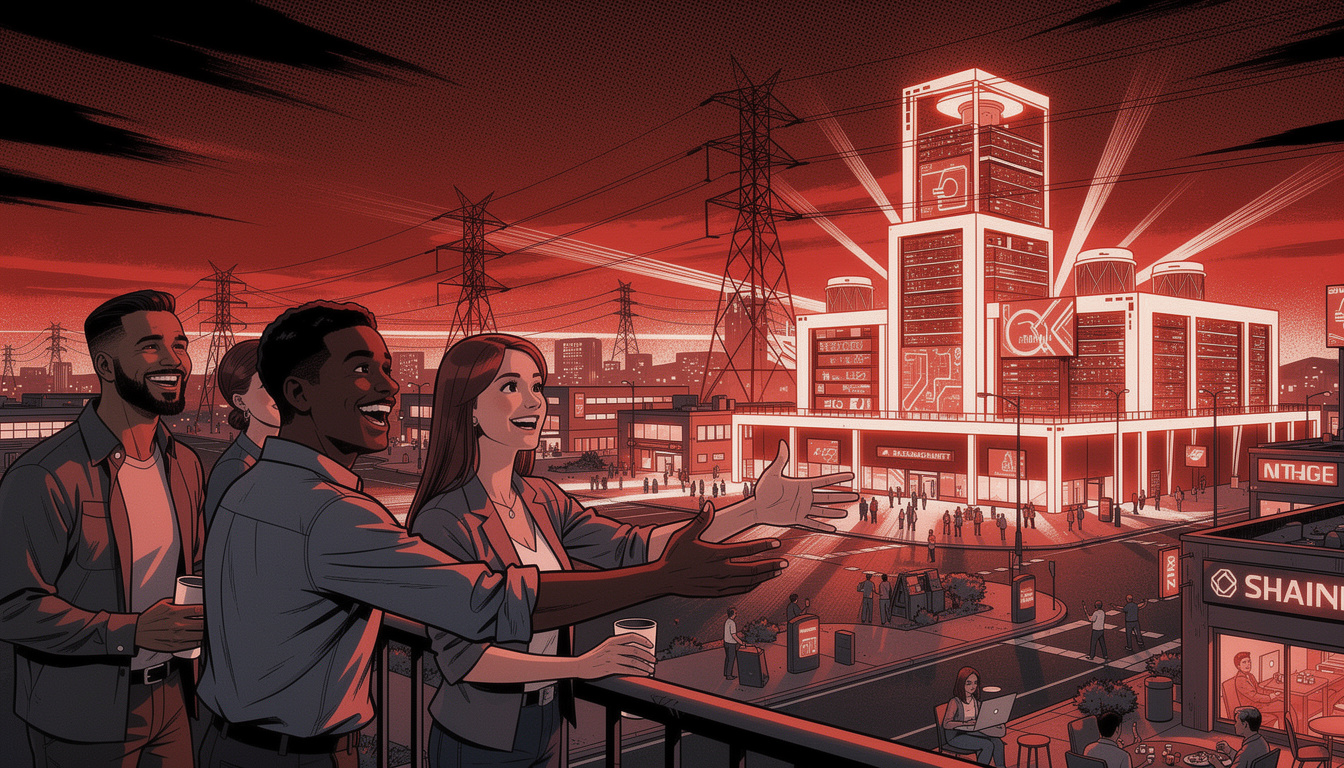
Meta is showing what the next phase of artificial intelligence really looks like. It is not just smarter chatbots. It is land. Power. Water. Cooling. Transmission. Chips. Data centers. Political approvals. Utility planning. Long-term energy contracts.
That is where Nevada enters the frame.
The AI race has moved out of the software lab and into the power grid. Las Vegas should be paying close attention.
Meta Is Showing What The AI Race Really Costs
Meta plans to begin production of its in-house AI chip, code-named Iris, in September 2026, according to Reuters. The move is part of Meta’s larger effort to reduce dependence on Nvidia and AMD while expanding the computing infrastructure needed to power AI across Facebook, Instagram, wearables, and future products. Meta is also aiming to grow its computing capacity from 7 gigawatts in 2026 to 14 gigawatts in 2027.
That number matters.
Gigawatts are not marketing language. They are power-plant language.
At the same time, Meta is moving forward with a C$13 billion AI-optimized data center in Sturgeon County, Alberta. The project is expected to start as a 1-gigawatt facility and could scale to 1.8 gigawatts, according to Reuters. Meta says the project will be its first data center in Canada and its 33rd globally.
Meta also says the Alberta project is expected to support more than 3,000 construction workers at peak, more than 300 operational jobs, and about C$60 million in local infrastructure improvements, including roads and water infrastructure.
That is the business model now.
AI companies are not just hiring engineers. They are building industrial-scale infrastructure.
Why Nevada Should Care
Nevada is already in the middle of the same conversation.
NV Energy’s 2026 integrated resource planning materials say Nevada has received about 22,000 megawatts, or 22 gigawatts, of interest inquiries from data centers. The utility has also executed about 6 gigawatts of signed Rule 9 agreements. NV Energy says Nevada is attractive for data centers because of developable land, favorable cooling conditions, and strong fiber connectivity.
That is not a small number.
For perspective, local reporting tied to NV Energy’s plan says that 22,000 megawatts of potential demand compares with Nevada’s current system peak of roughly 8,500 megawatts.
This is the heart of the issue.
Nevada is not just being asked to host new buildings. It is being asked to absorb a new industrial demand class that could reshape the state’s power future.
Desert Research Institute has also examined Nevada’s data-center pressure. Its report says 12 data-center projects outlined in NV Energy’s 2024 Integrated Resource Plan could drive 25,590 gigawatt-hours of load growth by 2033. DRI also notes that NV Energy estimated the energy demand for those 12 projects at 5,900 megawatts, about 2.8 times Hoover Dam’s 2,080-megawatt capacity.
That is the real local angle.
Meta’s AI chip is a national business story. Nevada’s power question is a local business story.
The two are now connected.
This Is Not A Tech Story. It Is A Power Story.
The first phase of the AI boom was about software.
The second phase is about infrastructure.
The companies that win will need reliable chips, cheap power, available land, cooling systems, fiber, favorable tax structures, and governments willing to approve massive projects quickly.
That puts Nevada in play.
The state has land. It has industrial corridors. It has existing data-center momentum in Northern Nevada. It has major energy planning underway. It has business-friendly positioning. It also has a global city in Las Vegas that already understands scale better than most places in America.
But Nevada also has constraints.
Power is not unlimited. Water is not casual. Transmission takes time. New generation takes capital. Ratepayers remember every bill increase. Small businesses do not want to subsidize someone else’s billion-dollar infrastructure play.
That is why NV Energy’s 2026 plan matters. The utility says its preferred plan proposes 4,370 megawatts of new solar, 5,405 megawatts of battery energy storage, 180 megawatts of geothermal generation, and 1,223 megawatts of peaking turbines. It also proposes a framework for large-load customers designed to make sure households, small businesses, and existing commercial customers are not asked to bear costs driven mainly by new large-load service requests.
That sentence should get attention in Las Vegas.
Because that is where the fight will be.
Not whether AI is coming.
It is already here.
The fight is who pays for the grid that AI needs.
Las Vegas Already Lives On High-Demand Infrastructure
Las Vegas is not a sleepy desert town being introduced to heavy infrastructure for the first time.
This city runs on scale.
Casinos need massive cooling. Resorts run around the clock. Convention centers move huge crowds. Entertainment venues demand serious power. Hotels process millions of transactions. Security systems, booking systems, gaming systems, retail systems, restaurants, elevators, digital signage, and live production all sit on top of complex infrastructure.
Las Vegas already understands that spectacle is not magic. It is logistics.
AI is the next version of that lesson.
The difference is that a resort creates visible public value. It brings guests. It fills restaurants. It supports taxi drivers, rideshare drivers, bartenders, housekeepers, cooks, entertainers, suppliers, small vendors, and local media.
A data center is different.
It can bring investment, construction jobs, tax revenue, and technical infrastructure. But it does not automatically feed the small-business economy the same way a resort, arena, festival, or convention does.
That does not make data centers bad.
It means Nevada has to negotiate like it understands its own value.
The Winners Are Obvious. The Risk Is Who Gets The Bill.
If Nevada handles this correctly, the winners could be significant.
Landowners with the right sites win. Power developers win. Transmission contractors win. Construction firms win. Engineering firms win. Fiber providers win. Utilities could win. Local governments could win if tax structures are disciplined. Industrial corridors could gain long-term value.
But the exposed parties are just as obvious.
Ratepayers are exposed if grid costs get socialized. Small businesses are exposed if power bills rise. Communities are exposed if projects consume infrastructure without producing enough local benefit. Policymakers are exposed if they chase press releases without locking down the math.
This is where Nevada has to be tough.
Every major data-center deal should answer basic questions before anyone celebrates.
Who pays for new generation?
Who pays for transmission?
How much water is required?
How much of that water is consumed?
How many permanent jobs are created?
What local vendors benefit?
What happens if projected demand changes?
What protections exist for residential customers and small businesses?
Those are not anti-growth questions.
Those are adult business questions.
Nevada Should Not Fear The AI Boom. It Should Price It Correctly.
There is a bad version of this future.
In that version, Nevada becomes a cheap power sink for out-of-state tech giants. The state absorbs infrastructure strain while the largest value creation happens somewhere else. Small businesses and residents see higher pressure on utilities while data centers operate behind walls with limited local spillover.
There is also a strong version.
In that version, Nevada becomes a disciplined AI infrastructure state. Large-load customers pay their own way. New power is added responsibly. Water use is transparent. Local construction and service firms get real contracts. Grid upgrades strengthen the state instead of weakening it. Data-center growth is tied to enforceable public benefit, not vague promises.
That is the path worth pursuing.
Meta’s move shows the scale of the opportunity. It also shows the leverage Nevada should demand.
AI companies need places that can host the future. Nevada should not give that away cheaply.
The Bottom Data Push
Meta’s AI chip push is not a Las Vegas story because Meta is building that chip here.
It is a Las Vegas story because it shows where the AI economy is really going.
The future of AI will be decided by companies that can secure chips, power, land, cooling, data centers, and political permission at scale.
Nevada is already being pulled into that race.
The smart move is not to hype every data-center announcement like free money. The smart move is to treat AI infrastructure like the major industrial shift it is.
Las Vegas was built by people who understood leverage, location, power, and spectacle.
The next question is whether Nevada can use that same instinct to win the AI infrastructure era without letting the bill land on everyone else.
That is the deal to watch.