The 2026 Run Delivered Real Heat
Las Vegas did not need another reminder that it can own a sports calendar. The 2026 NBA Summer League supplied one anyway.
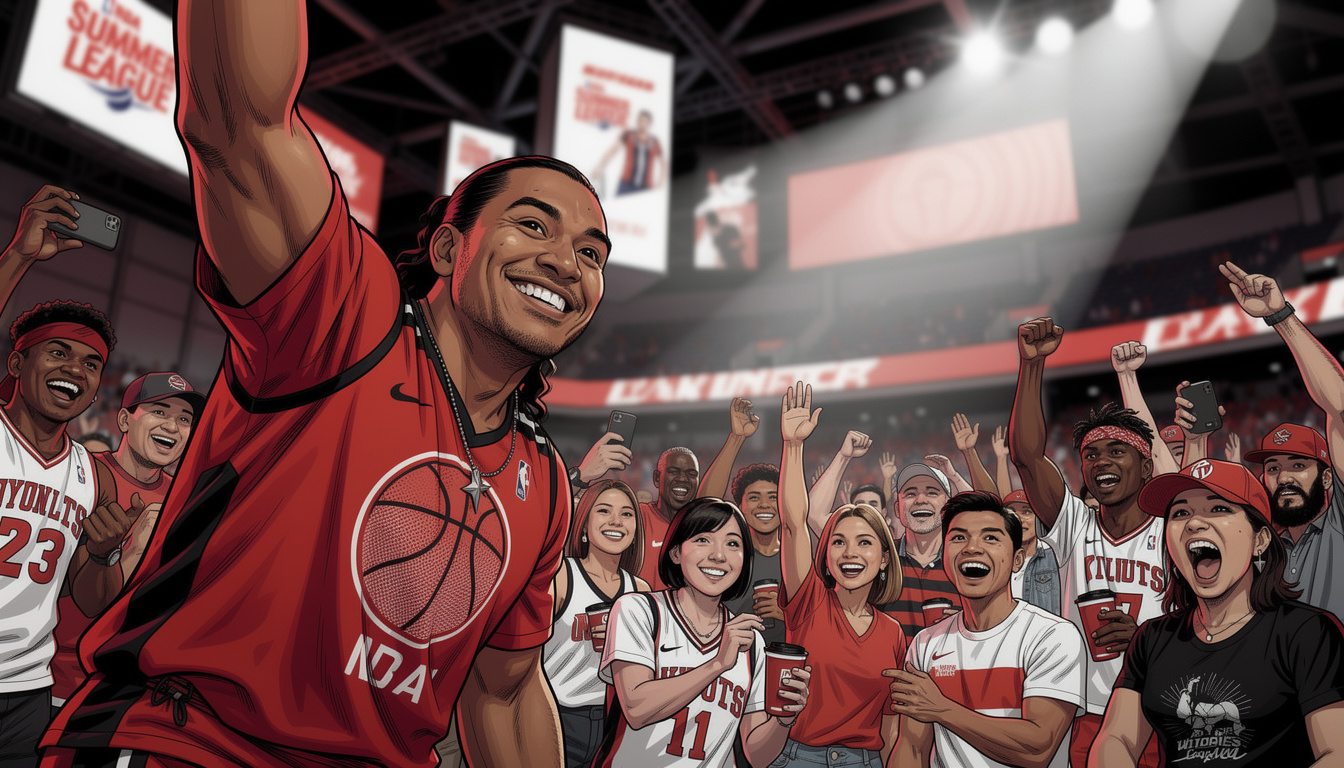
The league brought all 30 teams to the UNLV campus from July 9 through July 19, filling an 11-day window with prospects, roster hopefuls and wall-to-wall basketball. The NBA staged the event at the Thomas & Mack Center and Pavilion, keeping its signature summer showcase planted in the desert.
Then the numbers landed. More than 156,000 people attended, according to the NBA, setting a Summer League record. That was 12% higher than the previous attendance mark established in 2018. Merchandise sales also hit a record, climbing 11% above the previous high from 2024.
That is not background noise. That is a statement. July in Las Vegas already has heat, pools and packed resort calendars. Summer League adds a concentrated sports rush that brings players, coaches, scouts, media and fans into town at the same time. Basketball becomes the meeting room. The whole city gets the side action.
Why the 11-day window matters
Summer League works because it is more than a single marquee game. It creates a daily rhythm. Games start, another matchup follows, and the next prospect gets his shot. Fans can build an entire day around basketball without waiting for one evening tip.
The format also gives Las Vegas something valuable during the NBA offseason: relevance. The Finals are over. Free agency is moving. Training camp is still months away. For 11 days, the league's center of gravity shifts to UNLV.
That gap on the calendar is the sweet spot. Summer League does not compete with the regular NBA schedule because there is no regular NBA schedule. It owns its lane, parks on the asphalt and turns the volume up.
What Fans Got on the Court
The 2026 event included 76 games across the two UNLV venues. Seven games opened the schedule on July 9, and the action continued through the championship on July 19.
This was not a tiny rookie exhibition dressed up for television. Every NBA franchise participated. Each team played at least five games. That guaranteed repeat looks at prospects and gave less-heralded players more than one night to make an impression.
A format built for volume and stakes
Under the official 2026 competition format, teams played four initial games before the top four advanced to the semifinals. Records from those four games determined the playoff field, with point differential and total points among the tiebreaking criteria.
The 26 teams that missed the four-team playoff received a fifth game. The semifinal winners moved to the championship. Simple. Fast. No bloated bracket. There was enough structure to create stakes without pretending July basketball carries the weight of May.
The playing rules also preserved Summer League's distinct identity. Regulation games used four 10-minute quarters. Players could commit up to 10 personal fouls before fouling out in ordinary games, while the limit returned to six for the semifinals and championship. That wider margin gave teams more room to evaluate players rather than losing them early to foul trouble.
That is the bargain here. Summer League is competitive, but development and evaluation remain central. The standings matter. The championship matters. So does finding out whether a player can defend in space, handle pressure or make the extra pass against NBA-level athletes.
Two venues, one basketball hub
The Thomas & Mack Center served as the larger stage, while the adjacent Pavilion carried its own slate. The setup gave the NBA enough court space to stack the schedule without scattering the event around the valley.
For fans, that concentration is a major part of the appeal. One campus becomes basketball central. A lower-profile afternoon matchup can lead into a prime evening game without a cross-town sprint. The experience is closer to a hoops festival than a conventional one-game arena trip.
It also creates the signature Summer League mix. One section may be tracking a lottery pick. Another may be watching an undrafted guard attack every possession like his career depends on it. Because sometimes it does.
The Championship Put a Finish on the Showcase
Golden State closed the event by beating Memphis 94-90 in the championship game. The Warriors erased a 12-point deficit entering the fourth quarter, turning the final night into more than a ceremonial wrap-up.
Yaxel Lendeborg led Golden State with 21 points and 10 rebounds and was named championship game MVP. Cameron Boozer scored 19 points and grabbed eight rebounds for Memphis. The matchup gave the final a clean prospect-driven storyline and delivered late drama at Thomas & Mack.
The audience followed the finish
The championship averaged 676,000 viewers on ESPN, according to the NBA's post-event report. That made it the most-watched Summer League title game since 2017 and represented a 61% increase from 2025.
Those television numbers matter because they show the event's reach extends beyond the building. Las Vegas supplies the setting, but the basketball travels nationally. The Strip, the UNLV campus and the summer atmosphere become part of the broadcast package.
That combination is hard to duplicate. Plenty of cities can host games. Las Vegas can host the league around the games.
Summer League Has Become a Las Vegas Staple
The 2026 competition marked the 21st NBA Summer League held in Las Vegas. The event began here in 2004 with six teams and 13 games. It has been held every year since then except 2011 and 2020.
Now it brings all 30 clubs and a 76-game schedule. That growth tells the story. Summer League did not arrive as a finished mega-event. It became one because the league, teams, media and fans kept finding reasons to return.
The historical player list gives the showcase credibility. Kevin Durant, Stephen Curry, James Harden, Russell Westbrook, Giannis Antetokounmpo, Nikola Jokić and Shai Gilgeous-Alexander all appeared at Summer League before winning NBA MVP awards. Damian Lillard played in Las Vegas before winning Rookie of the Year and becoming an NBA All-Star.
Not every prospect becomes a star. Not every July performance survives contact with the regular season. That uncertainty is part of the fun. Fans are not buying a guaranteed glimpse of greatness. They are buying the chance to spot it early.
Las Vegas owns this kind of event
The city's major-league identity no longer rests on one team or one building. The Golden Knights, Aces and Raiders have established permanent homes here. Summer League plays a different role. It is a recurring national gathering that takes over a specific piece of summer.
That makes it a strong fit for Las Vegas. The event is compact, energetic and loaded with overlapping storylines. A top prospect can dominate the afternoon. A fringe player can steal the night. An executive can become the most photographed person in the building without taking a shot.
The result is controlled basketball chaos. Vegas knows the assignment.
The Final Score for Las Vegas
The 2026 NBA Summer League did more than return. It set attendance and merchandise records, put all 30 teams on the floor and produced the event's most-watched championship game in nine years.
That is why this window still matters. It keeps Las Vegas in the center of the NBA conversation during the heart of summer. It gives fans a dense menu of live games. It gives the league a national stage for its next wave of talent.
Eleven days. Seventy-six games. More than 156,000 attendees. That is not an offseason footnote. That is Las Vegas putting another sports event on the board.