Primm Did Not Lose the Road
The Problem Was the Stop
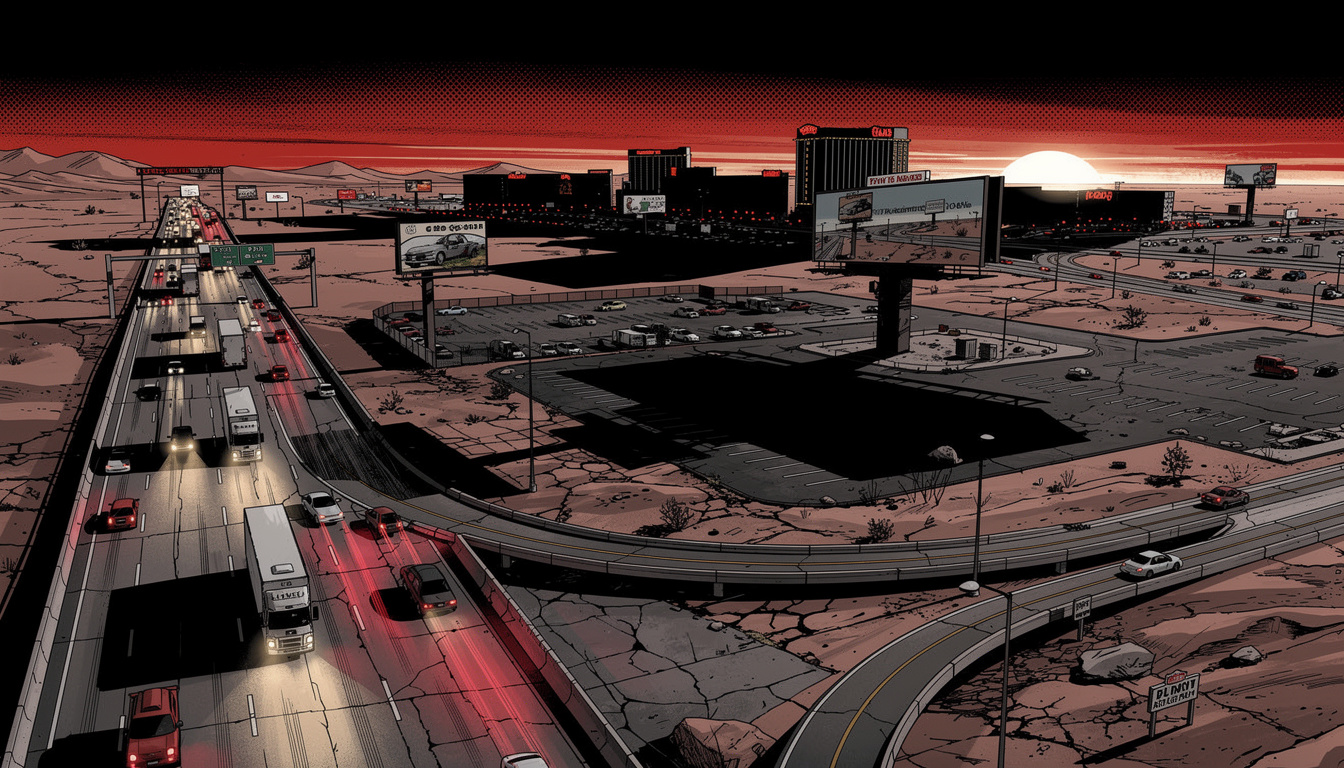
The cars are still there.
The trucks are still there.
The road is still alive.
But too many travelers now pass Primm with one goal: keep going.
That is the problem. Primm did not lose because Interstate 15 disappeared. It did not lose because Southern California stopped sending people toward Las Vegas. It did not lose because drivers forgot the exit existed. Primm lost because too many travelers stopped seeing a strong enough reason to pull off the highway.
That is a different kind of failure.
It is not a visibility problem. It is an urgency problem.
For decades, Primm worked because it intercepted Southern California travelers before Las Vegas did. The town sold the feeling that the Nevada trip had already started at the border. Cross the line, see the signs, pull off, eat, play, shop, stay, or at least spend something before finishing the drive.
That formula used to make sense.
Then Las Vegas got stronger. California gaming moved closer to the customer. Road-trip behavior got faster. Travelers started planning tighter trips. The border stopped feeling like enough of an event by itself.
Primm was still there.
The customer moved on.
Primm Once Won by Being First
The Border Used to Feel Like Arrival
Primm’s original power was timing.
It was the first major Nevada stop for millions of Southern California drivers heading toward Las Vegas. That mattered because the border once carried more emotional and commercial weight. Crossing into Nevada felt like the trip had changed. It felt like the rules had changed. It felt like the vacation had started.
Primm turned that feeling into a business.
The town did not need to be Las Vegas. It needed to make travelers feel like Las Vegas had already started.
That was the old advantage.
A driver coming from Los Angeles, Riverside, San Bernardino, or the Inland Empire could hit the state line and see a simple choice: keep driving, or stop now and get the first taste of Nevada. For many years, that choice worked in Primm’s favor often enough to support big buildings, bright signs, hotel rooms, food options, retail, and roadside activity.
Primm did not have to win the whole trip.
It had to win the first decision after the border.
The Town Sold Early Arrival
The old Primm was built around early arrival.
That was the psychology. A traveler could stop before reaching Las Vegas and still feel like the trip had begun. That feeling mattered before California gaming expanded and before the Las Vegas destination became even more powerful.
Primm’s job was simple:
Catch travelers at the border.
Give them an immediate Nevada reward.
Turn a quick stop into spending.
Let the bigger trip continue after Primm got its share.
That was the intercept model.
It worked because the border felt meaningful. It worked because travelers had fewer nearby alternatives. It worked because the stop had novelty. It worked because Primm could capture impatience before the Strip captured attention.
The old business was not built on being better than Las Vegas.
It was built on being earlier.
Las Vegas Became Too Strong to Delay
The Main Event Kept Getting Bigger
Primm was trying to interrupt a trip that increasingly had a stronger final destination.
That is a tough business to be in.
Las Vegas kept adding reasons to get there faster. The Strip got stronger. Downtown kept evolving. Restaurants became attractions. Sports became part of the city’s identity. Convention traffic kept mattering. Entertainment, nightlife, events, shows, hotel towers, and branded experiences kept pulling travelers deeper into the city.
The more powerful Las Vegas became, the weaker the argument for stopping short became.
A traveler with a dinner reservation, hotel check-in, showtime, game ticket, convention schedule, or group plan has less interest in delaying the trip 40 miles outside the city. The final destination carries more urgency.
That is where Primm lost emotional value.
The stop before Las Vegas used to feel like a bonus.
For many modern travelers, it became friction.
Stopping Short Got Harder to Justify
A stop has to compete with the clock.
That was Primm’s growing problem.
The modern Las Vegas trip is often planned before the car leaves Southern California. People have hotel apps, reservation times, GPS estimates, show tickets, dinner plans, and group chats tracking arrival. The trip is less spontaneous than it used to be.
That does not mean nobody stops.
It means the stop has to earn its place.
Primm’s old pitch asked travelers to interrupt their momentum. But Las Vegas kept making that momentum stronger. The closer the traveler got to the city, the more every extra stop had to justify itself.
Primm had name recognition.
Las Vegas had the pull.
In the long run, pull beat recognition.
California Gaming Made the Border Less Necessary
Convenience Moved Closer to Home
Primm also got squeezed from the California side.
California gaming changed the state-line math. Southern California customers who once had to drive toward Nevada for a full gaming experience gained more options closer to home. That made Primm less necessary for the customer who wanted gaming but did not need the full Las Vegas trip.
That was a structural problem.
Primm used to benefit from being the first major Nevada gaming stop. But once gaming convenience moved closer to Southern California customers, the border did not feel as powerful. The customer did not have to drive as far. The state line did not carry the same monopoly feeling.
That left Primm in a difficult middle position.
Customers who wanted convenience could find options in California.
Customers who wanted Las Vegas kept driving to Las Vegas.
Primm lost the middle ground.
Primm Was Squeezed Between Convenience and Spectacle
Primm had pressure on both sides.
California offered convenience.
Las Vegas offered spectacle.
That is a brutal squeeze for a border town. Primm was not as close as California gaming for many customers, and it was not as complete as Las Vegas for travelers who wanted the full destination experience.
That is how a once-powerful location can weaken without physically changing.
The land stays put.
The customer map changes.
The old stop no longer solves the same problem. Once that happens, the property has to reinvent itself or watch the traffic pass by.
Primm’s reinvention did not come fast enough.
The Road-Trip Customer Got Faster
Speed Became Part of the Product
The modern road-trip customer is harder to slow down.
That matters more than people think.
Travelers now move with apps, schedules, digital reservations, real-time traffic, planned routes, and tighter expectations. They know when they are supposed to arrive. They know where they are staying. They know how far they are from the next stop. They know whether a detour costs them 10 minutes or 45.
Speed has become part of the product.
That changes roadside economics.
A business near I-15 is not only competing with other businesses. It is competing with the traveler’s desire to keep moving. The stop has to feel easy, fast, clean, useful, and worth the time.
The old Primm tried to add time to the trip.
The modern traveler is trying to remove it.
Different Travelers Need Different Stops
The I-15 corridor still carries many kinds of travelers.
But they do not all want the same thing.
Families may want clean restrooms, food, and a safe stop. Drivers heading home may want fuel and the fastest path back to the road. Tourists heading to Las Vegas may not want to lose momentum. Truckers need diesel, parking, showers, and practical services. Commercial drivers need reliability, not entertainment.
That is the shift.
The old Primm was built around the idea that enough people could be convinced to linger. The modern corridor rewards businesses that solve immediate needs.
That means less friction.
It means clear value.
It means quick decisions.
It means the stop has to make sense before the driver passes the exit.
A Stop Has to Solve a Problem Quickly
The Modern Stop Has to Be Obvious
Travelers stop when the reason is clear.
That is the new rule.
Fuel is clear. Food is clear. Coffee is clear. Restrooms are clear. Parking is clear. Lottery access is clear. Safety is clear. A fading destination pitch is not as clear.
Primm’s old model asked for a bigger commitment. It wanted travelers to stop, enter, slow down, and spend time. That is harder now because the decision window is short. A driver has seconds to decide whether the exit matters.
If the offer is not obvious, the driver keeps moving.
That is why travel centers, fuel stops, quick-service food, and clean roadside services may fit the next version of Primm better than the old resort model did. They give the customer a direct reason to act.
No long explanation.
No nostalgia required.
Clear Need Beats Old Memory
Memory can help a brand.
It cannot carry a giant property by itself.
Many travelers remember Primm. They may remember stopping there as kids. They may remember the signs, the buildings, the road trips, the feeling of crossing into Nevada. That recognition has value.
But recognition is not demand.
A traveler can remember a place and still not stop there.
That is the danger for Primm. The town became familiar, but less necessary. The stop became part of road-trip memory, not a required part of the current trip.
I think that is the cleanest way to understand the decline.
Primm lost when the reason to stop became less obvious than the reason to keep driving.
Traffic Stayed, Conversion Fell
A Busy Highway Can Still Produce a Weak Business
I-15 traffic still matters.
Primm still has visibility.
The problem is not whether travelers pass.
The problem is whether they stop and spend.
A passing vehicle is not a customer. A driver seeing a sign is not revenue. A full highway is not a full parking lot. Traffic only becomes valuable when it converts into the behavior the business needs.
Primm’s old model needed too much conversion from too little urgency.
A large resort-style operation needs travelers to stay longer, spend more, and visit more often. But the modern corridor increasingly rewards fast, practical stops. That mismatch weakened the town.
The road did not fail Primm.
Primm’s offer stopped converting enough of the road.
Conversion Is the Real Metric
The Primm story should not be measured only by traffic count.
It should be measured by conversion.
How many drivers pull off?
How many park?
How many walk inside?
How many buy?
How long do they stay?
How often do they return?
How many choose Primm instead of driving straight to Las Vegas or stopping somewhere else?
That is the real business question.
And that is where Primm lost ground.
Primm Became a Place People Remembered, Not Needed
Memory Is Not a Business Model
Primm still lives in the road-trip memory.
That does not mean it lives in the current customer’s plan.
That difference matters. A place can be familiar and still lose demand. It can have signs people recognize, buildings people remember, and stories people tell, while fewer people actually stop, spend, and return.
Nostalgia has value only when it connects to current behavior.
For Primm, that connection weakened.
The town still has emotional residue. People remember it as the first stop, the odd stop, the place at the line, the giant buildings in the desert. But memory does not pay the utilities. It does not staff the floor. It does not fill rooms. It does not bring back retail tenants.
Memory can open the door.
Demand has to walk through it.
Familiarity Can Hide Decline
Familiarity can make decline harder to see.
A driver passes the same buildings for years and assumes the place still has a role. The signs are there. The structures are there. The exit is there. From the road, the town may still look like it has weight.
But familiarity can mask weakening behavior.
If fewer people are stopping, the business is already changing. If stops are shorter, the revenue model is changing. If the customer only wants fuel or a restroom, the old destination model is changing. If people remember Primm but no longer need it, the town has a positioning problem.
That is exactly what happened.
Primm became known, but not necessary enough.
The Next Primm Has to Compete With the Clock
The Future Is Throughput, Not Detour
The next Primm has to monetize movement instead of fighting it.
That is the strategic shift.
The old model tried to turn a road trip into a detour. The next model has to make the stop feel like part of the trip’s efficiency. That means fast access, clean facilities, fuel, food, truck parking, safety, restrooms, coffee, convenience goods, and services that help travelers move better.
Not slower.
Better.
That is why the travel-center idea makes sense. It accepts that the customer is time-sensitive. It does not ask every traveler to become a long-stay guest. It converts short stops into repeat business.
That fits the modern corridor.
Convenience May Matter More Than Spectacle
Primm cannot out-spectacle Las Vegas.
It should stop trying.
The more realistic future is convenience. The town can compete by being useful, clean, fast, safe, and reliable. It can compete by solving the road’s problems better than anyone else near the border. It can create value through practical demand instead of trying to revive old emotional demand.
That is not a downgrade if it works.
It is a category shift.
Primm’s next role may be less about making travelers linger and more about making sure they want to stop again next time.
Las Vegas Still Needs the Corridor
The Corridor Still Has Value
Primm’s location is not dead.
Its old use has weakened.
That distinction matters. Las Vegas still depends on Southern California travel. I-15 remains vital to tourism, freight, workers, visitors, and regional movement. A strong stop near the border could still serve that corridor.
The issue is not whether the corridor matters.
It does.
The issue is whether Primm can create the right model for it.
A better Primm could support travelers, workers, truckers, freight, future airport-adjacent activity, and the larger Southern Nevada economy. But it has to match what the corridor needs now.
Not what it needed 30 years ago.
Primm Still Has a Role If It Earns One
Primm’s future is not guaranteed, but it is not meaningless.
The town still has land, highway visibility, regional recognition, and position. Those are real assets. But assets only matter when they are connected to current demand.
That is where the next plan has to focus.
Primm’s value is not gone.
It is waiting for a model that fits the traffic.
Travelers Did Not Abandon the Road. They Abandoned the Stop.
The Road Still Works. The Old Offer Does Not.
The biggest lesson is simple.
Travelers did not abandon the road.
They abandoned the stop.
That is why Primm’s future depends on understanding the difference between traffic and demand. The cars still pass. The trucks still move. The corridor still matters. But the old reason to stop no longer carries enough force.
Primm cannot build its next chapter on memory alone.
It cannot assume that recognition will become revenue.
It cannot wait for the old customer to return in the old way.
It has to give the modern traveler a new reason to act.
Primm Needs a Reason People Cannot Ignore Now
The old Primm made sense because the border felt like arrival.
The next Primm has to make sense because the stop is useful.
That is the strategic reset. The town can still matter if it solves real problems for the people moving through the corridor. It can still capture traffic if the offer is clear enough. It can still become part of the Las Vegas travel economy if it stops competing with the past and starts serving the present.
Primm did not lose because nobody sees it.
It lost because too many people see it and keep driving.
The next chance will not come from making travelers remember why they used to stop.
It will come from giving them a reason they cannot ignore now.