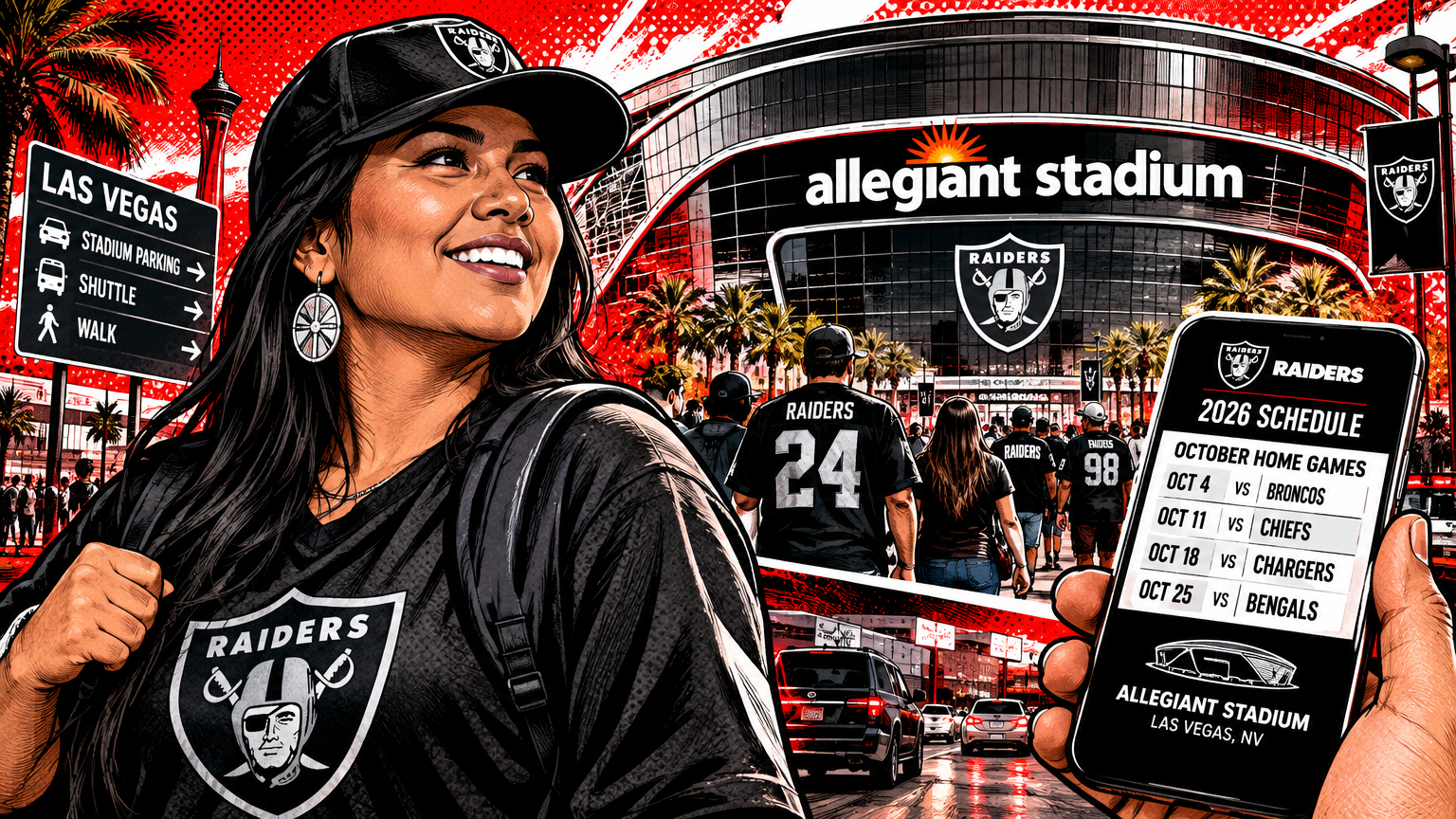
The Raiders’ 2026 schedule put three home games at Allegiant Stadium between Oct. 4 and Oct. 25, giving Las Vegas a concentrated midseason run of football dates. The stretch included a two-week gap, then back-to-back home games to finish it. That calendar made game-day travel a key planning consideration, but dates alone cannot tell us how much traffic each game produced.
The home matchups were Kansas City on Oct. 4, Buffalo on Oct. 18 and the Los Angeles Rams on Oct. 25. New England came between the first and second home games, on the road Oct. 11. The run put three large events at the stadium within 22 days, with the final two falling on consecutive Sundays.
For fans, the practical lesson is familiar: the opponent and kickoff are only part of the day. Stadium location, parking arrangements, road conditions and the chosen way in all shape the trip. As any coach will tell you, the plan matters. So does adapting when conditions change.
How the October Home Stretch Unfolded
The Raiders’ official 2026 schedule lists the Chiefs at Allegiant Stadium on Oct. 4, the Bills on Oct. 18 and the Rams on Oct. 25. The team opened its home season earlier, against Miami on Sept. 13, so October was not the first test of the year for the stadium or its visitors. But the later run packed three home dates into a tighter window.
That distinction matters. There was no three-week run of consecutive home games: the Raiders played in New England between the Chiefs and Bills matchups. The tighter sequence came at the end, with Buffalo followed by the Rams one week later. That is the schedule pattern worth noting, not a claim that all three dates created identical travel conditions.
Kickoff time can affect when fans arrive and when they leave, while other events and ordinary traffic can shape conditions on the same day. Those factors vary by date. The schedule confirms the game dates and opponents, but it does not provide a traffic count or prove that a particular game caused delays on nearby roads.
What the dates can, and cannot, tell fans
A cluster of home games can mean more occasions for visitors and locals to plan stadium trips within a few weeks. It cannot, on its own, establish gridlock, unusual delays or how smoothly stadium operations performed. Those conclusions require game-specific travel or operations information, not just the football calendar.
That is why it is better to treat each matchup as its own trip. A familiar route may work one Sunday and take longer another. Kickoff, event-day traffic controls and current access instructions can all change the equation. The scoreboard is the main event, but arriving with enough time to get through parking and the walk to the gate is part of the game plan.
Planning a Trip to Allegiant Stadium
Allegiant Stadium sits beside the Strip, west of Interstate 15 and between the Russell Road and Tropicana Avenue exits, according to the stadium’s directions and parking information. The location puts it close to resort hotels and major roads, but proximity is not a promise of a quick trip on an event day. Stadium guidance advises visitors to plan ahead and allow extra time, including for streets that may be converted to one-way traffic during games or other events.
Driving is one option, but fans should check the current parking instructions before setting out. Stadium-controlled parking requires advance planning, and event-day arrangements can vary. Rideshare and designated pickup and drop-off areas are also part of the stadium’s transportation guidance. For visitors staying on the Strip, the stadium identifies the Hacienda Bridge as a walking route on select event days, when it is closed to vehicle traffic.
The RTC’s Game Day Express is another option to check for regular-season Raiders home games. Service details, schedules and conditions can change, so fans should confirm current information for their specific game rather than rely on a past trip or an old travel plan.
- Confirm the kickoff and stadium guidance. Use current event information to set your departure time and understand access arrangements.
- Choose your route and parking plan early. Check the latest directions, parking availability and any event-day traffic controls.
- Allow time beyond the drive. Parking, the walk to the stadium and entry procedures all take time.
- Check transit and pickup details. Review current RTC and stadium instructions before choosing a bus, rideshare or other option.


The Schedule Is Only One Part of the Test
The Raiders’ October calendar created a clear midseason concentration: three Allegiant Stadium dates between Oct. 4 and Oct. 25, ending with consecutive home games. That pattern gave fans several chances to fine-tune their arrival plans, but it does not amount to a measured report on traffic or game-day performance.
For the next stadium trip, the winning move remains straightforward. Check the latest game and travel information, leave room for the unexpected and have a backup plan. In Las Vegas, the best route to kickoff is the one you verify before you leave.