Primm Didn’t Lose the Highway
The Real Problem Was Conversion
Primm didn’t fail because people forgot where it was.
It failed because people stopped needing what it was built to sell.
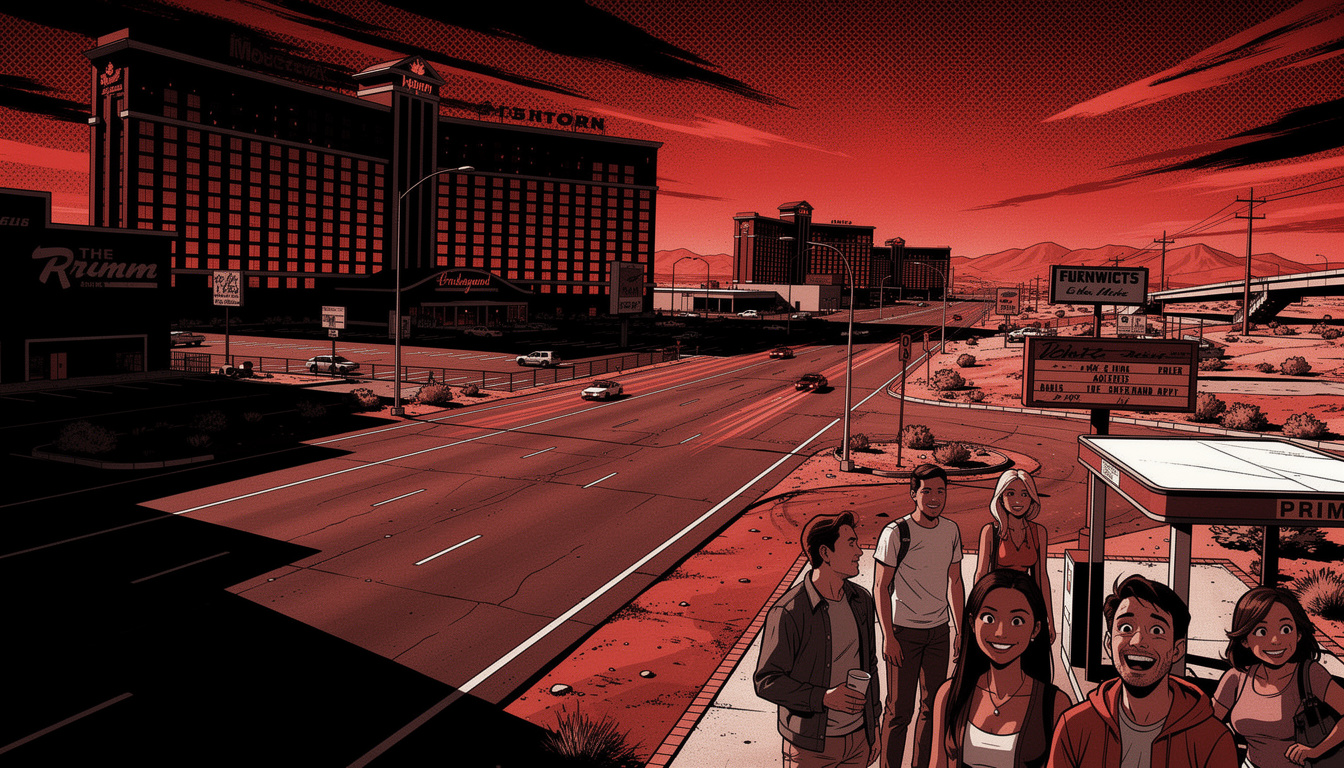
That’s the hard business truth behind the collapse of Primm’s old casino model. The highway is still there. The buildings are still there. The California-Nevada border is still there. The name still means something to generations of drivers who’ve passed those oversized desert properties on the way to Las Vegas.
But recognition isn’t revenue.
Primm was built around a specific customer behavior. Southern California drivers would cross into Nevada, see the first major gaming stop, pull off Interstate 15, and spend before the Strip ever had a chance to take their money. That was the model. It was simple, sharp, and powerful.
For a long time, it worked.
Then the market moved.
California gaming expanded. Las Vegas kept getting bigger. Travelers changed how they used the corridor. Massive resort properties became harder to operate. Weekend traffic wasn’t enough. The customer who once made Primm work didn’t vanish completely, but that customer became less dependable, less captive, and less likely to stop.
That’s how Primm’s casino model finally broke.
Not all at once.
Slowly. Structurally. Then suddenly in public.
Primm Was Built on Border Power
The State Line Was the Business Plan
Primm’s original advantage was geography.
It sat at the edge of Nevada, directly in the path of Southern California drivers heading toward Las Vegas. That mattered because, for decades, the state line had real commercial power. It separated California customers from the full Nevada casino experience.
Primm turned that border into a business model.
The town didn’t need to beat Las Vegas. It only needed to intercept Las Vegas money before it got there. That’s a very different strategy. The Strip was the main event, but Primm was the first taste. It gave travelers the feeling that the trip had already started before they reached the city.
That early-arrival psychology was valuable.
Drivers coming from Los Angeles, Riverside, San Bernardino, and the Inland Empire could cross into Nevada and immediately see a reason to stop. A traveler didn’t have to make it all the way to Las Vegas to gamble, eat, sleep, shop, or feel like they’d arrived somewhere bigger than the road.
That was Primm’s sweet spot.
Primm Didn’t Have to Be Better Than Las Vegas
Primm’s old model wasn’t based on being the best casino market in Nevada.
It was based on being first.
Whiskey Pete’s, Primm Valley Resort, and Buffalo Bill’s were built for a world where that first-stop advantage had real force. They weren’t random buildings in the desert. They were pieces of a border-town machine.
The formula was clear:
Catch Southern California drivers before Las Vegas did.
Give them a quick Nevada reward.
Convert the stop into spending.
Use hotel rooms, food, entertainment, retail, and gaming to extend the visit.
Repeat the cycle with the next wave of traffic.
That’s the old genius of Primm.
It monetized impatience.
A driver didn’t need to plan a full Primm vacation. The town just needed that driver to pull off the freeway. Once the car was parked, the system had a chance to work.
California Gaming Changed the Math
The Market Moved Closer to the Customer
The biggest structural blow to Primm came from California.
For years, Primm benefited from Nevada’s gaming advantage. Southern California customers who wanted the full casino experience had to make the desert drive. That gave Primm a built-in audience, especially among travelers who wanted to gamble before dealing with the full Las Vegas trip.
Then California tribal gaming matured.
Large casino resorts closer to Southern California customers changed the entire equation. Gamblers didn’t have to cross the Nevada line as often. They didn’t have to drive all the way to Primm for a gaming trip. They could find major properties closer to home, with better convenience and less travel friction.
That didn’t eliminate Las Vegas.
It did weaken Primm.
Las Vegas still had the full destination package: hotels, shows, restaurants, sports, nightlife, conventions, and global brand power. Primm didn’t have that same depth. Its best advantage was convenience at the border.
Once California offered more convenience before the border, Primm’s core position got squeezed.
The Customer Was No Longer Captive
Primm’s old customer had fewer choices.
The modern customer doesn’t.
That’s the difference. When a market becomes more competitive, the weakest assumption usually breaks first. For Primm, that assumption was simple: Southern California drivers would keep treating the Nevada border as a major stopping point.
Many no longer do.
They may still pass Primm. They may still recognize it. They may still remember stopping there years ago. But the urgency has changed. A casino trip no longer requires the same state-line commitment. The border doesn’t carry the same psychological pull.
That matters because Primm’s old model depended on habit.
Once that habit weakened, the whole machine had to work harder.
Las Vegas Stayed Bigger, Newer, and More Powerful
Primm Got Squeezed From Both Directions
Primm didn’t just face pressure from California.
It also faced Las Vegas.
That’s the part that makes the business story so unforgiving. Primm sat between two stronger forces. On one side, California gaming became more convenient. On the other, Las Vegas remained the bigger, louder, more complete destination.
The Strip kept evolving. It kept adding restaurants, arenas, luxury rooms, entertainment, sports, nightlife, conventions, and high-end experiences that Primm couldn’t realistically match. Downtown Las Vegas kept its own energy. The broader Las Vegas market kept pulling visitors deeper into the city.
Primm was left in a difficult middle position.
It wasn’t closer than California gaming for many customers.
It wasn’t bigger than Las Vegas for destination travelers.
That’s a brutal place to be.
The Stop Before Vegas Became Easier to Skip
For Primm to work, travelers had to believe stopping early was worth it.
That belief became harder to sustain.
A family heading to Las Vegas might want to get to the hotel, check in, find dinner, and start the real trip. A gambler might already have a favorite property in Southern California or Las Vegas. A road-tripper might want gas and food, but not a full resort stop. A trucker might need diesel, parking, and a fast meal, not a themed property built for leisure.
The road kept moving.
Primm’s offer didn’t keep matching enough of that movement.
That’s the key point. The buildings still had size, but size isn’t the same thing as relevance. The market didn’t reward Primm for being big. It rewarded whatever best solved the customer’s current problem.
Increasingly, Primm wasn’t that answer.
The Traveler Changed
The Modern I-15 Customer Wants Less Friction
The old Primm customer was easier to slow down.
The modern I-15 traveler often wants the opposite.
They want speed. Fuel. Food. Restrooms. Coffee. Clean parking. Safe lighting. Easy access back to the freeway. They don’t always want to walk through a large resort property, hunt for the right entrance, sit down for a long meal, or turn a stop into a major detour.
That’s especially true when the traveler already has a destination.
A driver heading to Las Vegas wants Las Vegas.
A driver heading back to California wants home.
A trucker wants function.
A family wants convenience.
A commuter wants time saved.
A massive casino resort needs a different kind of customer. It needs people willing to slow down, stay longer, and spend across multiple categories. It needs dwell time. It needs a customer who doesn’t just stop, but lingers.
That customer became harder for Primm to capture consistently.
The Customer Didn’t Vanish. The Mission Changed.
This is where I think the public often misreads Primm.
The issue isn’t that nobody drives through the corridor anymore. The issue is that the customer mission changed. Traffic can still be strong while the business model gets weaker. Those two things can be true at the same time.
A passing car isn’t revenue.
A full freeway isn’t a full hotel.
A busy corridor isn’t automatically a healthy resort economy.
The customer has to stop, enter, spend, and come back. Primm used to convert enough of that behavior to support large properties. Over time, it didn’t.
That’s not just a traffic problem.
It’s a conversion problem.
Weekend Traffic Couldn’t Carry Weekday Overhead
Big Properties Need Steady Demand
Large resort properties don’t run on memory.
They run on volume.
Hotel rooms need guests. Restaurants need covers. Gaming floors need players. Security has to be staffed. Utilities have to be paid. Maintenance doesn’t pause because the weekday is slow. Insurance, labor, cleaning, repairs, systems, cooling, lighting, and basic operations all create fixed costs.
That’s why weekend spikes weren’t enough.
Primm could still see bursts of activity when the corridor was busy. Friday and Sunday traffic could still create energy. Holidays could still produce movement. But large properties need a steadier base than occasional surges.
The math becomes dangerous when the buildings are built for a bigger era than the current demand can support.
The Assets Became Too Heavy
Primm’s properties were sized for the old model.
That became part of the problem.
A smaller travel stop can survive on quick transactions. A massive resort needs more. It needs enough revenue to justify the size of the machine. If the customer base becomes thinner, shorter-stay, and more weekend-dependent, the overhead starts turning against the operator.
The building becomes a burden.
The rooms become expensive to carry.
The gaming floor becomes harder to justify.
The restaurants become exposed.
The whole property starts needing a level of demand the corridor no longer reliably supplies.
That’s how the asset turns from advantage to drag.
Traffic Wasn’t the Problem. Conversion Was.
A Busy Road Isn’t the Same as a Strong Business
Interstate 15 still matters.
That’s not the debate.
The corridor between Southern California and Las Vegas remains one of the most important travel routes in the West. Primm still sits in a visible position. Drivers still see the exit. Trucks still move through the region. Tourists still pass by.
But traffic only has value when it turns into spending.
That’s where Primm’s old model weakened. It still had exposure, but exposure isn’t enough. A driver has to make the decision to stop. Then that stop has to be worth enough to support the business model waiting at the exit.
For a gas station, the bar is lower.
For a travel center, the bar is practical.
For a large casino resort, the bar is much higher.
Traffic Is Not Demand Until It Spends
Primm’s old business model depended on travelers doing more than passing through.
They had to park. Walk inside. Gamble. Eat. Shop. Book rooms. See shows. Build habits. Return often enough to keep the properties alive.
That’s a lot to ask from a traveler whose mission may now be fast movement.
The next version of Primm may need to accept that. The road still has value, but the business model has to match the traffic that exists now. That means more utility, less fantasy. More throughput, less dwell-time dependence. More clear reasons to stop.
The highway didn’t abandon Primm.
Primm’s old model stopped converting the highway.
The Buildings Outlived the Model
Whiskey Pete’s, Primm Valley Resort, and Buffalo Bill’s Were Built for Another Era
The physical scale of Primm tells its own story.
Whiskey Pete’s, Primm Valley Resort, and Buffalo Bill’s were built around the belief that the border would keep producing enough customers for large resort operations. That belief made sense in the era that created them.
But buildings don’t automatically adapt when the market changes.
A hotel tower can’t shrink itself.
A large gaming floor can’t become efficient just because demand softens.
A themed property can’t force travelers to care about the same experience they once did.
That’s the problem with oversized assets in a changing market. They carry the past into the present, even when the present doesn’t want the same thing.
The Old Primm Was Overbuilt for the New Customer
The modern customer often wants a smaller promise.
Primm was still carrying a larger one.
That mismatch matters. A traveler who wants fuel and food doesn’t need a giant resort. A trucker who wants parking and a shower doesn’t need an entertainment complex. A family trying to get to Las Vegas doesn’t need a major stop unless the stop is fast, clean, and obviously useful.
The old buildings were designed to hold attention.
The new corridor rewards efficiency.
That doesn’t make every asset worthless. It means every asset has to be re-examined. Some may need new operators. Some may need smaller uses. Some may need partial activation. Some may need to be repurposed. Some may never return to their old function.
The physical plant survived longer than the business logic that built it.
That’s the real asset problem.
The Old Primm Was a Destination. The New Corridor Wants Utility.
The Future Model Has to Match the Road
The old Primm sold escape.
The new corridor wants utility.
That’s the shift that matters most. Primm’s future can’t be built on a weaker version of its past. It has to be built around what people and companies already need from the exit today.
That likely means:
Fuel
Food
Restrooms
Truck parking
Convenience retail
Safe lighting
Fast access
Limited gaming where it fits
Worker housing
Freight support
Construction support
Long-term airport-adjacent positioning
That’s not as flashy as the old border-casino pitch.
It may be more realistic.
Throughput May Matter More Than Dwell Time
The old Primm needed customers to stay.
The next Primm may need to serve more customers quickly.
That changes the entire economic model. A resort thinks about occupancy, gaming spend, entertainment draw, restaurant traffic, and length of stay. A travel-center or logistics model thinks about volume, speed, parking, fuel sales, food transactions, repeat road use, and operational efficiency.
Those are different businesses.
Primm may still have a future if it stops trying to force the old business onto the new customer. The exit still has land. It still has visibility. It still has traffic. It still has a position between Southern California and Las Vegas.
But the winning model has to respect what the corridor is now.
Not what it used to be.
Primm Didn’t Fail All at Once
The Collapse Was a Long Business Unraveling
Primm’s casino model didn’t break overnight.
It unraveled over time.
The original advantage was real. The border mattered. The Southern California customer mattered. The first-stop psychology mattered. The highway position mattered. Primm turned all of that into a functioning business for decades.
But every advantage has a shelf life if the market around it changes.
California gaming changed. Las Vegas changed. Travelers changed. Retail changed. Operating costs changed. The economics of maintaining huge desert resort properties changed.
Primm didn’t lose because it was invisible.
It lost because the market stopped rewarding what it was built to be.
The Next Version Has to Be More Honest
The lesson isn’t that Primm has no value.
The lesson is that Primm’s value has to be rebuilt around reality.
The old model was based on border power. The next model has to be based on corridor utility. That means the exit’s future may depend less on recreating a casino destination and more on becoming the most useful stop between Southern California and Las Vegas.
That’s a colder story.
It’s also a stronger one.
Primm’s past was built on getting travelers to stop before Vegas.
Its future may be built on serving the road better than anyone else around it.
That’s the reset.
Primm’s casino model didn’t break because the town was invisible. It broke because the market finally stopped rewarding what Primm was built to be.