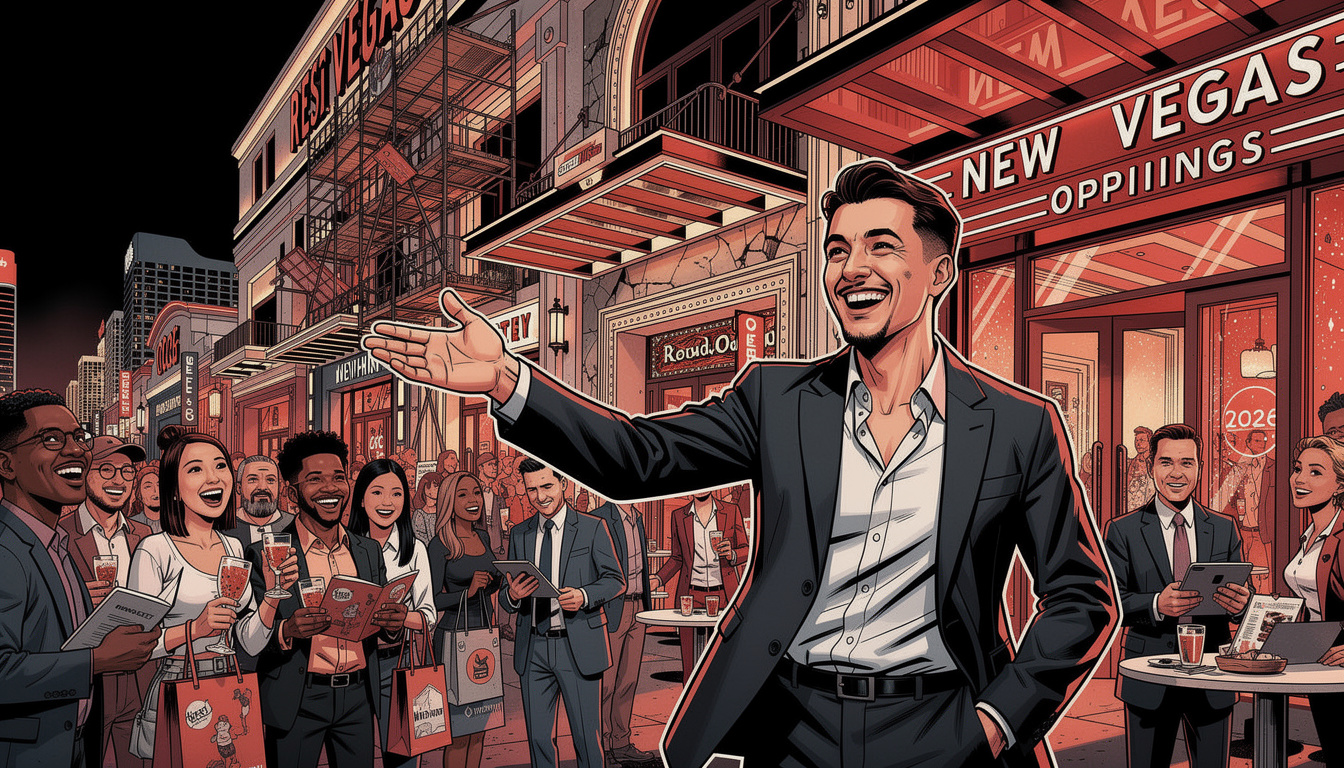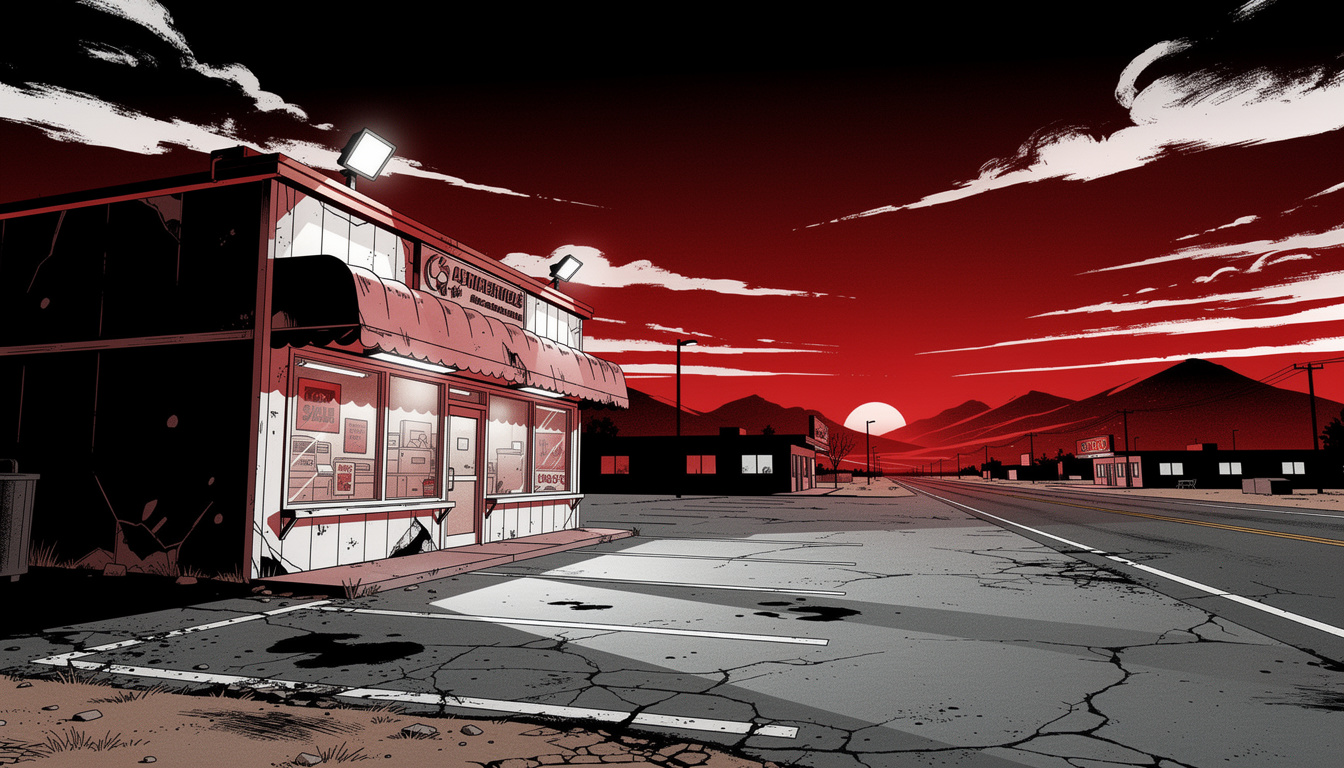
The Strangest Casualty in Primm’s Collapse
One Small Store Still Had a Reason to Exist
Of all the pieces caught in Primm’s collapse, the Lotto Store may be the strangest.
The old resort model is breaking. The large buildings are struggling. The traveler has changed. The border-town formula doesn’t pull like it used to. But the Lotto Store still had something Primm desperately needed.
A clear reason for people to drive there.
That’s what makes its possible closure so hard to understand from the outside. The Lotto Store wasn’t just another small roadside shop sitting near the California-Nevada border. It was one of the rare Primm businesses with a customer mission that still made immediate sense.
Nevada doesn’t have a state lottery.
California does.
That one difference created real behavior. Southern Nevadans could drive to the California side of the state line, buy Powerball or Mega Millions tickets, and head back home. During massive jackpot runs, that simple act became a ritual. People knew the drive. They knew the store. They knew why they were going.
That matters because Primm’s larger problem is demand.
The old model has struggled to convince enough people to stop, stay, and spend. The Lotto Store didn’t need that kind of persuasion. It had scarcity. It had urgency. It had a product Nevada residents couldn’t buy at home.
In a town losing its old commercial gravity, that’s not a small thing.
That’s an asset.
The Lotto Store Had What Primm Lost
A Clear Offer Beats a Fading Habit
Primm’s old resort model depended on habit.
The Lotto Store depended on a clear offer.
That distinction is important. The larger Primm model needed travelers to behave the way they used to. It needed drivers to see the border, feel the pull, exit the highway, walk inside, spend money, and maybe stay longer than planned.
The Lotto Store didn’t ask for all of that.
It asked for one decision: Do you want access to California lottery tickets?
That’s clean.
A customer didn’t need to be sold on a whole town. They didn’t need to book a room. They didn’t need to gamble, shop, dine, or turn the stop into a full experience. They just needed to want a lottery ticket badly enough to cross the line.
That made the store different from the surrounding decline.
Primm’s bigger properties were fighting to recreate old behavior. The Lotto Store still had live behavior attached to it. People drove there because the reason was obvious.
That’s a powerful thing in a distressed market.
The Store Didn’t Need Nostalgia
The Lotto Store didn’t need nostalgia.
It had scarcity.
That’s why it stands out. Much of Primm’s old identity is tied to memory. People remember stopping at Whiskey Pete’s. They remember Buffalo Bill’s. They remember the giant buildings, the road trips, the signs, the feeling of hitting the Nevada line before Las Vegas.
Memory can be valuable, but it’s not always enough.
The Lotto Store had something stronger than memory. It had a legal and geographic advantage that still meant something to Southern Nevada customers. The customer knew exactly why the store existed. They knew what they couldn’t get in Nevada. They knew where to go to get it.
That’s the type of demand Primm needs more of, not less.
Nevada’s Lottery Gap Created Real Demand
The State Line Still Had Power Here
The irony is hard to miss.
Primm’s old border power weakened in gaming, but the Lotto Store still monetized the border in another way.
For decades, Primm’s broader business model depended on the difference between California and Nevada. Travelers crossed into Nevada for gambling access, and Primm stood ready to catch them. But as California gaming grew, that state-line advantage became less powerful.
The lottery worked in reverse.
Nevada residents crossed into California because Nevada doesn’t offer the same product. That gave the California side of the line a rare pull over Southern Nevada customers. It turned the border into a reason to travel again.
That’s why the Lotto Store mattered.
It wasn’t just capturing travelers already passing through. It could create trips of its own. A Las Vegas local didn’t have to be heading to California to stop there. A huge jackpot could make the store the destination.
That’s real customer behavior.
Cross-Border Demand Is Not Easy to Replace
Cross-border demand is valuable because it’s specific.
It’s not vague foot traffic. It’s not soft interest. It’s not, “Maybe we’ll stop if we feel like it.” It’s a customer leaving one state to access something available in another.
That kind of demand gives a business a sharper position.
The Lotto Store had several advantages Primm’s larger model was losing:
A simple product.
A clear legal reason for the trip.
A customer base in nearby Las Vegas.
A fast transaction.
A direct connection to major jackpots.
A reason to exist outside the old resort ecosystem.
That’s why the possible closure feels so strange.
A town that’s struggling to create reasons to stop may lose one of the cleanest reasons it still had.
The Store Was Small, Specific, and Easy to Understand
Small Demand Can Be Strong Demand
Not every viable business needs massive dwell time.
Some businesses work because the customer mission is narrow, urgent, and easy to complete. That’s what the Lotto Store had. It didn’t need a giant footprint. It didn’t need to hold a customer for hours. It didn’t need a complicated entertainment pitch.
It needed a line, a counter, tickets, and trust.
That’s a very different model from the oversized resort economy around it. A large property needs multiple layers of spending to justify itself. Rooms, restaurants, gaming floors, entertainment, utilities, labor, maintenance, and security all need enough volume to make the numbers work.
The Lotto Store had a simpler equation.
A customer wanted lottery access. The store provided it.
That’s why small demand can still be strong demand. It may not carry an entire town by itself, but it can act as a dependable traffic generator. In a place like Primm, traffic generators matter.
Corridor Businesses Win When They’re Obvious
In a corridor economy, clarity matters.
A driver needs to understand the offer quickly. A local needs to know why the trip is worth it. A traveler needs to see the value before deciding to pull off the road.
The Lotto Store had that clarity.
It didn’t ask the customer to believe in Primm’s past. It gave the customer a current reason to act. That’s the lesson. A business doesn’t have to be massive to be strategically important. It has to match a real customer need.
The Lotto Store did.
That’s why its possible closure raises a larger question: If Primm can’t preserve one of its clearest remaining demand engines, what exactly is the next model supposed to protect?
The Closure Shows the Danger of Being Attached to a Larger System
A Strong Counter Can Still Lose Inside a Weak Structure
The Lotto Store’s problem may not be demand alone.
That’s the business lesson.
A storefront can still have customers and still get caught inside a larger collapse. Operations are rarely as separate as they look from the outside. Management, staffing, utilities, security, maintenance, property control, insurance, vendor relationships, and corporate decision-making can tie a small asset to a much larger system.
When that larger system exits, even the pieces that still make sense can get dragged with it.
That’s what makes the Lotto Store so frustrating.
From a customer perspective, the store had a clear purpose. From a systems perspective, it may have been connected to a broader operating structure that no longer wanted to carry the full footprint.
Those are two very different realities.
Value Can Be Trapped Inside the Wrong Structure
A business can still have customers and still lose if it’s attached to a collapsing machine.
That’s not sentimental. That’s operational.
If the store depended on shared labor, shared property control, shared systems, or decisions made at the larger operator level, then its individual customer demand may not have been enough to separate it from the shutdown. That doesn’t mean the store had no value. It means the value may have been trapped inside the wrong structure.
That’s an important distinction.
Primm’s future may depend on separating useful assets from failing assumptions. The Lotto Store is useful because it proves customer behavior can still be created at the border. But if that behavior stays tied to a larger model that no longer works, it can be lost anyway.
That’s how a place loses value it still needs.
The Lotto Store Proves Primm’s Future Needs Clear Reasons to Stop
The Next Primm Has to Be Obvious From the Road
Primm’s next model can’t rely on memory.
It has to give people specific reasons to stop.
That’s the real lesson of the Lotto Store. It worked because the customer didn’t need a history lesson. They didn’t need to be convinced that Primm used to matter. They didn’t need to buy into the old border-town fantasy.
They understood the transaction.
That’s what Primm needs now. The next version of the town has to be obvious from the road and useful in real life. If a driver has to think too hard about why they should stop, the model is already weak.
Clear reasons win.
Fuel is clear.
Food is clear.
Clean restrooms are clear.
Truck parking is clear.
Lottery access is clear.
Fast service is clear.
A fading, oversized destination pitch is not.
The Store Was a Blueprint in Miniature
The Lotto Store may be small compared with Primm’s larger properties, but strategically, it offers a useful blueprint.
It shows that Primm can still create behavior when the offer is sharp enough. That matters because the future of the town probably won’t be built around one giant reason to stop. It’ll likely be built around several practical reasons stacked together.
Fuel.
Food.
Parking.
Convenience.
Lottery access.
Limited gaming where it fits.
Worker housing.
Travel services.
Freight support.
Airport-adjacent positioning if the long-term corridor story develops.
That’s the future Primm should be studying. Not the idea of becoming what it used to be, but the idea of becoming useful again.
The Lotto Store already understood that better than the old model did.
Losing the Lotto Store Would Weaken More Than Lottery Sales
Demand Engines Matter in Distressed Places
Losing the Lotto Store would mean more than losing lottery sales.
It would mean losing a demand engine.
That’s a different thing. A demand engine doesn’t just process transactions. It creates trips. It gives people a reason to arrive. In a distressed place, those reasons are precious.
The Lotto Store pulled Southern Nevada customers south. Some may have bought only tickets. Others may have also bought gas, food, drinks, snacks, or convenience items. Some trips may have reinforced Primm as a useful border stop, even if the rest of the town was fading.
That kind of activity matters because distressed corridors need every active traffic generator they can keep.
When a place starts losing reasons to visit, the decline can feed itself. Fewer stops mean less activity. Less activity means weaker services. Weaker services make the exit feel less useful. Then more people skip it.
That’s the spiral Primm has to avoid.
The Store Helped Keep Primm Functional
The Lotto Store also helped preserve Primm’s identity as a functional cross-border stop.
That’s important. Primm’s old identity was built around gaming and travel. But the Lotto Store gave it a different kind of practical relevance. It made the border useful to Southern Nevada residents in a way that didn’t depend on hotel rooms, large buildings, or the old resort logic.
Losing that would make Primm feel even more hollow.
It would reduce one of the few unique reasons people still understood. And in a market trying to reset, uniqueness isn’t a side benefit. It’s leverage.
In a struggling market, unique demand is not small.
It’s strategic.
Could the Lotto Store Survive Under a New Model?
Lottery Traffic Fits a Travel-Center Future
The Lotto Store may not be the biggest asset in Primm.
It may be one of the clearest.
That’s why it should be part of any serious conversation about a new model for the exit. A travel-center strategy built around fuel, food, convenience, parking, and fast transactions could pair naturally with lottery traffic. The same customer who drives for tickets may also buy coffee, gas, snacks, or food. The same traveler who stops for fuel may decide to buy a ticket if the store is convenient.
That’s a strong fit.
It’s not complicated. It’s not romantic. It’s not built on the past.
It’s practical.
That’s exactly where Primm’s future may be headed.
Preservation Depends on Structure
The question is whether the Lotto Store can be preserved, separated, transferred, or reopened under a new structure.
That’s not a small question. Ownership, licensing, staffing, property control, operating agreements, state requirements, and site logistics all matter. A business can make sense conceptually and still be difficult to keep alive if the structure around it is messy.
But from a pure corridor strategy standpoint, the logic is there.
If Primm is rebuilt around utility, the Lotto Store fits that future better than many old resort assets. It creates a specific trip. It supports fast-stop behavior. It uses the state line as an advantage. It gives Southern Nevada customers a reason to come even when they aren’t headed to Las Vegas or California.
That’s the kind of demand Primm can’t afford to throw away.
The Lotto Store Was the Honest Version of Primm
The Customer Already Knew Why They Were Going
The Lotto Store made sense because the customer didn’t have to be convinced.
They already knew why they were going.
That’s what made it different. The old Primm model had to work harder and harder to convince travelers to stop, slow down, and spend inside a large property ecosystem built for another era. The Lotto Store’s pitch was smaller, sharper, and more honest.
Nevada doesn’t have a lottery.
California does.
The store sat at the border.
That was the business.
There’s a lesson in that.
Primm’s next chapter has to be built around clear reasons, not fading assumptions. It has to match what customers actually do now, not what they used to do. It has to create obvious value in a corridor where people make fast decisions.
The Smallest Asset May Have the Cleanest Lesson
The Lotto Store wasn’t Primm’s biggest attraction.
It wasn’t the most dramatic building.
It wasn’t the symbol people saw first from the highway.
But it may have offered the cleanest lesson for the town’s future. Give people a reason that’s specific, scarce, useful, and easy to understand, and they’ll still come.
That’s the opportunity Primm has to rebuild around.
Not vague nostalgia.
Not oversized fantasy.
Not the hope that the old customer returns in the old way.
The future has to be practical.
The Lotto Store proved that practicality can still pull traffic. If Primm loses that, it’s losing more than a retail counter. It’s losing one of the few remaining examples of what still worked.
The Lotto Store made sense because the customer didn’t have to be convinced.
They already knew why they were going.