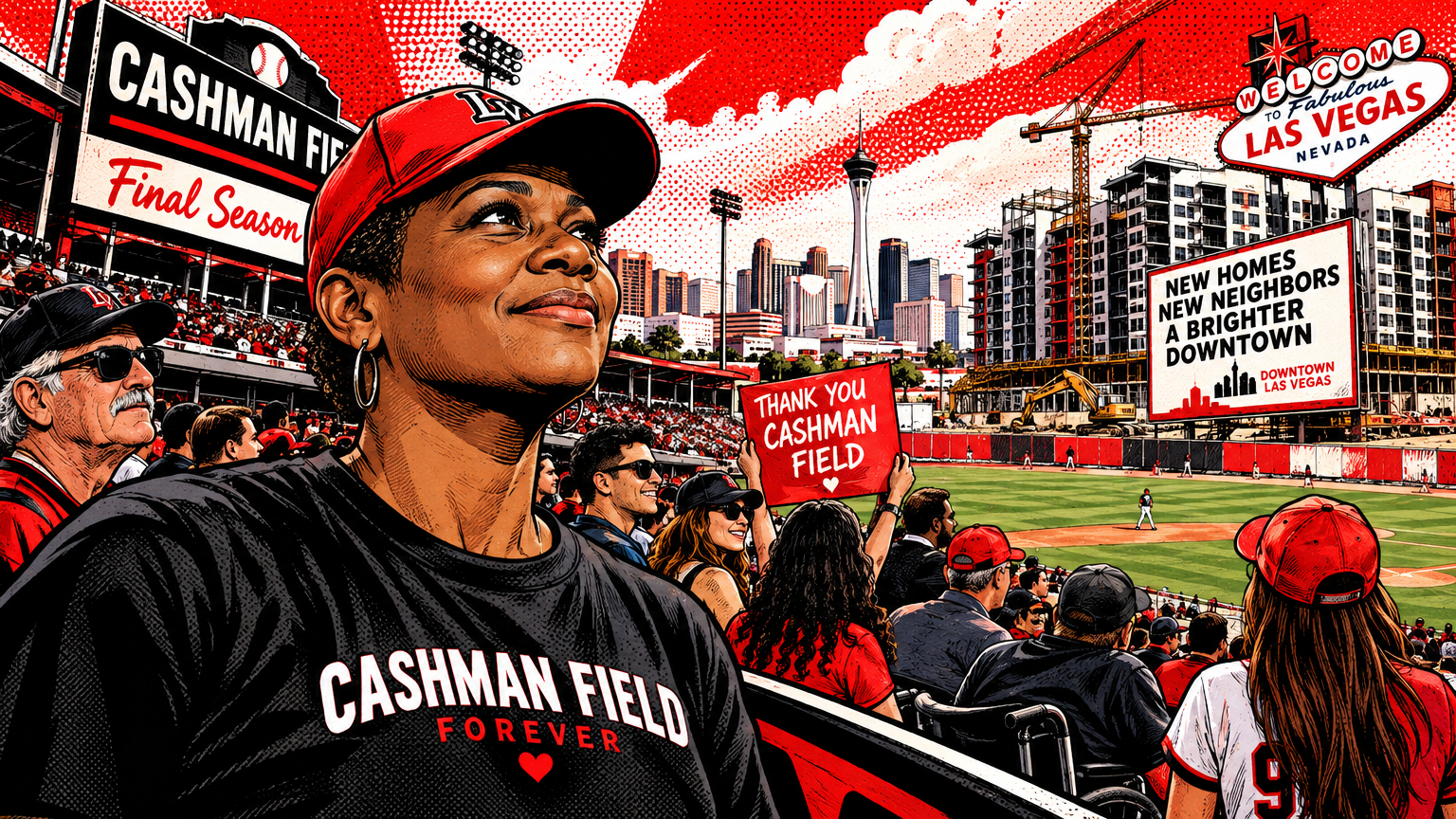
Cashman Field’s final professional sports game took place Oct. 17, 2026, closing the stadium’s run as a Las Vegas sports venue. The downtown property is now part of a planned residential redevelopment called The Foundry, a project announced by homebuilder Lennar after a groundbreaking ceremony on Oct. 15. The company says the roughly 70-acre development will bring more than 1,000 homes to the former Cashman Center and Grant Sawyer Building sites.
The stadium’s departure is real. The demolition schedule is not yet clear. A specific date for Cashman Field to come down has not been announced, and Lennar says vertical construction is expected to start in October 2027. So the next chapter is taking shape, but the wrecking ball does not have a public start date.
For longtime Las Vegas fans, that is a big shift. Cashman was not the valley’s newest or shiniest venue. It was the place where generations learned the local sports calendar by heart.
What is planned for the Cashman site?
Lennar’s plan, called The Foundry, covers approximately 70 acres across the former Cashman Center and the former Grant Sawyer state office building site, near Las Vegas Boulevard and East Washington Avenue. The company says the project will include more than 1,000 townhomes and single-family homes. Its Oct. 15 announcement marked a groundbreaking for the development, but says vertical construction is not expected to begin until October 2027.
The homes are planned as part of a public-private partnership involving Lennar, the city of Las Vegas and the state of Nevada, according to the project announcement. Lennar says prices are planned to start in the $300,000s. That is a future starting-price plan, not a current list of homes for sale.
The site’s transition follows the end of the stadium’s sports schedule. The Las Vegas Lights FC played its final game at Cashman on Oct. 17, against Lexington SC. The club’s 2026 season was its last at the venue. The move ends the stadium’s role as a professional sports home, even as the site’s next use moves forward.
Demolition and construction are different milestones
A groundbreaking is a visible sign of progress, but it does not mean the stadium has been demolished or that homes are already rising. The available project announcement sets an expected start for vertical construction, not a date for Cashman Field’s demolition. The precise demolition timing remains an open question.
That distinction matters for neighbors, sports fans and anyone trying to track what changes when. The development has a name, a broad scope and a construction outlook. The public still needs a firm demolition schedule and more detail on how the work will unfold across the two properties.
A sports history that began before the modern stadium
Cashman’s story stretches back beyond the stadium most locals remember. A wooden ballpark on the site opened in 1947, with its first game played in 1948. The modern stadium opened in 1983. It gave Las Vegas a home for Triple-A baseball, starting with the Las Vegas Stars.
The franchise later became the Las Vegas 51s. In 2019, the team left Cashman for a new ballpark in Summerlin and took the name Las Vegas Aviators. The Aviators’ team history records the franchise’s Cashman-era start in 1983 and its long run of Pacific Coast League baseball there.
Soccer became the stadium’s next major chapter. The Lights began playing at Cashman in 2018, initially sharing the venue with the 51s. After the baseball team moved, the Lights became the stadium’s professional sports tenant. Their final match on Oct. 17 brought the curtain down on that era.
Cashman also hosted events beyond regular-season baseball and soccer. Its history included exhibition baseball, rodeo and other gatherings. It was a downtown venue with a different scale and feel from the newer stadiums that now draw crowds across the valley. That is part of what residents lose: not just seats and a playing field, but a familiar address for a night out.
What Las Vegas loses, and what the new plan promises
Cashman was a working sports landmark, not a polished museum piece. Its value came from years of people showing up: families at baseball games, fans following the Stars and 51s, and soccer supporters under the lights. When the stadium goes, that shared setting goes with it.
The Foundry offers a different future for the property. More than 1,000 planned homes would bring a residential use to a large downtown site. Lennar has described the project as an effort to expand homeownership opportunities. Those are the developer’s stated goals; the finished community will be judged by the homes delivered and how the development works for the people who live there.
Homes and a stadium serve different purposes. The plan is not a replacement sports venue, and the team’s final game marked the end of Cashman as a professional sports home. The question is no longer whether the old stadium will keep hosting the Lights. It is how the redevelopment takes shape, and when the site moves from demolition work to construction.
There are still milestones ahead. A firm date for the stadium’s demolition has not been announced, and vertical construction is projected for October 2027. Until then, the most concrete change is already on the scoreboard: Cashman’s sports era is over, and a housing project is moving toward its next phase.
Las Vegas has plenty of new places to watch a game. Cashman’s legacy is harder to replace: decades of local sports history in one downtown spot. The next chapter may bring homes, but the old ballpark still gets the last word in the city’s memory.