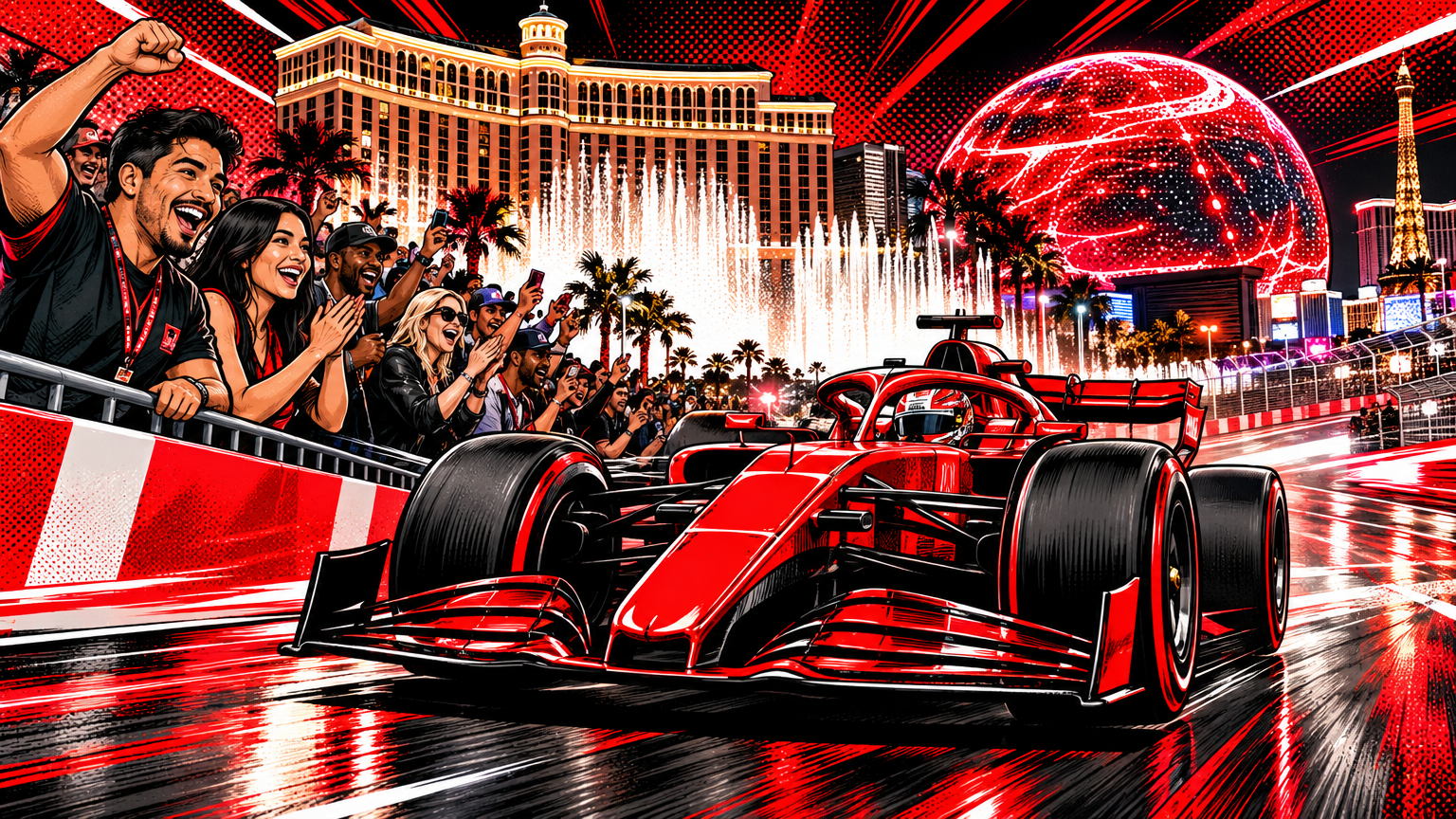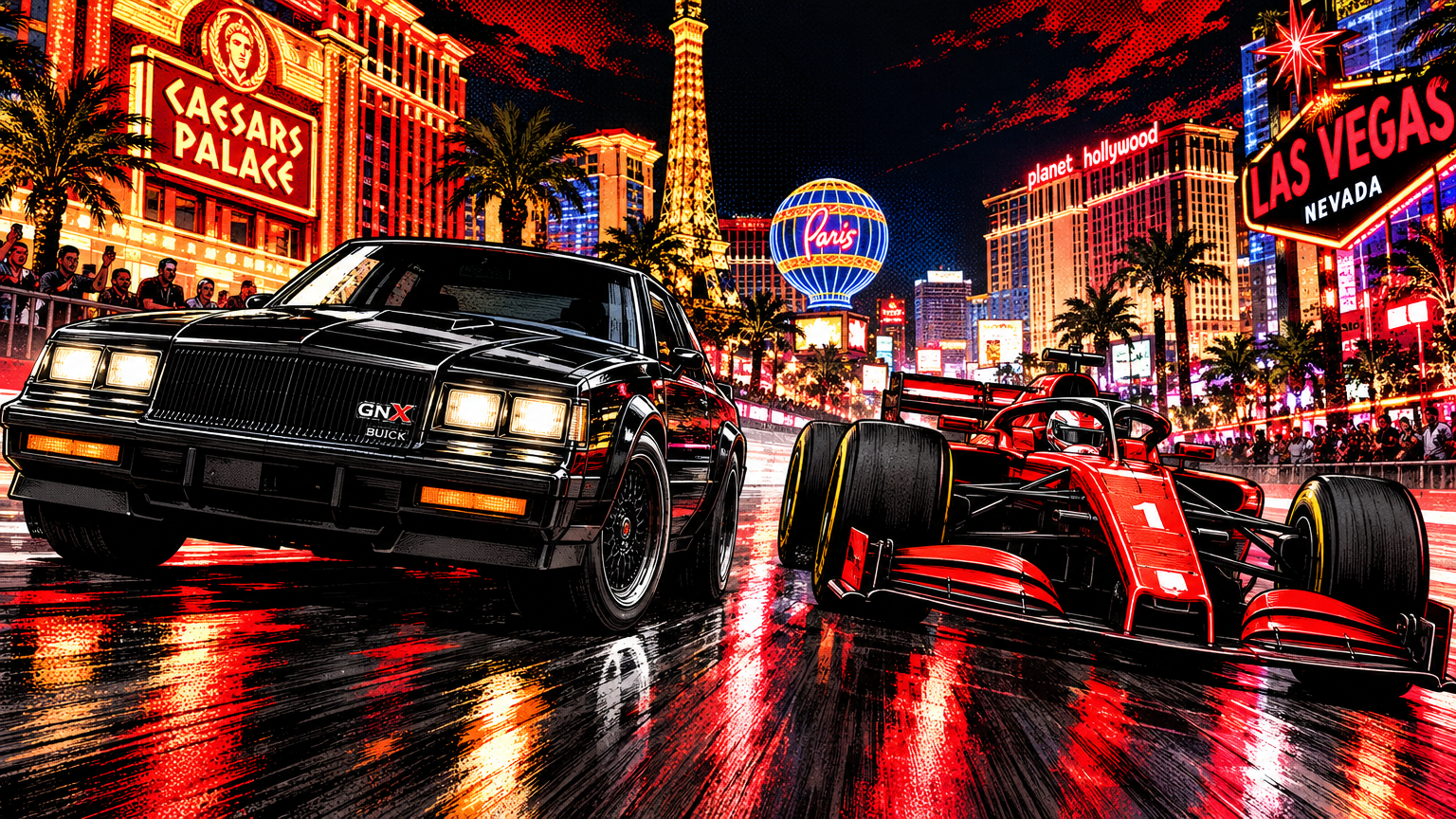
Most challengers in this series arrive wearing a supercar badge and a seven figure price tag. This one arrives wearing a Buick badge, in one color only, looking like a very angry taxi.
That is exactly why people still talk about it. In 1987, the Buick GNX was the quickest American production car you could buy, and it was not even close.
It outran the Corvette. It outran most Ferraris sold in America. And Buick only built 547 of them.
What happens if the Buick GNX picks a fight with a Formula 1 car?
What happens is a history lesson with a turbocharger attached. The GNX loses every round on paper, and somehow still walks away with its legend fully intact.
Let us score it properly. Buick figures first, period tests labelled as tests, and the famous underrated horsepower story handled with care.
First, Which GNX Are We Talking About?
There is only one GNX, and that is part of the magic. It was built for the 1987 model year only, in black only, as a two door Regal coupe only.
Every car carries a numbered plaque on the dashboard. Five hundred and forty seven cars were built, and that number is the car's identity, not a marketing line.
The family around it, kept separate the way this series always keeps it:
- The GNX, our challenger: the limited run flagship converted by ASC/McLaren for Buick. This is the scored car.
- The standard 1987 Grand National: the car the GNX started life as, rated at 245 hp. Quick, sinister, and not scored here.
- The earlier Grand Nationals, 1984 to 1986: the development story, including the intercooler that arrived for 1986. History, not the challenger.
- Modified GNXs: tuners have pushed this engine far beyond stock for decades. Culture only, zero points, because we score the factory car.
One name needs clearing up before it causes a bar argument. The McLaren in ASC/McLaren is McLaren Engines of Michigan, working with ASC, the American Sunroof Company.
It is not the British McLaren Formula 1 team. The GNX has no connection to Woking, which makes its speed even funnier.
Now the scored car. The full history is laid out in this Hemmings history of the GNX, and the core figures are consistent across Buick sources and period reporting.
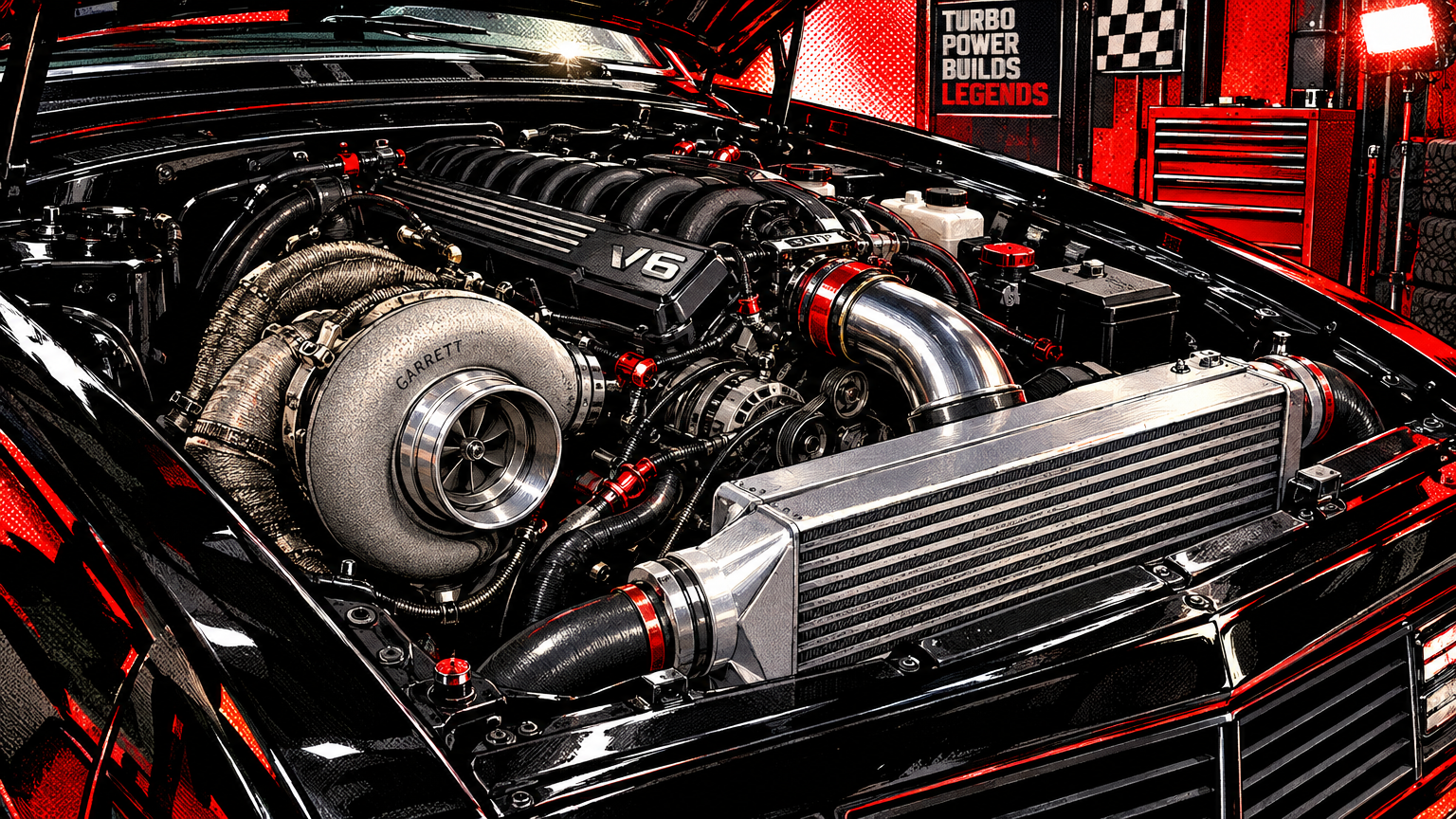
The engine is the Buick LC2: a 3.8 litre, 231 cubic inch, turbocharged and intercooled V6. Cast iron block, sequential fuel injection, and a Garrett T-3 turbocharger.
The GNX version got real hardware changes, not just a badge. A ceramic impeller in the turbo, a larger and more efficient intercooler, ceramic coated pipes, a freer dual exhaust, and a recalibrated computer allowing 15 psi of boost.
Official output was 276 hp at 4,400 rpm and 360 lb-ft of torque at 3,000 rpm. That was a gain of 31 hp over the standard 1987 Grand National.
Here is the first thing most readers do not know. Almost nobody in 1987 believed that 276 hp figure, and the period test numbers are why.
A car weighing about 3,545 lb does not run the times this car ran on 276 honest horsepower. Period analysis of the trap speeds pointed to something closer to 285 to 310 hp.
Why would Buick underrate its own flagship? Inside General Motors, the Corvette was supposed to be the performance king.
A black Buick coupe embarrassing it was awkward enough. Publishing a bigger power number than the Corvette's would have been a meeting nobody wanted.
So treat 276 hp as the official rating, because it is. Just know the stopwatch kept telling a slightly different story.
The gearbox is a GM Turbo-Hydramatic 200-4R four speed automatic with GNX specific reprogramming and extra cooling. No manual was offered, which tells you exactly what this car was built to do.
Underneath, ASC fitted a unique rear suspension with a Panhard bar and a torque arm on the live rear axle. The job was simple: stop wheel hop and put the launch down clean.
The wheels are black mesh style alloys under flared arches, with functional vents in the front fenders. Brakes are front discs and rear drums, which dates the car instantly.
Size check: 200.6 inches long on a 108.1 inch wheelbase. This is a big, upright, body on frame American coupe, and it makes no apology for it.
The price tells the rarity story. The GNX package added about $10,995 to a Grand National, for a total sticker of about $29,900 in 1987.
Buick planned 200 cars, then raised the run as orders poured in. The final count of 547 came from 500 dealer cars plus 47 extra cars for top performing dealers.
Period performance, kept labelled as period performance. Car and Driver tested the GNX at 0 to 60 mph in 4.7 seconds and the quarter mile in 13.5 seconds at 102 mph.
Buick's own figures, reported by Hemmings from Buick sources, were 0 to 60 mph in 4.7 seconds and the quarter mile in 13.47 seconds at 102 mph. Two sources, same story, which is rare and useful.
Top speed was governed to 124 mph. That was a tire rating limit, not an engine limit, and it matters a lot in Round Two.
Lateral grip was measured at about 0.80 g on the skidpad. Respectable for a big coupe on 1980s tires, and a number that will not save it in Round Three.
Five usable lessons from the GNX spec sheet, before we meet the other car:
- Boost is cheap power. A turbo, an intercooler, and engine calibration turned a family coupe V6 into the quickest American car of its year.
- Ratings are politics. An official horsepower figure can be a negotiation inside a company, not just a dyno result. Always check the test times.
- Traction is a system. The Panhard bar and torque arm mattered as much as the power. A launch is suspension work, not just engine work.
- Tires set the ceiling. The 124 mph governor existed because of tire ratings. The weakest part decides how fast the whole car is allowed to go.
- Scarcity compounds. One year, one color, 547 numbered cars. Rarity was designed in from day one, not discovered later.
Meet the 2026 Formula 1 Car
The 2026 Formula 1 car is a 1.6 litre turbocharged V6 hybrid. The petrol engine is limited to about 400 kW, and the MGU-K electric motor adds up to 350 kW.
Formula 1 describes the total package as more than 1,000 hp. Minimum weight is 768 kg, about 1,693 lb, and that figure includes the driver.
Do the power to weight math, because it decides almost everything in this series. The GNX carries about 78 rated hp per tonne.
The Formula 1 car carries more than 1,300 hp per tonne. That is not a gap, that is a different sport wearing similar clothes.
The F1 car is rear wheel drive, built from carbon, with active front and rear aerodynamics. It corners and brakes on racing tires that live for grip, not for mileage.
There is no universal official F1 0 to 60 time, top speed, or lap time, and this series never invents one. We score rounds on the evidence that actually exists.
That evidence includes real speed traps. Pierre Gasly was clocked at 353.9 km/h, about 220 mph, in qualifying at the 2026 Chinese Grand Prix, from FIA data.
Earlier Las Vegas traps, labelled by year, went higher still. Yuki Tsunoda hit 358.3 km/h in 2025, and Alex Albon hit 368.9 km/h, 229.2 mph, in 2024.
Keep those numbers in your pocket. A governed 1980s Buick is about to meet them.
Buick GNX vs. F1: The Numbers
| Category | 1987 Buick GNX | 2026 Formula 1 Car |
|---|---|---|
| Engine | 3.8L turbo V6, intercooled | 1.6L turbo V6 hybrid |
| Power | 276 hp rated (likely more) | More than 1,000 hp |
| Torque | 360 lb-ft at 3,000 rpm | Not published as one figure |
| Gearbox | 4 speed automatic | 8 speed semi automatic |
| Drive | Rear wheel drive | Rear wheel drive |
| Weight | About 3,545 lb | 768 kg (1,693 lb) with driver |
| 0 to 60 mph | 4.7 sec (period test) | No universal official figure |
| Quarter mile | 13.5 sec at 102 mph (period test) | Not a Formula 1 measure |
| Top speed | 124 mph, governed | 220 mph trap, 2026 (Gasly) |
| Brakes | Front disc, rear drum | Carbon racing brakes |
| Production | 547 cars, 1987 only | Built per team, per season |
| Vegas valet factor | Wins the room in silence | Cannot carry a passenger |
Read the weight row twice. The Formula 1 car, driver included, weighs less than half of the GNX.
Then read the power row. More than three times the rated power, in less than half the car, is why the rounds go the way they go.
But notice the row the GNX quietly owns. Production theatre: 547 numbered cars, one year, one color, and a plaque with your car's number on the dash.
Round One: Acceleration
This is the round the GNX was born for. In 1987, 4.7 seconds to 60 mph was supercar pace, full stop.
For context, the contemporary Corvette needed about six seconds. The GNX did not just beat GM's flagship, it embarrassed it in public, repeatedly.
The launch recipe still teaches something useful today. Boost, gearing, a recalibrated automatic, and a rear suspension built to stop hop: that is a complete system, not a party trick.
Against a modern Formula 1 car, though, the system runs out of road fast. The F1 car has more than 1,300 hp per tonne, launch control electronics, and tires built for one job.
There is no official universal F1 0 to 60 figure to print, and we will not invent one. We do not need one: the power to weight gap alone settles this round beyond argument.
Winner: Formula 1. The GNX keeps the best acceleration story in American car history, but the round belongs to the hybrid.
Round Two: Top Speed
This round is short, and the governor is the reason. The GNX was limited to 124 mph because its tires were not rated for more.
That is a useful ownership lesson hiding in a spec sheet. A car's top speed is often set by the cheapest rated component, not by the engine.
The Formula 1 evidence is measured, not claimed. Gasly's 353.9 km/h trap in 2026 qualifying is about 220 mph, in cornering trim, on a circuit.
Add the labelled Las Vegas history and it gets worse for the Buick. Tsunoda reached 358.3 km/h in 2025 and Albon reached 368.9 km/h in 2024.
The GNX engine, ungoverned, would likely have gone faster than 124 mph. Likely is not a number, and this series never scores a guess.
Winner: Formula 1. By about 96 mph against the 2026 trap, and by more against the Vegas record.
Round Three: Now Add a Corner
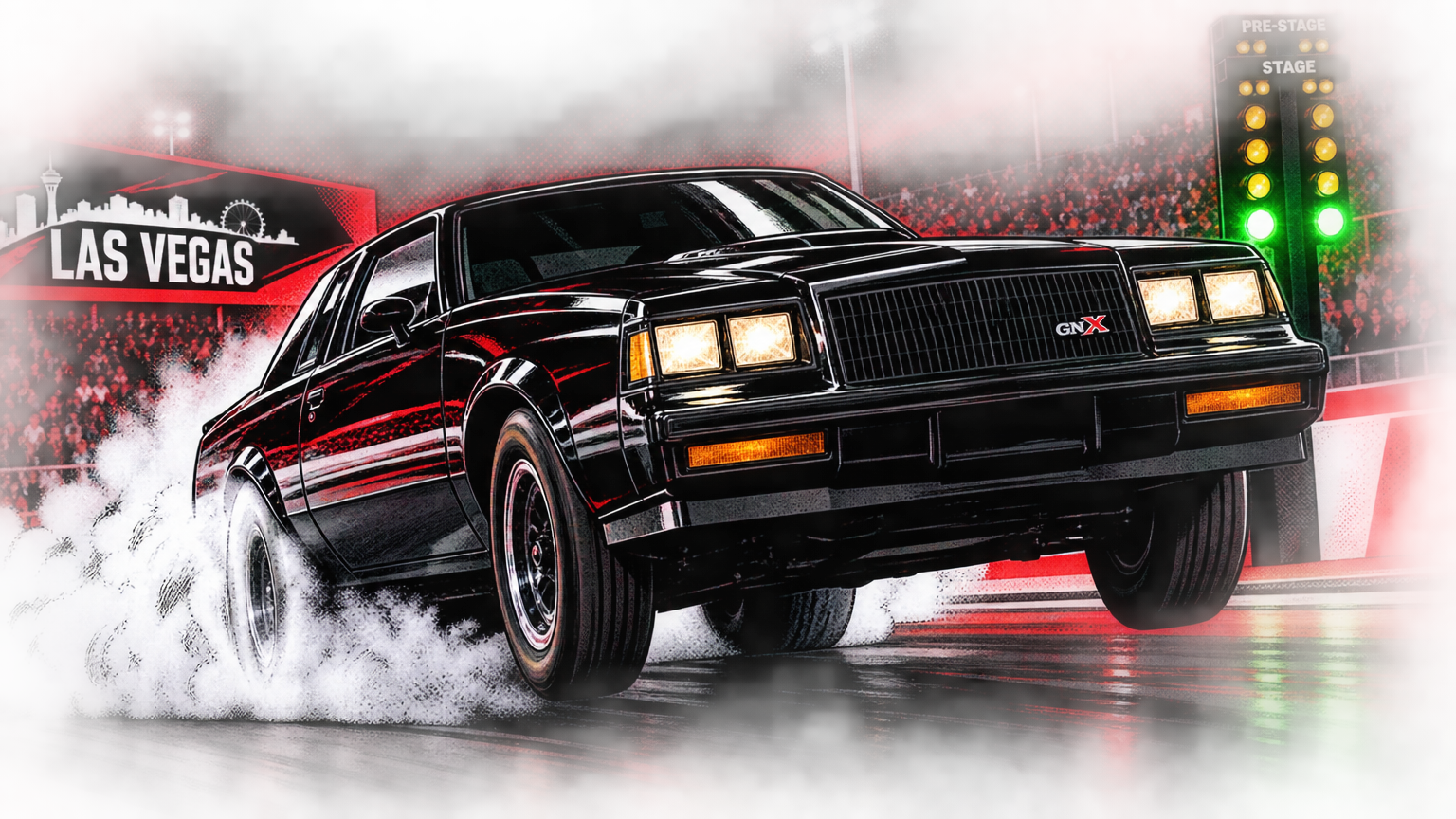
The GNX recorded about 0.80 g on a period skidpad. For a 3,545 lb body on frame coupe on 1980s rubber, that is an honest, respectable result.
It is also where the fight ends. A Formula 1 car generates downforce measured in multiples of its own weight and corners at forces a road car cannot approach.
The GNX has a live rear axle, front discs and rear drums, and steering tuned for American roads. It was built to go straight like a hammer, and it does.
Asking it to out corner a 2026 F1 car is like asking a heavyweight boxer to win a gymnastics medal. The talent is real, it is just pointed in another direction.
Winner: Formula 1. The corner is not the GNX's home, and it never pretended otherwise.


Round Four: Braking
Braking is where 1987 shows its age most honestly. Front discs and rear drums were normal muscle car hardware then, and drums fade when heat builds.
The GNX stops fine once, the way most cars of its era stop fine once. Repeated hard stops are where drum brakes start writing apology letters.
A Formula 1 car brakes on carbon discs, with enormous downforce pressing the tires into the road. Drivers endure braking forces that would rearrange an untrained neck.
No verified GNX braking distance from a primary or major test source is printed here, because none was found that we could stand behind. That empty space is the honest answer.
Winner: Formula 1. Carbon brakes, racing tires, and downforce beat front discs and rear drums in every era.
So, Does the GNX Win Anything?
Yes, and the list is longer than the score suggests. Start with the only scoreboard that mattered in 1987: quickest American production car of its year.
- Stealth: no wings, no scoops, no bright colors. Just black paint, flared arches, and a badge most people noticed too late.
- Usability: real seats, a real trunk, air conditioning, and an automatic. The GNX could do the school run and then win the drive home.
- Value story: about $29,900 new in 1987, and top auction results in recent years have run into six figures for the best cars.
- Rarity with proof: 547 cars, each numbered. Authentication starts with the plaque and the ASC paperwork, and clones are everywhere, so paperwork is the car.
A buyer briefing, because GNX shopping is a minefield. Verify the numbered plaque against build records, verify the ASC conversion parts, and be suspicious of any Grand National wearing GNX badges.
Check the turbo and intercooler are correct GNX parts, not standard Grand National pieces. On a car this cloned, originality is not a detail, it is the entire price.
And one more win, the cultural one. The GNX proved American speed did not need a V8, a decade before turbos took over everything.
If you enjoyed this fight, the previous one is just as lopsided and just as fun: Formula 1 vs. Koenigsegg Jesko.
For a very different kind of heavyweight, try Formula 1 vs. Bentley Continental GT Speed.
What Would Happen on the Las Vegas Strip Circuit?
The Las Vegas Grand Prix runs on the Las Vegas Strip Circuit: 6.201 km, about 3.85 miles, 17 turns, and 50 laps on race night.
The circuit includes a straight of roughly 2 km along the Strip. That straight is the one place the GNX would feel at home, right up until its 124 mph governor said no.
Picture the run honestly. The GNX launches with real violence, the turbo spools, and for the first few seconds the crowd gets the show it came for.
Then the F1 car's braking, cornering, and traction take over, corner after corner. Seventeen turns is sixteen more than the GNX ever asked for.
No lap times are invented here, because no GNX has lapped this circuit on the record. The honest comparison is the gaps you already know: weight, grip, brakes, and top speed.
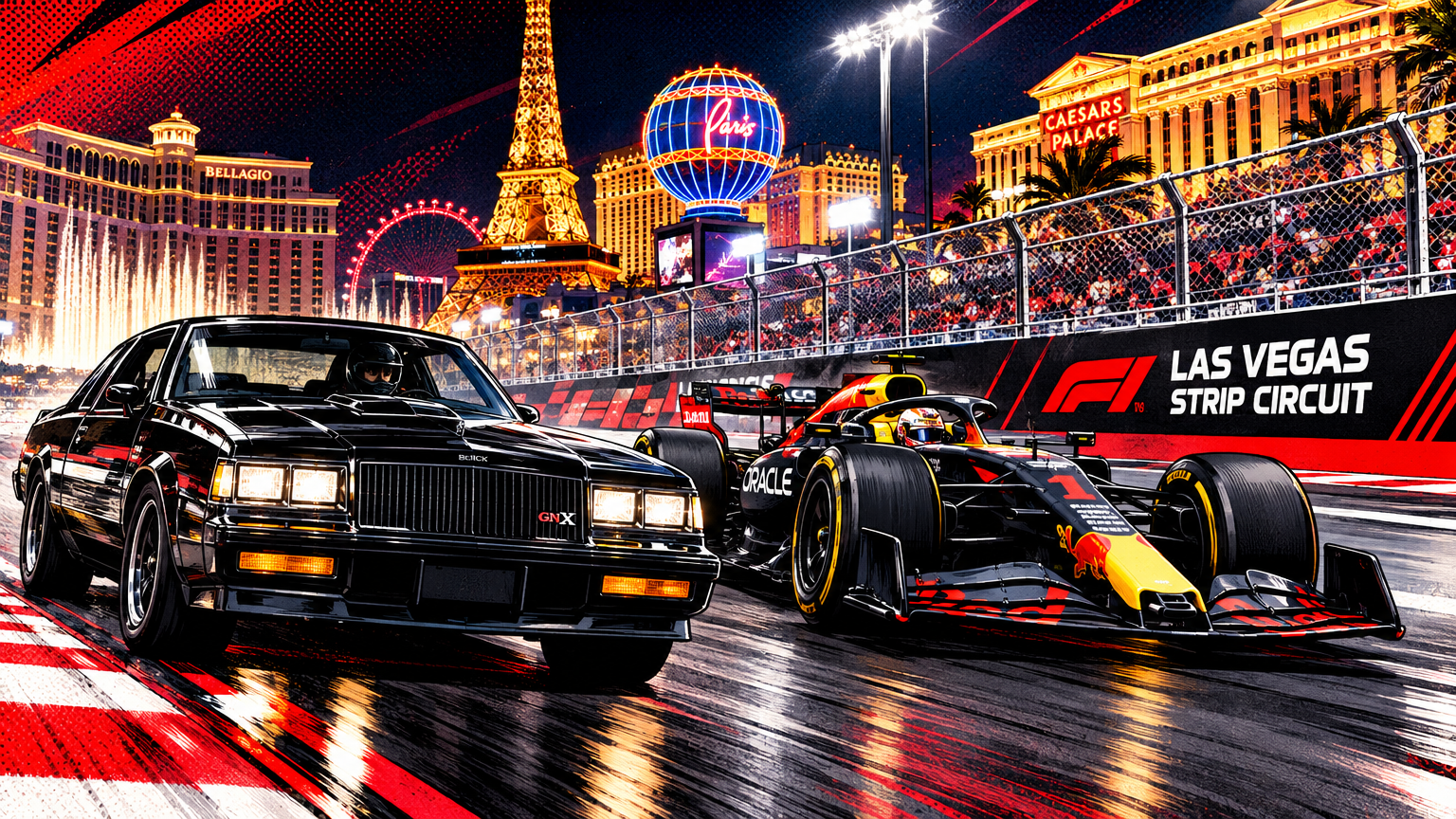
And yet, on the Strip, the GNX would win the crowd. A black 1987 Buick at full boost under the neon is a story nobody forgets.
The Final Call
Four rounds, four wins for Formula 1. Acceleration, top speed, cornering, and braking all go to the car with more than 1,300 hp per tonne.
That was never really the question, though. The question was whether a family coupe from Flint could earn its place in a series full of supercars.
It earned it in 1987, in 4.7 seconds, against the best America had. The Corvette, the magazines, and the stopwatch all agreed at the time.
Formula 1 may win the fight. But the GNX still owns the best ambush in American car history: a black Buick, a turbo V6, and a horsepower rating nobody believed.
There are plenty more cars waiting to pick a fight with Formula 1. Next up: Formula 1 vs. Porsche Carrera GT: a V10 built for a Le Mans car that never raced, a carbon clutch, and the purest soundtrack in this whole series.