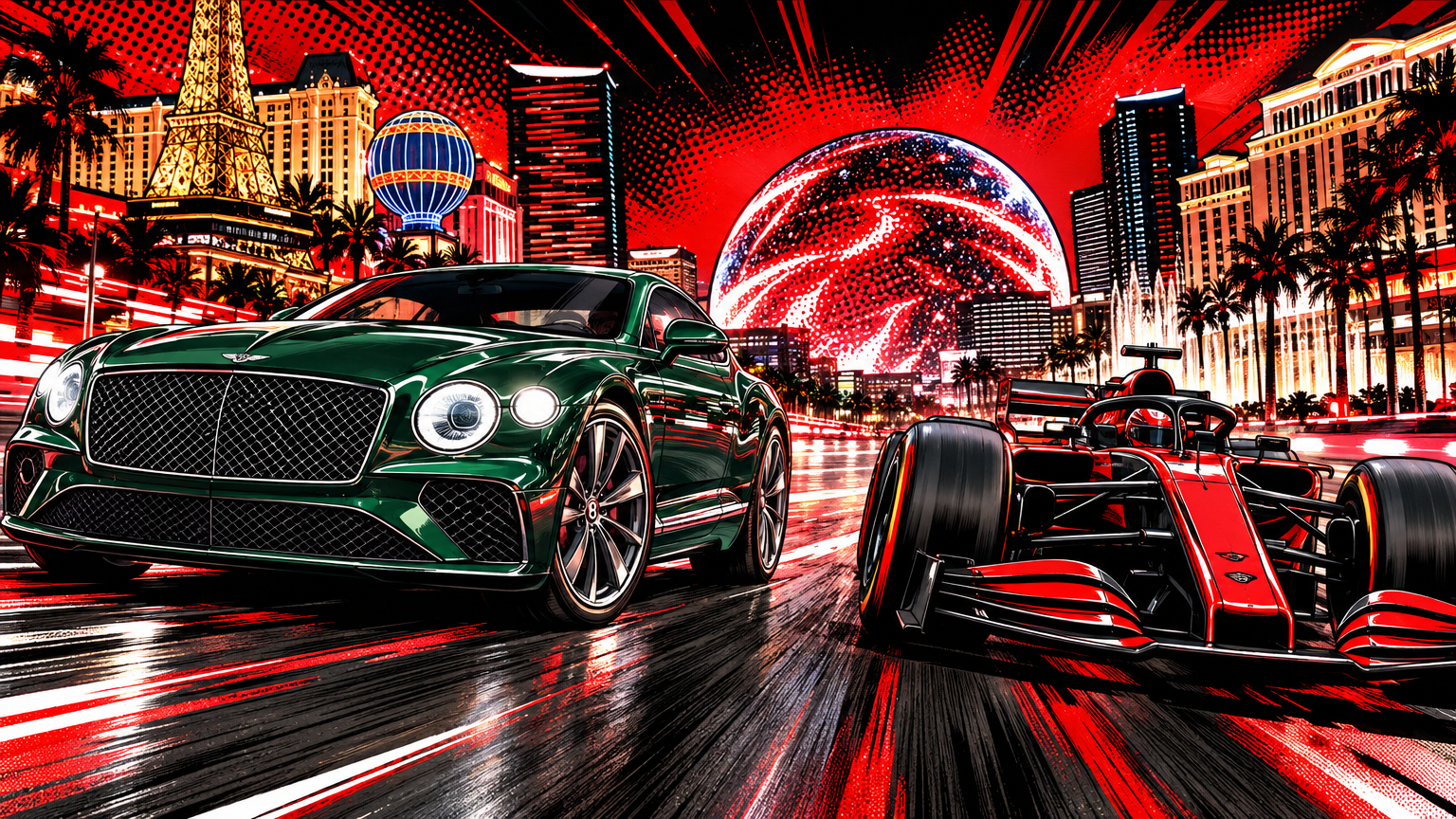
Most challengers in this series arrive light, loud, and built for one job. The Bentley Continental GT Speed arrives in a tailored suit, carrying four seats, a boot, and the strongest powertrain Bentley has ever put in a road car.
It weighs about as much as a small house. It also hits 60 mph in 3.1 seconds, according to Bentley.
That combination should not work. It works beautifully.
What happens if the Bentley Continental GT Speed picks a fight with a Formula 1 car?
What happens is the best heavyweight lesson in this series. Power can hide weight for a while, right up until a corner, a brake pedal, or a stopwatch asks a harder question.
Let us score it properly, on numbers that can be checked. Bentley figures first, independent tests labelled as tests, and no romance in the math.
First, Which Bentley Continental GT Speed Are We Talking About?
The Continental GT name has run since 2003, across four generations. We pin ours down first.
The family, kept separate the way this series always keeps it:
- The fourth generation Continental GT Speed, our challenger: revealed on June 25, 2024, and carried into the current model years. This is the scored car.
- The W12 cars: the twin turbo 6.0 litre W12 defined the Continental GT for two decades, and W12 production ended in 2024. Loved, retired, and not scored.
- The standard Continental GT: the softer hybrid car in the range, with 680 PS in its later form. Same family, less muscle. Not scored.
- The GTC Speed: the convertible sister car. Same powertrain idea, open roof, different car. Not scored.
- The Mulliner cars: the bespoke, coachbuilt end of the range. Beautiful, personal, and not the standard Speed scored here.
Now the scored car, Bentley figures first. The heart is Bentley's Ultra Performance Hybrid, and it replaced the W12 with a very modern answer.
The petrol side is a 4.0 litre twin turbo V8, 3,996 cc. On its own it makes 600 PS and 800 Nm of torque.
Inside the eight speed dual clutch gearbox housing sits a 190 PS electric motor, good for 450 Nm on its own. Together, the system delivers 782 PS, which is 771 bhp, and a full 1,000 Nm, or 738 lb-ft.
Bentley says that makes this the most powerful road going Bentley ever built. System power is up 19 percent on the old W12 Speed, and system torque is up more than 11 percent.
Drive goes to all four wheels through an electronic limited slip differential. Active torque vectoring works front to rear through a centre differential, and across each axle using the brakes.
The 25.9 kWh battery sits behind the rear axle, and that placement is a trick worth knowing. It helps give the car a 49:51 rear biased weight distribution, a first in Continental GT history.
Bentley lists unladen weight at 2,459 kg, about 5,401 lb. Hold that number, because it decides almost every round below.
Performance, per Bentley: 0 to 60 mph in 3.1 seconds, 0 to 100 km/h in 3.2 seconds, and a top speed of 208 mph, or 335 km/h, on summer tyres. Bentley notes the top speed is limited to 270 km/h when all season tyres are fitted.
The size is pure grand tourer. Length is 4,895 mm, the wheelbase is 2,851 mm, and the boot holds 260 litres behind four seats.
The chassis list reads like a race engineer wrote the options sheet. Two chamber air springs, dual valve dampers, Bentley Dynamic Ride 48 volt active anti roll control, all wheel steering, and a new generation of stability control software.
Brakes come in two Bentley options, both with 10 piston front calipers and four piston rears. Ventilated iron discs measure 420 mm front and 380 mm rear, while the carbon silicon carbide option grows to 440 mm front and 410 mm rear.
Then there is the party trick nobody else in this series can match. In full electric mode, the motor alone can push the car to 87 mph, and Bentley quotes up to 50 miles of electric only range on the WLTP cycle.
Total range is quoted at 534 miles. The battery can be fully replenished in as little as two and three quarter hours at up to 11 kW.
US launch pricing started just over 300,000 dollars, with about 306,250 dollars including destination widely reported at launch. Options and Mulliner personalisation push real cars far beyond that, which will surprise exactly nobody.
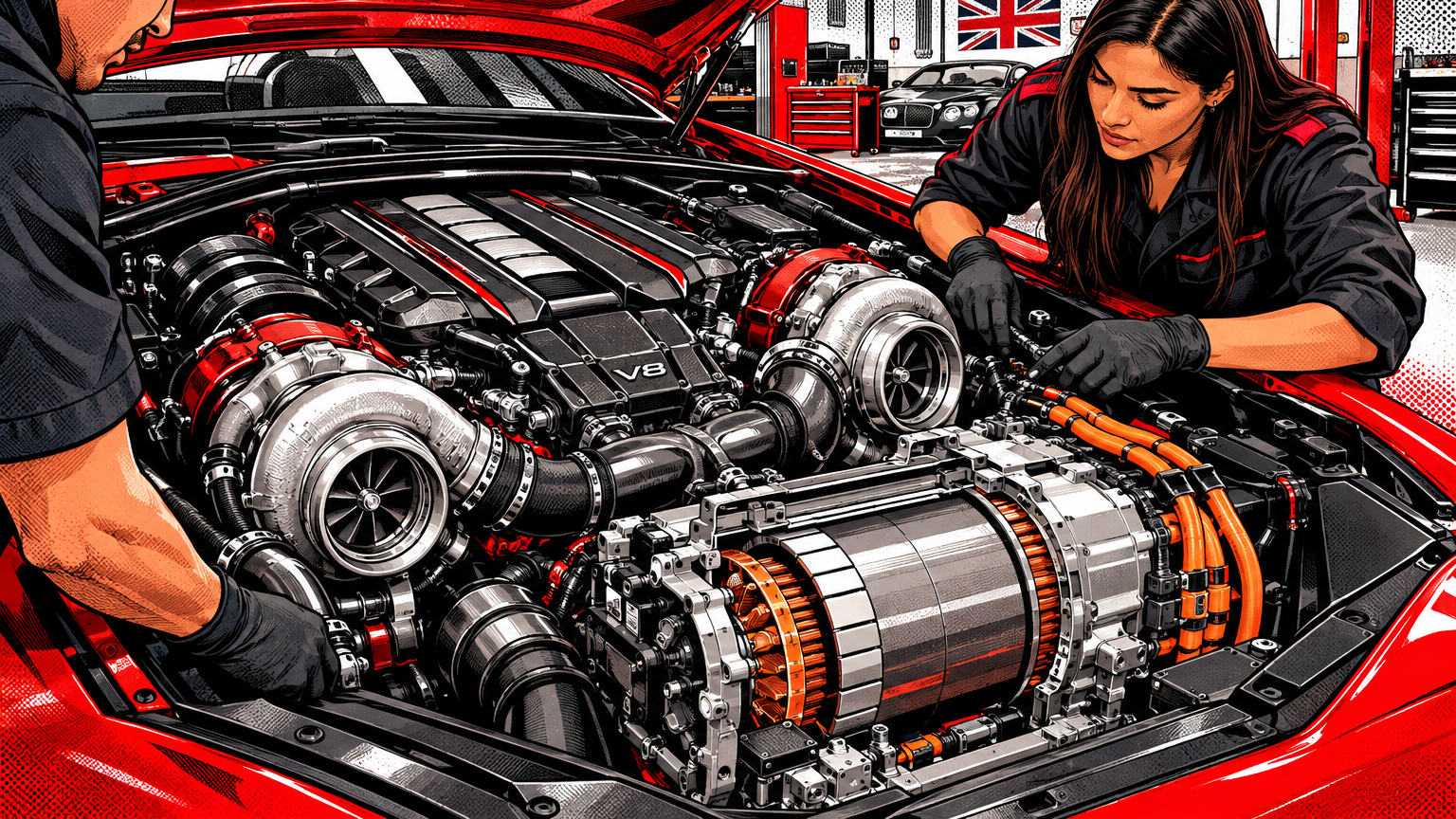
Independent tests, kept separate and labelled. MotorTrend tested a 2025 GT Speed and recorded 0 to 60 mph in just 2.8 seconds, quicker than Bentley's own claim.
The same test ran the quarter mile in 10.8 seconds at 130.7 mph. That is supercar pace from a car MotorTrend weighed at 5,406 lb.
MotorTrend also measured a best stop of 100 feet from 60 mph, on the optional carbon ceramic brakes. We will come back to that number in Round Four, because it is genuinely remarkable for the weight.
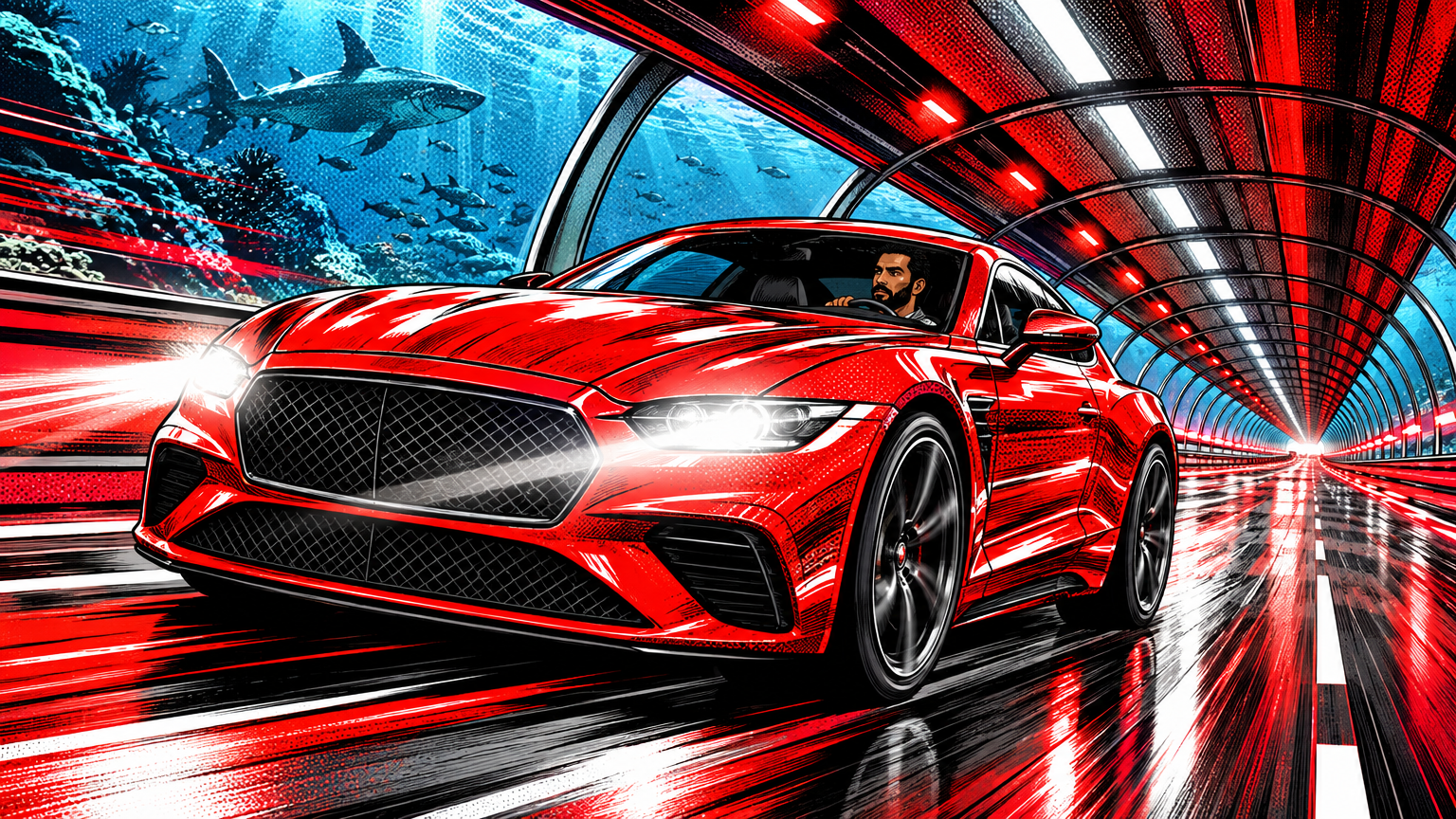
One more receipt, and it is a Bentley one. In April 2024, before the public reveal, Bentley ran a GT Speed to its full 208 mph top speed inside Norway's Ryfylke tunnel.
That tunnel is the longest and deepest sub sea road tunnel in the world, dropping 292 metres below sea level. Bentley called it an unofficial underwater speed record, and the car reached 335 km/h from a standstill in 33 seconds on renewable biofuel.
So the challenger is no soft luxury barge with a big badge. It is the most powerful Bentley ever, with a verified top speed run and a test sheet that embarrasses lighter cars.
Meet the 2026 Formula 1 Car
The other corner holds the current Formula 1 machine, built to the 2026 regulations. You can follow the whole season build up at our Las Vegas Grand Prix hub.
The 2026 Formula 1 car uses a 1.6 litre turbocharged V6 hybrid. The petrol engine is limited to about 400 kW, and the MGU-K electric motor can add up to 350 kW.
Formula 1 describes the total package as more than 1,000 hp. Minimum regulatory weight is 768 kg, about 1,693 lb, including the driver.
The rest is familiar Formula 1 recipe, turned up. Rear wheel drive, carbon construction, racing tyres, and active aerodynamics at the front and rear.
For speed evidence, this series uses measured traps, never invented top speeds. Pierre Gasly recorded 353.9 km/h, about 220 mph, in qualifying at the 2026 Chinese Grand Prix, per FIA data.
Put the two cars side by side and the story writes itself. The Bentley makes 782 PS and weighs 2,459 kg, while the Formula 1 car makes more than 1,000 hp and weighs 768 kg with a human inside.
Bentley Continental GT Speed vs. F1: The Numbers
| Category | Bentley Continental GT Speed | 2026 Formula 1 Car |
|---|---|---|
| Engine | 4.0L twin turbo V8 plus electric motor | 1.6L turbo V6 hybrid |
| Power | 782 PS (771 bhp), Bentley | More than 1,000 hp, per Formula 1 |
| Torque | 1,000 Nm (738 lb-ft), Bentley | Not published as one combined figure |
| Weight | 2,459 kg (about 5,401 lb) | 768 kg minimum, including driver |
| Power to weight | About 318 PS per tonne | More than 1,300 hp per tonne |
| 0 to 60 mph | 3.1 sec (Bentley); 2.8 sec (MotorTrend test, 2025 car) | No universal official figure |
| Top speed | 208 mph (335 km/h), Bentley, verified in the Ryfylke tunnel run | 353.9 km/h trap, Gasly, 2026 Chinese GP qualifying |
| Gearbox | 8 speed dual clutch | Sequential racing gearbox |
| Drive | All wheel drive | Rear wheel drive |
| Electric only range | Up to 50 miles WLTP | None, it is a race car |
| Seats | 4, in hand finished luxury | 1, in carbon fibre |
| Vegas valet factor | 10 out of 10, the valet keeps this one at the front | 0, there is no valet stand at a pit lane |
Three lessons hide inside that table, and they are worth more than the headline power figure.
- Power to weight is the real scoreboard. The Bentley's 782 PS works out to about 318 PS per tonne. The Formula 1 car clears 1,300 hp per tonne, more than four times as much push for every kilo it carries.
- A battery can be a handling tool. Bentley put the 25.9 kWh battery behind the rear axle on purpose, and it delivered that 49:51 balance. Weight placed well beats weight simply removed, at least until you can do both.
- Test numbers beat brochure numbers. Bentley claims 3.1 seconds to 60 mph, and MotorTrend measured 2.8. Always ask who measured a figure, in which car, and on what tyres.


Round One: Acceleration
On paper, this is the Bentley's best round. All wheel drive, instant electric torque fill, and a launch that MotorTrend timed at 2.8 seconds to 60 mph.
That electric motor earns its keep here. It fills the gaps while the turbos wake up and smooths every gear shift, so the big coupe leaves the line with zero drama and total violence.
There is no universal official Formula 1 0 to 60 figure, and this series never invents one. It does not need one here.
More than 1,300 hp per tonne, racing tyres, and a car built to launch off a Grand Prix grid settle it. The Bentley is stunningly quick for its size, and the Formula 1 car is quicker still.
Winner: Formula 1. But take the lesson with you: if a heavy car feels fast, check the power to weight math before you credit the engine alone.
Round Two: Top Speed
The Bentley brings a receipt most challengers cannot. Bentley itself ran the car to 208 mph, its full top speed, inside a tunnel under the sea.
That run matters because it is verified, not estimated. The car held 335 km/h on renewable biofuel, with a battery charged from Bentley's own solar array.
Against that, the Formula 1 evidence is measured speed traps on circuits, in cornering trim. Gasly's 353.9 km/h at the 2026 Chinese Grand Prix already clears the Bentley maximum.
The historical Las Vegas traps, labelled by year, are higher still. Yuki Tsunoda hit 358.3 km/h in 2025, and Alex Albon hit 368.9 km/h in 2024, the highest through the first three editions.
Fairness note, as always in this series: a trap speed is not a top speed attempt. Even so, every measured Formula 1 figure here sits above 208 mph, so the verified record decides the round.
Winner: Formula 1. The Bentley keeps the best top speed story in the series, and stories do not score points.
Round Three: Now Add a Corner
Here is where 2,459 kg sends its invoice. Every direction change asks the tyres to move three times the mass of the Formula 1 car.
Bentley fights back with real engineering. All wheel steering shrinks the turning feel, the 48 volt anti roll system holds the body flat, and torque vectoring shuffles power to the wheels that can use it.
It works, up to a point. Reviewers consistently praise how planted and balanced this car feels, and that 49:51 split is a big reason why.
The Formula 1 car plays a different sport. Carbon construction, active aero, racing tyres, and 768 kg mean cornering forces the Bentley cannot legally imagine on public roads.
Winner: Formula 1. The usable insight: chassis electronics can disguise weight brilliantly, but they spend tyre grip to do it, and grip always runs out first on the heaviest car.
Round Four: Braking
Give the Bentley its flowers first. MotorTrend stopped the 5,406 lb test car from 60 mph in 100 feet, a number many sports cars would frame.
The hardware explains it. Ten piston front calipers squeeze discs up to 440 mm across on the carbon silicon carbide option, and regenerative braking adds a helping hand from the electric motor.
Stopping distance, though, is set by tyres and mass, not by caliper count. The Formula 1 car brakes from far higher speeds, far later, lap after lap, with downforce pressing its tyres into the road.
One stop on a test track is also not the same test as a race distance. Heat is the real exam, and the Formula 1 braking system was built to pass it every single lap.
Winner: Formula 1. And still, 100 feet from 60 mph in a two and a half tonne luxury coupe deserves a standing ovation.
So, Does the Bentley Continental GT Speed Win Anything?
It wins the drive home, and it is not close. Four seats, a 534 mile total range, silent electric running in town, and a cabin built by hand in Crewe.
It wins the dual personality contest outright. No other car in this series can cross a city in near silence on electric power, then run to 208 mph in a tunnel an hour later.
It also wins on range of talent. The hybrid system in this car is a close cousin of the one in the Lamborghini Revuelto, which fought its own battle in this series, but the Bentley aims it at distance instead of drama.
Ownership lessons from this matchup, the kind you can actually use:
- Plug it in, every night. A plug in hybrid only delivers its electric range, its torque fill, and its best performance with a charged battery.
- Budget for the brakes you spec. The carbon ceramic option on MotorTrend's test car cost 18,820 dollars, and big cars eat tyres and brakes at a big car rate.
- Check the tyre fine print. That 208 mph top speed needs summer tyres; all season tyres cap the car at 270 km/h.
- Weight is a running cost. At 2,459 kg, every consumable works harder, from tyres to brake pads to suspension parts.
Yesterday's challenger made the opposite case, by the way. The Lotus Elise fought with lightness alone, and this Bentley fights with everything except lightness.
What Would Happen on the Las Vegas Strip Circuit?
The Las Vegas Strip Circuit runs 6.201 km, about 3.85 miles, with 17 turns and 50 laps on race night. Its roughly 2 km straight along the Strip is where top speed tells the truth.
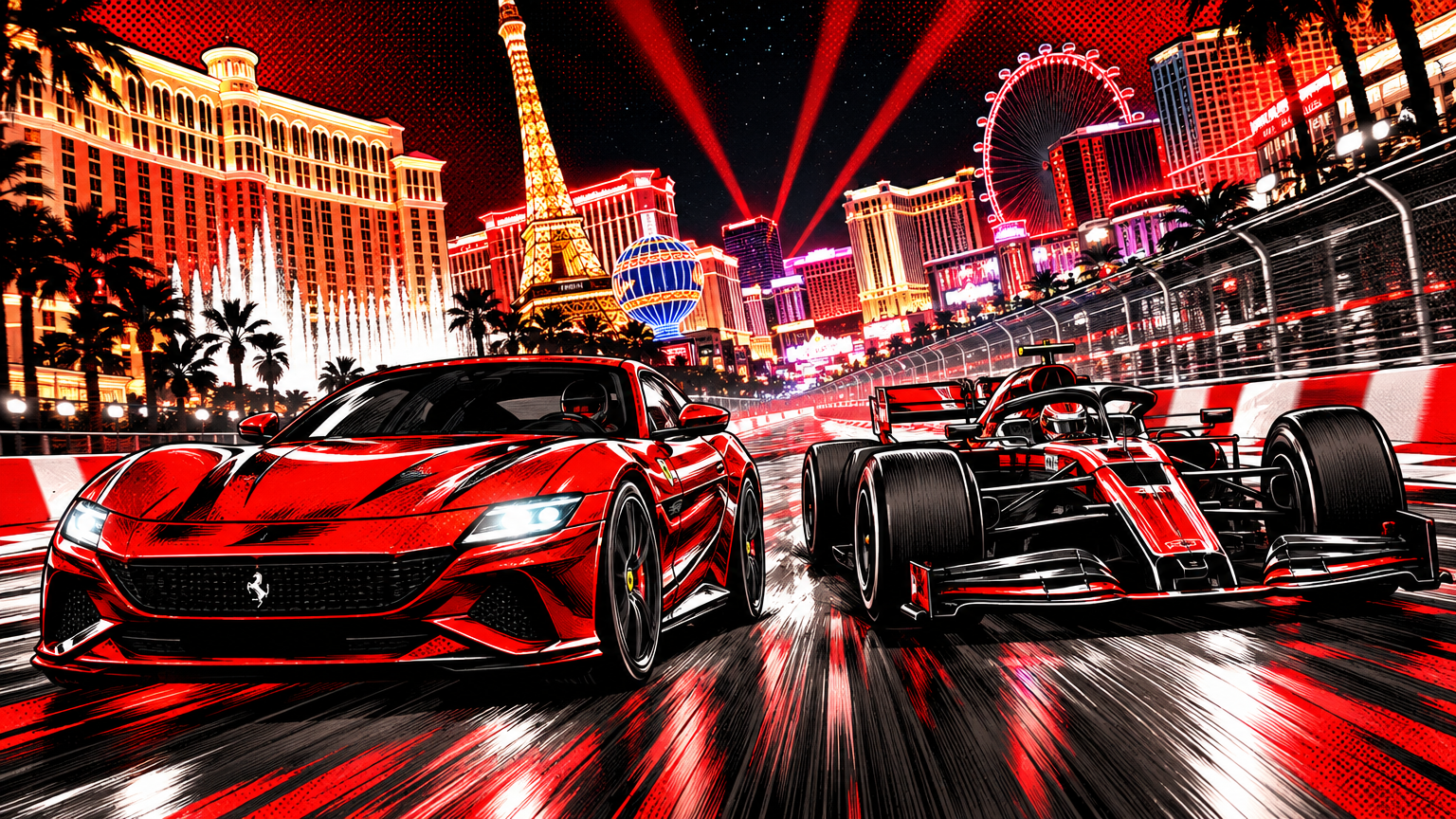
Down that straight, the Bentley would feel mighty. The hybrid system would punch it out of the slow corners, and 208 mph is real, verified pace.
Then the braking zones arrive, 17 turns at a time. Two and a half tonnes, on road tyres, asking road brakes to repeat race stops would fade long before a 50 lap distance did.
The Formula 1 car, meanwhile, has already trapped 368.9 km/h on this very straight in 2024 trim. That is the home field advantage, measured and filed.
This is an informed comparison, not a recorded race, and this series never invents lap times. It does not need to invent anything to call this one.
The Final Call
Four rounds, four wins for Formula 1. Acceleration, top speed, cornering, and braking all go to the car that weighs less than a third as much and makes more power doing it.
The Bentley Continental GT Speed still leaves with real honours. Most powerful Bentley ever, a verified 208 mph, a 2.8 second test launch, and a 100 foot stop, all while carrying four people in hand stitched comfort.
No other challenger in this series could take you to dinner, cross a desert in silence, and then outrun most supercars before dessert. That breadth is the Bentley's whole argument, and it is a strong one.
Formula 1 may win the fight. But the Bentley Continental GT Speed still owns the grand tour, the tunnel run, and every valet stand on the Strip.
There are plenty more cars waiting to pick a fight with Formula 1. Next up: Formula 1 vs. Koenigsegg Jesko: the Swedish hypercar that chases 300 mph comes to Las Vegas.