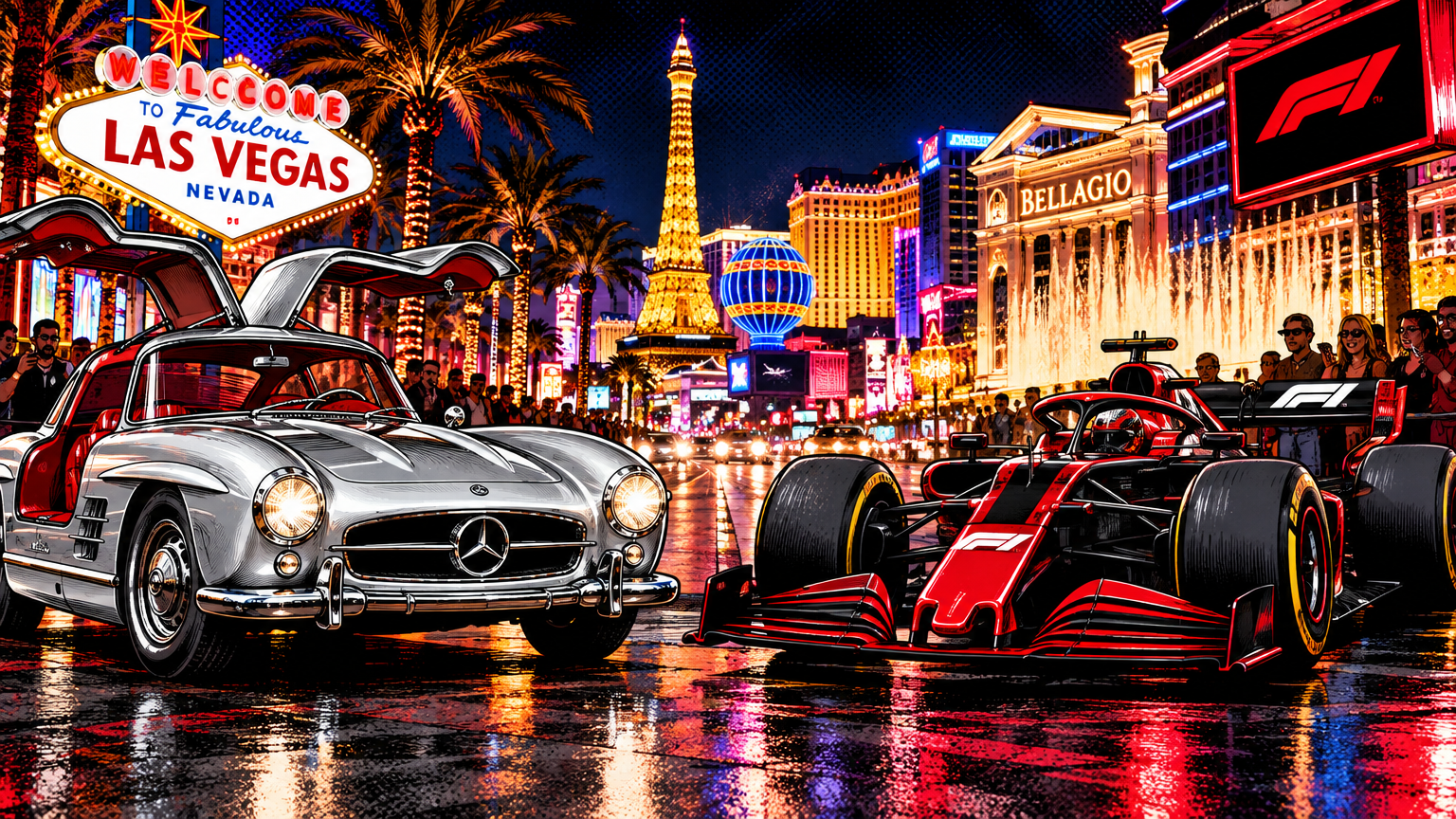
For 60 years, the Lamborghini flagship formula never changed. Big V12 in the middle, wild doors on the sides, and a top speed that scared the neighbors.
Then Lamborghini did the unthinkable. It kept the V12, kept the doors, and added three electric motors, a battery, and a plug.
The result is the Revuelto. It makes 1,015 CV, which makes it the first challenger in this series that can look a Formula 1 car in the eye on headline power and not blink.
What happens if the Lamborghini Revuelto picks a fight with a Formula 1 car?
What happens is the closest power matchup we have had yet. The Revuelto brings a screaming naturally aspirated V12, all wheel drive, and a quarter mile time under 10 seconds.
The Formula 1 car brings roughly the same power and weighs less than half as much. That second sentence is the whole fight, so let us score it properly, on numbers that can be checked.
First, Which Lamborghini Revuelto Are We Talking About?
The Revuelto name now covers more than one car, so we pin ours down first. Blending versions is how good cars get bad stats.
The family, kept separate the way this series always keeps it:
- The standard Revuelto coupe, our challenger: revealed on March 29, 2023, just before the 60th anniversary of the founding of Automobili Lamborghini, as the successor to the Aventador and the first High Performance Electrified Vehicle, or HPEV, from Sant'Agata Bolognese. Hybrid V12, all wheel drive, eight speed dual clutch. This is the scored car, in its current production form.
- The Revuelto SV: a later, limited, track focused evolution with more power and a higher price, announced in 2026 and capped at 1,963 units. A different car with different numbers. Not scored.
- The Aventador: the V12 flagship the Revuelto replaced, built from 2011 to 2022 with no hybrid system and a single clutch gearbox. Context only. Not scored.
- The Temerario: the smaller hybrid Lamborghini that replaced the Huracan, with a twin turbo V8. A great car, and not this car. Not scored.
Now the scored car, Lamborghini figures first. The engine is a brand new 6,498.5 cc naturally aspirated V12, and it is the lightest V12 Lamborghini has ever built.
On its own, with no electric help, it makes 825 CV at 9,250 rpm. That is about 814 hp if you count in American horsepower, and torque peaks at 725 Nm, about 535 lb-ft, at 6,750 rpm.
The redline sits at 9,500 rpm. Read that again, because a production V12 that revs like a superbike is the whole reason this car exists.
Then the electric side joins in. There are three electric motors, two driving the front wheels and one integrated with the gearbox at the rear.
A small 3.8 kWh lithium ion battery lives in the tunnel where a propshaft would normally sit. Combined output is 1,015 CV, or 747 kW, per Lamborghini.
That makes the Revuelto the most powerful production Lamborghini ever built at its launch. It also gives it the best weight to power ratio in Lamborghini history, at 1.75 kg per CV on the dry weight.
The rest of the Lamborghini sheet:
- Gearbox: a new eight speed dual clutch mounted transversely behind the V12, a first for a 12 cylinder Lamborghini. The old single clutch unit from the Aventador is gone, and good riddance at low speed.
- Drive: all wheel drive, but not the old way. The front wheels are driven only by electric motors, so there is no mechanical link from the V12 to the front axle.
- Structure: a carbon fiber monocoque Lamborghini calls the monofuselage. Lamborghini says it is 10 percent lighter and 25 percent stiffer than the Aventador structure.
- Weight: 1,772 kg dry, and about 1,880 kg at the curb with fluids. Hybrid hardware is brilliant, and it is not light.
- Size: 4,947 mm long, 2,033 mm wide across the body and 2,266 mm with mirrors, 1,160 mm tall, on a 2,779 mm wheelbase.
- Brakes: carbon ceramic discs as standard, about 410 mm at the front with 10 piston calipers and about 390 mm at the rear with four piston calipers, per published test specifications.
- Tires: Bridgestone Potenza Sport, 265/35 ZR20 at the front and 345/30 ZR21 at the rear, in the standard fitment the big independent tests used.
- Modes: four driving modes, Citta, Strada, Sport, and Corsa, combined with three energy modes for 13 total combinations. Citta is the quiet city setting, with electric drive and output cut right back.
- Price: United States pricing has been listed from about $608,358 for the standard car, before the personalization program most buyers use heavily. Real delivered prices are usually much higher.
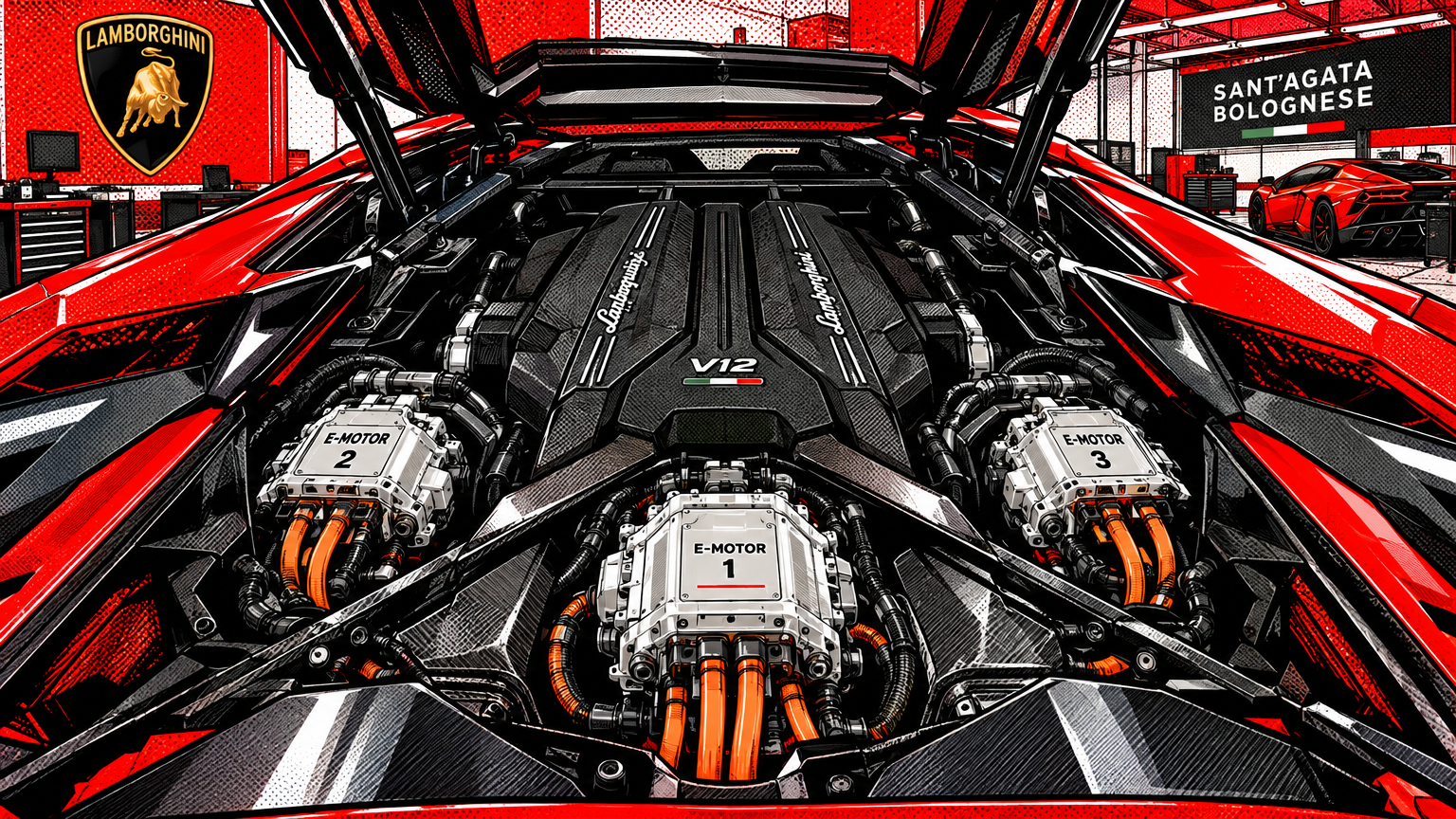
Here is the detail most quick summaries miss. The Revuelto has no mechanical reverse gear in the usual sense, because reverse is handled electrically.
It also has almost no electric range worth bragging about. The battery is tiny on purpose, because its job is performance, response, and all wheel drive, not commuting in silence.
Useful takeaway for buyers: judge this hybrid by what the motors add at full throttle, not by the electric range figure. The plug exists to make the V12 faster and sharper, not to replace it.
The name helps explain the car. Revuelto was a fighting bull from the 1880s, and the Spanish word also points to something scrambled or unruly.
A hybrid flagship with a 9,500 rpm V12 and electric front drive is exactly that. It is a scramble of old and new, and it works.
Meet the 2026 Formula 1 Car
The other corner is also a hybrid, which is what makes this matchup so interesting. A 2026 Formula 1 car is a hybrid racing machine built to a tight rule book, and this series uses the same verified facts every time.
- Engine: 1.6 liter turbocharged V6 hybrid. The combustion engine is limited to about 400 kW, and the MGU-K electric motor adds up to 350 kW.
- Total output: described by Formula 1 as more than 1,000 hp for the full package.
- Weight: minimum regulatory weight 768 kg, about 1,693 lb, including the driver.
- Drive and construction: rear wheel drive, carbon construction, active front and rear aero, and racing tires built only for this job.
Put the two hybrids side by side and the lesson lands fast. Both cars pair a combustion engine with serious electric power, and both land just past the 1,000 mark.
One of them wraps that power in a leather lined road car with a passenger seat, air conditioning, and a nose lift for driveways. The other wraps it in the lightest, stiffest racing shell the rules allow.
Speed trap evidence keeps us honest. Pierre Gasly recorded 353.9 km/h, about 220 mph, in qualifying at the 2026 Chinese Grand Prix, per FIA data.
That is a circuit figure in cornering trim, not a top speed attempt. Keep that label in mind for Round Two, because this series always does.
Lamborghini Revuelto vs. F1: The Numbers
| Category | Lamborghini Revuelto | 2026 Formula 1 Car |
|---|---|---|
| Engine | 6.5L naturally aspirated V12 plus 3 electric motors | 1.6L turbo V6 hybrid |
| Power | 1,015 CV combined (Lamborghini figure) | More than 1,000 hp (F1 figure) |
| V12 alone | 825 CV at 9,250 rpm | Combustion engine limited to about 400 kW |
| Weight | 1,772 kg dry, about 1,880 kg curb | 768 kg minimum, with driver |
| Gearbox | 8 speed dual clutch | Sequential racing gearbox |
| Drive | All wheel drive, electric front axle | Rear wheel drive |
| 0 to 100 km/h | 2.5 sec (Lamborghini figure) | No universal official figure |
| Top speed | More than 350 km/h (Lamborghini claim) | 353.9 km/h trap, 2026 China qualifying |
| Price | From about $608,358 in the US | Not sold to the public |
| Vegas valet factor | 10 out of 10. Scissor doors up, V12 out back, crowd out front. | 0 out of 10. No valet is insured for this. |
Read the table the right way. On power, this is a tie at the headline, and no challenger before the Revuelto could say that.
On weight, it is not close at all. The Revuelto at the curb weighs about 1,112 kg more than the Formula 1 minimum, which is like asking the Lamborghini to race with a whole extra small car on its roof.
Power to weight tells the story in one line. The Revuelto works out near 540 hp per tonne at the curb, a huge figure for a road car.
The Formula 1 car works out well past 1,300 hp per tonne. Same headline power, completely different math once the scale gets a vote.


Round One: Acceleration
Lamborghini claims 0 to 100 km/h in 2.5 seconds, and for once the independent tests went faster than the brochure. That almost never happens, so enjoy it.
Car and Driver tested a Revuelto and recorded 0 to 60 mph in 2.2 seconds. The same test hit 100 mph in 4.6 seconds and covered the quarter mile in 9.7 seconds at 148 mph.
Edmunds recorded a 9.9 second quarter mile at 143.7 mph on its own track. Two different test teams, two different surfaces, and the same conclusion: this is a sub 10 second road car on street tires.
The electric front axle is a big reason why. Instant electric torque fills the gaps while the V12 climbs toward the part of the rev range where it gets truly angry.
Formula 1 publishes no universal 0 to 60 time, and this series never invents one. The verdict rests on power to weight, traction, and gearing instead.
On power to weight, the Formula 1 car is more than doubling the Revuelto figure. On gearing and launch systems, it is a racing car built to leave a grid slot as violently as the rules allow.
Winner: Formula 1. The Revuelto is the quickest accelerating Lamborghini we have ever scored in this series, and it still gives this round away on weight alone.
Round Two: Top Speed
This round needs careful reading, because the two sides are not offering the same kind of number. One is a claim with a plus sign. The other is a measured trap speed.
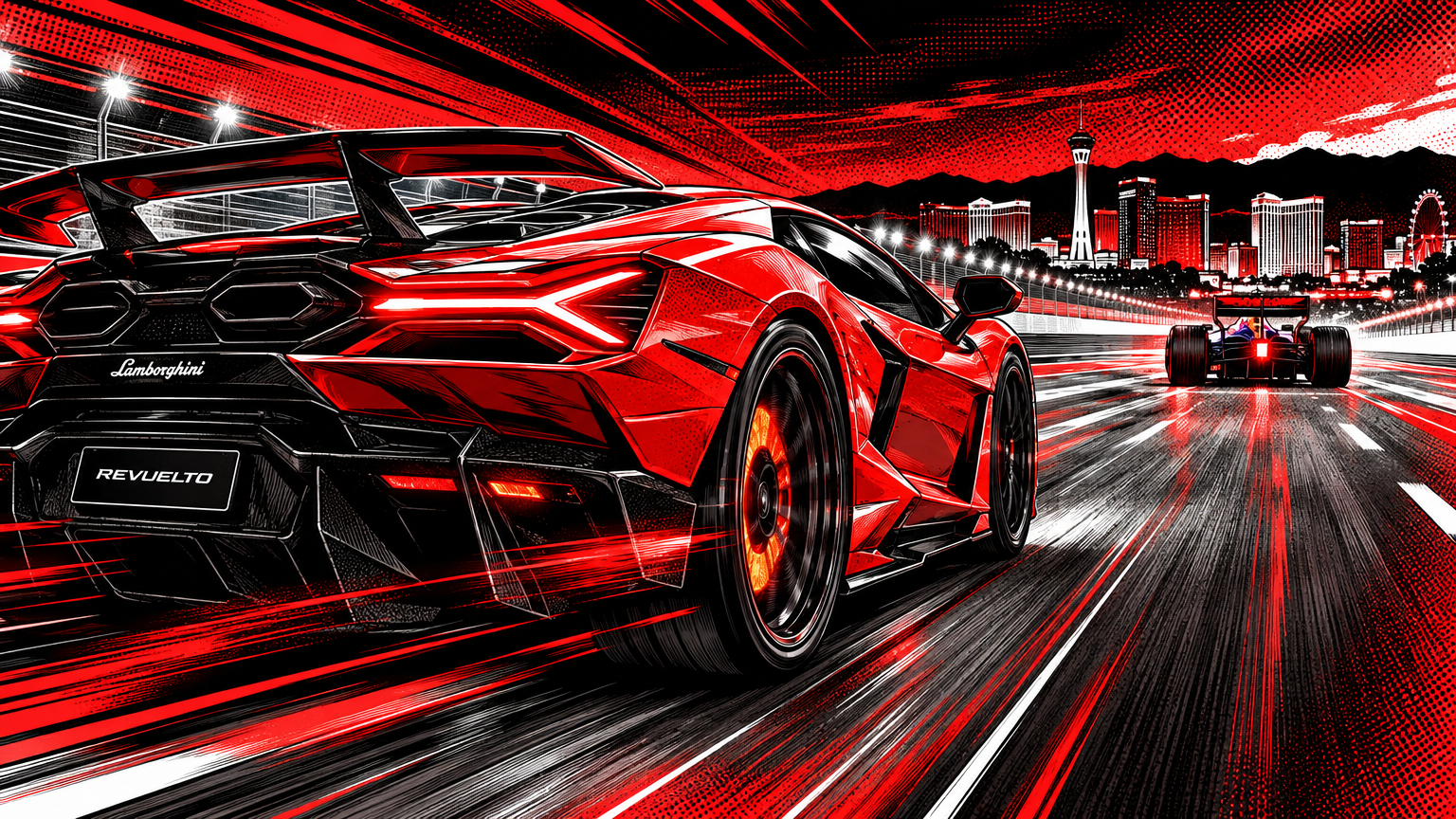
Lamborghini lists the Revuelto top speed as more than 350 km/h. Car and Driver lists the manufacturer claim as 217 mph, which is the same neighborhood in American units.
More than 350 could mean 352, or 355, or a little beyond. Lamborghini has not published one exact, independently witnessed top speed run for the standard car, so this series will not invent one.
Now the Formula 1 side, labeled correctly. The highest trap figures in this series are 368.9 km/h by Alex Albon in Las Vegas in 2024, 358.3 km/h by Yuki Tsunoda in Las Vegas in 2025, and Gasly at 353.9 km/h in China in 2026.
Every one of those measured figures sits above the 350 km/h line Lamborghini claims to clear. The 2024 Albon figure clears it by nearly 19 km/h.
Fairness note, stated plainly: in earlier rounds this series awarded top speed on a clear manufacturer claim that sat well above the trap figures. The Revuelto claim does not sit above them, it sits right at the edge of them, with a plus sign doing the heavy lifting.
Useful insight you can actually use: a top speed claim tells you what a maker is willing to print. A trap speed tells you what a car actually did, on a given day, in traffic, in cornering trim.
Winner: Formula 1. On verified numbers only, the traps beat the claim. If Lamborghini ever runs the Revuelto flat out with independent witnesses, this round is the first one we would happily rescore.
Round Three: Now Add a Corner
The Revuelto corners far better than a 1,880 kg car has any right to. Car and Driver measured 1.10 g on the skidpad, and Edmunds measured 1.11 g on its own test.
Those are serious numbers for a big V12 flagship on standard road tires. The electric front axle can pull the car into a turn, and the monofuselage keeps the whole structure calm while it happens.
Reviewers also agree on the character change. Where the Aventador could feel like it was daring you to make a mistake, the Revuelto feels composed, precise, and much easier to place.
Its limits are still physics. Nearly two tonnes cannot change direction like 768 kg, no matter how clever the motors are, and the standard tires give up long before a racing slick would.
The Formula 1 car corners on active aero, carbon brakes, and tires that exist for one purpose. Its downforce at speed exceeds its own weight, a sentence no road car can honestly print.
Winner: Formula 1. The Revuelto is the best handling V12 Lamborghini flagship yet. Formula 1 operates on a cornering scale that road cars, even great ones, cannot reach.
Round Four: Braking
The Revuelto braking hardware is enormous, and it needs to be. Carbon ceramic discs about 410 mm across at the front, clamped by 10 piston calipers, is racing grade specification by any honest measure.
Car and Driver recorded 154 ft from 70 mph to a stop, and 290 ft from 100 mph, with no fade noted in its test. For a car this heavy and this fast, those are strong, repeatable results.
Edmunds was cooler on the standard tires, noting that the fairly mild road tires limited outright stopping power compared with stickier track focused rivals. Both things can be true, and together they teach the real lesson.
Brakes stop the wheels. Tires stop the car. Put a heavier car on harder wearing road tires and the tire, not the disc, becomes the limit.
The Formula 1 car brakes with carbon discs, enormous downforce pressing it into the road, and a hybrid system harvesting energy under braking. It repeats that performance, at a far higher level, for a full Grand Prix distance.
Winner: Formula 1. The Revuelto has the best brakes ever fitted to a Lamborghini flagship. Formula 1 braking is still a different sport.
So, Does the Lamborghini Revuelto Win Anything?
Yes. It wins the argument that matters most to Lamborghini, and it is not close.
- The power tie: 1,015 CV against a Formula 1 headline of more than 1,000 hp. No challenger in this series has matched the headline before, and the Revuelto did it while keeping a naturally aspirated V12.
- The sound: a 9,500 rpm V12 with no turbos in the exhaust path. In an era of quiet speed, this car is gloriously, deliberately loud about going fast.
- The everyday flagship: a smooth dual clutch, a calm city mode, and a nose lift. The Aventador demanded commitment at parking speed, and the Revuelto mostly does not.
- The lineage: this is the direct heir to the Murcielago and the Countach that opened this series. The flagship bloodline survived electrification with its character intact.
It also wins a buyer briefing worth having:
- Budget past the sticker. A starting figure near $608,358 is the entry point, not the outcome. Personalization, options, and taxes move real cars far beyond it.
- Ask about the battery honestly. The 3.8 kWh pack is a performance part, not an efficiency feature. Judge the car on response and traction, not electric range.
- Respect the width. At 2,266 mm across the mirrors, this car is wider than many parking spaces and most garage doors were designed for. Measure first.
- Price the tires and brakes as consumables. Huge carbon ceramics and 345 section rear tires deliver the performance in this piece, and replacing them is part of owning it.
Missed the last matchup? Catch up on Formula 1 vs. Jaguar XJ220, where the record holder that missed its own name took its shot.
New to the flagship story? Start where this series started, with Formula 1 vs. Lamborghini Murcielago, the Revuelto grandfather in spirit.
What Would Happen on the Las Vegas Strip Circuit?

The Las Vegas Strip Circuit runs 6.201 km, about 3.85 miles, with 17 turns over a 50 lap Grand Prix distance. Its signature is the roughly 2 km straight along the Strip itself.
That straight is where the Revuelto would shine brightest. Give it 2 km of flat, open road and the V12 and motors together would push it toward the very top of what any current road car can do.
Then the braking zone arrives, and then 17 turns of street circuit reality. Tight corners, surface changes, and walls that punish a wide car for every extra centimeter.
No invented lap times here, because none exist for this pairing. The informed comparison is simple: the Formula 1 car would brake later, rotate faster, and deploy its power sooner at every single corner.
Over one lap the gap would be large. Over 50 laps, tire wear and heat in a car this heavy would make it larger still.
For the full picture of the race itself, visit our Las Vegas Grand Prix hub. It is the home base for this series and for race week coverage.
The Final Call
Score it clean. Acceleration to Formula 1, top speed to Formula 1 on verified numbers, corners to Formula 1, and braking to Formula 1.
That is 4 to 0, and for the first time in this series the score hides how close the headline fight really was. On power, the Revuelto stood toe to toe. On weight, aero, tires, and purpose, it never could.
None of that dims the car. The Revuelto saved the naturally aspirated V12 when it would have been easier to kill it, made it faster with electric help, and wrapped it in the best flagship Lamborghini has ever built.
Formula 1 may win the fight. But the Lamborghini Revuelto still proves that electrification, done right, can make a legend louder instead of quieter.
There are plenty more cars waiting to pick a fight with Formula 1.
Next up: Formula 1 vs. Ferrari F50: no radio, no carpets worth mentioning, and a V12 pulled straight from a Formula 1 car. Can Maranello purest halo car do what the hybrid bull could not?