Every car in this series shows up with a bigger number. More power, more turbos, more wings, more everything.
The Lotus Elise shows up with less. Less weight, less engine, less car, on purpose, for 25 straight years.
That is not a weakness in the Elise story. That is the whole Elise story.
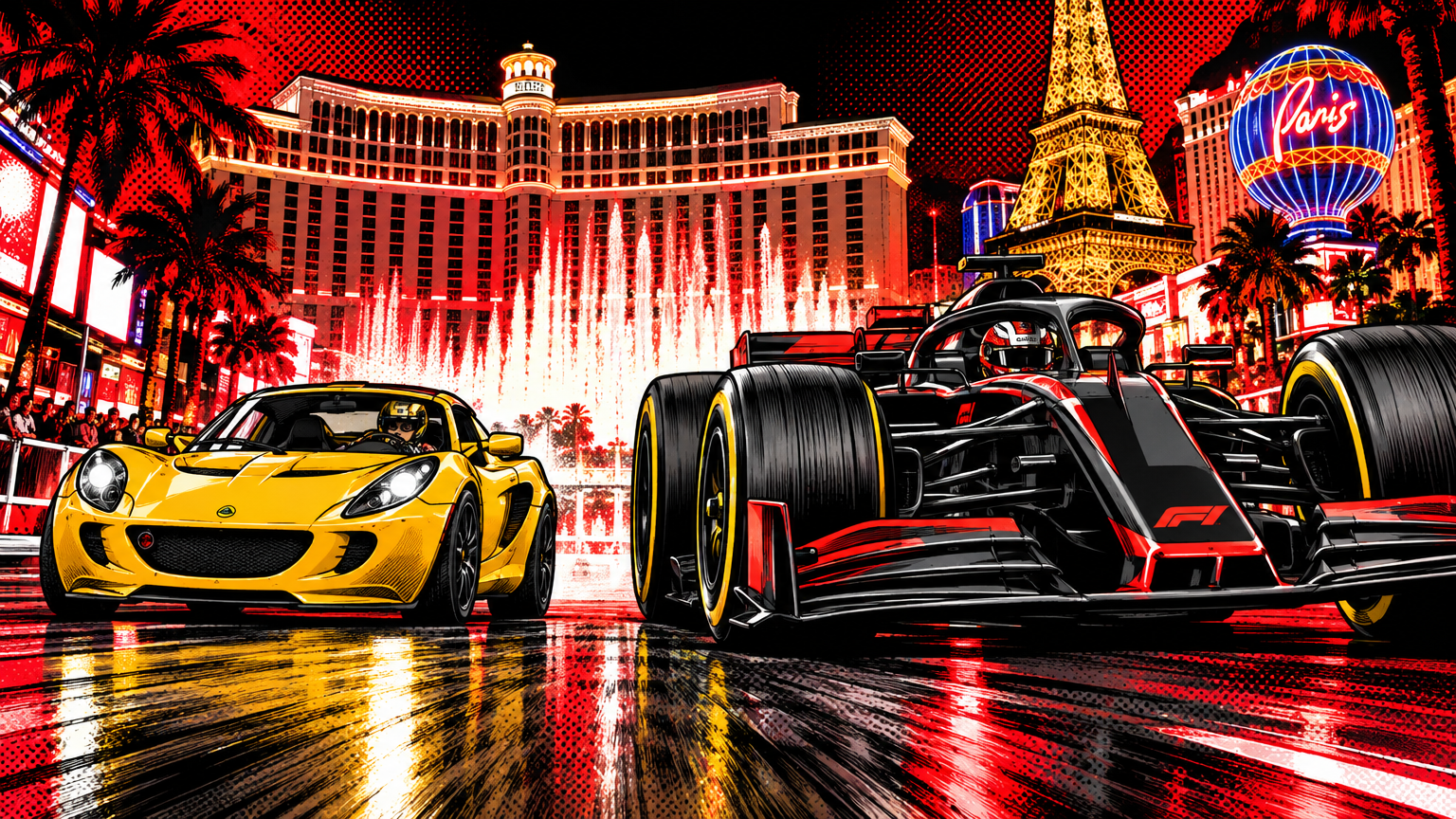
What happens if the Lotus Elise picks a fight with a Formula 1 car?
What happens is the purest lesson in this entire series. The Elise proves why light wins, and then a Formula 1 car, which is even lighter and far more powerful, proves it harder.
Let us score it properly, on numbers that can be checked. No romance in the math, plenty of romance everywhere else.
First, Which Lotus Elise Are We Talking About?
The Elise name ran from 1996 to 2021, across three series and dozens of versions. We pin ours down first.
The family, kept separate the way this series always keeps it:
- The Elise Sport 240 Final Edition, our challenger: the standard final edition car announced in February 2021, closing out 25 years of production. This is the scored car.
- The Elise Cup 250 Final Edition: the track leaning sister car, with 248 PS, an aero package, Bilstein dampers and stickier tyres. Faster on a circuit, different car. Not scored.
- The original 1996 Series 1 Elise: 725 kg and just 118 bhp from a 1.8 litre Rover engine. The founding statement, and context for everything below. Not scored.
- The Lotus Exige: the harder, faster coupe cousin that already had its own fight in this series. You can read Formula 1 vs. Lotus Exige for that one. Not scored here.
- The Lotus Emira: the car that replaced the Elise, Exige and Evora after 2021. A successor, not this car. Not scored.
Now the scored car, Lotus figures first. The Sport 240 Final Edition uses a mid mounted, supercharged and chargecooled 1.8 litre four cylinder engine, 1,798 cc, built around the Toyota 2ZR family.
Lotus lists maximum power at 243 PS, about 240 hp or 179 kW. Maximum torque is 244 Nm, about 180 lb-ft.
Drive goes to the rear wheels through a six speed manual gearbox. No automatic, no paddles, no apology.
Lotus quoted weight is 922 kg in standard specification. Tick every lightweight option, including carbon fibre covers, a lithium ion starter battery and a polycarbonate rear window, and Lotus put the lightest specification at 898 kg.
Performance, per Lotus: 0 to 100 km/h in 4.5 seconds, and 0 to 60 mph in 4.1 seconds. Top speed is listed at 237 km/h, about 147 mph.
The wheels tell the weight story too. Lightweight forged 10 spoke alloys, 16 inches at the front and 17 inches at the rear, wearing Yokohama tyres.
UK pricing started at 45,500 pounds for the Sport 240 Final Edition. That is supercar theatre money for exactly nobody, and that was always the point.
Here is the part most people miss. The last Elise ever built for a customer was a Sport 240, painted gold, and it went to Elisa Artioli.
Elisa is the person the car is named after. She is the granddaughter of Romano Artioli, who chaired Lotus when the Elise launched, and she was a toddler when the original car was unveiled.
Twenty five years later, the final car went home with its namesake. Try finding a better final chapter in this series. We will wait.
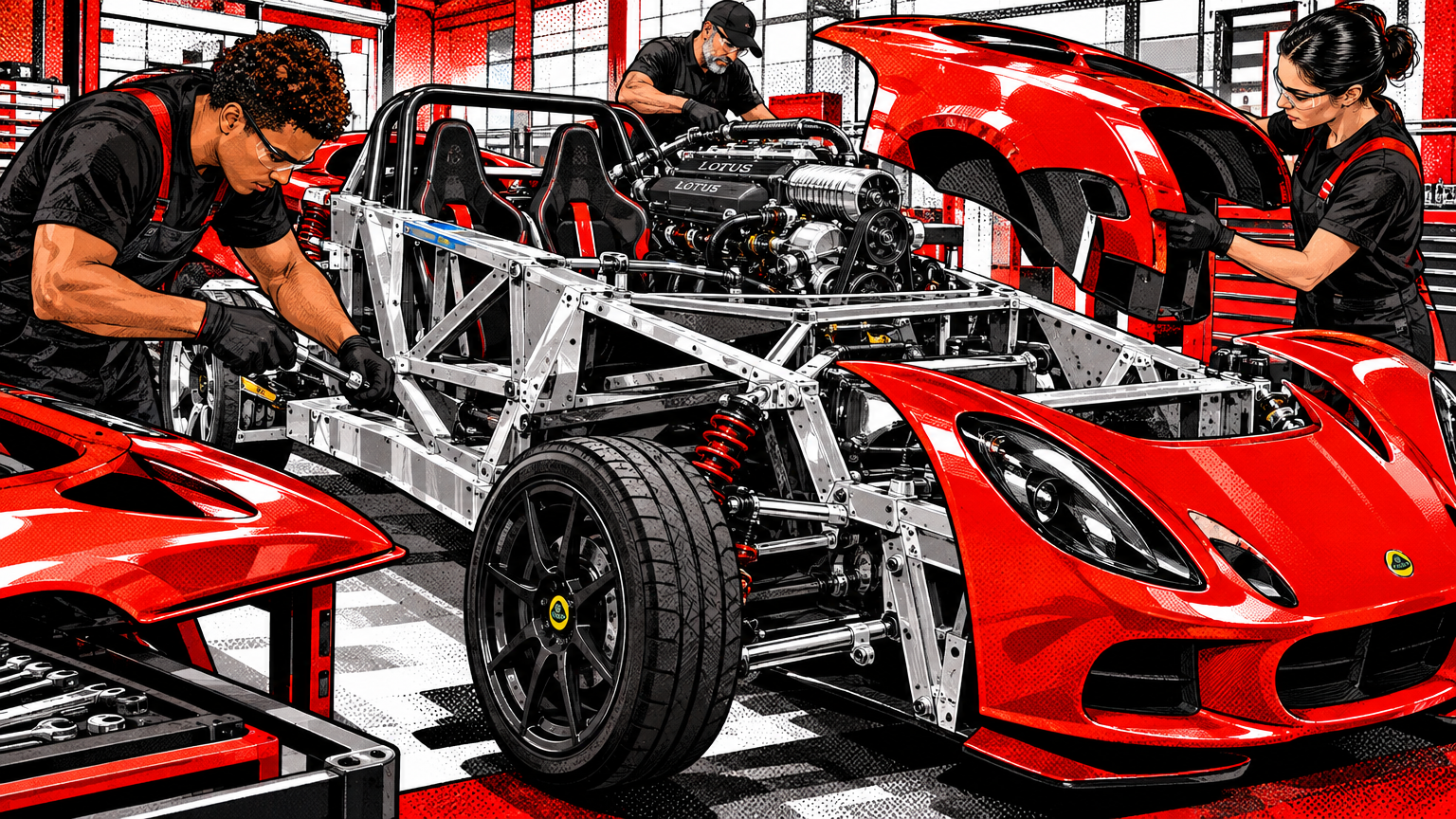
The engineering recipe never really changed. A chassis made from bonded extruded aluminium sections, stiff and astonishingly light, with a fibreglass body shell on top.
The original 1996 car weighed 725 kg, about 1,598 lb. Even after a quarter century of safety rules and equipment, the final car stayed under a tonne in its lightest form.
Total Elise production is commonly counted at 35,124 cars across the full run. Small numbers, giant influence, because half the lightweight cars you love learned something from this one.
Five lessons the Elise teaches every driver, before we even start the fight:
- Weight is a performance part. Removing mass helps acceleration, braking, cornering and tyre life all at once. Adding power only helps one of those directly.
- Power to weight beats power alone. At 922 kg, 243 PS works out to roughly 264 PS per tonne. Respectable, honest, and very usable.
- Small tyres can be a feature. A light car does not need giant rubber to generate grip, so steering stays talkative and running costs stay sane.
- Feel is data. In a light car with the engine behind you, you learn what the tyres are doing early, while there is still time to do something about it.
- Simple ages well. A manual gearbox, a small supercharged engine and a light chassis are things a good specialist can keep alive for decades.
Meet the 2026 Formula 1 Car
The 2026 Formula 1 car is also a lightweight obsessive. It just has a very different budget for the obsession.
Under the 2026 rules, the car pairs a 1.6 litre turbocharged V6 hybrid with much stronger electric power. The petrol engine is limited to about 400 kW, the MGU-K can deliver up to 350 kW, and Formula 1 describes the total package as more than 1,000 hp.
Minimum regulatory weight is 768 kg including the driver. Read that again, because it decides this whole article.
The Formula 1 car weighs less than the Elise, driver included, while making more than four times the power. The Elise philosophy, taken to its absolute extreme, is literally a Formula 1 car.
Add carbon construction, active front and rear aerodynamics, and racing tyres built only to grip. That is the opponent. For the full picture of race week in this city, start at the Las Vegas Grand Prix hub.
Lotus Elise vs. F1: The Numbers
| Category | Lotus Elise Sport 240 Final Edition | 2026 Formula 1 Car |
|---|---|---|
| Engine | 1.8L supercharged four cylinder, 1,798 cc | 1.6L turbo V6 hybrid |
| Power | 243 PS (about 240 hp) | More than 1,000 hp |
| Torque | 244 Nm (about 180 lb-ft) | Not published as one combined figure |
| Weight | 922 kg standard, 898 kg lightest specification | 768 kg minimum, including driver |
| Power to weight | About 264 PS per tonne | More than 1,300 hp per tonne |
| Gearbox | 6 speed manual | Sequential racing gearbox |
| Drive | Rear wheel drive, mid engine | Rear wheel drive, mid engine |
| 0 to 100 km/h | 4.5 sec (Lotus) | No universal official figure |
| Top speed | 237 km/h listed | 353.9 km/h trap, Gasly, 2026 Chinese GP qualifying |
| Built | Final Edition, 2021; 35,124 Elises in total | Built for one season, then replaced |
| Vegas valet factor | 10/10. Tiny, gold if you spec it right, and the valets will fight over the keys for the manual gearbox alone. | 1/10. No starter motor routine a valet can use, and it stalls if you look at the clutch wrong. |
Study that weight row. Every other challenger in this series arrived heavier than the Formula 1 car and tried to make it up with power.
The Elise is the first challenger whose entire identity is weight, and it still arrives heavier. That tells you how extreme a modern Formula 1 car really is.


Round One: Acceleration
The Elise is genuinely quick. Lotus says 4.5 seconds to 100 km/h, in a car you can buy used for family SUV money, with a manual shift you get to enjoy on the way.
The launch is all traction and lightness. There is not much mass to get moving, the engine sits over the driven wheels, and the supercharger answers right now, with no waiting for boost to build.
The Formula 1 car answers with violence. More than 1,000 hp, less weight than the Elise, and tyres that treat a standing start like a personal insult.
There is no universal official Formula 1 0 to 60 figure, and this series never invents one. It does not need one here.
Four times the power at less weight is not a contest, it is a physics lecture. The Elise makes its 4.5 seconds feel thrilling. The Formula 1 car makes time feel optional.
Round One winner: Formula 1. The Elise is quick the honest way. The Formula 1 car is quick the absurd way.
Round Two: Top Speed
Top speed was never the Elise brief. Lotus listed the Sport 240 at 237 km/h, about 147 mph, and nobody at Hethel lost sleep over it.
A light, short geared roadster is built to be thrilling at legal speeds and devastating on a tight road. Chasing 200 mph would have required power and weight that would have ruined the car.
Now the verified Formula 1 evidence. Pierre Gasly recorded 353.9 km/h, about 220 mph, in qualifying at the 2026 Chinese Grand Prix.
The historical Las Vegas traps, labelled by year, are even higher. Yuki Tsunoda hit 358.3 km/h in 2025, and Alex Albon hit 368.9 km/h in 2024, the highest figure through the first three editions of the race.
Those are speed trap figures on a circuit, in cornering trim, not top speed attempts on a runway. Even so, every one of them clears the Elise maximum by more than 115 km/h.
Down the roughly 2 km Strip straight, the Elise would be at its ceiling, happy and flat out. The Formula 1 car would still be accelerating past it.
Round Two winner: Formula 1. On verified trap speeds alone, and it is not close.
Round Three: Now Add a Corner
This is the round the Elise was born for. So let us give the little car its full due before the score lands.
A 922 kg car changes direction with almost no inertia to argue with. It brakes later because there is less to slow, it turns earlier because the tyres are not overwhelmed, and it talks to the driver the whole time.
That is why Elise owners are so calm about the power figure. On a tight, technical road, usable pace comes from confidence, and confidence comes from feel.
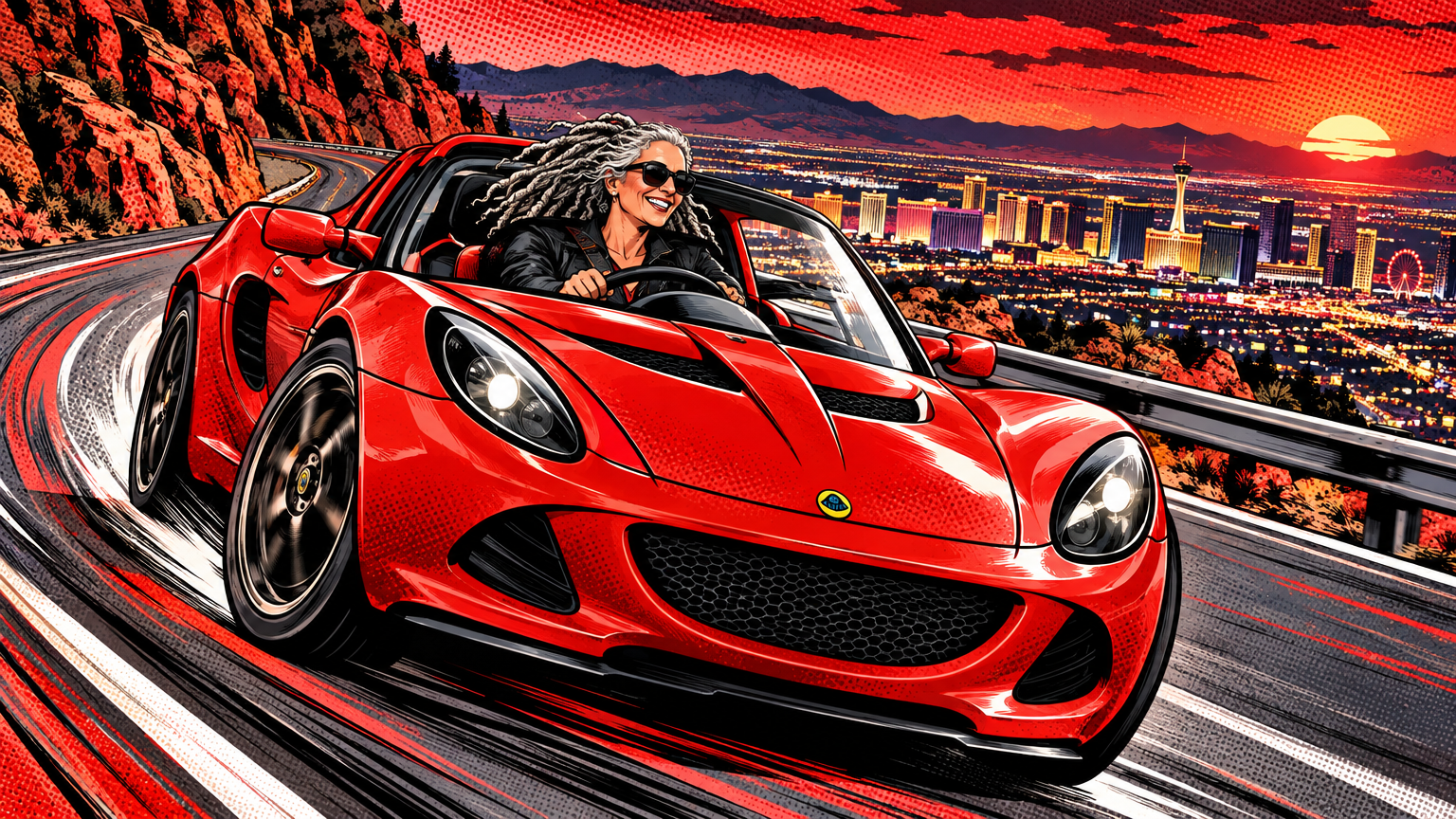
Here is the usable insight for your own driving. Tyres have a total grip budget, and heavy cars spend it faster.
- A lighter car asks less of its tyres in every corner, so the grip lasts longer across a drive.
- A lighter car transfers less weight under braking and acceleration, so it stays calmer mid corner.
- A lighter car can use narrower tyres and still grip hard, which keeps steering feel clean and replacement bills smaller.
Now the Formula 1 car enters the same corner. It carries active aerodynamics pressing it into the road, carbon brakes, racing slicks, and a chassis built for cornering loads no road car will ever see.
The Elise lesson is real, and the Formula 1 car is that lesson with a laboratory behind it. Less weight than the Elise, plus downforce the Elise never had.
Round Three winner: Formula 1. The Elise wins the argument about what matters. The Formula 1 car wins the corner.
Round Four: Braking
Braking is where low weight should pay the Elise back, and in the real world it does. Less mass means less energy to turn into heat, every single stop.
That is why a light car can use modest brakes and still stop hard, all afternoon, without cooking them. It is also why Elise brake parts do not carry supercar price tags.
Lotus never made braking theatre part of the Elise pitch. The pitch was always simpler: carry less weight, and every stop gets easier, cooler and cheaper to repeat.
The Formula 1 side needs no single distance either. Carbon brakes, huge downforce shedding speed the instant the driver lifts, and slick tyres give it braking performance that defines the modern sport.
Drivers brake at points that look like mistakes to everyone watching. Then the car stops anyway. Every lap, at the same impossible point.
The Elise stops like a great road car. The Formula 1 car stops like the laws of physics got negotiated down.
Round Four winner: Formula 1. Lightness helps the Elise enormously. It is just not enough.
So, Does the Lotus Elise Win Anything?
It wins the philosophy round, and it is not close either. The Elise is the proof, sold to the public for 25 years, that cutting weight is the smartest performance money can buy.
It wins on running costs. Small tyres, a production based engine, and modest brakes mean Elise ownership is sports car fun without the supercar invoice collection.
It wins on involvement. A manual gearbox, the engine behind your shoulders, and a car that moves around honestly underneath you. No screen can simulate that, and no spec sheet can price it.
It wins on story, too. Named for a chairman's granddaughter, launched at 725 kg, and closed out 25 years later with the final gold car delivered to that same person, Elisa Artioli.
And it wins every ordinary Tuesday. The Formula 1 car cannot take you anywhere. The Elise can make a grocery run feel like a qualifying lap, legally, at 40 mph.
For more on the marque and the current range, see Lotus Cars. For the previous fight in this series, read Formula 1 vs. Ferrari F50.
What Would Happen on the Las Vegas Strip Circuit?
The Las Vegas Strip Circuit runs 6.201 km, about 3.85 miles, with 17 turns and 50 laps on race night. It mixes a roughly 2 km blast down the Strip with tight, technical sections that punish a clumsy car.
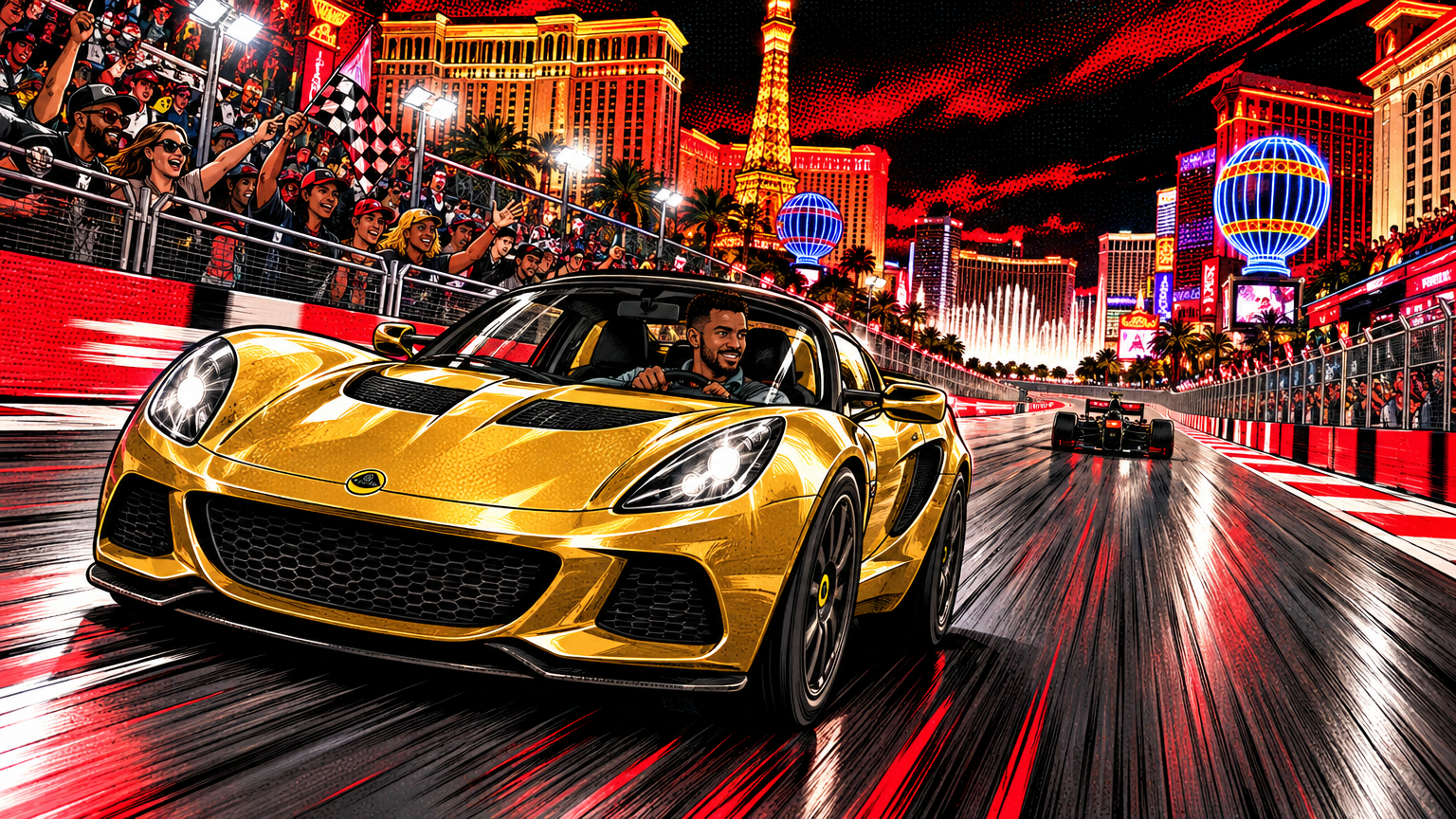
On the straight, this is a walkover. The Elise tops out at 237 km/h while Formula 1 cars have trapped at up to 368.9 km/h here in 2024 trim.
In the tight sections, the Elise would be charming. Quick direction changes, honest braking, and a driver grinning through every rotation.
Charming is not fast, though. The Formula 1 car brakes later, turns harder, and deploys electric power out of every corner like it was shot from something.
We will not invent a lap time for either car here, because no such Elise lap exists on record. The honest summary is simple: the Elise would entertain the crowd, and the Formula 1 car would lap it, repeatedly, while putting on the real show.
That is not an insult. Getting lapped by a Formula 1 car on the Strip, in a gold roadster named after a person, is a story you tell forever.
The Final Call
Formula 1 wins this fight 4 to 0. Acceleration, top speed, cornering and braking all go to the car with more than 1,000 hp, less weight, active aero and racing tyres.
But notice what the score hides. The Elise did not lose because its idea was wrong. It lost because Formula 1 follows the same idea further than any road car is allowed to.
Add lightness is the oldest speed secret in motorsport, and Lotus built its name on it. The Elise is that secret in its purest road going form, proven over 35,124 cars and 25 years.
Buy one while good cars are still findable, learn what real feel is, and keep it light. That lesson will make you faster in everything else you ever drive.
Formula 1 may win the fight. But the Lotus Elise still teaches the lesson the winner was built on.
There are plenty more cars waiting to pick a fight with Formula 1. Next up: Formula 1 vs. Bentley Continental GT Speed: the heaviest luxury missile in Britain wants a word with the lightest argument in racing.