Some cars pick a fight with horsepower.
The Lamborghini Murciélago brought a 6.5-liter V12 and enough theater to fill a casino.
The Lotus Exige brought a diet.
This is the smallest, lightest car on our entire list. No giant engine. No luxury barge nonsense. No interest in your comfort, your luggage, or your lower back.
Lotus has one religion, and it is not power.
It is lightness.
Colin Chapman built the whole company on that idea decades ago, and the Exige is what happens when engineers take it personally. Strip the weight, sharpen everything left, and let physics do the showing off.
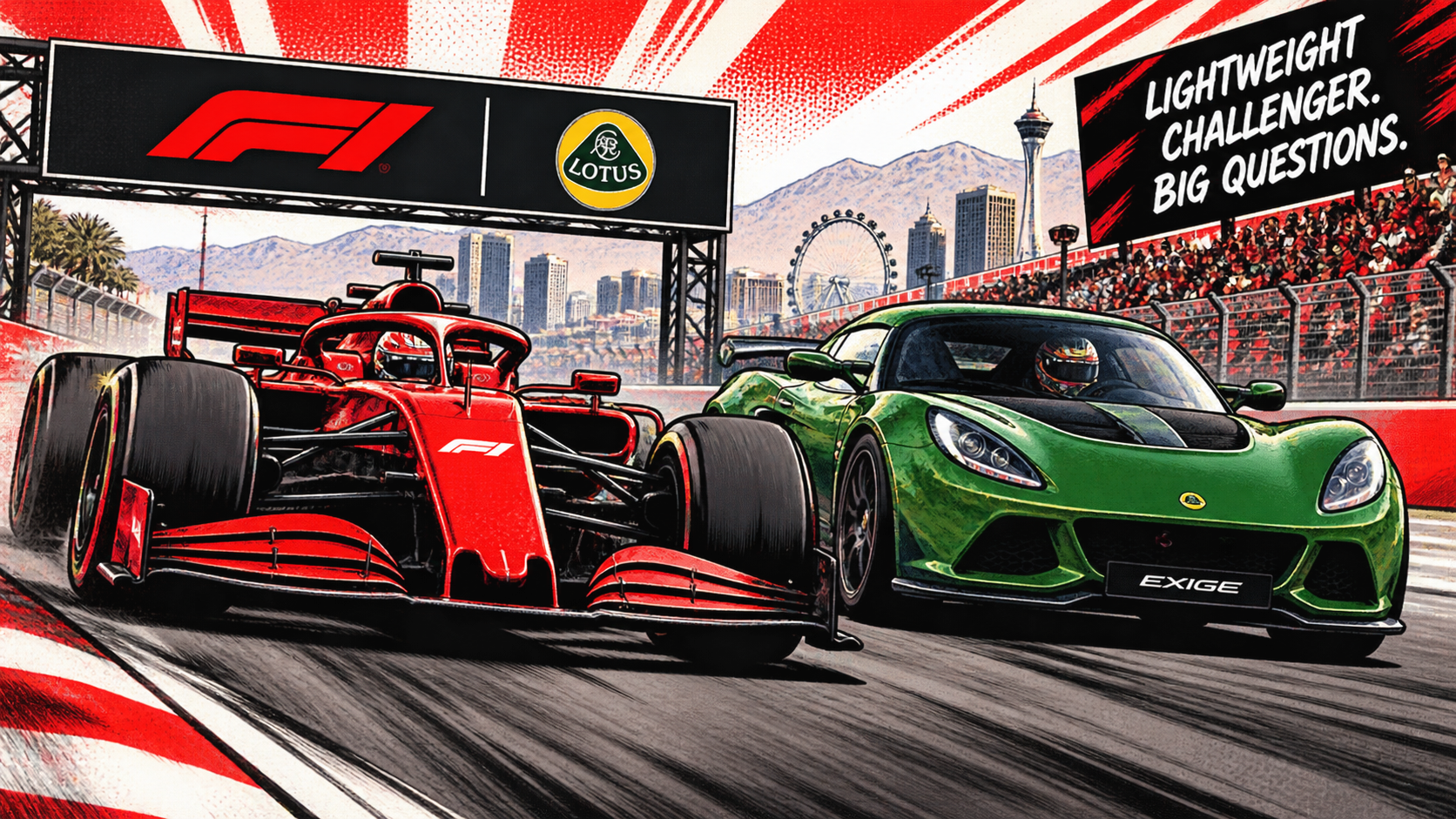
Standing across from it is a 2026 Formula 1 car, which plays the same game at a level that should honestly be illegal in several states.
So here comes today's completely unnecessary but extremely important question.
What happens if the Lotus Exige picks a fight with a Formula 1 car?
Things are about to get much lighter.
First, Which Exige Are We Talking About?
The Exige ran for more than two decades in a lot of versions, from mild to completely unhinged. Throwing one set of numbers at every car wearing the badge would be sloppy.
So we're bringing the nasty one.
The Lotus Exige Cup 430, unveiled in November 2017 and built through 2021. When it arrived, Lotus called it the most powerful Exige ever, and it borrowed its powertrain from the bigger Evora GT430.
Under the rear clam sits a 3.5-liter supercharged V6, a Toyota-sourced, all-aluminum engine fitted with an Edelbrock supercharger and a charge cooler. Lotus rates it at 430 horsepower at 7,000 rpm and 325 pound-feet of torque, delivered from 4,000 to 6,800 rpm.
It drives the rear wheels through a six-speed manual gearbox. No automatic was offered. In 2017. Lotus looked at the entire industry's paddle-shift future and chose violence.
Now the important part.
Lotus quotes a lightest possible dry weight of 1,056 kilograms, about 2,328 pounds, with a standard dry figure of 1,059 kilograms. For context, that lightest number requires deleting the optional airbags, because of course it does.
That gives the Cup 430 a power-to-weight ratio of 407 horsepower per tonne on Lotus's dry figures.
Lotus's claimed performance: zero to 60 mph in 3.2 seconds, zero to 100 kilometers per hour in 3.3, and a top speed of 180 mph.
The aero is real, too. The carbon front splitter, air curtains, and that big straight motorsport rear wing produce 220 kilograms of downforce at maximum speed, split 100 kilograms front and 120 rear, according to Lotus.
Braking hardware comes from AP Racing: four-piston calipers and two-piece J-hook ventilated discs, 332 millimeters front and rear. Tires are Michelin Pilot Sport Cup 2s, because anything less grippy would be a practical joke.
And the party trick: Lotus lapped its own Hethel test circuit in 1 minute 24.8 seconds in the Cup 430, which the company said made it the fastest production car ever around its home track, 1.2 seconds quicker than the road-going Lotus 3-Eleven.
That's a manufacturer number on a manufacturer track, and we're labeling it that way.
But it tells you what this car is for.
Unfortunately, Formula 1 also knows what it's for.
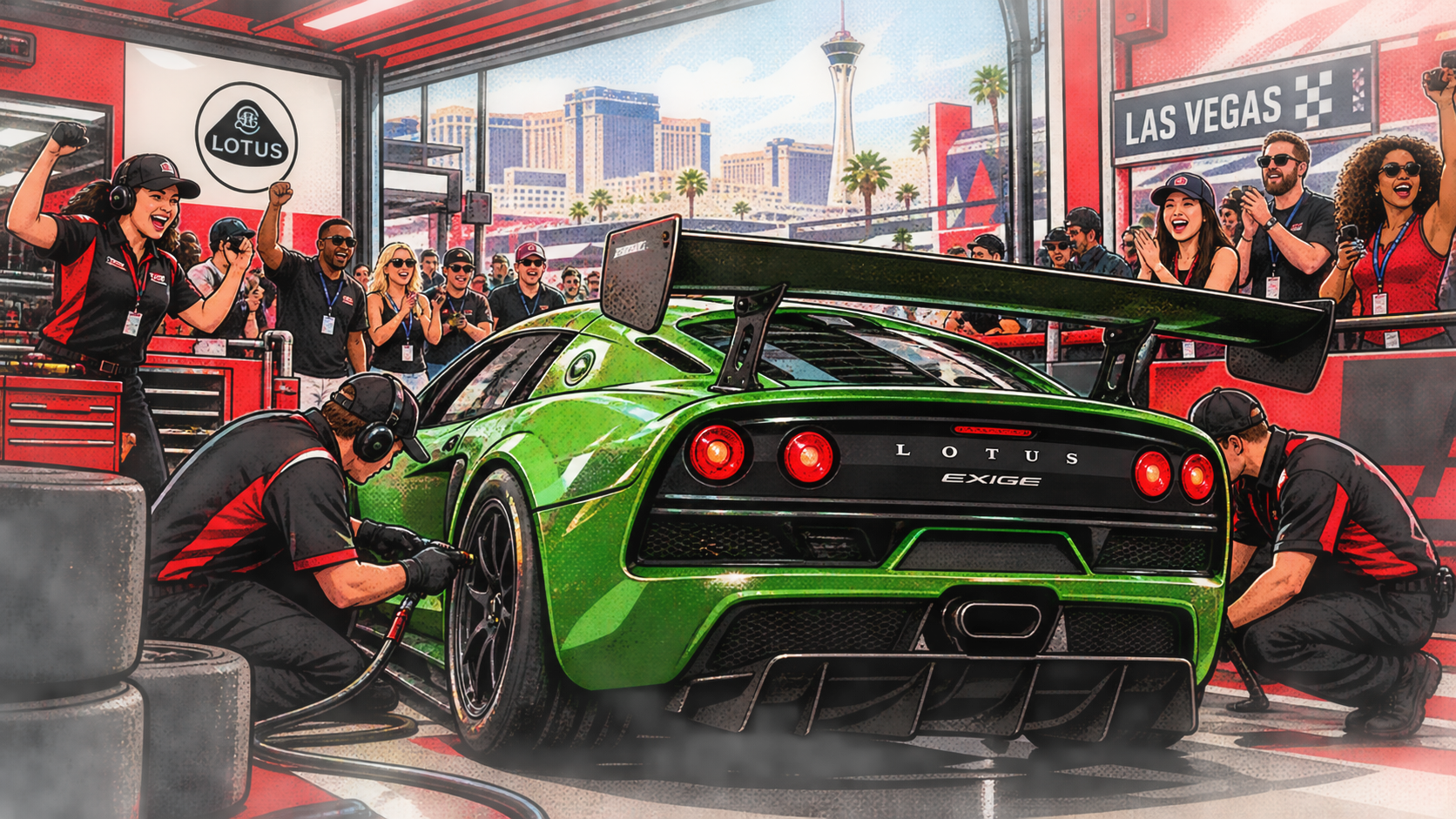
Meet the 2026 Formula 1 Car
The 2026 Formula 1 machine is what happens when the lightness religion gets a billion-dollar research department.
At the center is still a 1.6-liter turbocharged V6 hybrid.
The internal-combustion side is limited to around 400 kilowatts. The electric MGU-K can deliver as much as 350 kilowatts in the parts of the lap where maximum deployment is permitted.
Formula 1 has described the total package as producing more than 1,000 horsepower, although the electrical contribution isn't simply available at maximum output everywhere, all the time. Energy deployment and harvesting are controlled throughout the lap.
The minimum regulatory weight for a 2026 F1 car is 768 kilograms, about 1,693 pounds, including the driver.
Read that again.
The F1 car's minimum weight, driver included, is nearly 290 kilograms below the Exige's lightest dry weight, and the Lotus figure doesn't include fuel or a human.
Then there's the aero. For 2026, Formula 1 introduced active front and rear aerodynamics. The wings change configuration between low drag for the straights and high downforce for the corners.
The Exige has a big fixed wing and 220 kilograms of downforce at full speed.
The F1 car has wings that take instructions.
This seems rude.
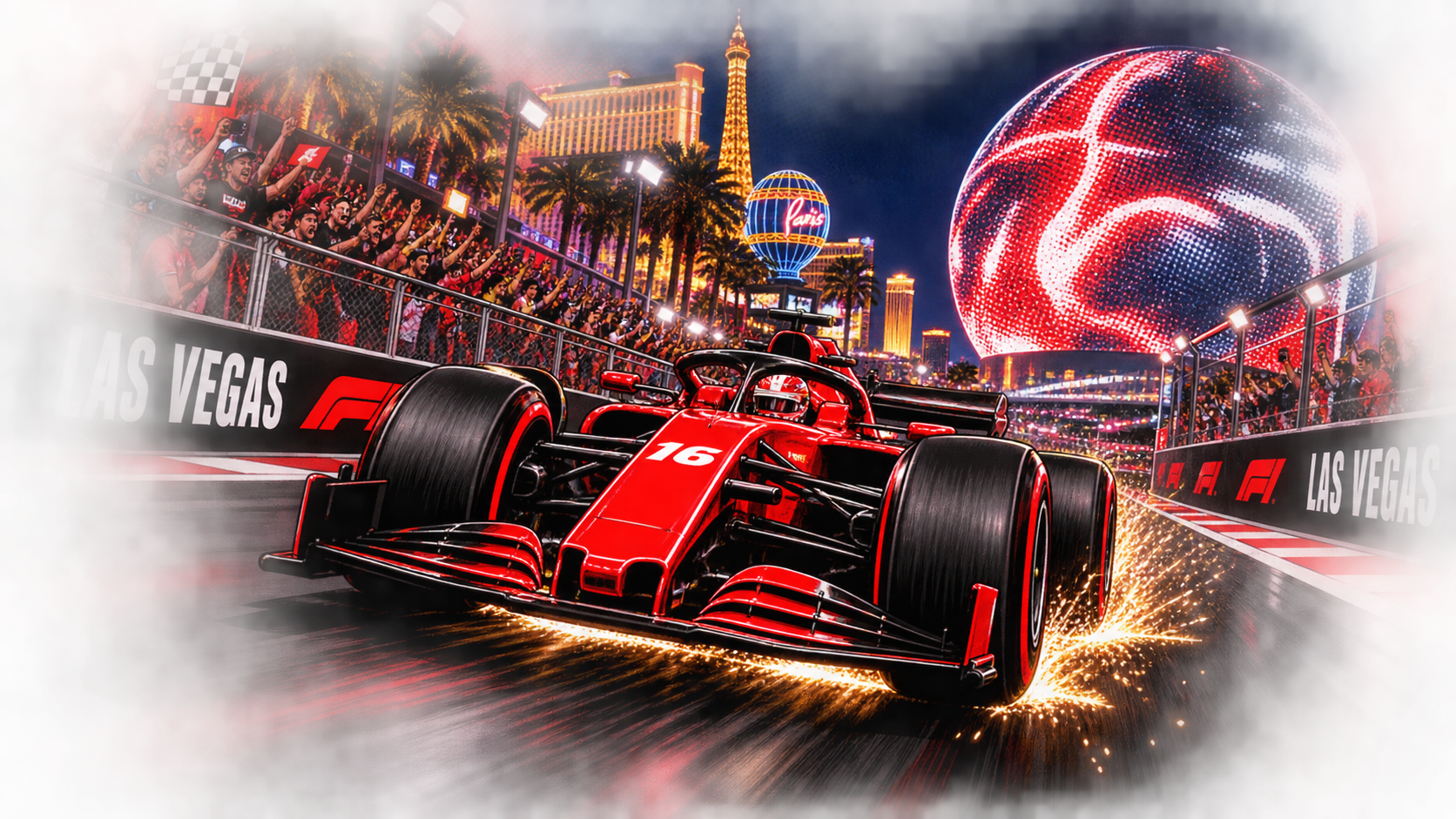


Exige vs. F1: The Numbers
| Category | Lotus Exige Cup 430 | 2026 Formula 1 Car |
|---|---|---|
| Engine | 3.5-liter supercharged V6 | 1.6-liter turbocharged V6 hybrid |
| Power | 430 hp at 7,000 rpm, Lotus figure | 400 kW combustion engine plus up to 350 kW MGU-K deployment; more than 1,000 hp total per Formula 1 |
| Torque | 325 lb-ft, Lotus figure | No single standardized series figure |
| Weight | 1,056 kg lightest dry, Lotus figure | 768 kg minimum regulatory weight, driver included |
| Power-to-weight | 407 hp per tonne, Lotus dry figure | Not directly comparable because electrical deployment varies around the lap |
| 0-60 mph | 3.2 sec, Lotus claim | No universal official 2026 figure |
| Quarter-mile | No official Lotus figure | No standardized F1 quarter-mile figure |
| Top speed | 180 mph, Lotus claim | 2026 FIA speed-trap data has already exceeded 219 mph |
| Drivetrain | Rear-wheel drive, six-speed manual | Rear-wheel drive |
| Aerodynamics | Carbon splitter and fixed rear wing, 220 kg downforce at maximum speed | Active front and rear aerodynamics |
| Street legal | Yes | No |
| Era | 2017-2021 | 2026 |
| Luggage capacity | One small bag, packed with optimism | The driver is the luggage |
Round One: Acceleration
This is the round the Exige was born for.
There's barely any car to move. The engine sits behind the driver, over the driven wheels. The gearbox is a proper manual with a Lotus open-gate shifter that feels like operating expensive machinery.
Lotus claims 3.2 seconds to 60 mph, and featherweight cars launch with a violence that bigger, heavier cars have to spend real horsepower to match.
There isn't one official zero-to-60 number that applies to every 2026 F1 car, and we're not going to manufacture one.
What we can say is the F1 car carries roughly 290 fewer kilograms than the lightest Exige, brings more than double the power when its electrical deployment is working, and puts it down through racing tires built for exactly this.
The Lotus might make the first few feet genuinely interesting.
Then physics collects its money.
Round One Winner: Formula 1
Round Two: Top Speed
Here's where the lightness bill comes due.
The Exige Cup 430 tops out at a Lotus-claimed 180 mph. That's fast. Honestly fast. The kind of fast that ends arguments at most racetracks on Earth.
But that giant rear wing is back there making downforce, and downforce charges rent in drag. Lotus built this car to corner, not to win a top-speed contest.
Formula 1's evidence is already on paper. During qualifying at the 2026 Chinese Grand Prix, official FIA speed-trap data recorded Pierre Gasly at 353.9 kilometers per hour, about 220 mph.
And right here on the Las Vegas Strip Circuit, during the 2025 race weekend, Yuki Tsunoda was trapped at 358.3 kilometers per hour, about 222.6 mph. Those were 2025-spec cars, not the current machines, so we're not presenting that as a 2026 prediction.
It does show what kind of neighborhood we're visiting.
On the long Strip straight, the F1 car simply has another 40 mph in its pocket.
The Exige doesn't get embarrassed. It gets outrun by a car playing a different sport.
Round Two Winner: Formula 1
Round Three: Now Add a Corner
Welcome to the Exige's home address.
This is why the car exists. The bonded aluminum chassis weighs almost nothing. The steering is famously talkative. The whole car changes direction like it read your mind a half second before you thought the thought.
Add 220 kilograms of real downforce, three-way adjustable Nitron dampers, and Michelin Cup 2 rubber, and you get the fastest production car Lotus ever sent around its own test track.
Hethel, 1:24.8. Manufacturer number, manufacturer track, label attached. Still impressive.
But Formula 1 lives here too, and it brought weapons.
The F1 car weighs 768 kilograms with the driver already in it. Its tires are purpose-built racing slicks. Its active wings press it into the pavement in the corners and get out of the way on the straights.
The honest version: this is the closest round of the series so far.
The Exige's cornering is genuinely world-class, and on a tight, technical circuit it would make the F1 driver at least glance in the mirrors out of respect.
Then the F1 car would brake later, turn harder, and leave.
Closest round yet is still a round to Formula 1.
Round Three Winner: Formula 1
Round Four: Braking
Light cars stop like they mean it, and the Exige means it.
AP Racing four-piston calipers. Two-piece J-hook discs, 332 millimeters at both ends. A car that, in its lightest form, barely clears a metric tonne.
That's serious hardware on a very light car, and it's why the Cup 430 can attack a braking zone lap after lap at Hethel without the pedal going on vacation.
Formula 1 braking, though, is a different scale of violence.
An F1 car starts the braking event with even less mass, on racing tires, with aerodynamic load helping push those tires into the track before the speed bleeds off. Then it does it again. And again. For 50 laps.
The Exige's brakes are superb for a road car.
The F1 car's brakes are a controlled emergency, repeated on schedule.
Round Four Winner: Formula 1
So, Does the Exige Win Anything?
Yes. And it's not a consolation prize, either.
It wins the scale.
At 1,056 kilograms in its lightest dry form, the Exige Cup 430 is the lightest car to challenge Formula 1 in this series so far. The Murciélago carried roughly 3,850 pounds. The Countach wasn't exactly on a diet plan either.
The Exige is playing the same game as Formula 1, just with a license plate and a price tag a normal human can read without sitting down.
Speaking of price: Lotus launched the Cup 430 at £99,800 in the UK. Formula 1 teams operate under a cost cap in the hundreds of millions. The Lotus costs less than the F1 car's steering wheel budget and a decent sandwich.
It also wins the gearbox. A six-speed manual with an open-gate shifter. The F1 car changes gear faster than thought, but the Lotus makes you part of the machine, and there are days when that's the entire point of a sports car.
And it wins feel. No filter, no flattery, no committee. Just a tiny, loud, supercharged British missile that treats every corner like a personal insult.
Exige wins: the scale, the shifter, the price tag, and the driver's grin.
What Would Happen on the Las Vegas Strip Circuit?
Now let's put this fight where it belongs.
The 2026 configuration is 6.201 kilometers, about 3.85 miles, with 17 turns. The Grand Prix runs for 50 laps. There's also roughly a two-kilometer stretch along the Strip.
That straight is the Exige's worst neighborhood on the whole lap. At a 180 mph ceiling, with the wing charging drag rent, the Lotus would watch the F1 car disappear toward the Sphere at speeds the Cup 430 can only wave at.
The infield is kinder. The tighter sections around Harmon Avenue and the slower direction changes are where the featherweight Lotus would feel least out of place. Less mass to stop, less mass to rotate, real downforce for its size.
Least out of place is doing a lot of work in that sentence.
Every braking zone still favors the lighter, aero-loaded F1 car. Every fast corner hands Formula 1's active aero another paycheck. And over 50 laps, the gap stops being a gap and becomes a different event happening on the same track.
No invented lap times here. This is an informed comparison, not a recorded race.
But if any road car in this series could make the Strip Circuit's twisty bits look fun instead of frightening, it's this one.
The Lotus would lose the lap.
It would win the highlight reel of the infield.
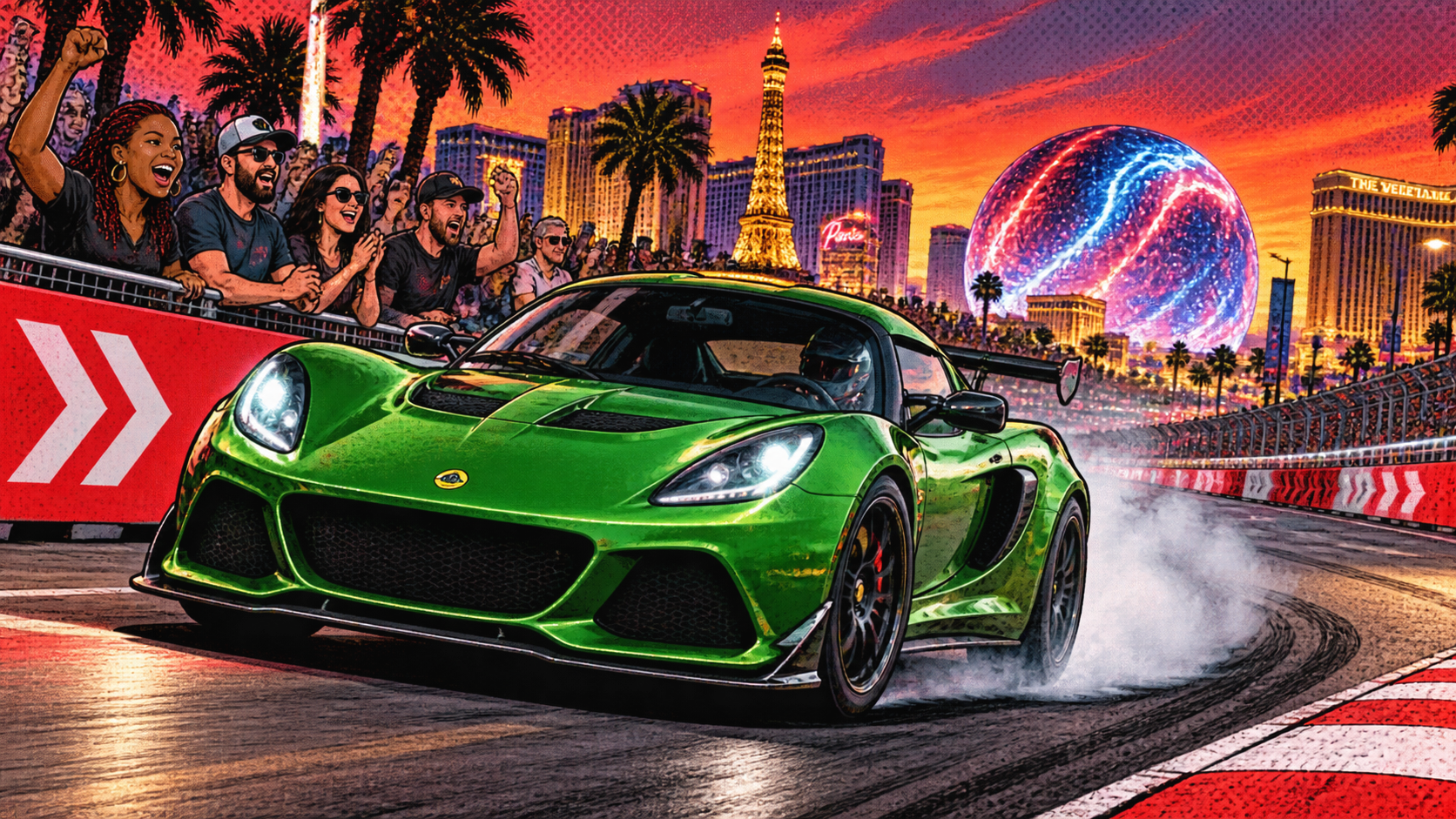
The Final Call
Winner: Formula 1.
Four rounds. Four wins.
Acceleration goes to F1 on weight, power, and tires. Top speed isn't close. Braking isn't close. Cornering is the closest fight of the series so far, and it still goes to the car with active wings and a driver-inclusive weight under 800 kilograms.
But here's the thing about the Exige.
It's the first challenger that speaks Formula 1's native language. Not power. Not luxury. Not drama.
Lightness.
It just speaks it with an accent, a manual gearbox, and a supercharger whine, from a tiny factory in Hethel that has been proving the same point since before most F1 engineers were born.
Formula 1 may win the fight.
But the Lotus Exige still makes cars three times its price look like they're carrying luggage they never packed.
There are plenty more cars waiting to pick a fight with Formula 1.
Next up: Formula 1 vs. BMW M1. The wedge that used to warm up the crowd for Formula 1 itself.