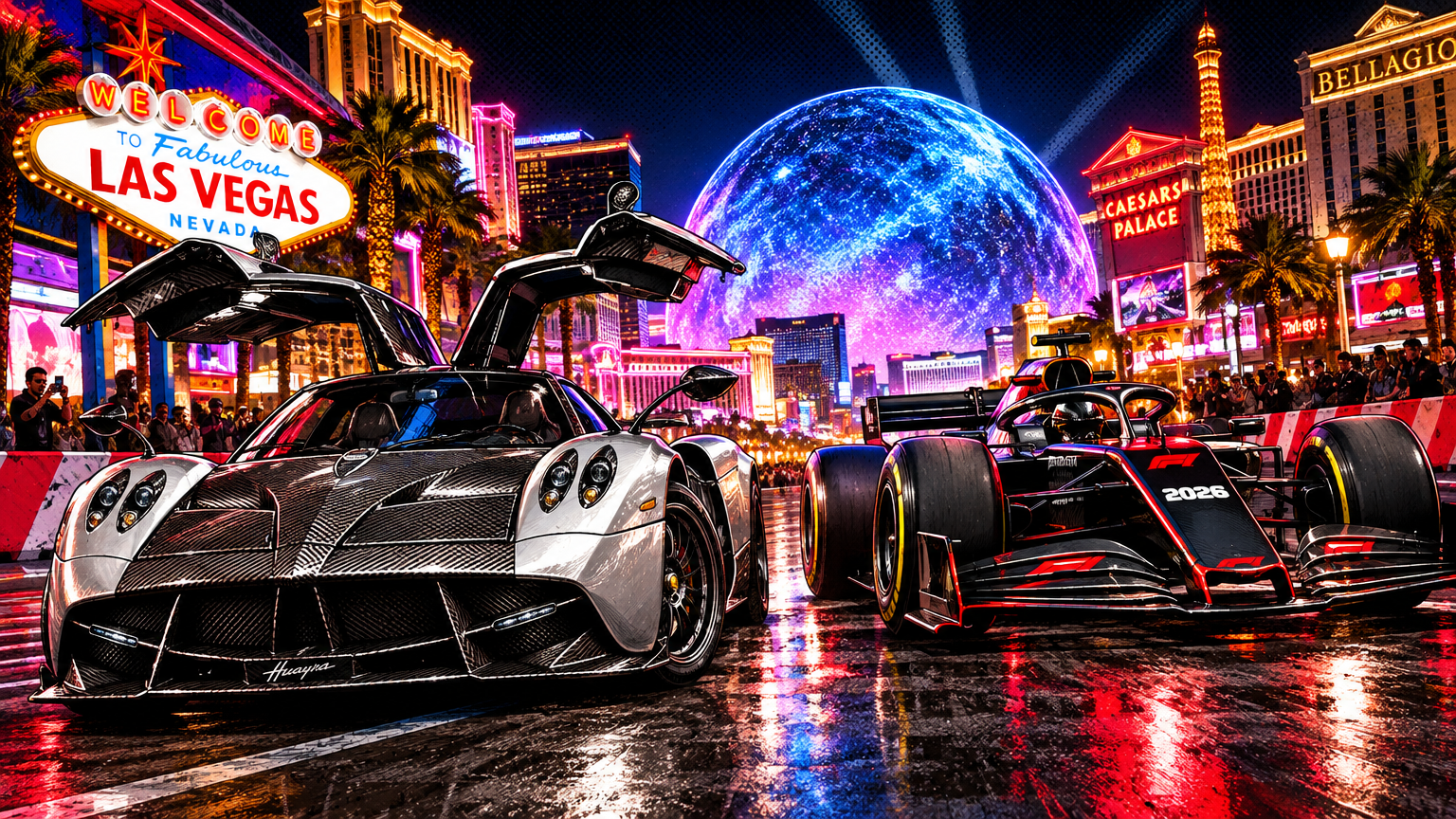
This challenger is named after the wind.
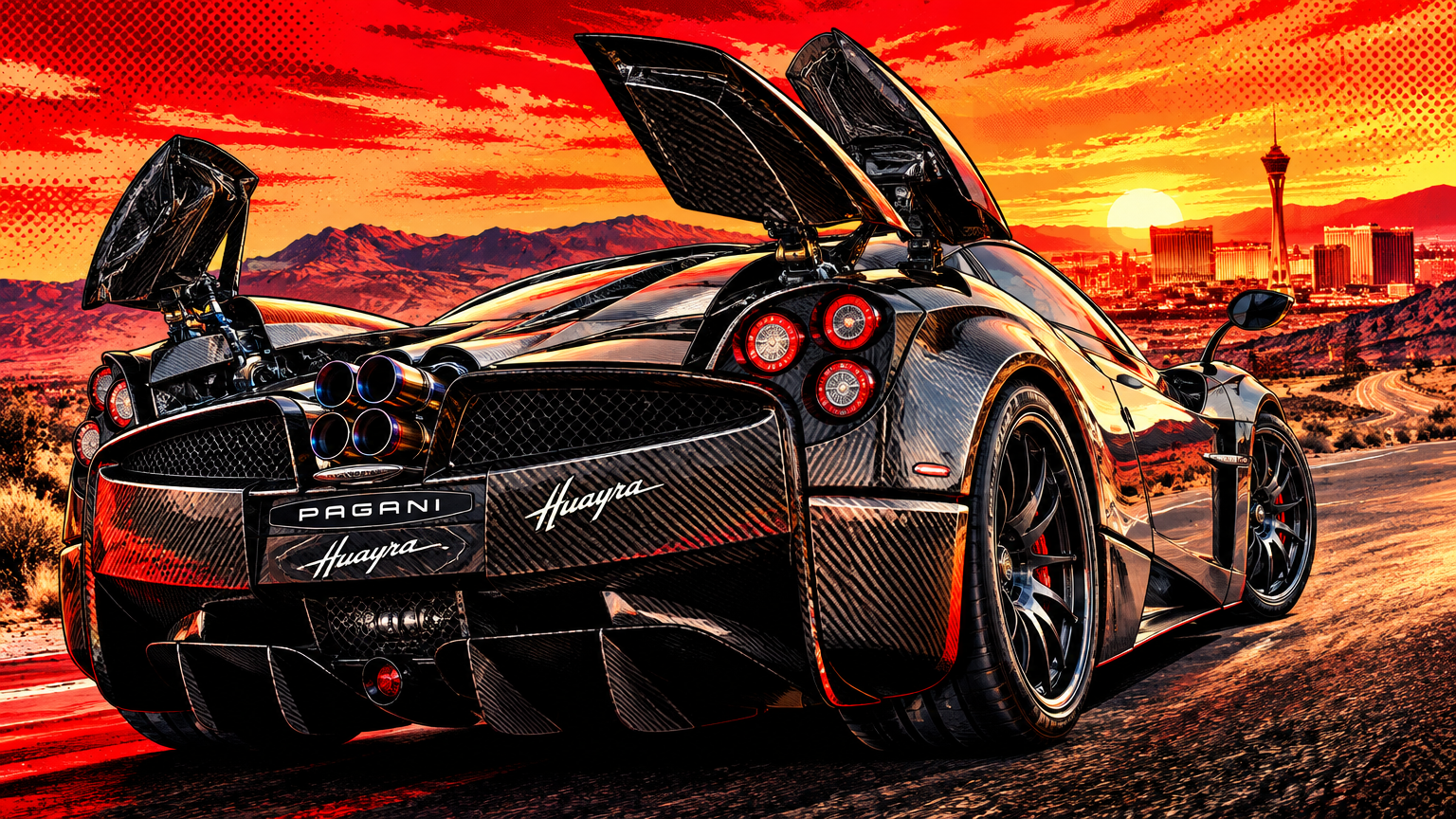
Not a storm with a marketing team. The actual wind, Huayra Tata, a god of wind in Quechua tradition, the kind of name you only pick if you plan to build a car that moves air around like it owns the stuff.
Pagani did exactly that. The Huayra is the car that followed the Zonda, and following the Zonda is like following a fireworks show with a candle.
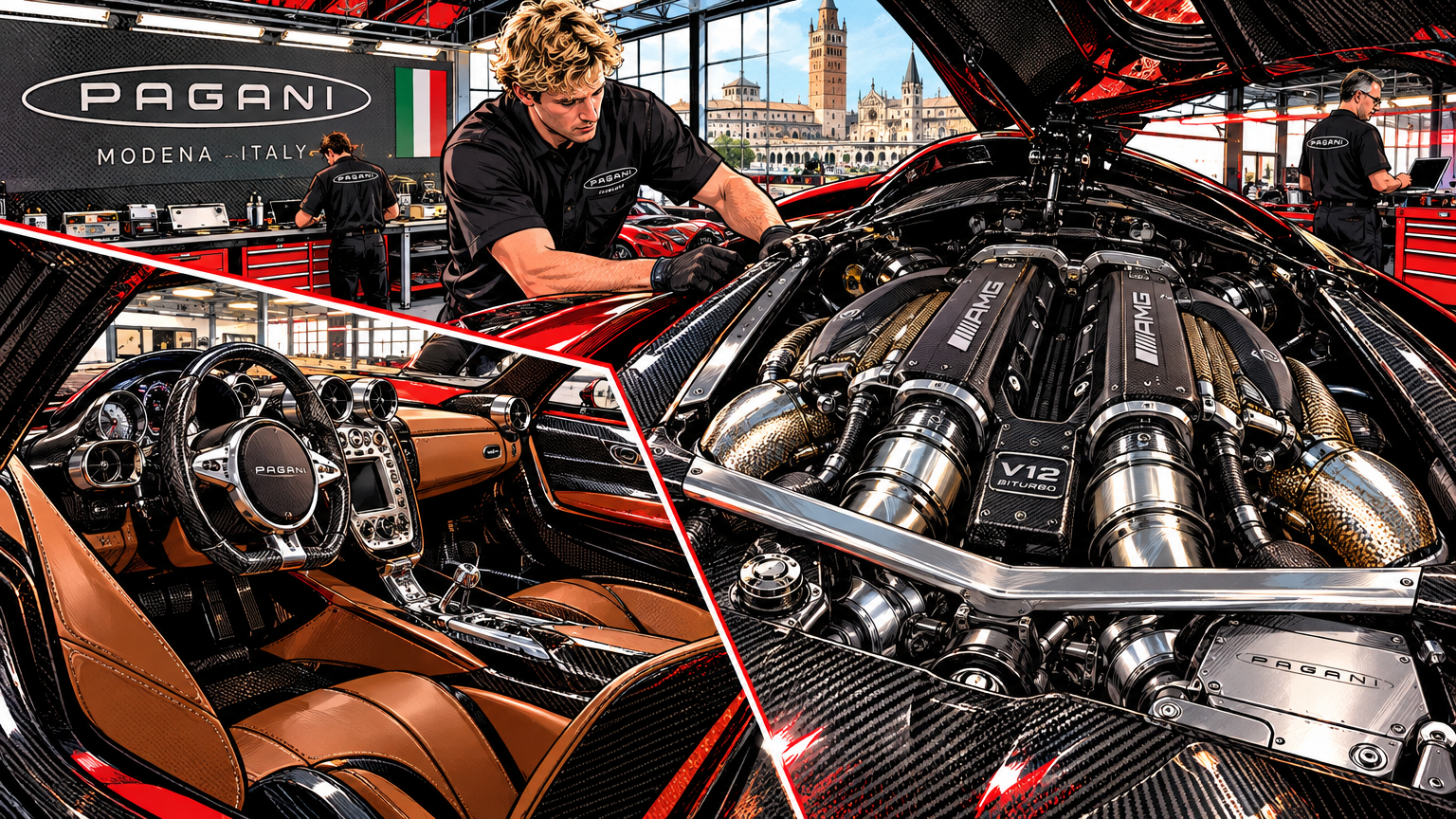
So Pagani built a hypercar out of carbon and titanium, gave it a twin turbo V12 built by Mercedes-AMG just for this car, and fitted four little flaps that think for themselves. It is part race car, part watch, part sculpture you are somehow allowed to drive.
What happens if the Pagani Huayra picks a fight with a Formula 1 car?
What happens is the prettiest argument in this series so far. The Huayra brings ideas Formula 1 fans will recognize, active aerodynamics, exotic materials, obsessive weight saving, and wraps all of it in leather and polished metal.
The Formula 1 car brings the same ideas with the gloves off. More than 1,000 horsepower, a minimum weight of 768 kg including the driver, and no interest at all in being art.
Wind, meet weather system. Let us score it.
First, Which Pagani Huayra Are We Talking About?
Precision matters more with Pagani than with almost anyone, because the Huayra name covers a whole family of cars that do not share one spec sheet.
The family, kept separate the way this series always keeps it:
- The original Huayra coupe: our challenger. Revealed online on January 25, 2011 as project C9, the successor to the Zonda, and limited to 100 coupes under Pagani's agreement with engine supplier Mercedes-AMG. Coupe production ran through 2018.
- Huayra Roadster: the open car, also 100 built, with more power at 764 PS and a lighter dry weight of 1,280 kg. A different car, never scored here.
- Huayra BC: the track focused coupe named for Benny Caiola, Pagani's first customer and a close friend of founder Horacio Pagani. Lighter again at 1,218 kg dry, with more power. Kept separate.
- The specials: the Imola, the Tricolore, the long tail Codalunga, and the track only Huayra R with its naturally aspirated racing V12 and 850 hp. Wonderful cars, none of them the scored car.
So the scored car is the original Huayra coupe, exactly as Pagani listed it. Here is the full card, Pagani figures first:
- Engine: Mercedes-AMG M158, 5,980 cc (6.0 litre) 60 degree twin turbocharged V12, developed by Mercedes-AMG specifically for Pagani. Pagani asked for smaller turbos and a revised setup to cut lag and sharpen response, which is why this turbo V12 feels awake instead of sleepy.
- Power: 740 PS (544 kW, 730 hp) at 5,800 rpm, per Pagani.
- Torque: 1,000 Nm (738 lb-ft) across a broad band, quoted from 2,250 to 4,500 rpm. That is not a peak you visit for a second. That is a plateau you live on.
- Gearbox: seven speed transverse sequential automated manual, driving the rear wheels through a single disc clutch. Pagani chose a single clutch box over a heavier dual clutch setup to save weight, and that choice has a real cost you will meet in Round One.
- Body and chassis: a monocoque in Pagani's own carbon titanium composite, often called carbotanium. Titanium woven into the carbon helps the structure hold together in a crash instead of shattering the way plain carbon can, and it keeps the car stiff and light at the same time.
- Weight: 1,350 kg (2,976 lb) dry, per Pagani. Dry means no fluids and no fuel, a distinction that matters and gets its own lesson below.
- Size: 4,625 mm long, 2,036 mm wide, 1,169 mm tall, on a 2,795 mm wheelbase. Gullwing doors, because a car named after a wind god was never going to open its doors like a hatchback.
- Aerodynamics: four independently controlled flaps, one at each corner, plus a variable front ride height. A dedicated control unit reads speed, yaw, lateral acceleration, steering angle, and throttle position, then moves the flaps to add downforce, cut drag, fight body roll, or act as an air brake. Horacio Pagani quotes a drag coefficient that varies between 0.31 and 0.37 depending on what the flaps are doing.
- Brakes: Brembo carbon ceramic discs, drilled, 380 mm across, with the rear flaps joining in as an air brake under hard stops.
- Exhaust: a titanium system built by MHG Fahrzeugtechnik with Inconel silencers, weighing less than 10 kg in total. The four centre mounted pipes are the Pagani signature, and here they are also a weight saving measure.
- Tires: Pirelli P Zero, 255/35 ZR19 in front and 335/30 ZR20 at the rear on the standard car. Remember the tire spec. It becomes the whole story in Round Three.
- Price: about 1.4 million dollars in the United States when new, before the personalisation that Pagani buyers treat as the real starting point.
Pagani performance claims, labelled as claims: 0 to 100 km/h in 3.2 seconds, and a top speed quoted at about 370 km/h (230 mph) in some Pagani listings and about 383 km/h (238 mph) in period Pagani material.
That top speed split is not a typo in this article. It is two different factory era figures living side by side, and Round Two will handle both of them honestly instead of picking the one that suits the scoreboard.
Independent evidence, kept separate. The Huayra's most famous lap is its 1 minute 13.8 second run at the Top Gear test track in January 2013, driven by the Stig, which stood as the fastest production car lap in the show's history at the time.
It also comes with a footnote every buyer should know. Reports at the time alleged the lap car ran hand cut slick style tires linked to the track only Zonda R, and Pagani acknowledged using two different sets of tires during the test programme.
The time stayed on the board. The debate never fully went away, and that debate is genuinely useful to you, as Round Three explains.
Meet the 2026 Formula 1 Car
The other corner holds the current Formula 1 machine, built to the 2026 regulations. Keep it honest, the way this series always keeps it: there is no single universal Formula 1 specification sheet, because every team builds its own car inside the same rulebook.
The verified shared facts for the 2026 car:
- Power unit: 1.6 litre turbocharged V6 hybrid. The combustion engine is limited to about 400 kW, and the MGU-K electric motor contributes up to 350 kW. Formula 1 describes the total package as more than 1,000 hp.
- Weight: minimum regulatory weight of 768 kg, about 1,693 lb, including the driver.
- Drive and construction: rear wheel drive, carbon construction, racing tires, and active aerodynamics at the front and rear.
- Measured speed evidence: Pierre Gasly recorded 353.9 km/h, about 220 mph, in a qualifying speed trap at the 2026 Chinese Grand Prix, per FIA data. That is a trap speed on a circuit, in cornering trim, not a top speed attempt.
Put the two machines side by side and this is the closest family reunion in the series. Both cars use active aerodynamics as a core idea, not a party trick.
Both are built around carbon composite structures. Both are rear wheel drive, mid engined in spirit, and obsessed with what air does at speed.
The difference is manners. The Huayra has to do all of it beautifully, at road speeds, on road tires, with a passenger admiring the stitching.
The Formula 1 car has to do it for 50 laps of the Las Vegas Strip Circuit with a crew waiting to rebuild it. Same religion, very different church.
Pagani Huayra vs. F1: The Numbers
| Category | Pagani Huayra (original coupe) | 2026 Formula 1 Car |
|---|---|---|
| Engine | 6.0 litre twin turbo V12, by Mercedes-AMG for Pagani | 1.6 litre turbo V6 hybrid |
| Power | 740 PS (730 hp) at 5,800 rpm (Pagani) | More than 1,000 hp (Formula 1 figure) |
| Torque | 1,000 Nm (738 lb-ft) from 2,250 rpm | No single published figure |
| Weight | 1,350 kg dry (Pagani) | 768 kg minimum, including driver |
| Power to weight | About 541 hp per tonne, on dry weight | More than 1,300 hp per tonne |
| 0 to 100 km/h | 3.2 sec (Pagani claim) | No universal official figure published |
| Top speed | About 370 to 383 km/h claimed, see Round Two | 353.9 km/h trap, Gasly, 2026 Chinese GP qualifying (FIA) |
| Drive | Rear wheel drive | Rear wheel drive |
| Gearbox | 7 speed sequential, single disc clutch | Sequential racing gearbox |
| Aerodynamics | Four active flaps, variable front ride height | Active front and rear aero |
| Production | 100 coupes | Built per team, per season |
| Price | About $1.4 million new in the US | Not for sale at any price |
| Vegas valet factor | 10/10. Gullwing doors, four exhaust pipes, and a cabin that looks like a Swiss watch exploded in the best way | 0/10. No passenger seat, no road registration, and it needs a crew to start the evening |
Read the power to weight line twice, because it explains most of this fight. The Huayra figure even flatters the car, since it uses Pagani's dry weight with no fuel or fluids aboard.
Add fluids and a driver to both cars and the gap only grows. The Formula 1 car carries more than twice the power per tonne, and it carries that advantage into every single round.
Here is your first usable lesson, and it works on any car listing you will ever read. Always ask which weight a maker is quoting.
- Dry weight counts the car with no fuel, no oil, and no coolant. It is the lightest number a maker can honestly print.
- Kerb weight counts the car ready to drive, with fluids and usually a full or near full tank.
- Test weight adds the driver and the test gear, which is why magazine numbers run heavier still.
None of those numbers is a lie. They are just answers to three different questions, and mixing them is how ordinary cars get made to look like heroes on paper.
Round One: Acceleration
Winner: Formula 1.
Give the Huayra its full respect first. A thousand newton metres of torque arriving from just 2,250 rpm is a shove that rearranges your understanding of fast.
Pagani claims 3.2 seconds from 0 to 100 km/h. In a rear wheel drive road car on road tires, with no electric motors helping the launch, that is serious work.
The car also keeps pulling. Turbo V12 torque does not fade the way a small engine does, so the Huayra is still accelerating hard at speeds where most fast cars start writing apology letters.
Now the honest weaknesses, plural, because this round has two. First, traction: 1,000 Nm through two rear tires is a physics negotiation, and the tires lose the early rounds of it.
Second, the gearbox. Pagani picked a single clutch sequential box to save weight, and single clutch shifts take real time.
Car and Driver made the same point testing the later Huayra Roadster BC, a different and quicker variant, noting that the single clutch shift added precious tenths on the run to 60 mph. The standard coupe lives with the same trade off.
That is a lesson worth keeping for your own driving life. A gearbox choice is never free: you pay for lightness with shift speed, or you pay for shift speed with weight.
The Formula 1 car pays neither price. Racing tires, launch friendly active aero, hybrid torque filling every gap, and more than 1,300 hp per tonne end this round early.
This series never invents a universal Formula 1 0 to 60 figure, because none is officially published. On the physics both sides do publish, it is not close.
Round Two: Top Speed
Winner: Pagani Huayra, on the manufacturer claim, scoped exactly that way.
This round needs the most care of any round in this matchup, so here are the numbers with their labels on.
Pagani figures for the Huayra top speed come in two versions. Some Pagani listings quote about 370 km/h, or 230 mph, while period Pagani material put the claim at about 383 km/h, or 238 mph.
Neither figure comes from an independently witnessed top speed run of the kind the Bugatti Veyron and the McLaren F1 produced earlier in this series. Those two cars took this round on verified numbers. The Huayra is asking to take it on a claim.
Against the claim, set the Formula 1 evidence. Gasly trapped 353.9 km/h in 2026 qualifying trim, Yuki Tsunoda trapped 358.3 km/h at Las Vegas in 2025, and Alex Albon trapped 368.9 km/h at Las Vegas in 2024, the highest through the first three editions of the race.
Even the lower Huayra claim, 370 km/h, sits a whisker above that best Formula 1 trap. The higher claim clears it properly.
And the fairness note still applies, the same one this series prints every time. A speed trap is not a top speed attempt: it is a car in cornering trim, carrying wing, arriving at a braking zone.
A Formula 1 car trimmed purely for top speed would run faster than its traps. It would also be worse at being a Formula 1 car everywhere else, which is the entire point of the trade.
So the scoring follows the Saleen S7 precedent in this series. On manufacturer claimed top speed, the road car takes the round.
On verified trap speeds only, Formula 1 would take it instead, and this article is telling you both things instead of quietly choosing one. That is how you should read every top speed claim you ever meet: ask who measured it, where, and in what trim.
The Huayra leads a round. Enjoy it, because the corners are coming.
Round Three: Now Add a Corner
Winner: Formula 1.
The Huayra cornering case is genuinely clever, and it starts with those four flaps. Most road cars get one fixed answer to aerodynamics: a shape, a wing, a compromise frozen at the factory.
The Huayra changes its answer corner by corner. Inside flaps rise in a turn to add downforce where the car wants to roll, the front ride height adjusts, and the car stays flatter and calmer than a fixed shape car of this power has any right to be.
That idea, a car that reshapes its own aerodynamics in real time, is now everywhere in top level racing and high end road cars. In 2011, on a road car, it was a glimpse of the future wearing a very beautiful coat.
Then there is the lap. One minute 13.8 seconds at the Top Gear track in 2013, the fastest production car lap the show had recorded at that point, in a heavy, luxurious, turbocharged road car.
And here is the reader lesson buried in that lap, the most useful one in this whole article. A lap time is only ever as honest as its tires.
- Ask what tire set the time. Reports alleged the Huayra lap car ran hand cut tires derived from a track only car's slicks, and Pagani acknowledged two tire sets were used during the test.
- Ask whether you can buy that tire. A time set on rubber no customer can order proves what a car can do, not what your car will do.
- Ask who else ran the same day. Weather, surface, and driver move lap times by seconds, which is why same day, same tire comparisons are the only ones worth money.
None of that erases the Huayra's pace. It just prices the lap correctly, which is what this series does with every car it loves.
Against a Formula 1 car, though, clever meets overwhelming. The F1 car weighs 768 kg including its driver, generates downforce a road car cannot legally or physically match, and corners on racing tires built for one job.
The Huayra taught road cars how to think about air. The Formula 1 car is what air thinking looks like with no road rules attached.
Round Four: Braking
Winner: Formula 1.
The Huayra braking setup is the full supercar specification, plus one trick nobody else had. Carbon ceramic Brembo discs handle the friction work, big 380 mm rotors built to survive repeated stops from serious speed.
The trick is in the air. Under hard braking the two rear flaps rise to act as an air brake, and the front suspension lifts to fight the nose dive that unloads the rear tires.
That matters more than it sounds. A car that stays level under braking keeps all four tires working, instead of turning into a front tire bonfire with two passengers at the back doing nothing.
Use that on your own car, at your own speeds. If a car dives hard and feels vague and light at the back under braking, that is weight transfer talking, and it is why suspension condition matters as much as pad condition.
The Formula 1 car still takes the round, and it takes it on mass and downforce. At speed, its wings press it into the road so hard that braking force builds with the airflow itself.
It also weighs a little over half what the Huayra weighs before the Huayra even takes on fuel. Less mass to stop, more grip to stop with, every lap, with no fade argument to have.
The Huayra brakes like a race car that went to finishing school. The Formula 1 car brakes like the exam itself.
So, Does the Pagani Huayra Win Anything?
Yes, and not just the one scored round. Start with the scoreboard item: a claimed top speed that edges the best Formula 1 trap figures in this series, taken honestly on the claim, with the caveat printed in daylight.
Then the things no scoreboard holds. The Huayra wins the materials argument against almost every car ever built, Formula 1 cars included.
- Craft: a cabin of leather, polished metal, and exposed mechanisms, where the gear lever linkage sits on display like sculpture because Pagani decided hiding it would be a waste.
- Detail: period reporting on the car notes that even its titanium bolts carry the Pagani name etched into them. Nobody needs that. That is exactly why it matters.
- Ideas: active flaps at all four corners, a carbon titanium structure, and a turbo engine tuned for response over headline numbers, all on a road car in 2011.
- Presence: 100 coupes, gullwing doors, and a Las Vegas arrival factor that needs no lap time to explain itself.
It also wins the ownership argument in the only way a hypercar can. You can drive it to dinner, slowly, theatrically, legally.
The Formula 1 car cannot take you anywhere except around a circuit, with a crew, on a schedule. The Huayra is a car. The other one is an event.
And if you are shopping far below this price bracket, the Huayra still teaches you something real. Judge a car by how its parts work together, tires, brakes, gearbox, and aero as one system, and never by one heroic number lifted off a spec sheet.
That is the standard Pagani builds to. It is also, not coincidentally, the standard this series scores to.
For the previous fight in this series, read Formula 1 vs. Lexus LFA, where a V10 soundtrack took on the same teacher and lost beautifully.


What Would Happen on the Las Vegas Strip Circuit?
The Las Vegas Strip Circuit runs 6.201 km, about 3.85 miles, with 17 turns over a 50 lap Grand Prix distance. Its signature is a straight of roughly 2 km down the Strip, the longest invitation to use a top speed claim in this whole series.
Picture the Huayra on that straight at night. Flaps trimmed flat, turbo V12 at full song, the Strip lights reflecting off carbon titanium bodywork.
For about 2 km, this is the Huayra's favourite place on Earth. It would use more of its claimed top speed here than on almost any other circuit in Formula 1.
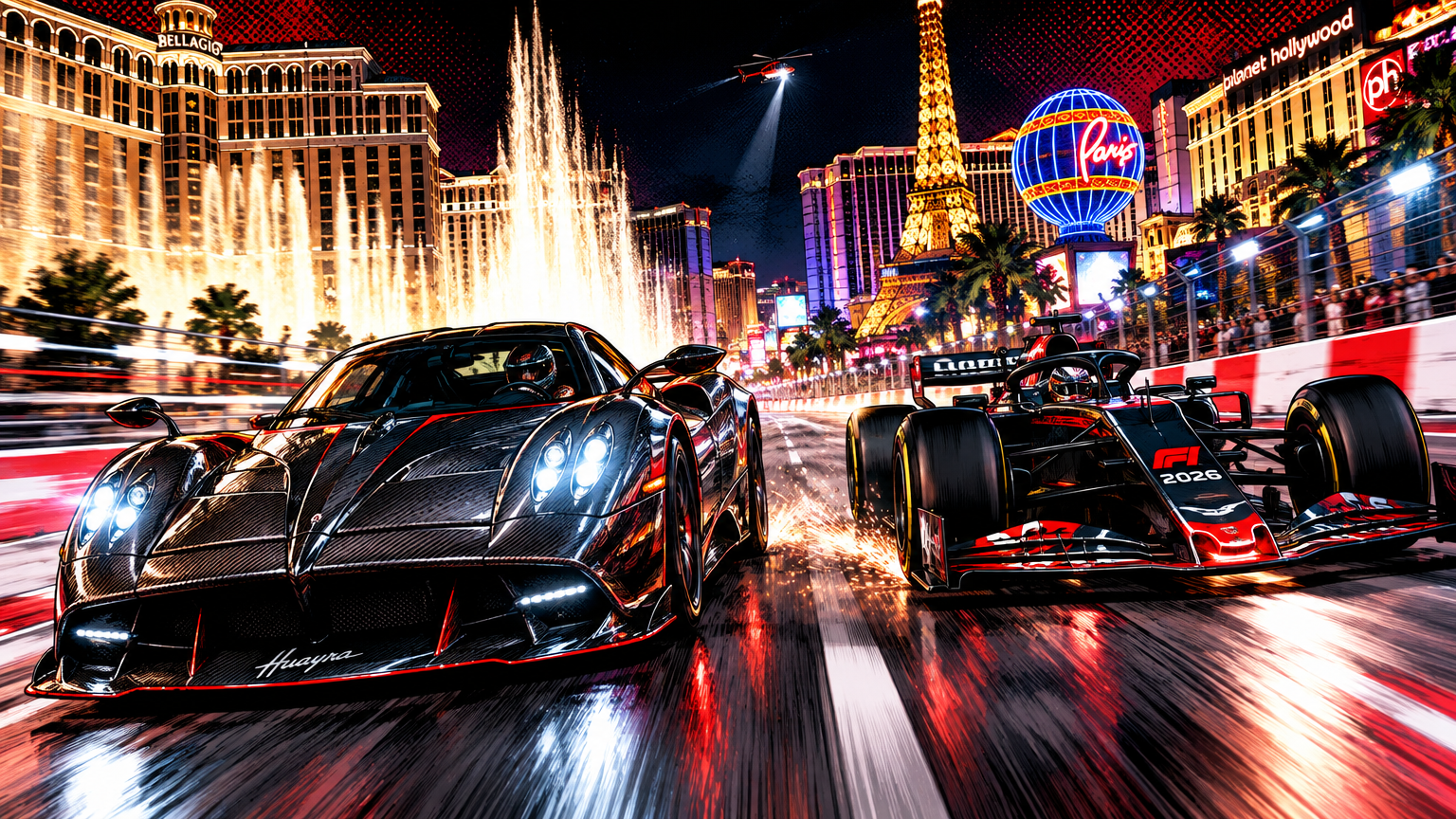
Then the circuit asks its 17 questions. Every corner rewards the car that weighs 768 kg, brakes later, and carries racing tire grip the road car cannot bring on public rubber.
Over one lap the gap would be measured in many seconds. Over 50 laps it would be measured in laps, plural, because the road car would be managing tires, brakes, and heat while the Formula 1 car was just getting started.
No invented lap times here, the way this series never invents them. Just the shape of the result, which the weight, tire, and downforce gaps make unavoidable.
The Huayra would still win the photograph. On the Strip, at night, against that skyline, it might win the photograph against anything on four wheels.
The Final Call
Winner: Formula 1, three rounds to one.
Acceleration went to a power to weight advantage of more than two to one. Cornering and braking went to the car that weighs 768 kg including its driver and uses downforce as both grip and brake.
Top speed went to the Huayra, on its manufacturer claim, with the verified evidence printed right beside the claim so you can judge the win for yourself. That makes the Huayra the third road car in a row in this series to take a round off Formula 1, after the Veyron and the McLaren F1 did it on verified numbers.
Three wins in a row for the challengers in one round, and a clean sweep everywhere else. That is a fair picture of where road cars have got to, and how far away Formula 1 still lives.
And what a challenger it is. A car named after a wind god, built from carbon and titanium by a tiny company in Modena, with flaps that think and bolts with its maker's name etched into them.
Formula 1 may win the fight. But the Pagani Huayra still proves that a road car can be art and engineering in the same breath, still owns the best arrival on the Las Vegas Strip, and still teaches every car that followed it that air is a material you design with, not just something you push through.
There are plenty more cars waiting to pick a fight with Formula 1. Next up: Formula 1 vs. Chevrolet Corvette ZR1: can America's fastest production Corvette, built for a fraction of hypercar money, land a punch the million dollar cars could not?