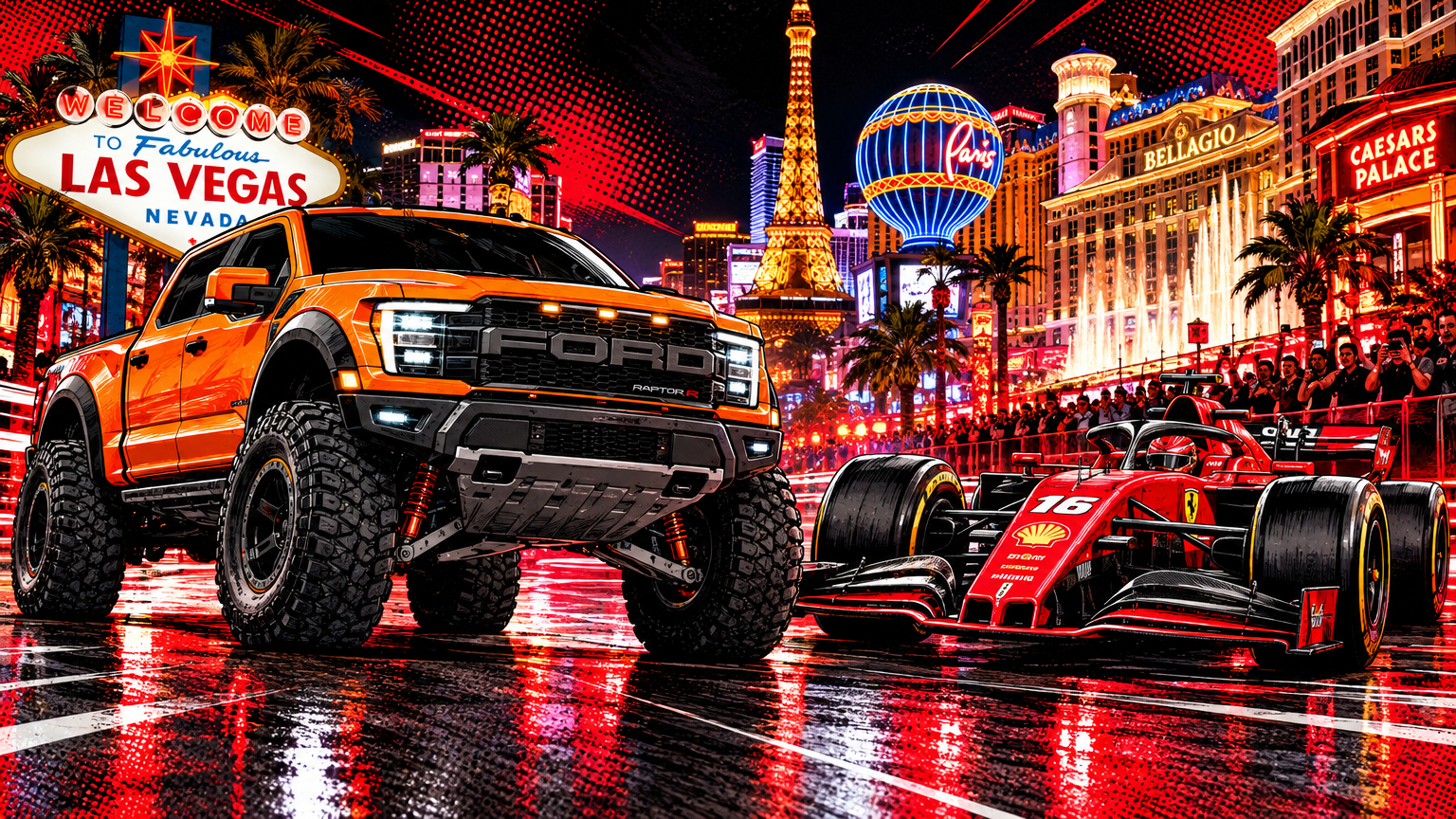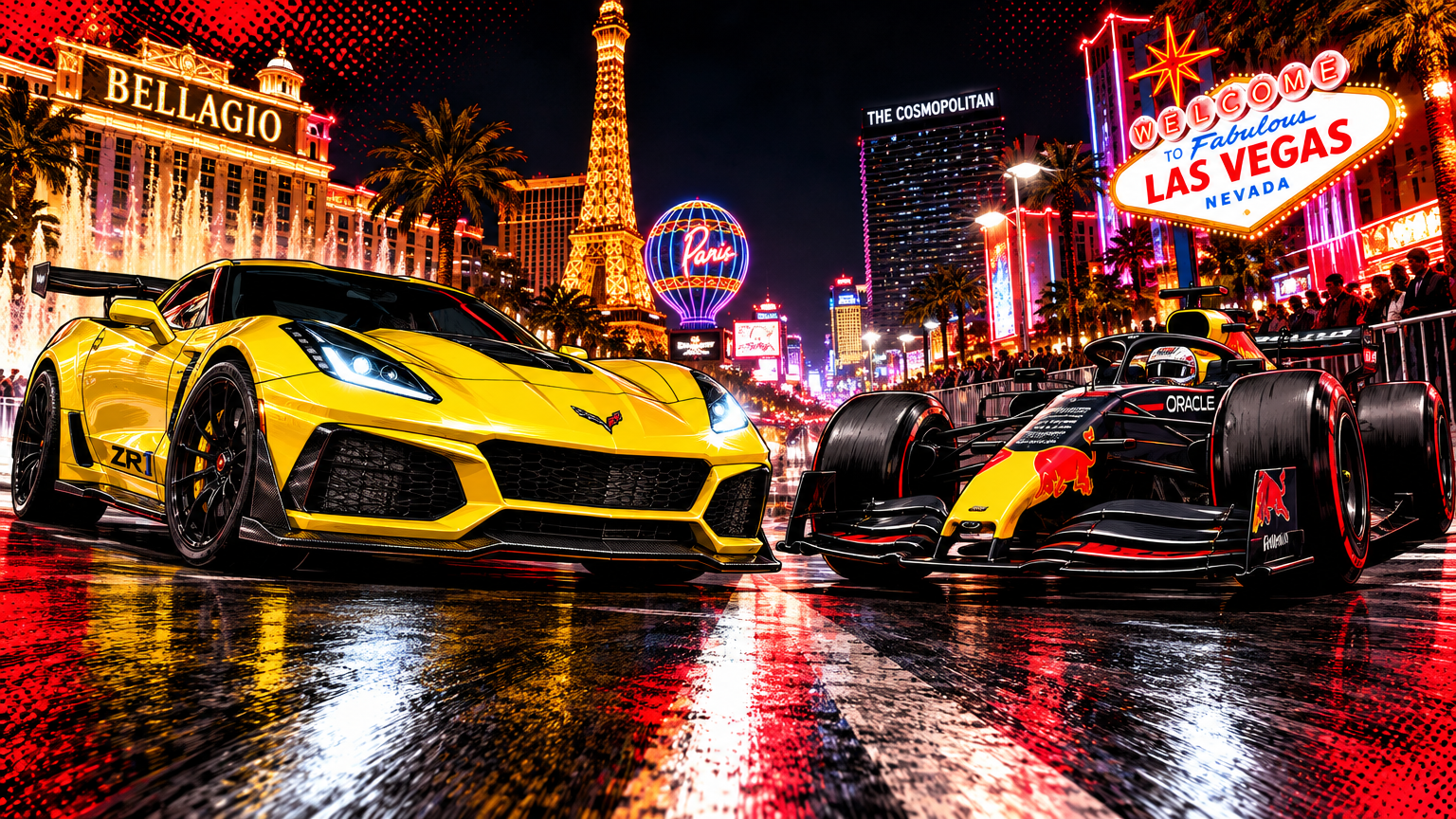
This challenger was built in Kentucky, and it is done being polite about it.
For decades the Chevrolet Corvette was the sports car you bought when you wanted supercar speed without the supercar invoice. Quick, loud, a little rough around the edges, and priced like it was apologizing.
The Corvette ZR1 is not apologizing. It makes 1,064 horsepower, it has run 233 mph on a German test oval with the president of General Motors driving, and it lapped the Nürburgring faster than any American car before it.
What happens if the Chevrolet Corvette ZR1 picks a fight with a Formula 1 car?
What happens is the most American argument this series has had so far. The ZR1 brings a hand built twin turbo V8, a verified top speed that beats every Formula 1 speed trap number in our files, and a starting price that would not cover the options list on some of the cars we have featured.
The Formula 1 car brings more than 1,000 horsepower in a car that weighs 768 kg including its driver, and roughly double the power to weight. Bowling Green, meet the big leagues. Let us score it.
First, Which Chevrolet Corvette ZR1 Are We Talking About?
The ZR1 badge has appeared on several generations of Corvette, so let us pin this one down before the shouting starts.
The family, kept separate the way this series always keeps it:
- The C8 ZR1, our challenger: the current car, introduced for the 2025 model year and carried into 2026. Mid engine, rear wheel drive, twin turbo V8, 1,064 hp. Built at Bowling Green Assembly in Kentucky.
- The ZR1X: the newer hybrid sibling announced for 2026. It adds a front axle electric motor and all wheel drive for a combined 1,250 hp. A different car with a different fight card, so it stays out of this one.
- The C7 ZR1 (2019): the front engine predecessor, supercharged, 755 hp, and a 212 mph two way average at the same Papenburg oval. Respected, mentioned once, not scored.
- The Z06: the ZR1's naturally aspirated sibling, whose 670 hp flat plane crank V8 shares the basic architecture the LT7 was developed from.
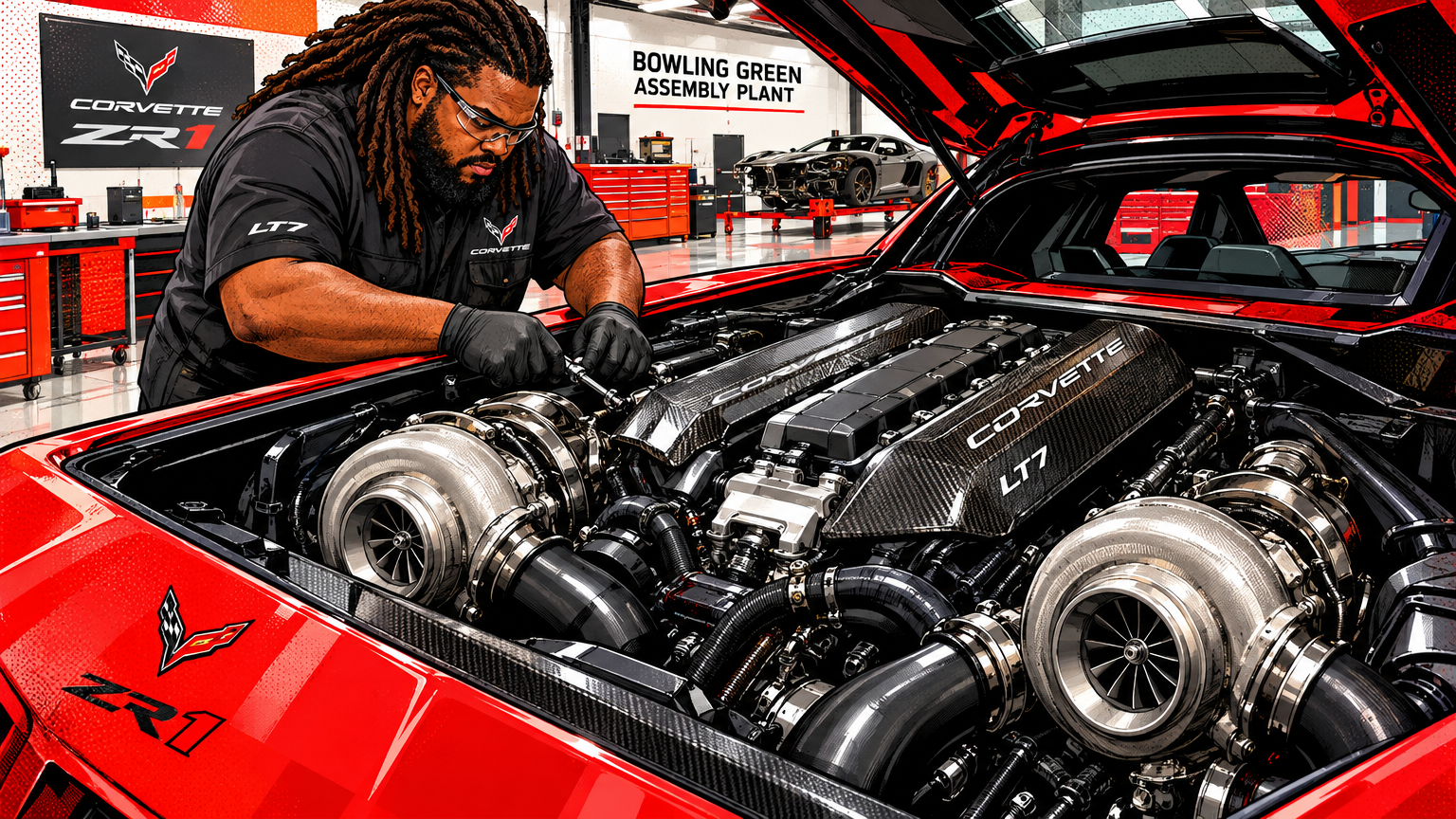
Now the scored car, Chevrolet figures first. The engine is the LT7, a 5.5 litre twin turbocharged dual overhead cam V8 with a flat plane crankshaft, hand assembled at the Performance Build Center in Bowling Green.
It shares the Gemini architecture of the Z06's LT6, but Chevrolet is clear that the team changed or optimized virtually every system for boost rather than bolting turbos onto the existing engine. Unique block castings, forged pistons, a 9.8 to 1 compression ratio, port injection added on top of direct injection, and two 76 mm ball bearing turbochargers mounted to the exhaust manifolds with electronic wastegates.
The result is 1,064 hp at 7,000 rpm and 828 lb-ft of torque at 6,000 rpm, with an 8,000 rpm redline. Chevrolet calls it the most powerful V8 ever produced by an American automaker for a production car, and nobody has shown us a bigger one.
Power runs through a strengthened eight speed dual clutch transmission to the rear wheels only. No electric motors, no battery, no hybrid help. This is a gasoline argument, made loudly.
The rest of the Chevrolet sheet:
- Weight: 3,670 lb dry for the coupe (Chevrolet figure), 3,758 lb dry for the convertible. Dry means no fuel and no fluids, and we will come back to why that word matters.
- Aerodynamics: the available carbon fiber aero package makes more than 1,200 lb of downforce at top speed, the most of any production Corvette. The ZTK Performance Package adds the big rear wing, front dive planes, a hood Gurney lip, underbody strakes, stiffer springs, and Michelin Pilot Sport Cup 2 R tires.
- Brakes: carbon ceramic discs are standard, 400 mm (15.7 in) at the front and 390 mm (15.4 in) at the rear. The front rotors are the largest ever fitted to a Corvette.
- Tires: Michelin Pilot Sport 4S on the standard car, 275 section front and 345 section rear, on 20 inch front and 21 inch rear wheels.
- Price: Chevrolet lists the 2026 ZR1 coupe from $185,000. Hold that number against what is coming in the rounds.
One design detail worth knowing: the coupe's rear deck carries a carbon fiber split window spine, a deliberate nod to the famous 1963 Sting Ray split window. The fastest Corvette ever built still stops to tip its hat to 1963. That is how you do heritage without slowing down.
Chevrolet performance figures, published in December 2024 and labeled as Chevrolet figures: 0 to 60 mph in 2.5 sec in standard form, 2.3 sec with the ZTK package, and the quarter mile in 9.6 sec at 150 mph with ZTK. Chevrolet notes those runs were made on 93 octane pump gas on a surface that was not a prepped drag strip.
Independent tests, kept separate the way this series always keeps them: Car and Driver tested a ZTK car in 2025 and did slightly better, recording 0 to 60 mph in 2.2 sec and the quarter mile in 9.5 sec at 149 mph. The magazine called it the quickest rear wheel drive car it has ever tested, which is a sentence worth reading twice.
And then there are the receipts Chevrolet collected on real tracks. In February 2025 the ZR1 set production car lap records at five American circuits, including Road Atlanta at 1:22.8. In July 2025 it lapped the Nürburgring Nordschleife in 6:50.763 with ZR1 vehicle dynamics engineer Brian Wallace driving, the fastest lap an American manufacturer's car had ever set there, until the hybrid ZR1X beat it by about a second and a half on the same trip.
One more thing about that Nürburgring time, because it teaches you how to read every record list you will ever see. The ZR1's lap sits in the Prototype and Pre-Production category of the official records, not because the car was a prototype, but because the ZR1 is not sold in Europe.
The cars that ran were US production specification with only the safety equipment the track recommends. Record lists have fine print. Now you know where to look for it.
Meet the 2026 Formula 1 Car
Across the garage sits the usual suspect. The 2026 Formula 1 car pairs a 1.6 litre turbocharged V6 with a much bigger electric contribution than the old cars had, the combustion side limited to about 400 kW and the MGU-K allowed up to 350 kW.
Formula 1 describes the total package as more than 1,000 hp, so on headline power the Corvette actually shows up with the bigger number, 1,064 hp against a figure Formula 1 itself only states as four digits and a shrug.
Then you read the second line of the spec sheet. The Formula 1 car's minimum weight is 768 kg, about 1,693 lb, including the driver. The ZR1's dry weight alone is 3,670 lb before a drop of fuel goes in.
Add active aerodynamics at both ends, carbon everything, racing tires that live for one furious hour, and brakes that work like a wall appearing in front of the car, and you have the shape of this fight.
Similar power. Half the weight. Everything that follows is arithmetic.
For the full picture of Grand Prix racing in this city, the Las Vegas Grand Prix hub is where this series keeps its context.
Chevrolet Corvette ZR1 vs. F1: The Numbers
| Category | Chevrolet Corvette ZR1 (2026 coupe) | 2026 Formula 1 Car |
|---|---|---|
| Engine | 5.5 litre twin turbo flat plane crank V8 (LT7) | 1.6 litre turbo V6 hybrid |
| Power | 1,064 hp at 7,000 rpm (Chevrolet) | More than 1,000 hp (Formula 1 figure) |
| Torque | 828 lb-ft at 6,000 rpm | No single published figure |
| Weight | 3,670 lb dry, coupe (Chevrolet) | 768 kg minimum (about 1,693 lb), including driver |
| Power to weight | About 639 hp per tonne, on dry weight | More than 1,300 hp per tonne |
| 0 to 60 mph | 2.3 sec with ZTK (Chevrolet); 2.2 sec (Car and Driver test) | No universal official figure published |
| Top speed | 233 mph (375 km/h), verified two way average, Papenburg 2024 | 353.9 km/h trap, Gasly, 2026 Chinese GP qualifying (FIA) |
| Drive | Rear wheel drive | Rear wheel drive |
| Gearbox | 8 speed dual clutch | Sequential racing gearbox |
| Downforce | More than 1,200 lb at top speed (Chevrolet, carbon aero) | Active front and rear aero, figures vary by team |
| Brakes | Carbon ceramic, 400 mm front / 390 mm rear | Carbon racing brakes |
| Price | From $185,000 (Chevrolet, 2026 coupe) | Not for sale at any price |
| Vegas valet factor | 9/10. You can hand a valet the key, take your passenger to dinner, and drive home on the same tires | 0/10. No passenger seat, no road registration, and it needs a crew to start the evening |
Two lines in that table do all the work. The power line is nearly even, which has never happened this late in the series. The weight line is not even at all, and it never is.
Here is the usable version of the power story, the one you can apply to any window sticker in America. Divide the price by the horsepower:
- Corvette ZR1: about $185,000 divided by 1,064 hp comes to roughly $174 per horsepower.
- The million dollar club in this series: the Pagani Huayra cost about $1.4 million for 730 hp, roughly $1,900 per horsepower, and the Bugatti Veyron's arithmetic was in the same neighborhood.
- The lesson: horsepower gets cheaper as the production line gets longer. Chevrolet builds Corvettes in a factory in Kentucky, and the savings show up in the one column accountants and enthusiasts both read.
And the weight lesson bears repeating, because Chevrolet prints the honest version and many makers do not. Dry weight excludes fuel, oil, and coolant.
Add a full tank, fluids, and a driver, and the car a magazine weighs is always heavier than the car in the brochure. The ZR1's 639 hp per tonne is calculated on its dry weight, the friendliest possible basis, and the Formula 1 car still doubles it.
Round One: Acceleration
Let us give the Corvette its full moment first, because it has earned it. A rear wheel drive production car, on pump gas, running 0 to 60 mph in 2.2 sec in an independent test is absurd. Front engine muscle cars spent fifty years dreaming about traction like this.
The mid engine layout is the trick. The LT7 sits behind the seats, its weight presses on the driven wheels, and the Cup 2 R tires in the ZTK package turn that press into launch. Chevrolet's own 2.3 sec figure with ZTK came on an unprepped surface, which means there was nothing sticky sprayed on the ground to help.
And the quarter mile tells the deeper story. At 9.5 sec and 149 mph in Car and Driver's hands, the ZR1 is not a launch trick that runs out of breath. It is still pulling hard at speeds where most fast cars are negotiating with the wind.
Now the other side of the garage. The Formula 1 car makes similar power and weighs, with its driver aboard, less than half what the Corvette weighs dry. More than 1,300 hp per tonne against about 639 is not a gap, it is a different sport.
Formula 1 publishes no universal 0 to 60 figure, and this series does not invent one. But power to weight this lopsided decides standing starts the same way it decides everything else, and once both cars are moving the Formula 1 car's traction and gearing keep the advantage growing.
Round One to Formula 1. The Corvette takes the consolation prize, and it is a real one: quickest rear wheel drive car Car and Driver has ever tested, full stop.
Round Two: Top Speed
This is the round where the Corvette stops asking permission.
In October 2024, at the Automotive Testing Papenburg oval in Germany, a standard aero ZR1 coupe ran a two way average of 233 mph, 375 km/h, with GM President Mark Reuss driving and an engineer riding along. Five engineers on the team also ran 230 mph or better during the same testing.
Read the fine print on that run and it gets better, not worse. A two way average means the car ran the number in both directions, canceling out any help from wind.
This was not a downhill hero pass or a one way gust reading. Chevrolet certified it the boring, honest way.
GM's conclusion stands as the headline: the fastest speed ever recorded by a car built by an American manufacturer, and at the time unrivaled by any current production car under a million dollars. The ZR1 cost about a fifth of that threshold.
Now line it up against the Formula 1 evidence this series uses, which is speed trap data, measured mid lap at real Grands Prix:
- 2026 trim: Pierre Gasly, 353.9 km/h (about 220 mph), qualifying at the Chinese Grand Prix, per FIA data.
- 2025 at Las Vegas: Yuki Tsunoda, 358.3 km/h (222.6 mph).
- 2024 at Las Vegas: Alex Albon, 368.9 km/h (229.2 mph), the highest through the first three editions of this race.
The Corvette's verified 233 mph sits above every one of them. Yes, there is a fairness note, and this series always prints it: a Formula 1 trap speed is recorded in cornering trim, on a circuit, with a braking zone ahead, not in a dedicated top speed attempt on a banked oval with miles to run.
But a round has to be scored on evidence, and on verified numbers on record the Corvette wins it outright. No claim, no estimate, no asterisk beyond the honest one above.
The Bugatti Veyron and the McLaren F1 took this round on verified numbers earlier in the series. The ZR1 joins them, at about a tenth of the Veyron's inflation adjusted money.
One trade worth knowing if you are shopping: the 233 mph car wore the standard aero package. The ZTK big wing that pins the car down in corners adds drag, so the winged car is the cornering weapon and the clean car is the top speed weapon.
Chevrolet made you pick your superpower. Choose based on where you actually drive.
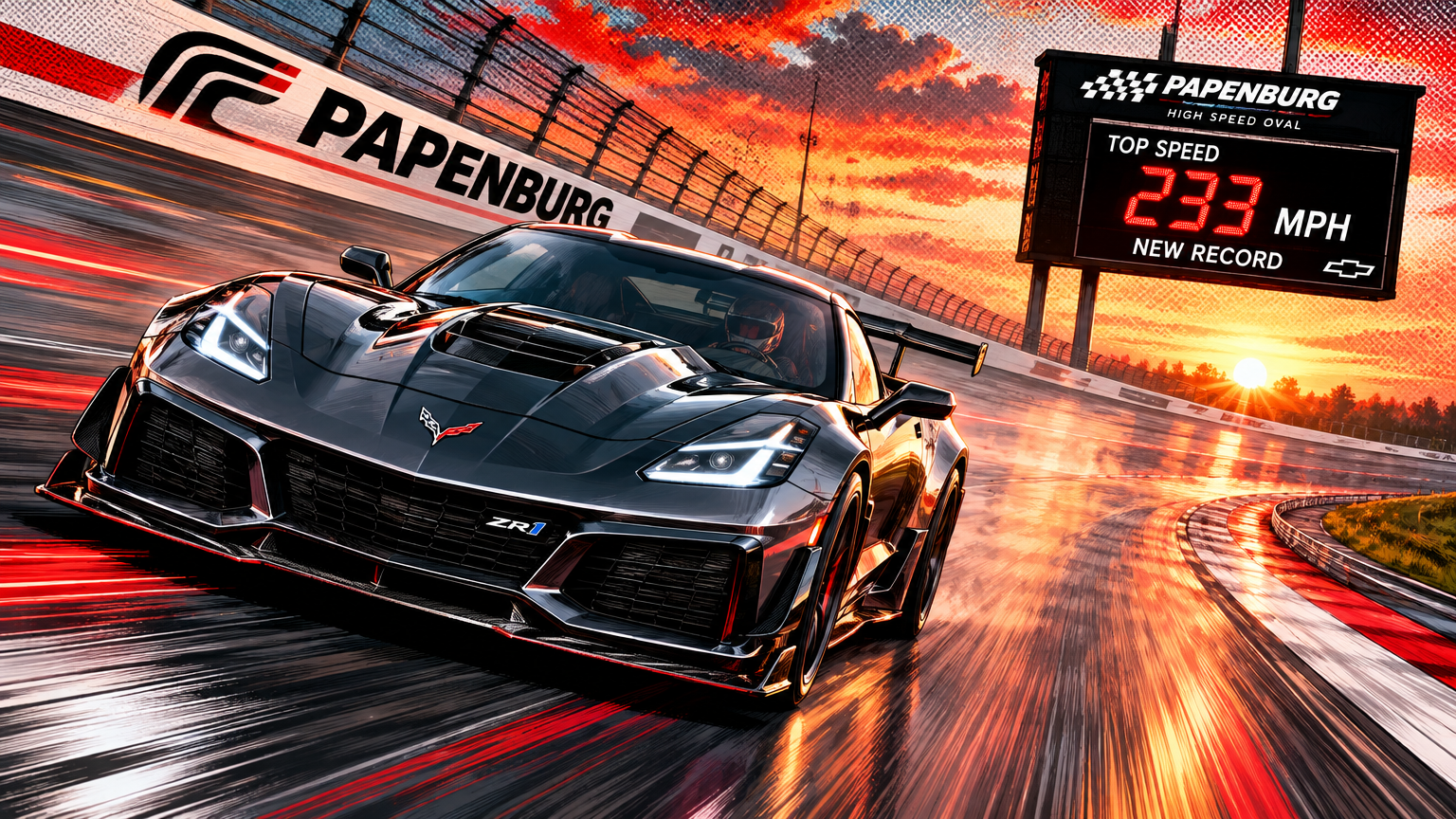
Round Two to the Chevrolet Corvette ZR1, on verified numbers. The crowd in Bowling Green can stand up for that one.


Round Three: Now Add a Corner
Back to arithmetic. Cornering is a weight and tire exam, and the Corvette walks into it carrying 3,670 lb dry on street legal rubber, however serious that rubber is.
Give the ZR1 its due first, because its cornering evidence is genuinely elite for a road car. A 6:50.763 at the Nürburgring puts it in the top ten production car laps ever recorded there, alongside cars from Porsche and Mercedes-AMG that cost multiples of its price.
The ZTK package is a real answer to the grip question too: Cup 2 R tires, stiffer springs, and a wing package making more than 1,200 lb of downforce at speed. This is not a drag car that wanders through turns. It is a track weapon that happens to wear a license plate.
But the Formula 1 car generates its downforce in a different league, weighs 768 kg with the driver, and rides on slick racing tires built for one purpose. Through the 17 corners of the Las Vegas Strip Circuit, the gap is not a car length. It is a different time zone.
The usable lesson here is about tires, because it transfers to your own car. Grip is a system, not a part: tire compound, suspension tuning, aero load, and weight all multiply together. The ZR1's Nürburgring time came from Chevrolet tuning all four as one package, which is exactly why the ZTK box is worth ticking if corners are your hobby.
Round Three to Formula 1. The Corvette's lap times embarrass million dollar cars. They do not embarrass Formula 1, and nothing on a license plate does.
Round Four: Braking
Chevrolet did not phone this round in. The ZR1's carbon ceramic brakes are the biggest ever fitted to a Corvette, 400 mm front rotors built with a manufacturing process Chevrolet developed to cut rotor temperatures and stretch durability on track.
The proof figure Chevrolet publishes is the fun one: the ZR1 accelerates from 80 mph to 200 mph and brakes back to 80 mph in 24.5 sec. Think about what that includes. A full run to 200, then shedding 120 mph, all inside half a minute, and the brakes are built to do it repeatedly.
That durability point matters more than the single stop, and it is the ownership lesson in this round. Carbon ceramic brakes earn their money on lap fifteen, not lap one: steel brakes fade as heat builds, carbon ceramics keep their bite. Budget for them like the consumable they are, because replacement rotors are priced like jewelry, and you will never go back.
The Formula 1 car still wins the round, and it is not close. Carbon racing brakes on a 768 kg car, helped by aerodynamic drag and regenerative braking from the MGU-K, stop with a violence no road car can legally imitate. Weight is the whole story again: stopping 768 kg is a smaller job than stopping a Corvette, every single time.
Round Four to Formula 1. The ZR1 brings the best brakes in Corvette history. Formula 1 brings physics with a head start.
So, Does the Chevrolet Corvette ZR1 Win Anything?
Plenty, and let us stack it up properly:
- A round, on verified numbers. The 233 mph two way average beats every Formula 1 trap figure in this series. It joins the Veyron and the McLaren F1 as a verified top speed winner.
- The value championship. Roughly $174 per horsepower, built in Kentucky, with a warranty. The Pagani Huayra it follows in this series cost about eight times as much for less power.
- The home crowd trophy. Fastest car ever built by an American manufacturer, five US circuit records in one tour, and the fastest American lap at the Nürburgring in its class at the time it was set.
- The daily life round. Two seats, a roof panel you can remove, luggage room, air conditioning, and a valet can park it. The Formula 1 car cannot take you to dinner. The ZR1 can, at 233 mph worth of bragging rights per appetizer.
That is not a consolation list. That is the résumé of the strongest challenger this series has seen from the working side of the price chart.
What Would Happen on the Las Vegas Strip Circuit?
The Strip Circuit is 6.201 km, about 3.85 miles, with 17 turns and a roughly 2 km straight down the Strip itself. Picture the ZR1 unleashed there on a November night.
Down that straight, the Corvette is in its element. It would stretch toward the tall end of its speed range with the Bellagio fountains on one side and the whole skyline lit up, and on trap speed evidence alone it would post a number in the same conversation as the Grand Prix cars.
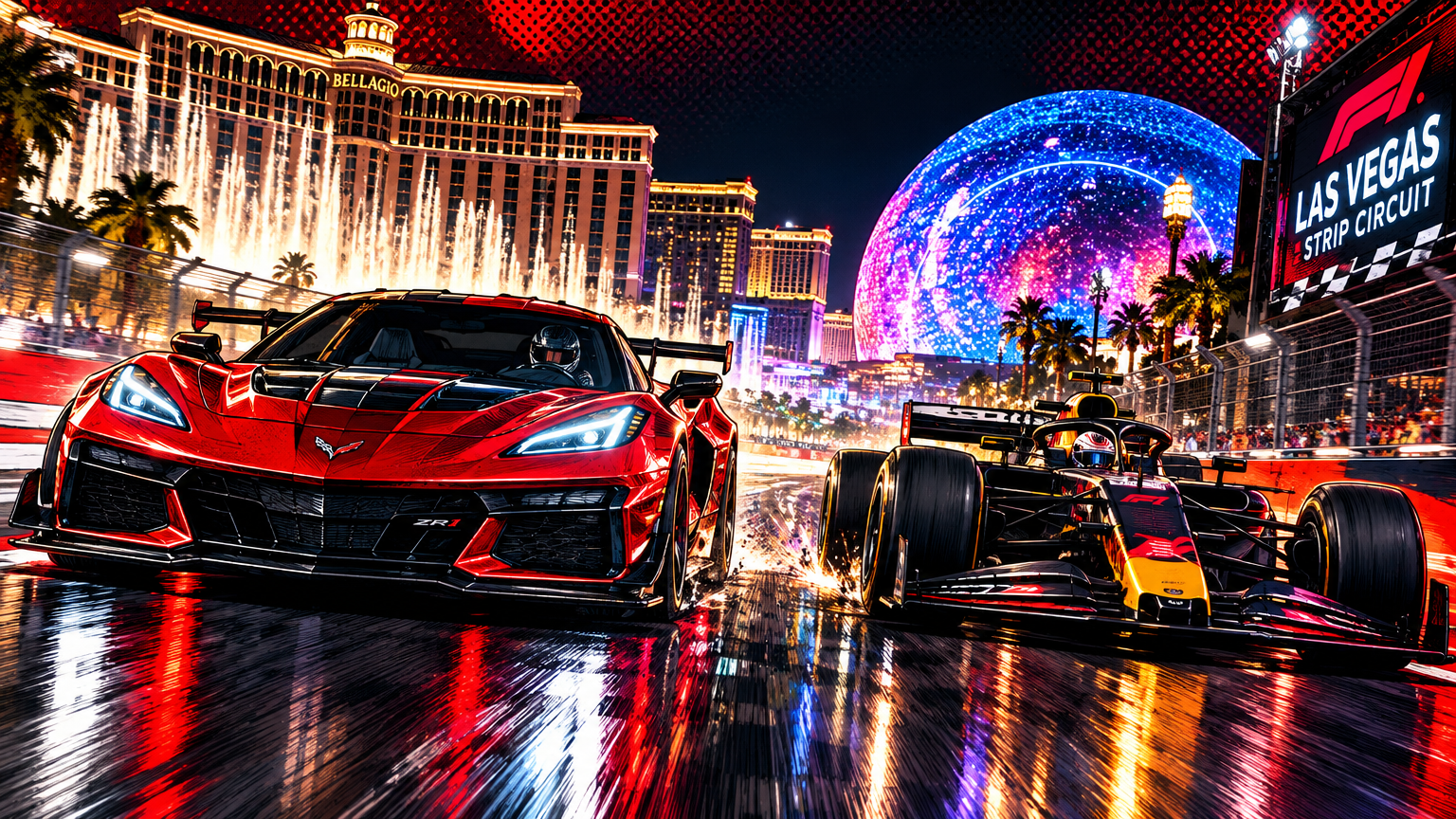
Then come the braking zones and the 17 corners, and the weight bill arrives. Every stop asks the Corvette's giant brakes to haul down twice the mass. Every corner asks street compound tires to do a racing slick's job.
Over one lap the gap would be many seconds. Over the Grand Prix distance of 50 laps it would be laps, plural, as the road car managed tires, brakes, and heat while the Formula 1 car settled into its working rhythm.
No invented lap times here, the way this series never invents them. Just the shape of the result, which the weight and tire gaps make unavoidable, and one honest footnote: on the straight, for a few glorious seconds, the Kentucky car would not be embarrassed at all.
The Final Call
Winner: Formula 1, three rounds to one.
Acceleration went to a power to weight advantage of more than two to one. Cornering and braking went to the car that weighs 768 kg including its driver and treats downforce as both grip and brake.
Top speed went to the Corvette, on verified numbers, making the ZR1 the fourth straight challenger in this series to take a round off Formula 1, and the third to take this round on evidence rather than claims. It did it for $185,000, which might be the most Corvette sentence ever written.
That is the real story of this matchup. The gap between a Formula 1 car and the best road car America has ever built is now measured in weight and tires, not in courage or power.
Bowling Green closed every gap it could close. The ones left are the ones physics keeps.
Formula 1 may win the fight. But the Chevrolet Corvette ZR1 still holds the highest verified top speed in this entire series, still flies the flag for the hand built American V8 at 1,064 horsepower, and still proves you do not need a million dollars to make a Formula 1 car check its mirrors on a straight.
There are plenty more cars waiting to pick a fight with Formula 1. Next up: Formula 1 vs. Mercedes-Benz 300 SL Gullwing: the doors go up, the legend is seventy years old, and in 1954 this Mercedes was the fastest production car on Earth. Can the original supercar still land a punch?