Las Vegas is being called everything wrong with modern society.
Overpriced. Overbuilt. Overhyped. A place where you pay more, get less, and barely talk to a human while doing it.
But here is the uncomfortable question most people are not asking.
Is Las Vegas actually broken, or is it just exposing what the rest of the country is quietly becoming?
In this breakdown, we are going to challenge the outrage, test the nostalgia, and uncover whether Vegas is the problem or the preview of what comes next.
Las Vegas Became the Perfect Symbol of a Bigger Problem
Las Vegas has always sold a fantasy. That part is not new.
What is new is how many people now look at the city and see something darker. They do not just see bright lights, giant hotels, and wild weekends. They see a place that feels overpriced, less personal, and built to squeeze every last dollar out of regular people.
That is what makes the question behind this article so powerful. Is Las Vegas really everything that is wrong with society? Or is Las Vegas simply the loudest example of what is already happening across America?
The argument is clear. It presents the case that Las Vegas has turned into a machine. A place where charm gets demolished, service gets replaced by kiosks, prices keep rising, and the middle class gets pushed further out. In that view, Vegas is no longer a dream destination. It is a warning sign.
But that is only one side of the story. Las Vegas did not invent greed. It did not invent corporate consolidation. It did not invent hidden fees, weaker service, or the slow death of human connection in the name of efficiency. What Vegas does better than almost anywhere else is expose these problems in a way people cannot ignore.
That is the real tension. Maybe Las Vegas is not everything wrong with society. Maybe it is simply the clearest mirror of it.
The Case Against Las Vegas
The City That Got Too Expensive to Enjoy
Start with the money. That is where most complaints begin, and for good reason.
Las Vegas built its reputation on value. Cheap rooms. Free drinks. Affordable food. A place where a regular person could feel rich for a weekend without going broke.
That version of Vegas is fading fast.
Today, the advertised price is rarely the real price. A room might show up at $49 a night, but by the time you add resort fees, taxes, parking, and small add-ons, that same room can easily double. What looks like a deal becomes a trap.
It does not stop there. Visitors are paying premium prices for basic things. Bottled water, quick meals, and simple conveniences now feel inflated. Even parking at your own hotel can cost you daily.
From a business standpoint, this is not random. It is pricing strategy. Lower the entry price to pull people in, then increase total spend once they are committed. It works because most people focus on the first number they see, not the final bill.
The problem is what that strategy does to perception. When customers feel tricked, trust disappears. And once trust is gone, the experience starts to feel like a transaction instead of an escape.
The Death of the "Fun for Regular People" Version of Vegas
Las Vegas was never just about gambling. It was about the experience around it.
There was a time when you could walk the Strip and be entertained without spending much at all. Free shows. Cheap buffets. Low-cost games. Simple fun that made the trip feel worth it even if you lost money at the tables.
That layer of value is disappearing.
Affordable restaurants are closing or raising prices. Buffets are shifting toward premium experiences. Free attractions are being replaced with retail space or paid access. The city is slowly removing the low-cost entry points that made it accessible.
From a corporate perspective, this makes sense. High-end customers spend more. Premium experiences have better margins. Public companies are not rewarded for serving budget travelers. They are rewarded for maximizing revenue per visitor.
But that shift comes with a tradeoff. The more Vegas chases high spenders, the more it risks losing the wide base of visitors who gave the city its energy in the first place.
When the average person no longer feels like they can participate, the entire atmosphere changes. What was once a shared playground starts to feel exclusive, controlled, and less fun.
Automation Replacing Hospitality
One of the biggest changes is not what you see. It is what you feel when you arrive.
Las Vegas used to greet you with people. Front desk staff. Concierge desks. Employees who set the tone for your entire stay. That first interaction mattered.
Now, in many places, you are greeted by a screen.
Self-check-in kiosks are becoming standard. Staffing is tighter. Lines are longer. And if you want faster service, there is often a fee attached to it.
On paper, automation is supposed to improve efficiency. In reality, it often removes the human element that made the experience enjoyable in the first place.
From a business lens, the motivation is clear. Labor is expensive. Technology is scalable. Reducing staff while maintaining volume increases profit margins.
But here is the problem. Hospitality is not just a system. It is a feeling. When you strip away human interaction, you strip away part of the value people are paying for.
That creates a disconnect. Guests are paying more, but feeling less taken care of. And that gap is where frustration grows.
The City as a Corporate Machine
Behind all of these changes is one major shift. Ownership.
Las Vegas used to be a patchwork of independent operators competing for attention. That competition drove better deals, more creativity, and stronger customer experiences.
Today, a large portion of the Strip is controlled by a small number of major players.
To the average visitor, it still feels like there are endless choices. Different hotels. Different brands. Different apps offering different deals.
But in many cases, those choices lead back to the same corporate ownership.
This creates what looks like competition on the surface, but operates more like a coordinated system underneath. Pricing strategies align. Fees become standard. Experiences start to feel similar.
From a business perspective, this is powerful. Consolidation increases control. Control increases pricing power. Pricing power increases profits.
From a customer perspective, it feels like the options are shrinking, even when the number of buildings keeps growing.
That is the core argument being made. Las Vegas did not just change. It was optimized. And in that optimization, something important may have been lost.
But Was Old Vegas Really Better?
Nostalgia Can Leave Out the Ugliest Truths
It is easy to look back and say Vegas used to be better. Cheaper. Friendlier. More fun.
But that version of the story is incomplete.
Old Las Vegas was not just neon lights and cheap buffets. It was heavily tied to organized crime, underground deals, and a system that operated in the shadows. The experience may have felt more personal, but the foundation behind it was far from clean.
That matters because nostalgia tends to filter reality. People remember how they felt, not how the system actually worked. They remember being greeted by name, not the environment that made that possible.
From a business standpoint, the old model was not sustainable at scale in today’s world. Regulation, public markets, and institutional ownership changed the rules. What replaced it may feel colder, but it is also more structured and transparent in certain ways.
So the real question is not whether old Vegas felt better. It is whether that version of Vegas could even exist today under modern economic and legal pressures.
Vegas Has Always Sold Fantasy
At its core, Las Vegas has always been about selling an escape.
Whether it was the Sin City era, the mega resort era, or today’s luxury experience, the product has always been the same. Step outside your normal life. Spend freely. Live differently for a short period of time.
The difference now is not the existence of the fantasy. It is how it is packaged and priced.
In earlier decades, the illusion was supported by lower costs and more accessible experiences. Today, that same illusion is often wrapped in premium pricing, upsells, and layered fees.
From a strategic perspective, this is simply evolution. As demand grows and ownership consolidates, the business model shifts toward higher-margin customers. The fantasy does not disappear. It just becomes more expensive to access.
That leads to a hard realization. Vegas did not suddenly become something different. It revealed what it has always been, just with a new pricing structure.
Was "Family-Friendly" Vegas Ever Fully Real?
The 1990s introduced a different version of Las Vegas. One that welcomed families, promoted themed resorts, and created a broader appeal.
It felt more inclusive. More affordable. More balanced.
But even that era was driven by strategy.
Operators were expanding the customer base. Bringing in middle-class families created volume. Volume created revenue. The themed experiences were not just creative decisions. They were calculated moves to increase market share.
And for a time, it worked extremely well.
However, as the market matured and ownership consolidated, the incentive structure changed. Instead of maximizing volume, the focus shifted to maximizing spend per visitor.
That shift explains much of what people are reacting to today.
The "family-friendly" version of Vegas was not a permanent identity. It was a phase. A highly effective one, but still a phase built on business logic.
Understanding that helps reframe the debate. The issue may not be that Vegas lost its identity. The issue may be that its current identity is less appealing to the average person than the one that came before it.
The Biggest Claim: Is Vegas a Warning for America?
The Argument That Vegas Is Not Unique Anymore
This is where the conversation gets more serious.
This argument does not just criticize Las Vegas. It uses Vegas as an example of something much bigger. The idea is simple. The same patterns people complain about in Vegas are now showing up everywhere else.
Hidden fees are not just a Vegas problem. Airlines do it. Hotels across the country do it. Even basic services now come with layers of added costs that were once included.
Service quality is not just declining in Vegas. Self-checkout lines, understaffed businesses, and app-based interactions are becoming normal across multiple industries.
Pricing pressure is not unique either. Food, housing, travel, and entertainment are all becoming more expensive while delivering less perceived value.
From a business perspective, this is not accidental. It is a response to incentives. Public companies are driven by growth, margins, and shareholder expectations. That pressure leads to the same strategies being applied across different sectors.
Las Vegas just happens to concentrate all of these strategies in one place, making them easier to see.
Las Vegas as America Turned All the Way Up
If you want to understand a system, you study the most extreme version of it.
That is what Las Vegas represents.
Everything is amplified. Pricing tactics are more aggressive. Marketing is more direct. Experiences are more intense. The gap between high-end customers and everyone else is more visible.
This amplification creates clarity.
In a typical city, these changes happen slowly and quietly. In Las Vegas, they happen loudly. They are impossible to ignore because the entire environment is built to capture attention.
That makes Vegas useful as a case study.
It shows what happens when efficiency, scale, and profit optimization are pushed as far as they can go. It reveals both the strengths and the weaknesses of that approach.
The strength is obvious. Massive revenue, global recognition, and constant reinvestment.
The weakness is just as clear. A growing perception that the experience is becoming less authentic and less rewarding for the average person.
If the Model Works, Why Would Corporations Stop?
This is the most uncomfortable part of the argument.
If people continue to visit, spend money, and accept the experience, then from a business standpoint, nothing is broken.
Companies respond to behavior. Not complaints.
If demand remains strong, there is no financial reason to lower prices, increase staffing, or remove fees. In fact, the opposite is true. There is an incentive to continue pushing the model further.
This creates a feedback loop.
Customers feel frustrated, but they still participate. Companies see consistent revenue, so they continue optimizing for profit. Over time, the experience shifts further in the same direction.
Las Vegas makes this loop visible.
This scenario is framed as a warning. Not just about Vegas, but about what happens when consumer behavior does not change in response to declining value.
Whether that warning is accurate depends on one key factor. Will people actually change how they spend their money, or will they continue to accept the tradeoff?
The Soul Problem: What Exactly Did Vegas Lose?
The Disappearance of Charm
When people say Vegas has changed, they are usually not talking about numbers. They are talking about a feeling.
There was a time when the city felt unpredictable. Each property had a personality. Each experience felt slightly different. You could walk from one end of the Strip to the other and feel like you were stepping into entirely new worlds.
That sense of charm is harder to find today.
Many properties now feel standardized. Themes have been stripped down. Unique attractions have been replaced with retail, premium dining, and controlled experiences designed to maximize revenue per square foot.
From a business perspective, this shift is logical. Consistency is easier to manage. Proven concepts reduce risk. High-margin uses of space outperform free or low-cost attractions.
But that logic comes at a cost.
When everything starts to feel optimized, it also starts to feel similar. And when it feels similar, it loses the magic that made people want to explore in the first place.
Human Warmth Versus Frictionless Efficiency
Efficiency has become the priority across the entire experience.
Check-ins are automated. Orders are placed through screens. Interactions are reduced to transactions. The system moves faster, at least in theory.
But speed is not the same as value.
Hospitality has always been built on human interaction. A conversation at the front desk. A recommendation from a staff member. A moment where a visitor feels welcomed instead of processed.
When those moments disappear, something important disappears with them.
From a cost standpoint, reducing staff makes sense. Labor is one of the largest expenses in any service business. Technology allows companies to maintain volume with fewer people.
From a customer standpoint, the tradeoff is clear. You may get a faster system, but you lose the connection that made the experience memorable.
And when the emotional value drops, the entire trip starts to feel less worth the price.
Local Flavor Versus Sterile Luxury
Las Vegas has always balanced two identities. Local character and global spectacle.
Today, the scale is tipping heavily toward spectacle.
Massive resorts. Luxury developments. High-end dining. Global brands. Everything looks impressive, but not everything feels personal.
The more the city builds for scale, the more it risks losing the small details that made it feel alive.
Local businesses, independent spots, and unique experiences still exist, but they are less visible compared to the dominant corporate presence on the Strip.
From a strategic standpoint, large-scale luxury projects attract high-value customers and global attention. That is the goal.
But from an experience standpoint, it can create distance. Visitors feel like they are inside a polished system rather than inside a real, evolving city.
That is the core of the soul problem.
Vegas did not stop being impressive. It may have stopped feeling as personal.
The Sphere, Mega Projects, and the New Vegas
Innovation or Expensive Distraction?
The modern version of Las Vegas is defined by scale. Bigger builds. Bigger budgets. Bigger headlines.
The Sphere is the clearest example.
It is visually impressive. Technologically advanced. Designed to create an experience that cannot be replicated anywhere else. On the surface, it represents the future of entertainment.
But the business reality is more complicated.
Projects at this scale require constant demand. They require consistent sellouts, premium pricing, and limited downtime. When those conditions are not met, the numbers become difficult to sustain.
That raises an important question. Who are these projects really built for?
From an investment standpoint, they are built to attract attention, drive tourism, and justify massive capital deployment. From a visitor standpoint, they are positioned as must-see experiences.
But if the experience is too expensive, too limited, or too inconsistent, it risks becoming something people admire from a distance instead of something they actively participate in.
That is the tension. Innovation creates buzz, but it does not always create long-term value for the average customer.
Bigger Is Not Always Better
Las Vegas has always believed in going bigger.
That strategy worked for decades. Larger resorts meant more rooms, more entertainment, and more reasons for people to stay longer and spend more.
Now the equation is changing.
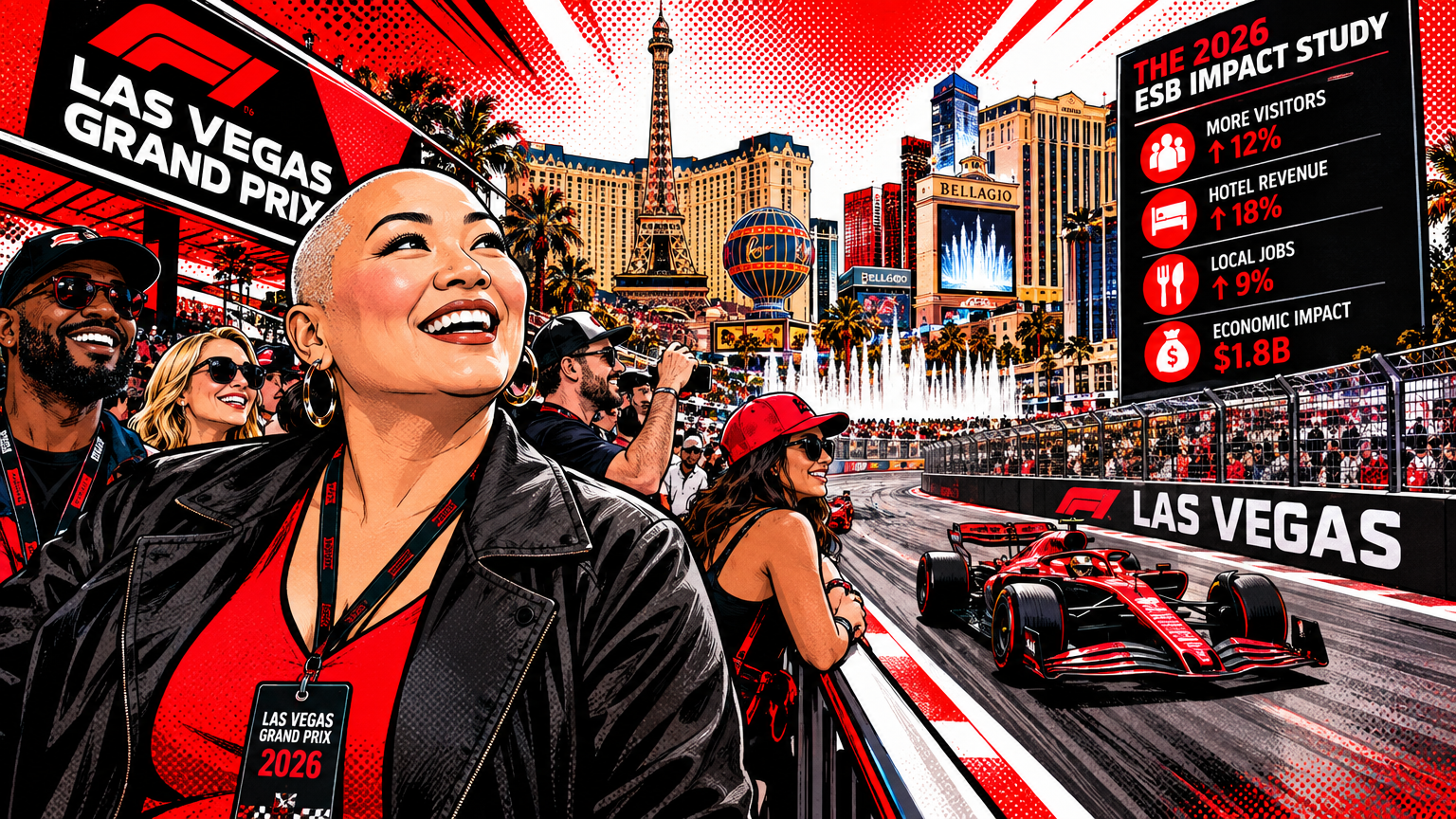
Massive projects like Formula 1 infrastructure, new stadiums, and large-scale developments are designed to attract global attention and high-value visitors. They generate headlines and bring in premium dollars.
But they also shift the focus.
Instead of building experiences for everyone, the city increasingly builds experiences for specific segments. High spenders. Corporate events. Luxury travelers.
From a business perspective, this is efficient. Fewer customers generating more revenue is a powerful model.
From a broader perspective, it narrows the audience.
When everything is designed for the top tier, the middle begins to feel like an afterthought. And when the middle feels pushed out, the overall energy of the city changes.
Building for Headlines Versus Building for Experience
There is a difference between what looks impressive and what feels valuable.
Las Vegas continues to build projects that dominate headlines. Multi-billion-dollar venues. High-profile events. Large-scale developments that signal growth and ambition.
But not every headline translates into a better experience for visitors or locals.
Some projects create congestion. Some increase costs. Some shift resources away from maintaining existing properties and services.
From a strategic standpoint, headline projects are powerful. They keep the city relevant. They attract global attention. They create a sense of momentum.
But long-term value is built on consistency.
If the everyday experience declines while the headline projects expand, the gap becomes noticeable. Visitors may come once to see the new attraction, but they may not return if the overall experience feels weaker.
That is the risk.
Las Vegas is investing heavily in what is new. The question is whether it is investing enough in what made people come back in the first place.
The Other Side: Why People Still Keep Coming
Vegas Still Does Things No Other City Can Do
For all the criticism, one fact remains. Las Vegas still delivers a level of concentration that few cities in the world can match.
Entertainment, dining, nightlife, events, and spectacle are all packed into a single, highly walkable corridor. You can see a major show, eat at a top restaurant, and experience multiple environments in a single night.
That density creates value.
From a business perspective, it is a powerful advantage. Visitors can justify higher costs because they are getting access to a wide range of experiences without needing to travel far.
Even if individual parts of the experience feel overpriced, the overall package can still feel unique.
That is why demand continues. Vegas is not just selling individual products. It is selling access to an entire ecosystem in one place.
The City Remains a Freedom Machine for Many People
At its core, Las Vegas still offers something people cannot easily find in their everyday lives.
Freedom.
The ability to step outside routine. Stay up late. Spend differently. Make decisions without the usual constraints. That appeal has not disappeared.
For many visitors, the rising costs are simply part of the tradeoff. They are not looking for efficiency or value in the traditional sense. They are looking for an experience that feels separate from normal life.
From a strategic standpoint, this is why the model continues to work.
As long as enough people value that freedom, they will accept higher prices, added fees, and reduced service. The emotional payoff still outweighs the financial cost for a large segment of visitors.
That is what keeps the system moving.
Not All of Vegas Is Dead
It is also important to recognize that the entire city has not moved in the same direction.
While the Strip continues to evolve toward large-scale, high-margin experiences, other parts of Las Vegas still offer value, character, and local identity.
Off-Strip locations, independent businesses, and certain legacy properties continue to operate differently. They serve a different audience and often deliver a more grounded experience.
From a business perspective, this creates opportunity.
As the main corridor becomes more expensive and more standardized, alternative areas can attract visitors looking for something more authentic or more affordable.
This suggests that the "soul" of Vegas may not be gone. It may have shifted.
For visitors willing to explore beyond the obvious, the city can still deliver moments that feel real, personal, and worth the trip.
The challenge is visibility. The larger and louder the corporate layer becomes, the harder it is for those smaller experiences to stand out.
So, Is Las Vegas Really Everything That's Wrong with Society?
The Case for Yes
If you look at the trends, it is not hard to build the argument.
Prices rising faster than value. Fees layered on top of fees. Service reduced while costs increase. Ownership concentrated into fewer hands. Experiences designed to extract more money from fewer people.
Las Vegas shows all of it, clearly and aggressively.
From a business lens, this is what happens when optimization goes too far in one direction. Every lever gets pulled toward revenue. Every system gets tightened for efficiency. Every decision gets measured by return.
That creates strong financial performance. It can also create a weaker customer experience for a large portion of the market.
When visitors start to feel like they are being managed instead of welcomed, the perception shifts. The city no longer feels like an escape. It feels like a system designed to maximize spend.
In that sense, Las Vegas becomes a symbol. Not just of entertainment, but of what happens when business priorities fully override experience.
The Case for No
At the same time, it is important to stay grounded.
Las Vegas did not create these trends. It reflects them.
Airlines use similar pricing strategies. Hotels across the country have adopted resort-style fees. Restaurants are raising prices. Automation is replacing human interaction in multiple industries.
What makes Vegas different is visibility.
The city concentrates these patterns in one place and amplifies them. That makes it easier to notice, but it does not make it unique.
From that perspective, blaming Las Vegas alone misses the bigger picture. The same economic forces are shaping experiences across the entire country.
Vegas is simply operating at the extreme end of those forces.
The Real Answer
The most accurate answer sits somewhere in the middle.
Las Vegas is not everything that is wrong with society. But it is one of the clearest examples of where certain trends can lead.
It shows what happens when consolidation reduces competition. When pricing strategies become more aggressive. When efficiency replaces connection. When the focus shifts from serving many to maximizing a few.
At the same time, it still delivers experiences that draw millions of visitors every year. It still creates moments people cannot easily replicate anywhere else.
That is what makes the debate so complex.
Las Vegas is both a success story and a warning sign.
Which one it becomes in the future depends on a simple but difficult question. Will people continue to accept the tradeoffs, or will they start demanding something different with their time and their money?
| Core Issue | Old Vegas | New Vegas | Bigger Social Question |
|---|---|---|---|
| Pricing | Low-cost rooms, buffets, freebies, and affordable fun | Higher fees, added charges, and premium-priced basics | Are companies raising costs while giving people less in return? |
| Hospitality | Human interaction, personal service, and memorable check-ins | Kiosks, understaffing, and automated guest experiences | Is convenience replacing the human connection people actually value? |
| Competition | More independent operators competing for attention | Greater ownership concentration and less real choice | What happens when fewer corporations control more of the experience? |
| Entertainment | Free attractions, themed fun, and broad public access | Premium experiences, headline projects, and paid exclusivity | Is entertainment being redesigned for high spenders instead of everyone? |
| Identity | Distinct themes, charm, and memorable personality | Sleeker, more polished, but often more uniform and less personal | Does growth eventually strip places of the character that made them special? |
This table simplifies the article’s central comparison. It shows how Las Vegas changed from a place built around broad access and personality into a more optimized, expensive, and corporate-driven experience, while also raising the larger question of whether the same shift is happening across society as a whole.
Vegas Is Not the Problem
Las Vegas did not wake up one day and become something new. It evolved in the direction the incentives pushed it.
More consolidation. Higher margins. Bigger projects. Less reliance on the average visitor. More focus on high spenders. From a business standpoint, the logic is consistent.
What changed is how that logic feels to the people experiencing it.
For some, Las Vegas still delivers exactly what they want. Scale, spectacle, and the freedom to step outside normal life. For others, it feels like the value has shifted too far. The cost is higher, the experience is thinner, and the connection is weaker.
That is why the question matters.
Las Vegas may not be everything that is wrong with society. But it does a better job than almost any city of exposing the tradeoffs that come with modern business at scale.
It shows what happens when efficiency outpaces experience, when growth outpaces character, when the system works financially but starts to feel different emotionally.
And that leads to the final point.
If people keep showing up, spending money, and accepting the experience, then the model will continue. Not just in Las Vegas, but everywhere.
Las Vegas is not just a destination. It is a signal.
The real question is whether anyone is willing to respond to it.