The Money Is in the Midweek Calendar
Las Vegas entered 2026 with a clear business play: use a loaded trade-show calendar and a newly renovated convention center to put more paying customers in hotel rooms from Sunday through Thursday.
The verified numbers make the position clear. The Las Vegas Convention and Visitors Authority said the Las Vegas Convention Center was on pace to host as many as 48 trade shows and 1.23 million trade-show attendees in 2026, up from approximately 1.06 million in 2025. That is roughly a 16% increase at the city’s flagship convention property.
This is not evidence of a record year for the entire Las Vegas tourism market. It is evidence that the convention segment is providing leverage when leisure demand faces pressure. Las Vegas welcomed 38.5 million visitors in 2025, down 7.5% from 2024. Convention attendance, by comparison, held near 6 million. That made group business a stabilizer, not a sideshow.
The distinction matters. In 2025, annual hotel occupancy fell to 80.3%, the average daily room rate declined to $183.52 and revenue per available room dropped to $147.30. Yet Las Vegas still filled rooms at a rate well above the 62.3% national average cited by the LVCVA. The city’s scale remains unmatched, with approximately 150,300 hotel rooms and nearly 15 million square feet of meeting and convention space.
Why Convention Visitors Carry Extra Weight
Convention traffic attacks the soft part of the weekly operating cycle. Leisure customers tend to concentrate around weekends and major events. Trade shows build compression during the week, when hotels, restaurants, transportation companies and entertainment operators have more inventory to sell.
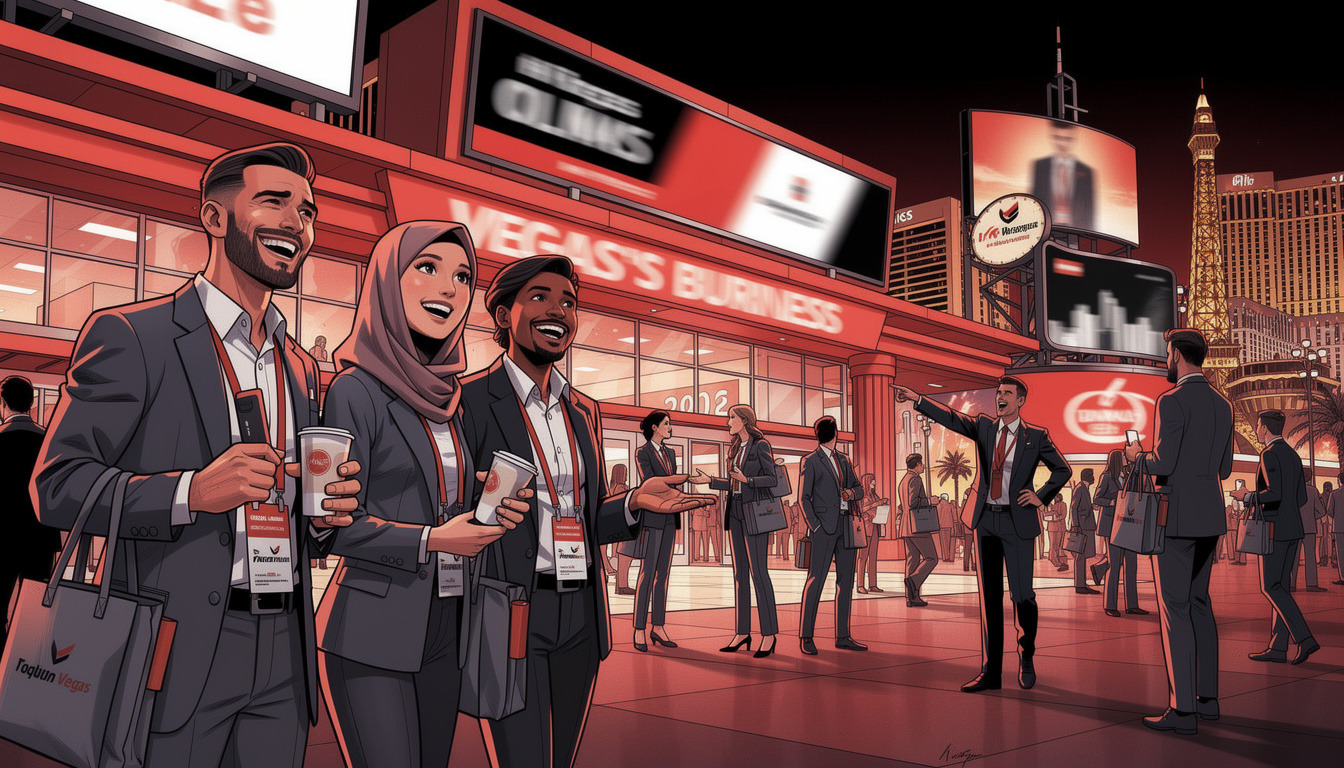
That is the real revenue map. A delegate books a room, rides between venues, buys meals, entertains clients and often stays beyond show hours. Exhibitors add freight, labor, production, security, technology and hospitality spending. The money moves through far more channels than the registration desk.
The LVCVA reported that the convention segment supported $16 billion in Southern Nevada economic impact in 2024. Total tourism generated $50.8 billion in direct visitor spending and an $80.9 billion economic impact in 2025. Those figures cover different scopes and periods, so they should not be blended into one projection. They do show why protecting convention volume is a boardroom priority.
The Shows Setting the 2026 Pace
The calendar opened with a heavyweight. CES 2026 drew more than 148,000 attendees, according to the Consumer Technology Association’s initial post-show count. The event featured more than 4,100 exhibitors and covered over 2.6 million net square feet of exhibit space. More than 55% of attendees were senior-level executives, exactly the customer profile that fuels high-value meetings, corporate dining and deal flow.
CES also demonstrated the citywide nature of modern convention business. The show operated across 13 official venues, not just one exhibit hall. Airlines added more than 360 flights to accommodate delegates, including service from nine countries. That is convention demand translating directly into aviation capacity and hotel compression.
For a closer look at the final show numbers, ESB’s report on CES 2026 attendance in Las Vegas breaks down the event’s growth.
March brought another industrial-scale booking. CONEXPO-CON/AGG 2026 was scheduled for March 3 through 7 at the Las Vegas Convention Center with approximately 140,000 construction professionals, more than 2,000 exhibitors and over 3 million square feet of exhibits. The event returns every three years, giving Las Vegas a major cyclical boost that was absent from the 2025 calendar.
The year still has major business on the books. The SEMA Show is scheduled for Nov. 3 through 6 at the Las Vegas Convention Center. The automotive specialty-products show remains trade-only for most of its run, with public access planned for Friday, Nov. 6. The official Las Vegas convention calendar also lists fall events including Printing United Expo, the Olympia Fitness and Performance Weekend and the Global Gaming Expo.
Dates and attendance estimates can change, particularly for future events. Operators making staffing or purchasing decisions should confirm details through the official Las Vegas convention calendar and individual show organizers.
The Infrastructure Bet Is Now Producing Returns
Las Vegas did not land this position by selling sunshine. It invested.
The LVCVA completed a $600 million renovation of the Las Vegas Convention Center’s legacy campus in January 2026. That work followed the $1 billion West Hall, which opened in 2021. The broader campus now covers 4.6 million square feet.
The renovation upgraded the Central Hall lobby, added a climate-controlled interior concourse between North and South halls, redesigned portions of South Hall and extended the architectural language introduced at West Hall. These are not cosmetic moves. Large shows sell efficiency. Exhibitors measure loading, movement, digital visibility and the time required to get tens of thousands of people through a campus.
CES 2025 generated an estimated $381.2 million in economic impact for Southern Nevada, according to the LVCVA. That figure gives the public investment context. One major show can move hundreds of millions of dollars through the regional economy. A full calendar compounds the return.
Readers preparing for events at the campus can also use ESB’s business traveler’s guide to the Las Vegas Convention Center for practical planning.
Who Captures the Upside?
The first winners are obvious: resorts with large room inventories and meeting facilities. The next layer runs deeper. Restaurants gain corporate dinners. Nightlife venues sell hosted events. Transportation operators capture airport and venue traffic. Exhibit contractors, temporary staffing firms, audiovisual suppliers, caterers and security companies all participate in the spend.
Local operators need discipline, not hype. Track the calendar. Identify the shows that fit the customer base. Build staffing plans around arrival, show and departure days. Create packages for groups without assuming every convention produces the same spending pattern. A construction-equipment buyer, a technology executive and an automotive retailer arrive with different priorities.
Real estate also follows the signal, although individual hotel or development projects should not be attributed to convention demand without direct evidence from their owners. The broader connection is sound: reliable group business supports room rates, restaurant sales and utilization of meeting space. Those operating metrics influence capital decisions across the resort corridor.
What the 2026 Wave Really Means
The strongest reading of 2026 is not that every tourism metric is surging. The market entered the year after a decline in total visitation, occupancy and room revenue. That keeps pricing, value and international travel in focus.
The power move is that Las Vegas has another demand engine capable of carrying weight. The LVCVA projected approximately 1.2 million trade-show attendees at its convention center in 2026, up from about 1 million in 2025. CES produced more than 148,000 attendees. CONEXPO returned with a six-figure audience. SEMA anchors the fall.
That calendar does more than fill exhibit halls. It defends midweek occupancy, supports airline service and puts customers with expense accounts into the city’s restaurants, resorts and entertainment venues.
Follow the money and the strategy is clear. Las Vegas is not relying on one customer, one weekend or one headline event. It is using convention infrastructure to diversify demand at city scale. That is how Vegas protects its position, and that is how it builds the next tourism cycle.