Las Vegas marked nine years since the Route 91 Harvest shooting on Thursday, Oct. 1, 2026, remembering those killed and the survivors whose lives changed that night. The anniversary also points to a lasting record of the tragedy: news reports, public documents, photographs and firsthand accounts that help people understand what happened and how the community responded.
That record is not the same as memory, and it cannot speak for everyone affected. But it can preserve details, make room for people’s voices and give future readers more than the first, urgent headlines. In Las Vegas, remembering Oct. 1 means keeping the people at the center of the story.
Why the public record still matters
News reports are one part of a much larger history
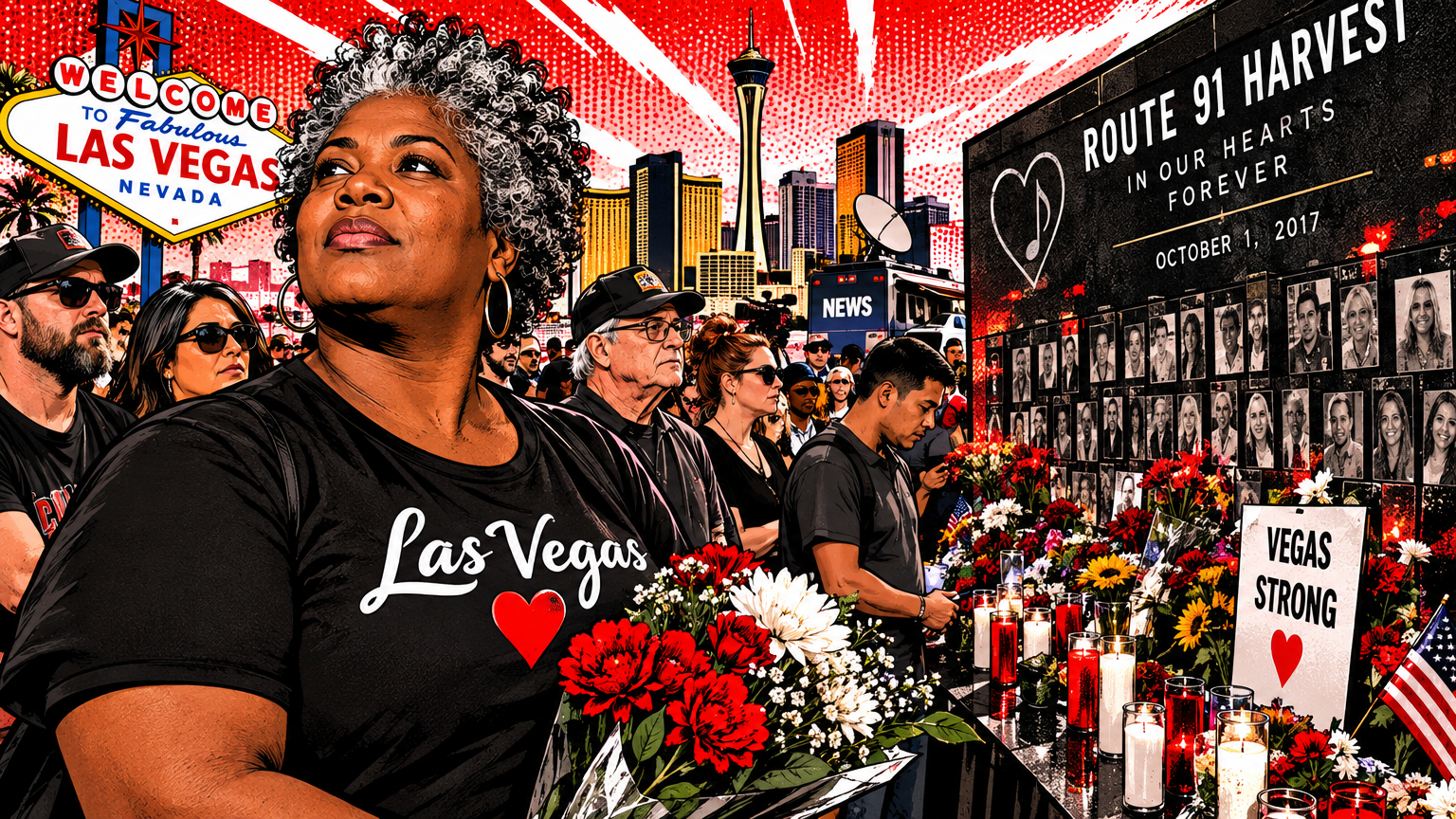
The shooting unfolded at the Route 91 Harvest country music festival, where a gunman fired on concertgoers from a room at Mandalay Bay. The attack killed 58 people at the scene and injured hundreds. Two more people later died from injuries connected to the shooting, bringing the number of lives lost to 60, according to the UNLV University Libraries’ account.
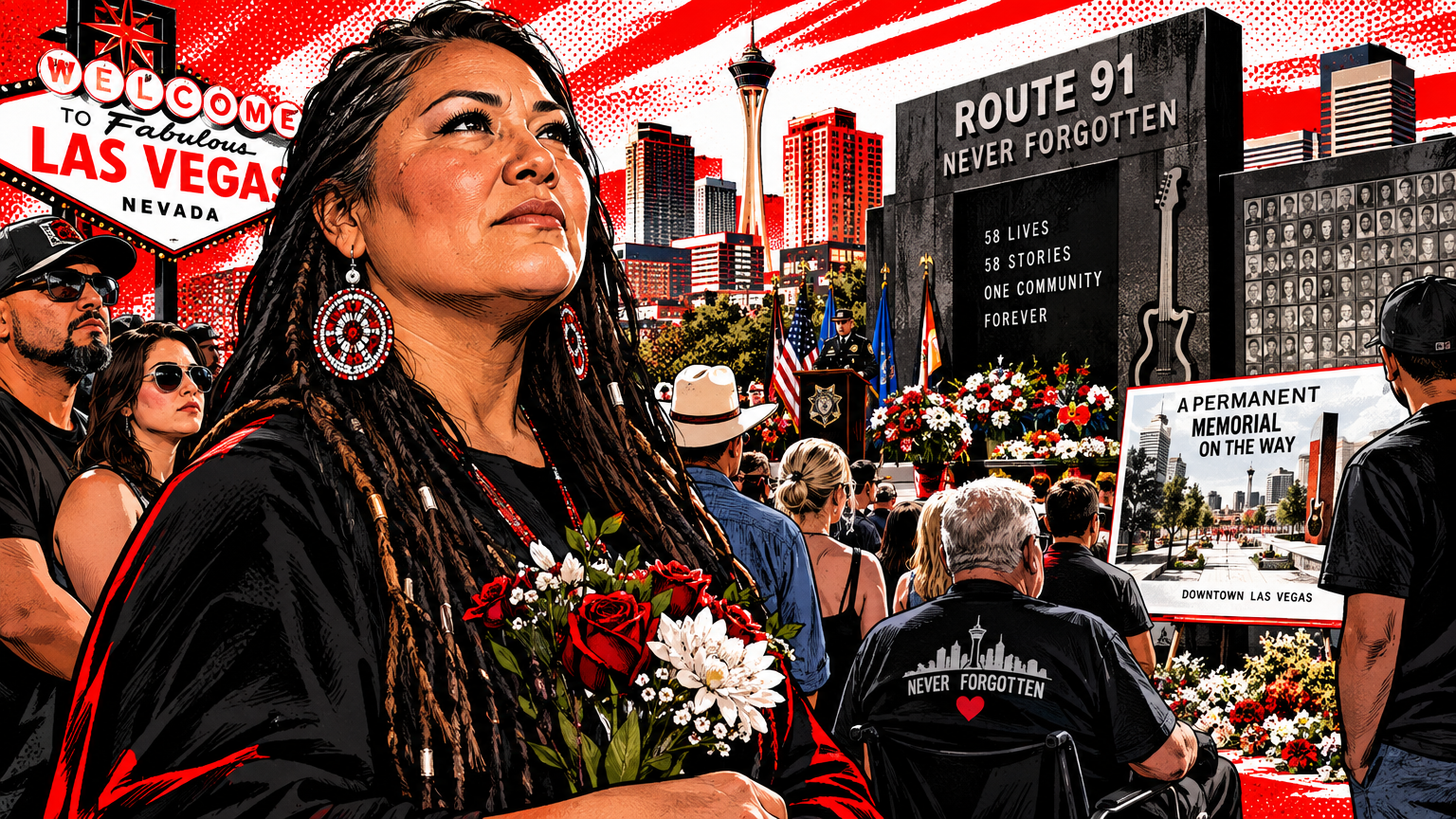
On the ninth anniversary, a community remembrance took place at the Clark County Government Center. Coverage of the ceremony included the raising of flags, a moment of silence and reflections from survivors and family members. The names and lives behind the numbers remain the reason the anniversary matters.
Here are nine ways the record of 1 October continues to shape how the city understands and remembers it.
1. The first reports captured a fast-moving emergency
In the hours after the shooting began, concertgoers, families and the public needed information about an unfolding emergency. Early reports were produced while officials and witnesses were still trying to establish what had happened. That makes them an important record of the moment, but not a final account of every detail.
Read an early story with its publication time in mind. Later updates may reflect information that was not available at first. The timeline is part of the story.
2. The people behind the numbers matter
Casualty figures describe scale, but they do not describe a person’s life. UNLV’s oral-history project preserves accounts from concertgoers and first responders, alongside stories that help put the victims and their families in view.
The project includes 66 oral histories. One comes from photographer David Becker, who was assigned to cover the festival. These are firsthand accounts, not substitutes for every survivor’s experience. They do help keep individual voices in the record.
3. The response is part of the history, too
In the days after the attack, residents and volunteers took action to support people affected. The city’s Community Healing Garden was sketched out on Oct. 2, 2017, and opened four days later. The city’s history of the garden describes its memorial wall, trees and features shaped by families, survivors and community members.
Accounts of help and solidarity belong in the history, but they do not erase grief or imply that every person’s experience was the same. Both truths can sit in the record.
4. Official records add detail over time
Investigations and after-action reviews provide another kind of public record. The Las Vegas Metropolitan Police Department’s public records page makes investigative reports and an after-action review available for the 1 October shooting.
Those documents serve a different purpose from news stories or oral histories. They can help readers follow official findings and response procedures. No single record tells the whole story, and a report’s conclusions should be read in the context of what that document covers.
5. Anniversary coverage brings the story back into public view
Each anniversary can prompt new reporting and community remembrance. On Oct. 1, 2026, local coverage included accounts from a survivor and a mother who lost her son. Their experiences show why the passage of time does not make the event a closed chapter for everyone.
An anniversary is a reason to listen, not a deadline for healing. People affected by the shooting do not share one timeline or one way of remembering.
6. Archives give future readers more than a headline
News stories are one part of the available record. UNLV’s oral-history collection preserves interviews with attendees and first responders, while the Clark County memorial project documents the process of creating a permanent memorial.
These collections let readers encounter accounts and materials beyond a single news cycle. They also show why context matters: a first-person recollection, an official report and a news article answer different questions.
7. The words used to describe tragedy carry weight
Language can keep attention on the people harmed, or let the attacker dominate the account. Reporting that centers victims, survivors and families gives readers a fuller picture than a retelling built around shock alone.
Care does not mean withholding important facts. It means presenting them with accuracy and context, without turning grief into spectacle.
8. Local reporting connects a national event to this community
The shooting drew attention far beyond Southern Nevada. Local reporting also follows what the tragedy means to people here, from remembrance ceremonies to the work of preserving stories and supporting those affected.
That local view matters in a region often reduced to its resort corridor. The people connected to 1 October are not a footnote to a story about the Strip. They are the story.
9. Readers help carry the record forward
News archives can help preserve a public account, but readers also shape how that account travels. Check when a story was published, look for later updates and distinguish firsthand accounts from official findings or interpretation.
Nine years on, Las Vegas remembers through public ceremonies, memorial spaces and the words of people who lived through the attack. News is one part of that work. The clearest record keeps its focus where it belongs: on the lives lost, the people who survived and the community still remembering.