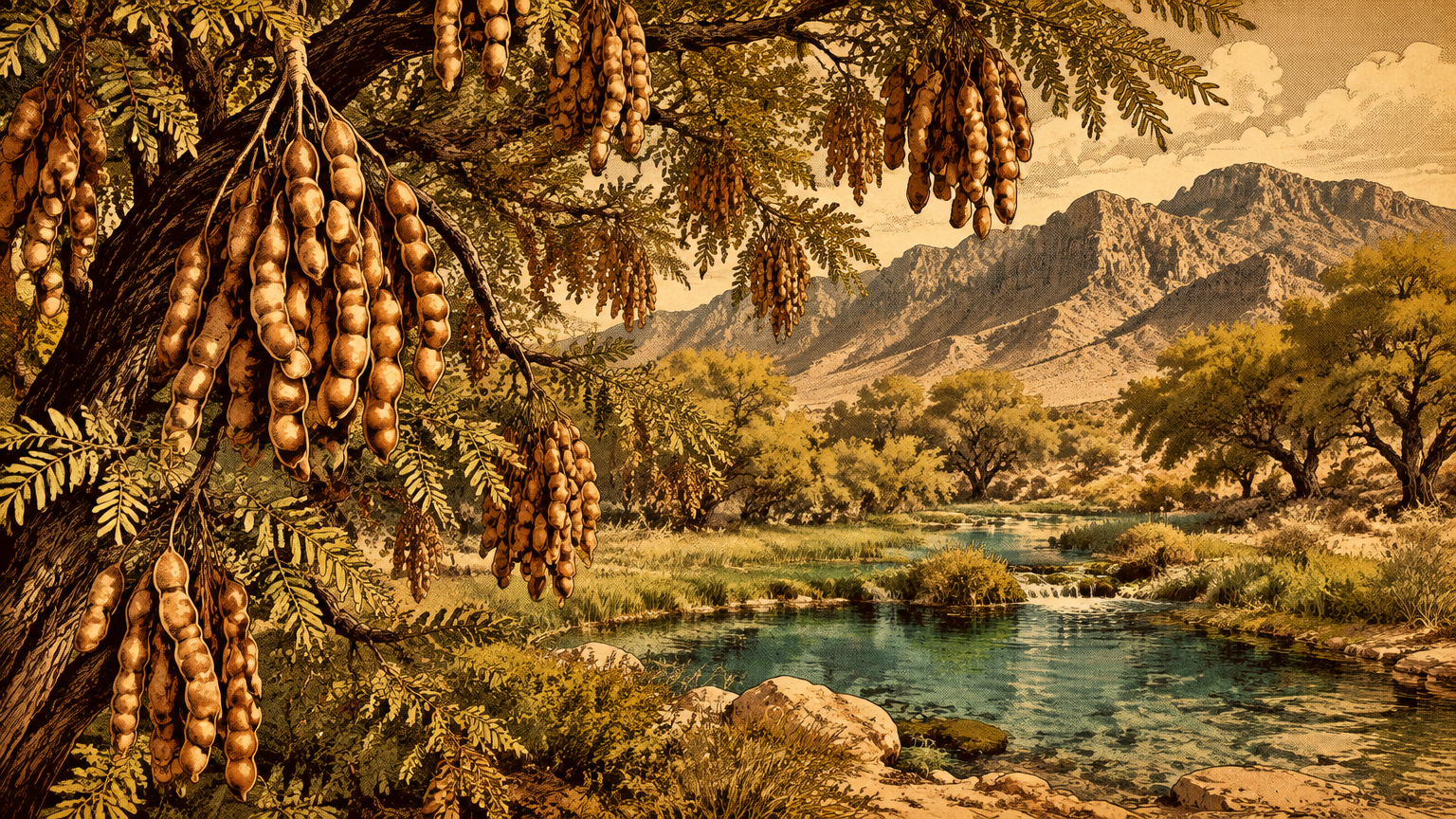
The first Las Vegas grocery store had no doors, no shelves, and no sign. It was a forest.
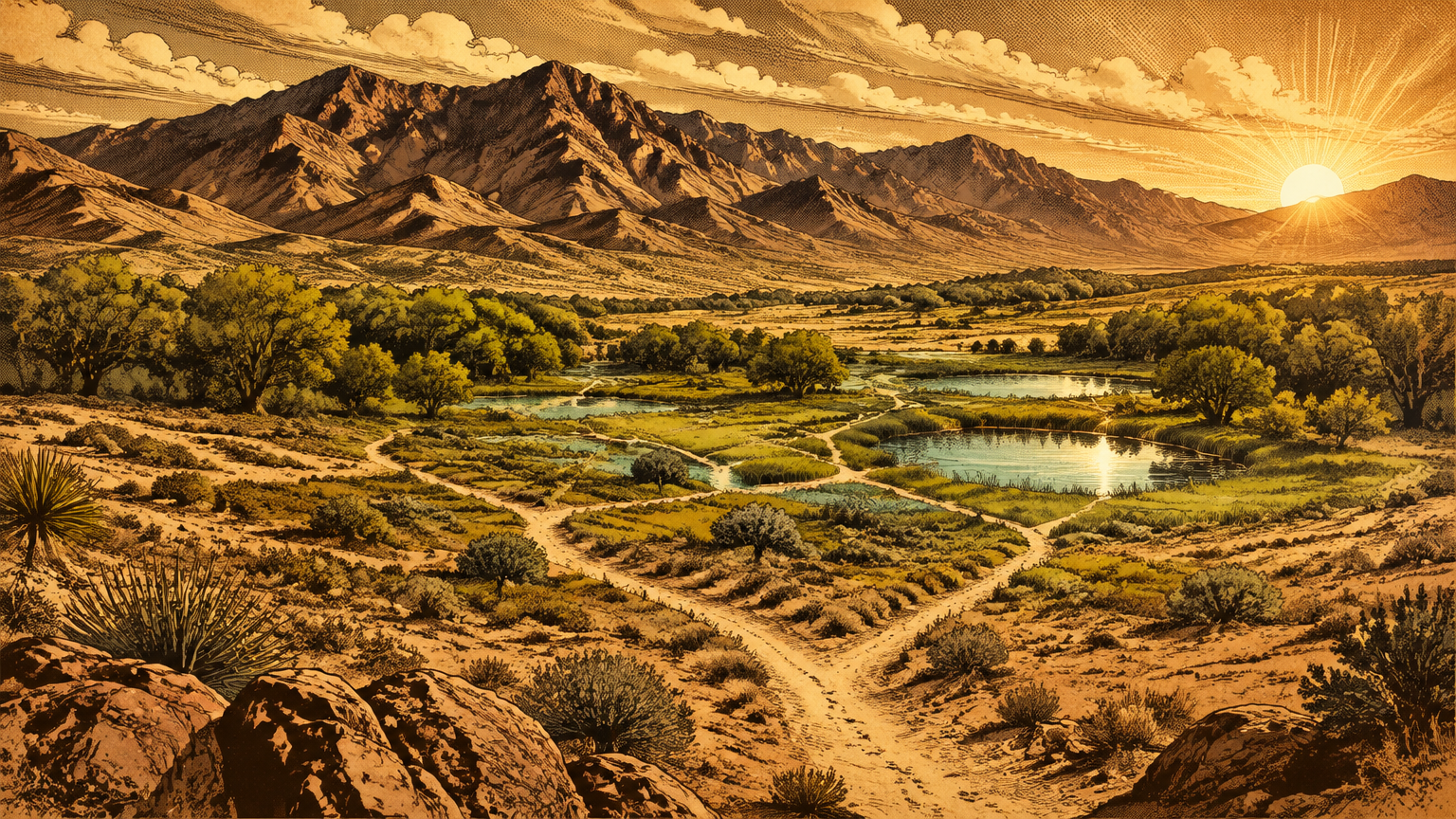
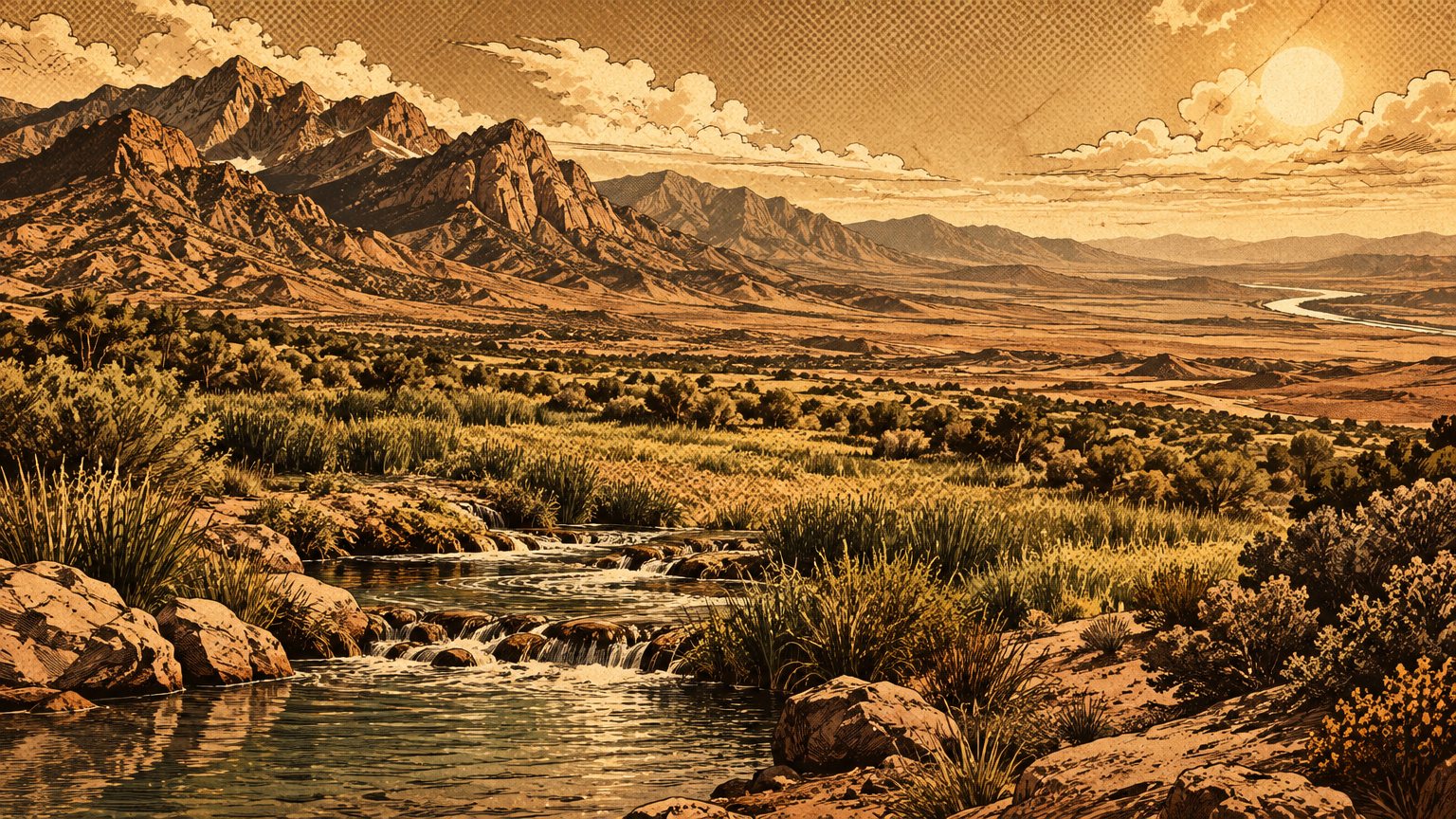
Around the springs and along the washes of this valley grew bosques of mesquite, thickets of willow, and meadows of grass, and for the people who lived here, that greenery was not scenery. It was the pantry, the pharmacy, and the warehouse, all rooted in one place.
The standard picture of desert survival is a person eking out a living from a barren land. The record here says the opposite. Federal researchers summarizing Southern Paiute subsistence put it plainly: wild plant foods were the dietary mainstay, gathered primarily by women, with mesquite beans and pods of considerable importance.
The desert did not feed these communities despite being a desert. It fed them because they knew, plant by plant and month by month, exactly what it grew.
This is the story of that knowledge: the plants themselves, the calendar they imposed, the stone and basket technology that turned pods into winter food, and the question of what is left of the pantry now that a city of two million stands on top of it.
An edible landscape
Mesquite and other native resources
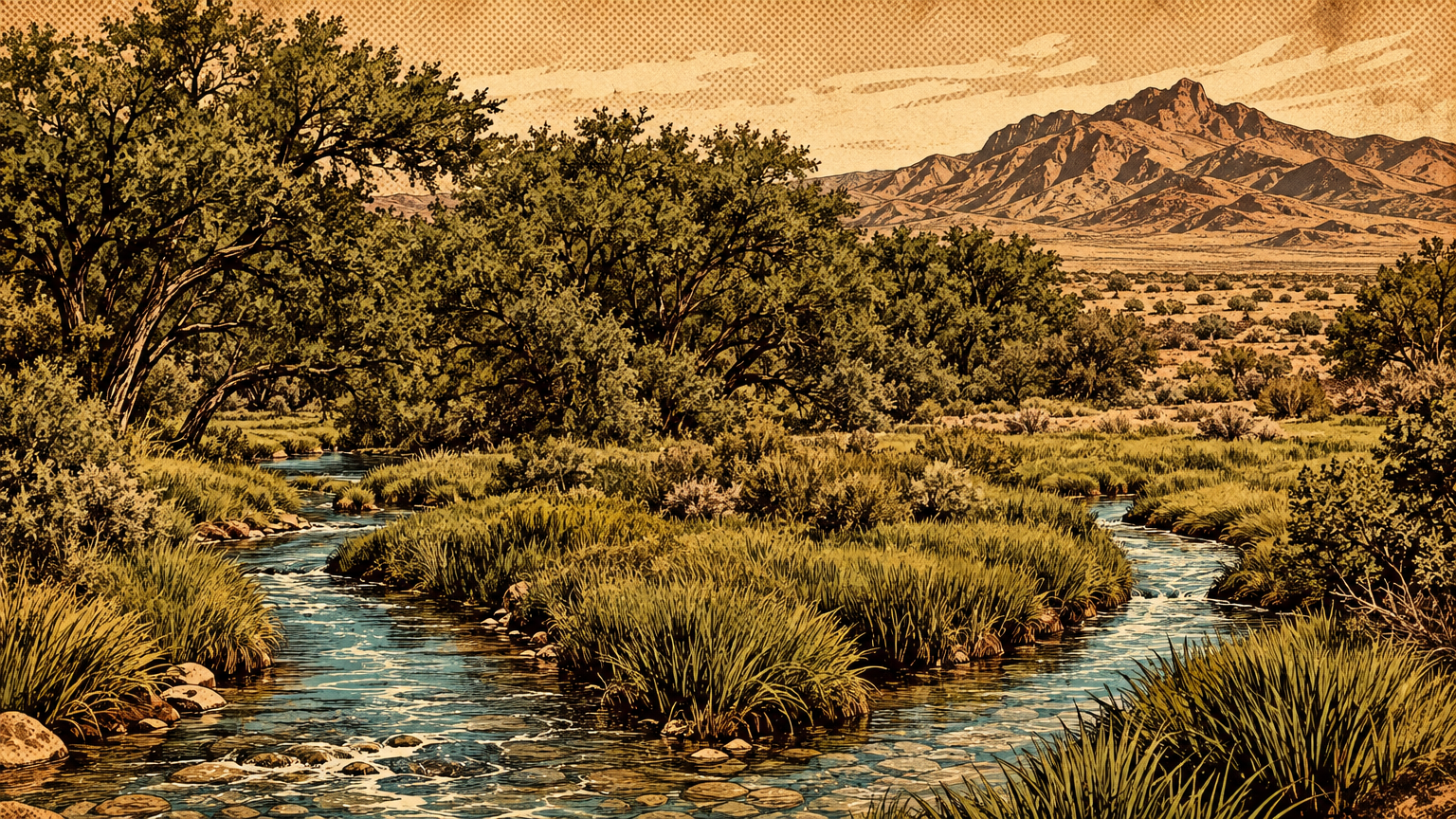
Start with the tree that mattered most. Two mesquites grew in and around the valley: honey mesquite, with its long sweet pods, and screwbean mesquite, named for pods that twist like a corkscrew. Both are phreatophytes, plants that send roots deep enough to drink groundwater directly, which is why they clustered exactly where people needed them, along the springs, creeks, and washes of the valley floor.
The ethnographic record does not mince words about the honey mesquite. Researchers documenting Paiute foodways recorded mesquite bean meal as the staff of life, and the archaeology backs the ranking up.
Federal archaeologists cataloging the valley's later prehistoric sites list mesquite seeds among the staple remains, alongside agave, prickly pear seeds, and squash. A tree that fruited reliably in the middle of the Mojave was not a snack. It was infrastructure.
Screwbean played the supporting role, and it was no minor one. Its pods were harvested at two different times, eaten green and raw in the spring or gathered ripe in late summer, according to the U.S. Department of Agriculture's plant guide.
The same guide lists the Southern Paiute among the peoples who used it, and John Wesley Powell's field notes from the 1870s describe mesquite and screwbean growing together in great abundance in the southern Paiute country, their pods and seeds ground together into a single flour.
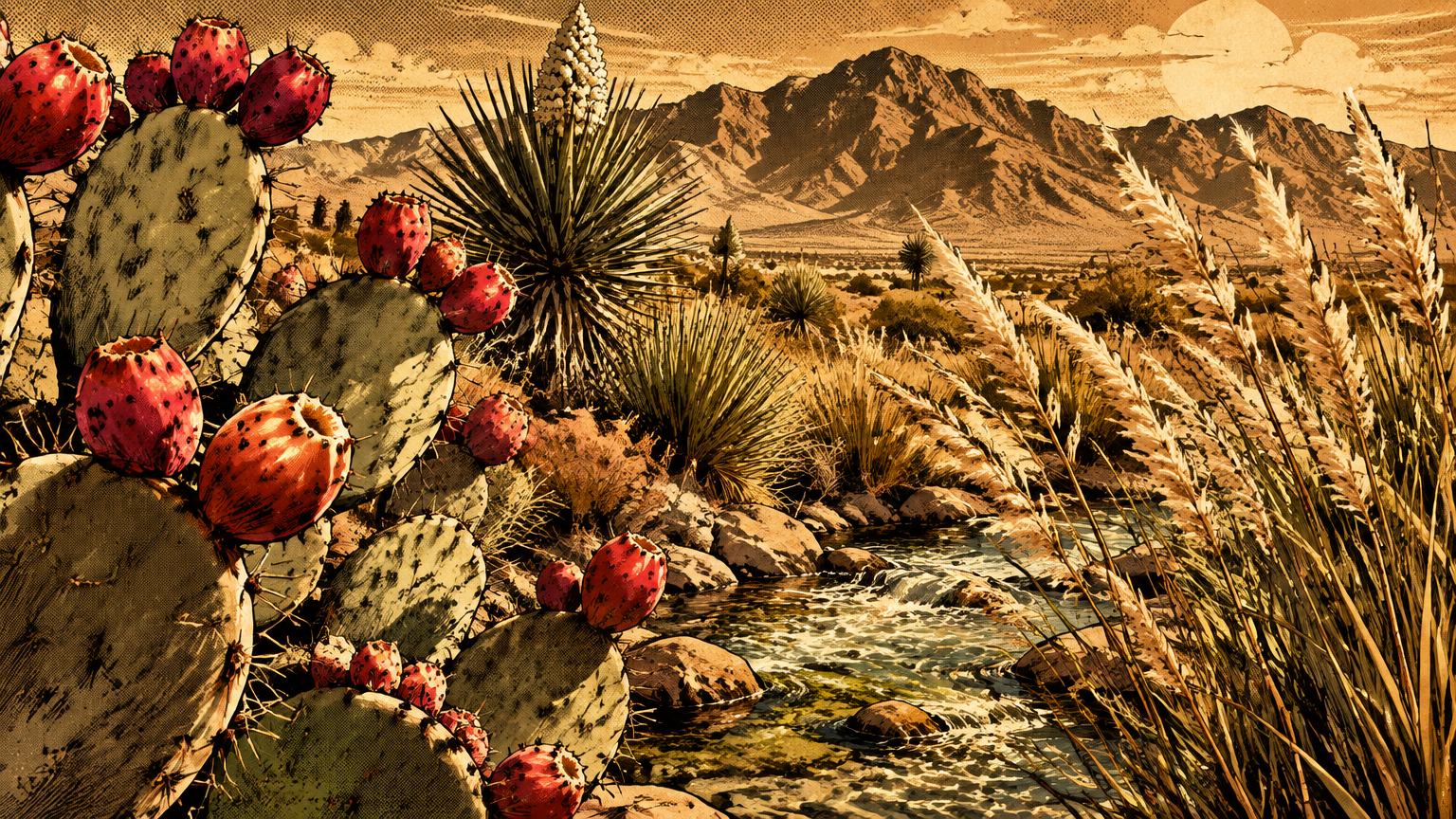
Around the two mesquites stood a whole supporting cast. Prickly pear offered fruit and seeds. Mojave yucca gave fruits and pods, and its fiber went into cordage and baskets.
Hedgehog cactus, chenopodium, and amaranthus contributed seeds, and wild grapes hung near the springs in quantities large enough that an Army survey officer noted them in 1871. Grass seeds, gathered across the valley floor, rounded out a menu that federal researchers describe as dozens of plants deep.
And part of the landscape was planted on purpose. The soil beside the valley's creeks and springs suited horticulture, and the communities here worked it.
Archaeologist Claude Warren documented gardens tended beside the springs, and the federal synthesis lists maize, beans, squash, and sunflower among the crops, with pumpkins added in the Forest Service's seasonal account. Lieutenant George Wheeler, surveying in 1871, saw the system still running: Paiute families around Las Vegas and Cottonwood raising corn, melons, and squashes.
Seasonal harvest patterns
None of this food arrived all at once, and that was the point. The pantry paid out on a calendar, and the calendar organized the year.
Spring opened the account: wild plants gathered across the valley, green mesquite pods eaten fresh, and gardens prepared beside the springs. Late spring and early summer went to tilling and sowing, corn, squash, beans, pumpkins, and sunflowers going into the ground where irrigation could reach them.
Summer belonged to the valley loop. Gardens had to be watered, tended, and guarded, and as the season turned, the mesquite ripened.
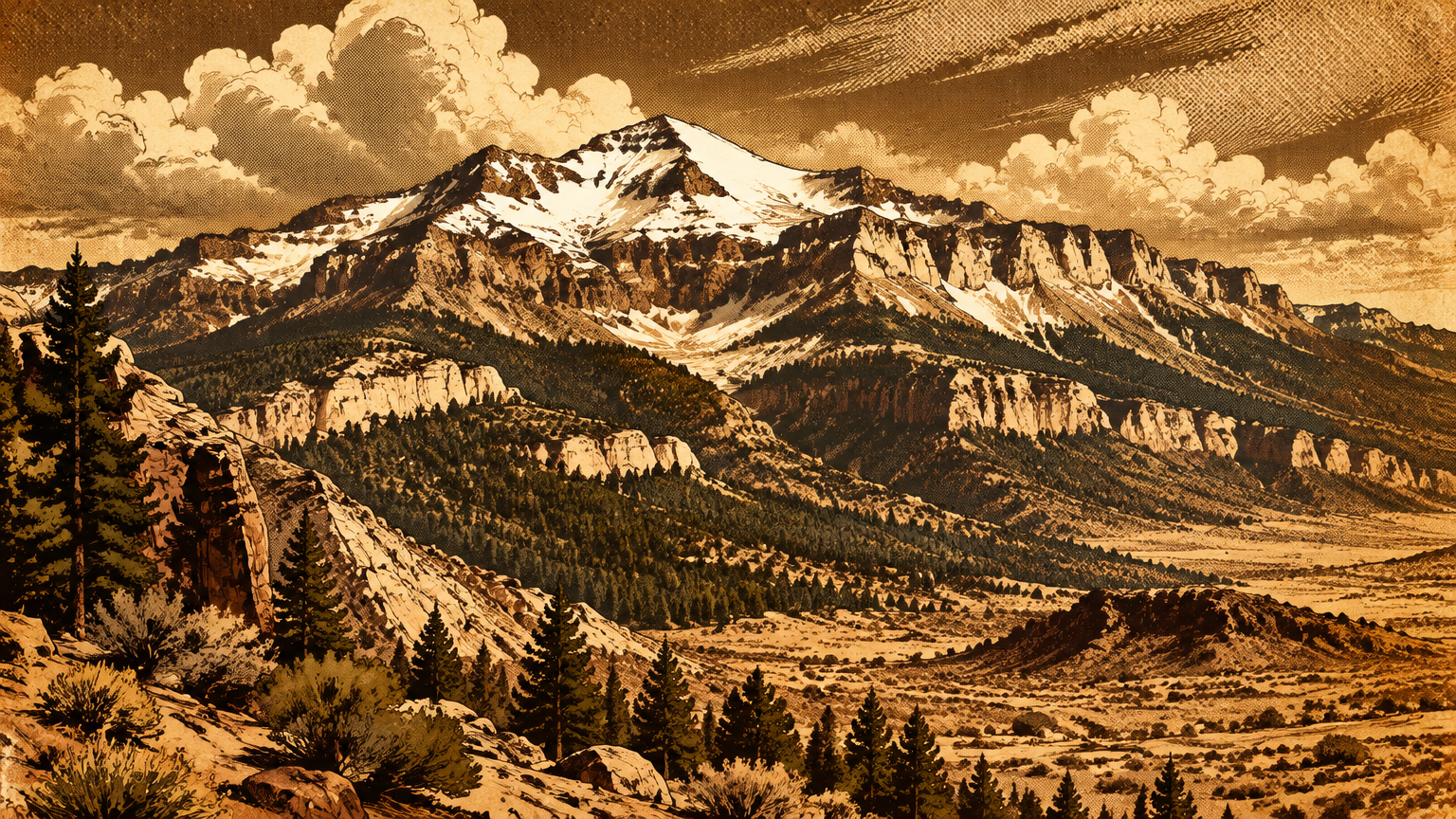
The ethnographic record fixes the moment precisely: the beans were ground in August, when they turned brown. While the valley floor paid out its staples, the foothills above were loading a second harvest, because within about twenty miles of the springs, the Spring Mountains rose into pinyon pine, agave, and Joshua tree country.
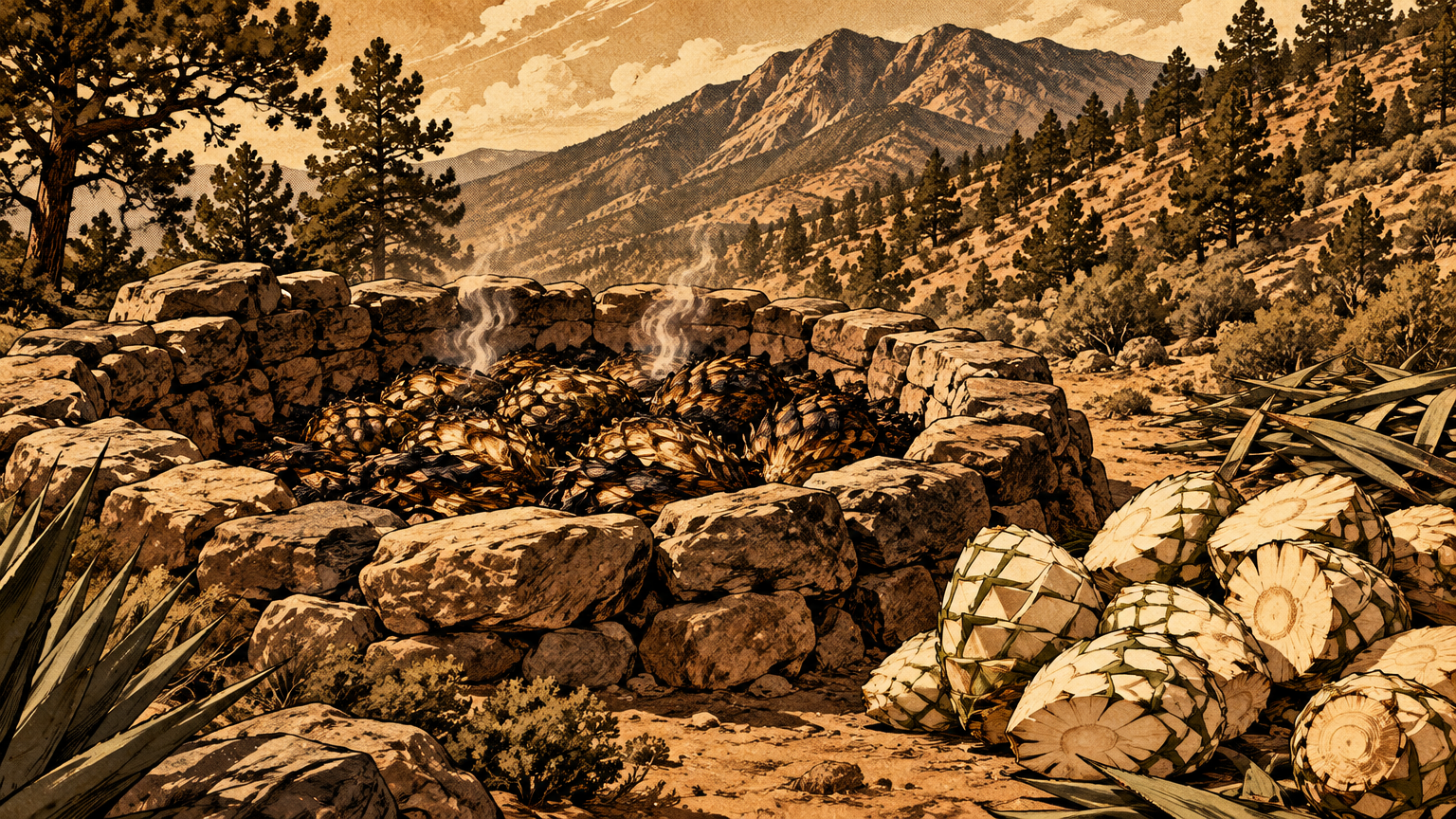
Fall was the harvest that decided the winter. Families moved up to the plateaus and mountains, in the Forest Service's account, and the mountain loop of Warren's double loop swung into motion: pine nuts gathered in the pinyon groves, agave hearts cut and roasted, the last of the mesquite and screwbeans brought in. The camps were not improvised.
Warren found that harvest camps in the foothills were returned to and reused year after year, which tells you the calendar was not a habit. It was a schedule, kept by people who knew exactly when each grove would pay.
Knowledge across generations
Processing, storage and movement
A pod on a tree is not food security. The technology that made it food security was grinding stone, woven basketry, and the storage pit.
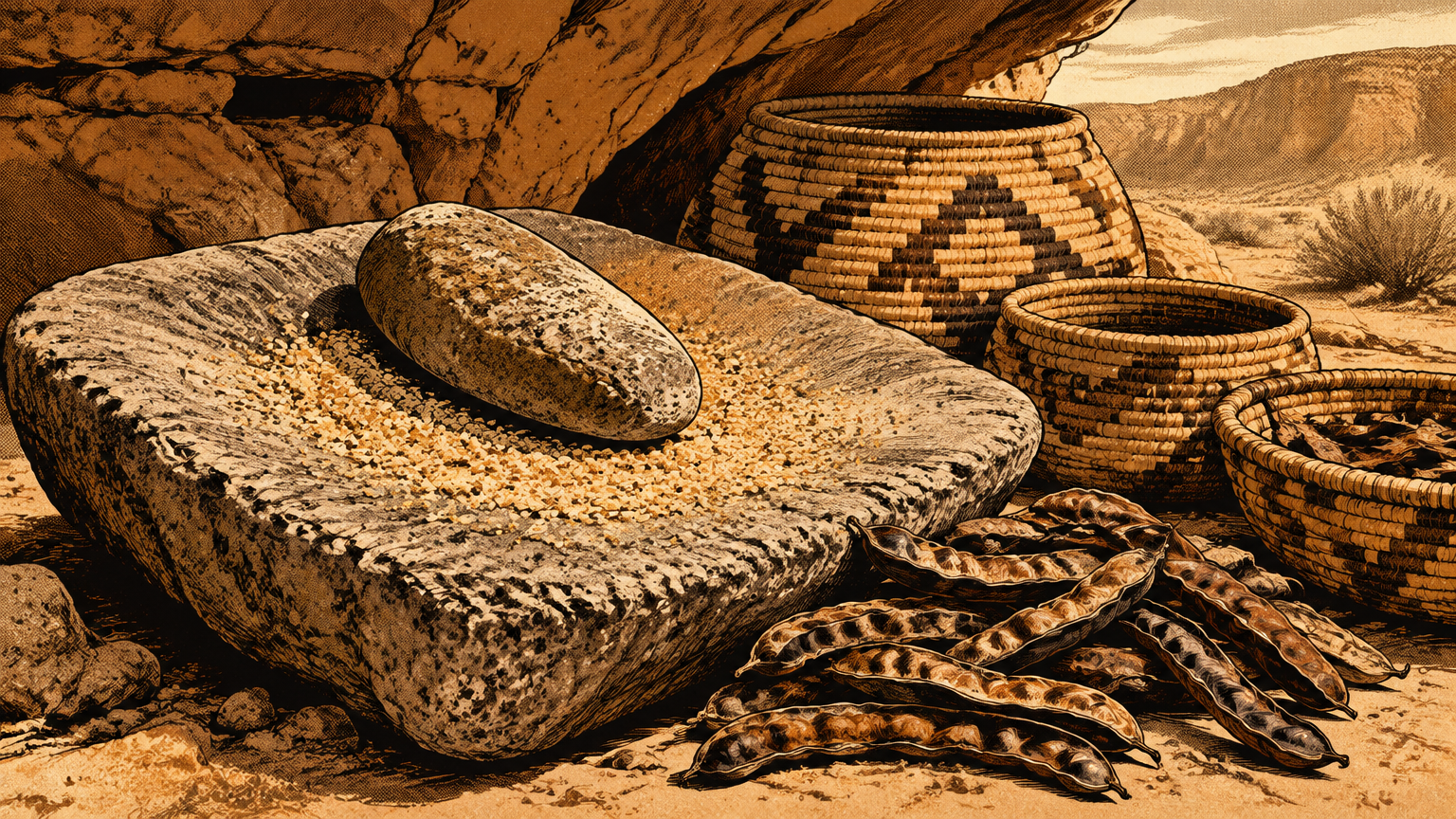
Powell watched the first step and described the tools: two mealing stones, a flat slab and a smaller rounded stone worked by hand. On that stone, pods and seeds together were ground into flour, then eaten as mush or formed into cakes. The cakes, he noted, were often sun-dried instead of baked, and kept on hand for quite a lengthy period.
The storage system behind those cakes was engineered, not casual. The federal ethnographic overview records meal packed into conical baskets and dried in the sun, the hardened cakes then stored in winter houses near the fires, or in pot-shaped pits dug into the rear walls of rock shelters and lined with grass to preserve the meal. The USDA's screwbean guide describes the same architecture from the plant side: ripe pods pounded to fine flour in bedrock or tree-stump mortars, the meal dried and stored in baskets set into grass- or bark-lined pits in rockshelters and caves.
Screwbean even had a slow-cooking method of its own. The USDA guide records beans cooked in pits covered with earth and left to stand three or four days, then spread to dry and pounded into pinole.
The agave of the foothills demanded the heaviest machinery of all: the earth oven. Archaeologists documenting the Sheep Range, just north of the valley, counted 232 roasting pit features and documented 193 of them in the field, stone-lined pits where agave hearts baked slowly under earth. In the Spring Mountains, the pits were lined with limestone, and the hearts roasted a day or two under their earthen seal.
All of this processing had a second purpose: it made food portable. A dried cake or a basket of meal is food that travels, and travel was built into the system. The double loop moved people between valley gardens and mountain groves on a yearly circuit, and the Forest Service notes the large exchange networks that tied this region to its neighbors.
What the valley produced in storable form could move with a family, or move as trade. Fresh food feeds a camp. Processed food feeds a network.
Environmental limits and variation
The system was sophisticated, and it was not magic. Every element of the pantry ran on water that arrived on the desert's terms.
Mesquite groves were dependable precisely because their roots reached groundwater, which made them hostages to the water table beneath them. A dry cycle that dropped that water, or a spring that weakened, pressed directly on the tree the whole economy leaned on hardest.
The mountain half of the pantry swung even harder. Pine nut crops are famously uneven, generous one year and thin the next, and agave asks for patience on a scale modern farming rarely tolerates: a rosette grows for years before it can be harvested, and harvesting it ends the plant.
The archaeological record shows communities answering that variability with breadth. The valley's later sites hold agave, mesquite, prickly pear, yucca, cactus, squash, and melon in combination, a portfolio built so that no single failure could starve anyone.
Storage was the other answer, and it explains the sheer effort poured into pits, baskets, and cakes. When your best foods arrive in a few concentrated weeks and your lean season lasts all winter, processing is not a preference. It is the whole strategy.
The Forest Service summary says it in one line: pine nuts were the essential food stored for winter use. Everything about the grinding stones and grass-lined pits exists to move fall abundance across the winter gap, and the fact that the system worked for centuries is the measure of how well it was understood.


What survived urban growth
Native plant restoration
What broke the pantry was not drought. It was plumbing. As Las Vegas grew, groundwater pumping pulled the water table down, and by 1962 the springs that fed the meadows had stopped flowing.
The Springs Preserve, which now protects the spring site, describes the aftermath in plain terms: the water had sustained meadows and thickets of mesquites and willows, and when the springs dried up, much of the vegetation around them died. The trees that survived were the ones whose roots could still reach shallow groundwater, the phreatophytes holding on at the edge of their own adaptation.
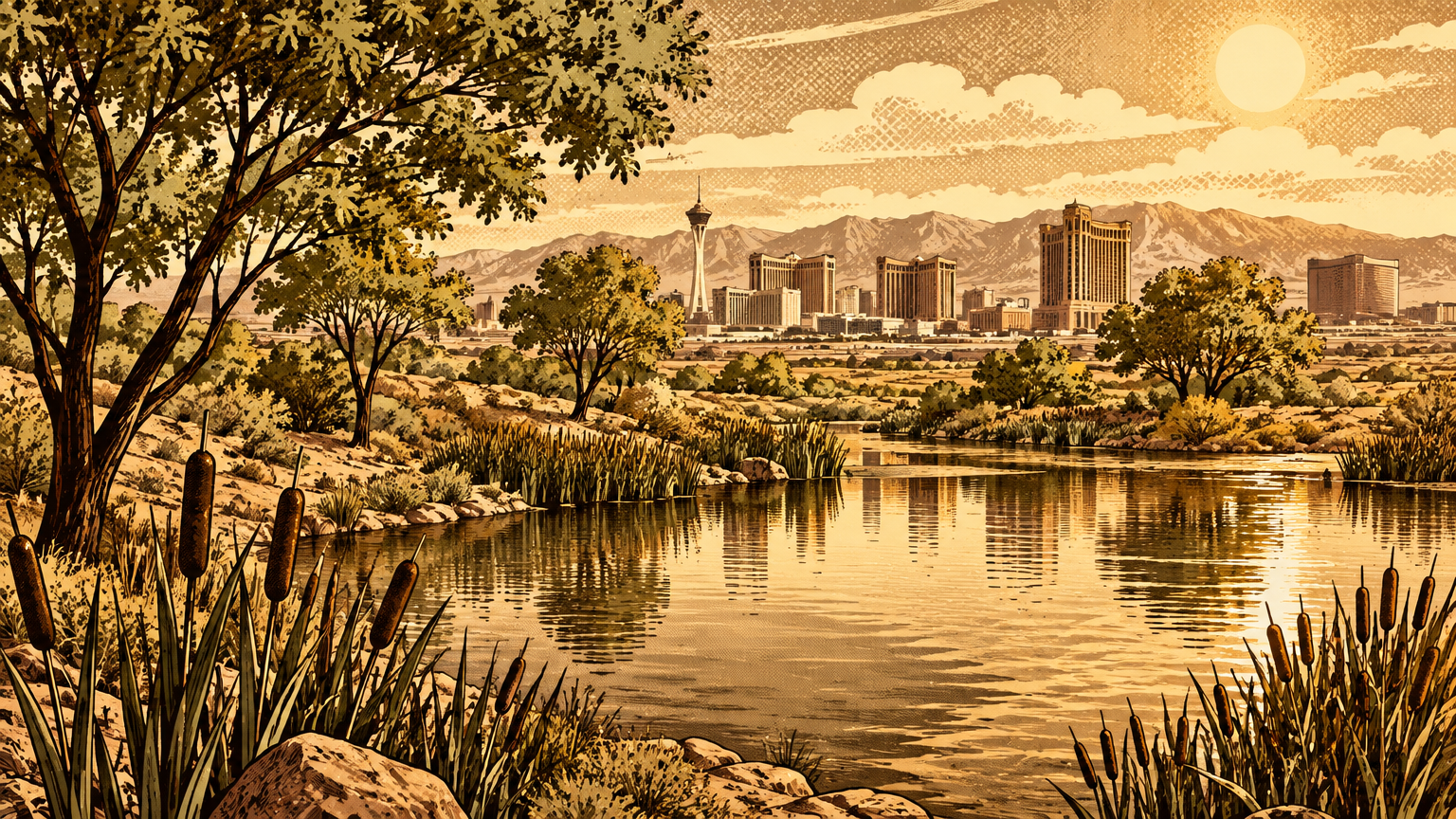
The city paved the rest. Mesquite bosques that had stood along the washes fell to streets, subdivisions, and flood channels, and the gardens beside the springs became a street grid. But the site itself was never fully erased.
The Las Vegas Springs were listed on the National Register of Historic Places in 1978, and the 180-acre Springs Preserve that opened on the site has spent two decades putting the plant community back. Its Cienega restoration, begun in 2003, rebuilt ponds and a stream and revegetated the ground to recreate the original wetlands.
The restored plant list reads like the old pantry roster. The Preserve reports thriving cottonwood, willow, mesquite, and acacia, with shrubs, grasses, cattails, and bulrushes at the water.
Its botanical garden grows many of its native plants from seed collected in the Las Vegas Valley, keeping them genetically true to this place, and nearly all of its native cacti and yucca were salvaged from local land being cleared for development. More than 250,000 plants now grow across the Preserve. The pantry is not feeding a city anymore, but it is alive, labeled, and teaching.
Community-led interpretation
The deeper continuity is not botanical. The knowledge that ran the pantry never belonged to the plants; it belonged to the people, and the people are still here.
Research on Nuwuvi ecological knowledge in the Spring Mountains and the Desert National Wildlife Refuge, built with twenty-two Southern Paiute knowledge holders, evaluates the piñon pine as a cultural keystone species: central by its number of uses, its role in ritual and story, and its irreplaceability. That is a scientific way of saying the harvest calendar in this article is not ancient history to everyone.
That knowledge now has a formal seat at the table. The Nuwuvi Knowledge-to-Action Project brought seven Nuwuvi Nations into government-to-government consultation and collaborative stewardship with the U.S. Forest Service and the U.S. Fish and Wildlife Service, putting Indigenous ecological knowledge to work managing the same piñon-juniper woodlands their ancestors harvested. When a 2026 study in American Antiquity assembled sixty-one Theft of Pine Nuts oral histories, five of them Southern Paiute, it treated those stories as evidence, mapping pinyon origins to homelands within a hundred miles, likely the Spring Mountains themselves.
So the honest answer to what survived urban growth is: more than the pavement suggests. The groves at the springs are restored rather than original, and the gardens are gone. But the plants still grow wild across the valley's washes and the mountain foothills, the roasting pits still ring the ranges, and the nation that read this landscape like a pantry still governs, still harvests, and still tells the stories that encode where the pine nuts came from.
A pantry can be rebuilt. A knowledge system, once lost, cannot, and this one was never lost.
The neon came later. Before it, there were groves at the springs and grinding stones worn smooth by August beans, cakes drying in the sun and pits lined with grass against the winter, and a people who treated a desert not as an obstacle but as a larder with a calendar. The next time you pass a mesquite holding its pods over a valley sidewalk, you are looking at the oldest grocery store in Las Vegas, still standing.
Next in Vegas, Back Then: The Ancient Footpaths Beneath Modern Las Vegas.