Las Vegas has an official birthday, and it is a good one: May 15, 1905, the day a railroad auctioned off town lots beside the tracks and a city sprang out of the dust in an afternoon. It is a fine founding story. It is also, at best, the second founding of this valley.
Long before the auctioneer lifted his gavel, this was a homeland with its own names, its own language, its own farms and roads and laws of belonging, and the people of that homeland never left. They govern a sovereign nation inside this city today, from an address on Paiute Drive.
So this piece is not a prologue. The usual telling treats Indigenous history as the overture before the real show starts, a few paragraphs of deep background before the settlers arrive and history supposedly begins.
Flip it. The Southern Paiute homeland is the foundation everything else in this valley was built on, and the city is the newcomer that has been here for about five minutes of the homeland's long day.
The homeland and its names
Nuwu or Nuwuvi and Tudinu
Start with what the people call themselves, because the names carry the map. The Las Vegas Paiute Tribe's own government site introduces the tribe this way: the Las Vegas Paiute Tribe, known as the Tudinu, is a federally recognized sovereign nation whose ancestors have inhabited Southern Nevada since at least AD 1100.
Tudinu means Desert People, a name that is not an apology. It is a credential, earned by a people who made one of the driest landscapes in North America into a home that fed them for centuries.
The wider people are the Nuwu, written Nuwuvi in much scholarly work, and the word simply means the People. Sit with that for a second.
It is the oldest naming pattern on earth: we are the people, this is our place. The tribe describes itself as part of that greater Nuwu people, Southern Paiute communities spread across four modern states, all rooted in the same desert world of springs, rivers, and high country.
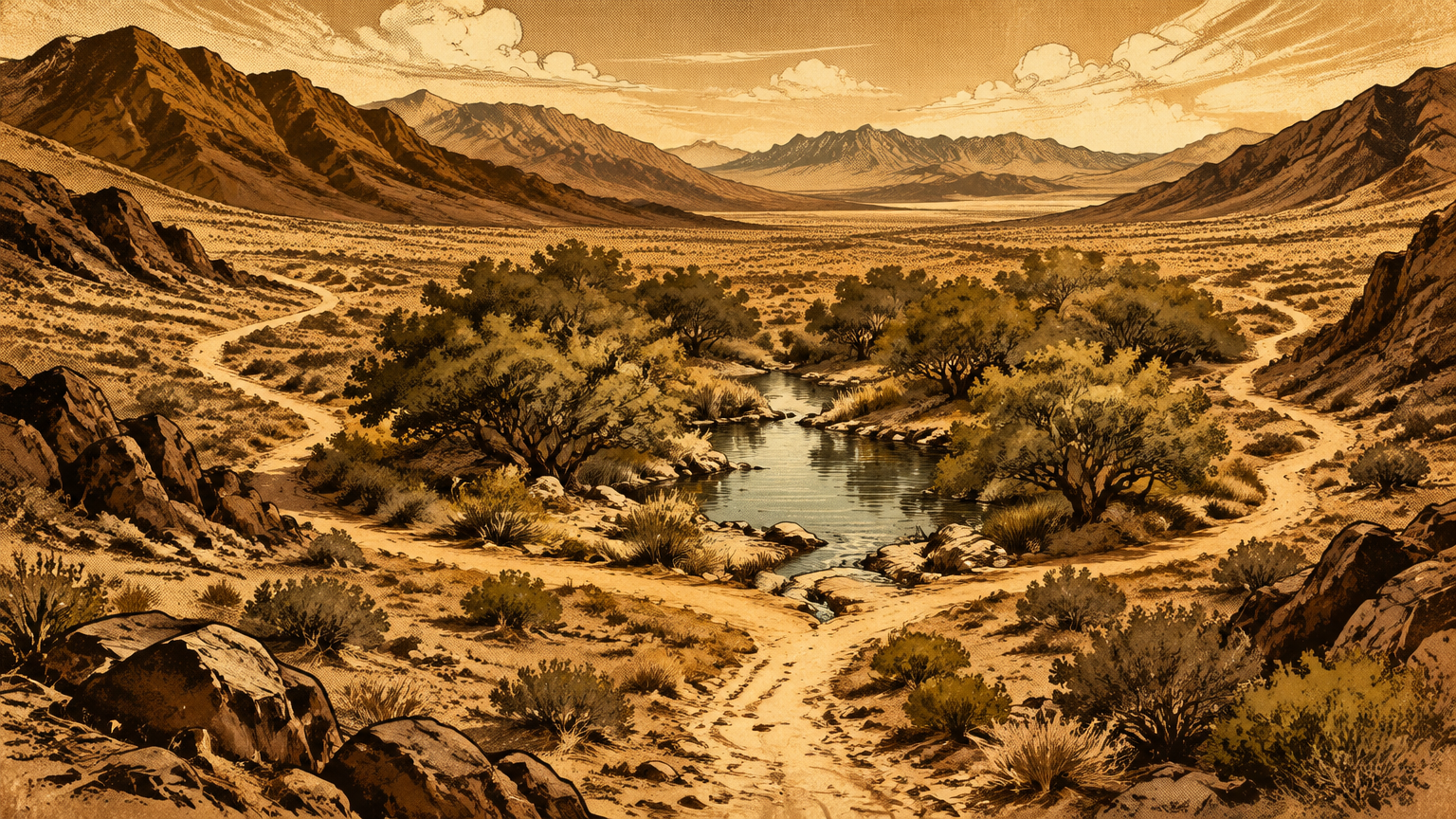
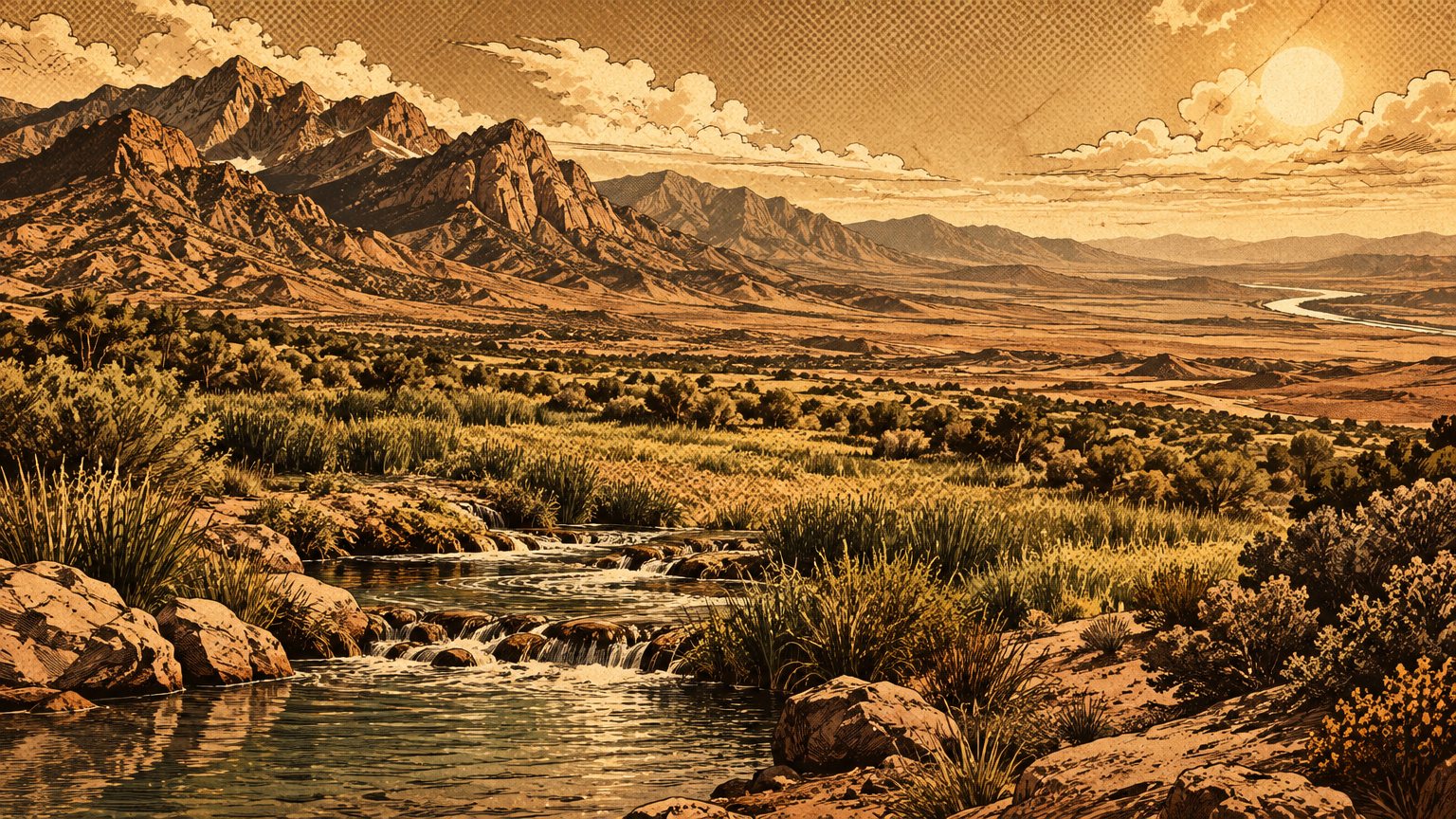
Even the word Paiute is an outsider's label, and the National Park Service explains its roots plainly: "Paa" ute means water ute, a reference to the people's preference for living near water sources. In a desert, that is not a preference.
It is the whole strategy. The homeland was organized around water the way a modern city is organized around power and roads, and the names the Nuwu gave their world reflect a people who knew exactly where every drop of it lived.
Places and connections across the basin
The tribe's published history draws the Tudinu territory this way: it encompassed part of the Colorado River, most of southeastern Nevada, and parts of both southern California and Utah. The wider Southern Paiute world reached further still, a great crescent running from southeastern Utah to northeastern Arizona, across southern Nevada, and into the deserts of southern California.
Las Vegas sits inside that map, not at its edge. The valley was one well-watered room in a very large house.
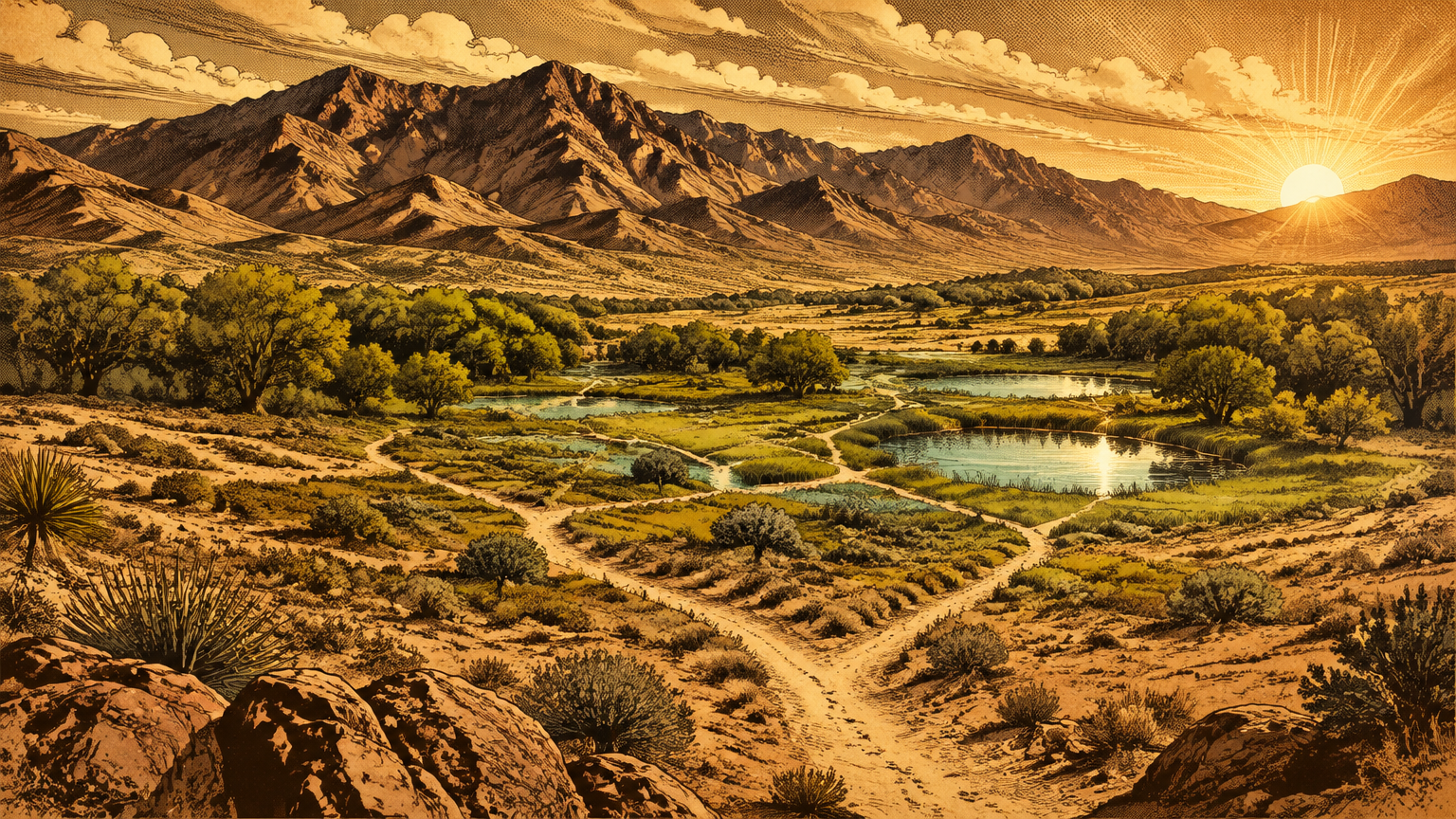
Inside that house, people moved. A state historical marker at the springs records the rhythm of the local year: the Las Vegas Springs were the winter homeland of the Southern Paiutes, who spent the summers in the Charleston Mountains, the high range now called the Spring Mountains that walls the valley's west side.
Winter at the water, summer in the cool pines. It was a circuit, repeated year after year, generation after generation, tying the valley floor to the mountains so tightly that the two were really one homeland with two altitudes.
And the connections ran outward in every direction. Related Southern Paiute communities still live across that map today, at Moapa and Pahrump in Nevada, in the Southern Paiute bands of southern Utah, and at Kaibab in Arizona, among others.
These were never isolated villages sealed off from each other. They were kin, linked by trails, marriages, trade, and shared songs, and the modern tribal governments on that map are the living continuation of a network far older than any state line drawn through it.
Culture on its own terms
Community, language and land knowledge
The homeland worked because its people knew it in detail, down to the level of individual springs, groves, and seed grounds. Archaeologist Claude N. Warren described the Las Vegas pattern as a double loop.
Down in the valley, families planted and irrigated gardens near the springs and tended them closely, while extensive mesquite groves produced beans so reliable they could be stored against hard times. Then, in the warm months and early fall, the loop swung upward, twenty miles or so into the Spring Mountains foothills, for agave and pine nut harvests, returning to the same groves and the same camps year after year.
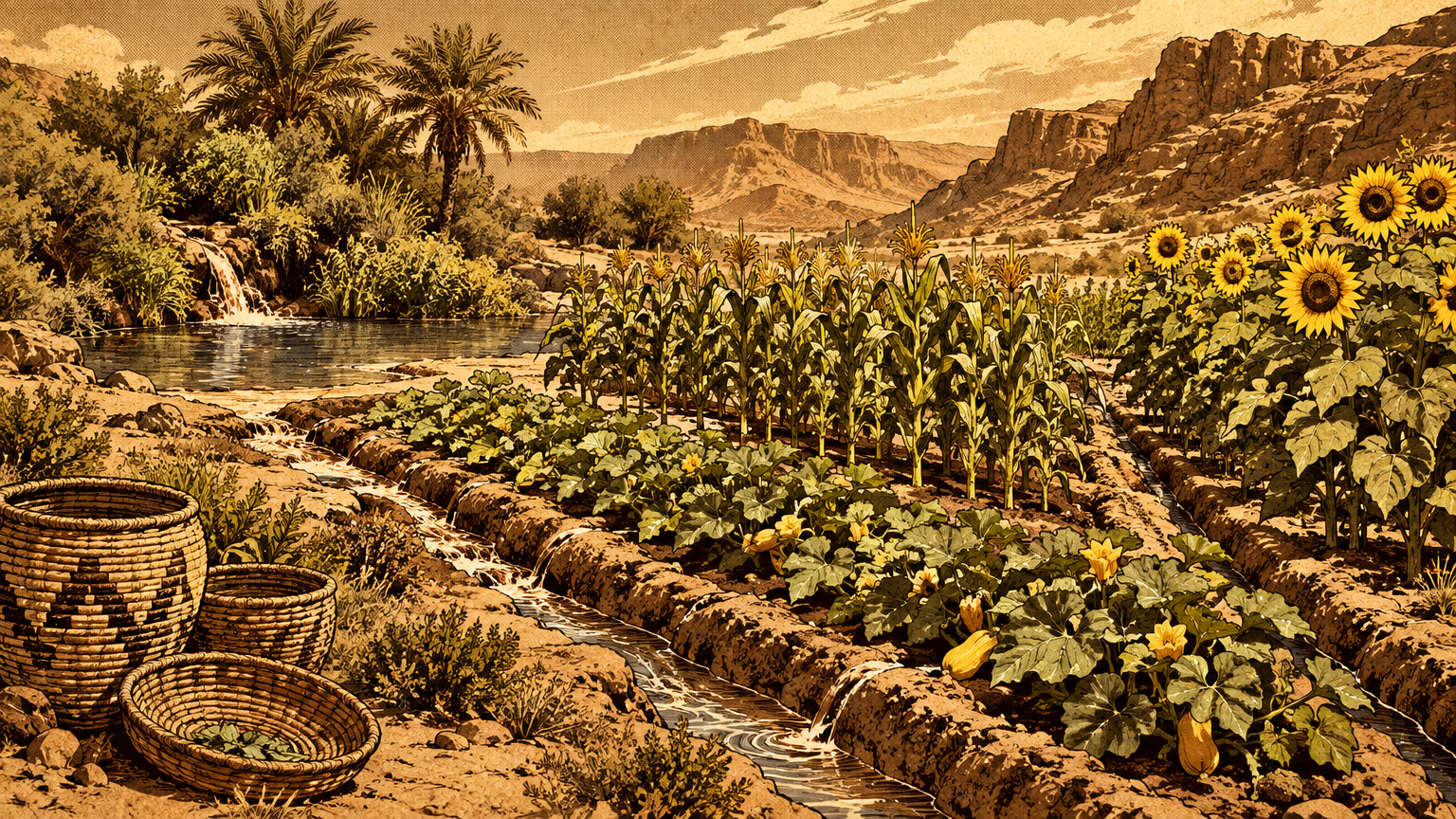
They were gardeners, not just gatherers, and the record is explicit about it. The National Park Service describes Southern Paiute floodplain gardening built on reservoirs and irrigation ditches, raising corn, squash, melons, gourds, sunflowers, beans, and wheat. As early as 1776, the Spanish explorer Escalante was noting the engineering in his journal: well dug irrigation ditches watering small fields of corn, pumpkins, squash, and sunflowers.
The same skill ran to craft. Southern Paiute basket weavers were renowned, and a basket woven fine enough and sealed with pine pitch could carry water itself through the desert.
All of that knowledge lives in the language. The Southern Paiute language belongs to the Numic branch of the Uto-Aztecan family, closely related to Ute, and it is the operating system of the homeland: place names, plant knowledge, routes, and responsibilities encoded in the words themselves. That is why the tribe today lists protecting the Southern Paiute language among its core heritage work, alongside the songs.
Lose the language and you lose the index to the land. Keep it, and the homeland remains legible to the people it belongs to.
Oral histories and Tribal sources
For most of human history, the archive was a voice. Southern Paiute history was carried by elders and storytellers, and the National Park Service notes that the tradition continues: elders who still speak the language pass tribal history down to the next generation through community activities and events. At the Springs Preserve today, archaeologists combine oral histories with archaeological data to understand how peoples used the springs, treating the tribe's memory as evidence alongside the spade.
That is the correct order of things. The people who belong to a place are a primary source about it.
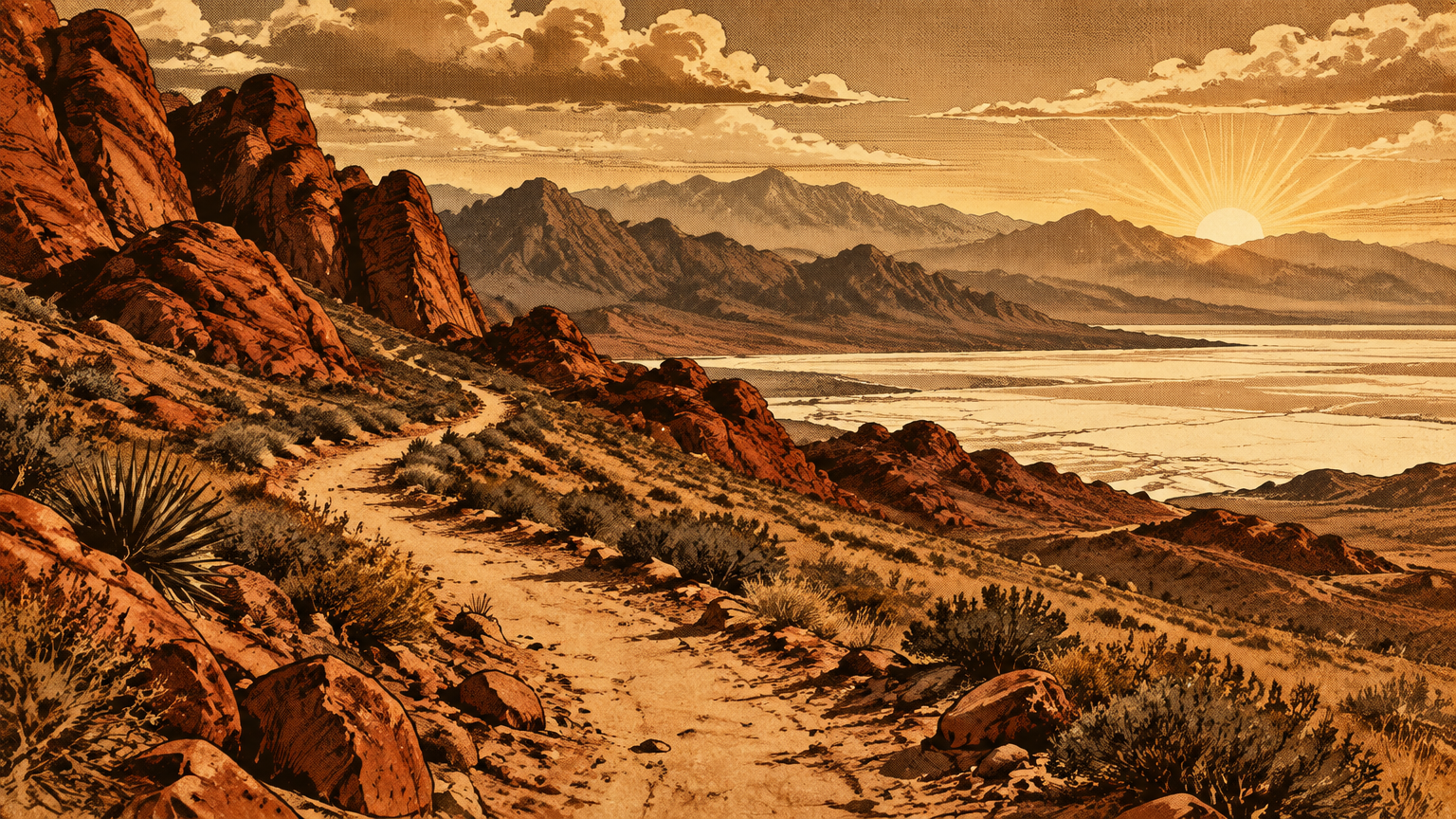
Nowhere is that clearer than in the Salt Songs. The Cultural Conservancy, which documents the tradition with Southern Paiute singers, describes the Salt Songs as the sacred songs of the Nuwuvi bands across California, Utah, Arizona, and Nevada: a cycle of about 142 songs that describe the ancient landscape place by place. The songs name sacred sites, ancient villages, hunting grounds, burial grounds, and gathering places for salt and medicinal herbs, tracing a journey of a thousand miles.
They are sung most often at funerals and memorials, to assist the departed on their way. A map you sing from memory cannot be confiscated, flooded, or fenced. It survives as long as someone keeps singing, and the Las Vegas Paiute Tribe lists the Salt Songs today among the ancestral traditions it actively protects.
The tribe also teaches how to stand in this landscape. Its official site welcomes visitors to Nuvagantu, the sacred land, and publishes a Nuwu teaching that describes the land as alive, with eyes to see and ears to hear the people who enter it. The Spring Mountains, in Southern Paiute tradition, are a place of creation.
Hold those two ideas together and the homeland stops being scenery. It is a presence, with a memory, and the correct way to write about it is the way the tribe itself insists on: with the tribe speaking for the tribe.


Continuity through upheaval
Dispossession and resilience
The upheaval arrived on hooves. In 1829 and 1830 the Old Spanish Trail opened across Paiute land, a trade road from New Mexico to California that followed Indigenous trails and Indigenous water, because there was no other way across. The tribe's own published history, written by John Alley and issued by the Las Vegas Tribe in 1977, tells what the caravans cost: traders and travelers camped at Paiute homesites near the springs and streams, their stock damaged the delicate plant life, they shot the game and depleted the land's resources, and they kidnapped Paiute children and sold them as slaves in New Mexico and California.
Read that sentence again. The first commerce Las Vegas ever hosted included the sale of its own people's children, and the Paiutes learned to avoid the travelers they had once greeted.
Permanent settlement followed. In 1855, Mormon missionaries arrived at the springs and built a fort and mission there, on Paiute land at the heart of the Paiute homeland, with Paiute converts helping to build and maintain it. The mission collapsed within about two years, torn by internal disputes and Paiute resistance, and the missionaries left in late 1856.
But the pattern the National Park Service identifies for the region had begun: marginalization worked through water. Whoever controlled the springs controlled the valley, and control of the springs was passing out of Paiute hands.
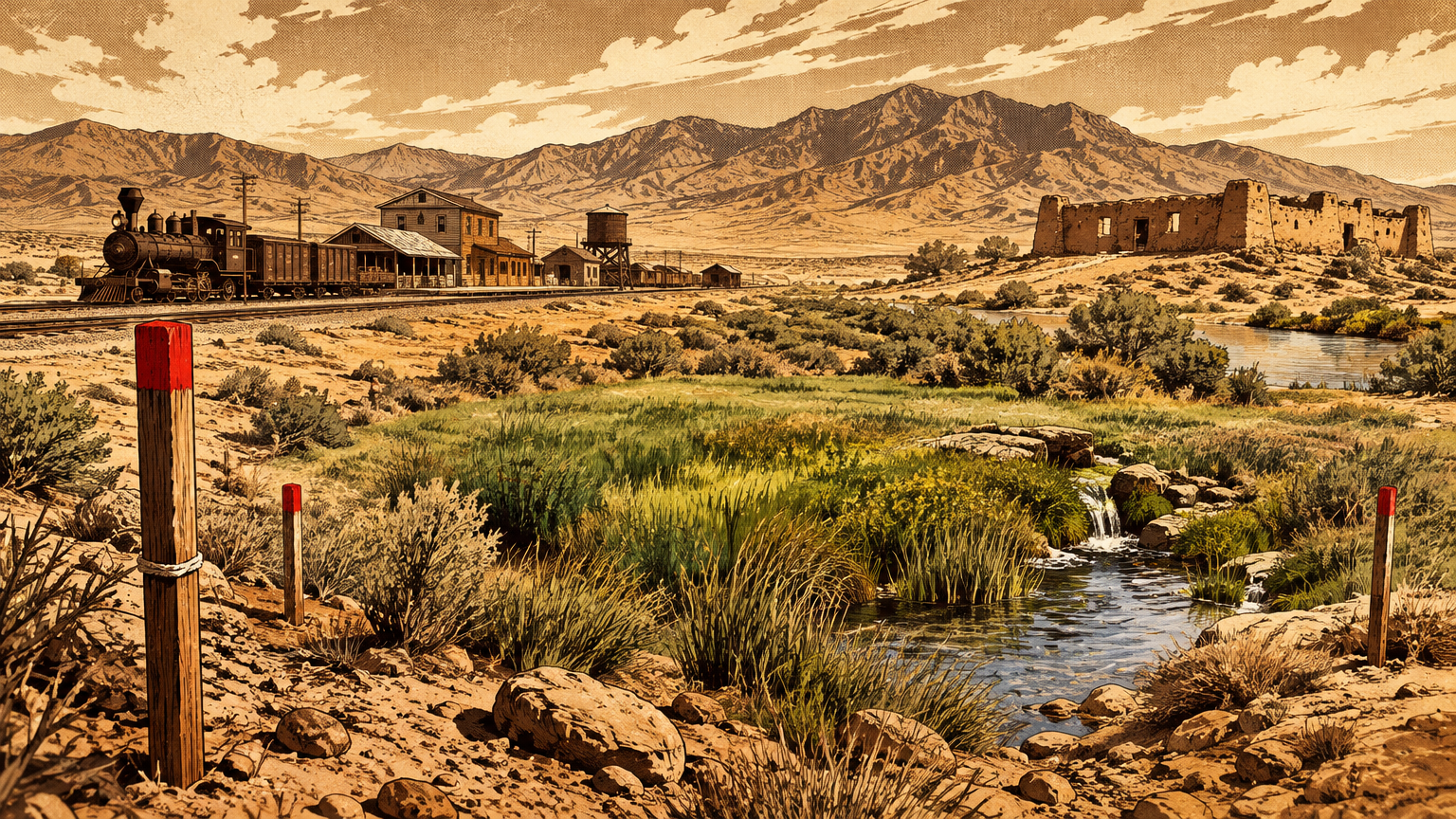
The ranch era finished the legal part of the job. The old fort and the springs passed to ranchers, first the Gass outfit and then the Stewart ranch, and in 1902 the railroad bought the ranch, setting up the 1905 auction that founded the city. Through all of it, the people whose homeland this was held not one acre of it secured to them in law.
That changed only on December 30, 1911, when ranch owner Helen J. Stewart deeded 10 acres of spring-fed land in what is now downtown Las Vegas for the Paiutes, creating the Las Vegas Indian Colony.
Ten acres. After thousands of years, the homeland's owners were granted a plot smaller than a modern casino parcel, and according to UNLV's archive for the original deed, that single parcel remained the tribe's only communal land for the next seven decades.
Present-day Tribal institutions
Here is the part the old telling always skips: the story does not end at ten acres. Under the Indian Reorganization Act of 1934 and a tribal constitution approved on July 22, 1970, the Las Vegas Paiute Tribe stands recognized as what it always was, a sovereign nation.
Then, in 1983, an act of Congress returned roughly 3,800 more acres to the tribe at the Snow Mountain Reservation, between the eastern slopes of the Spring Mountains and the western flanks of the Sheep Range. The tribe today counts 3,850 reservation acres, a homeland within the homeland, governed from home.
The government is real and it is busy. An elected Tribal Council governs the nation from the tribal administration at 1 Paiute Drive in Las Vegas. Ten departments deliver healthcare, wellness, education, public safety, justice, and economic opportunity, and the tribe fields its own police department on Paiute Drive.
Its education program puts money behind tribal members and descendants from trade school through university, tuition and books. Every Memorial Day weekend, the Annual Snow Mountain Pow Wow gathers the community the way gatherings have always worked in this desert: dancing, games, and kin showing up for each other.
The economy is sovereign too, and it funds the rest. On the Snow Mountain land, the tribe built the Las Vegas Paiute Golf Resort, 54 holes of it. Downtown, beside the old colony ground, stand the Tribal Smoke Shop on North Main Street and the NuWu Cannabis Marketplace, enterprises the tribe points to with pride.
The tribe is direct about where the money goes: revenue from enterprise returns to the community, into healthcare, scholarships, elder care, youth programs, infrastructure, and education. A nation that was once pushed off its own springs now runs businesses on its own land to pay for its elders' care and its kids' schooling.
That is not a comeback story imposed from outside. It is self-determination, itemized.
The neon came later, and it will be gone someday too. The homeland is older than the city built inside it and, on the evidence, considerably more durable: a people who still call themselves the Desert People, still guard the sacred land, still sing the map.
Las Vegas did not begin in 1905. It began the first time someone who belonged to this valley stood at the springs and called it home, and the descendants of that someone are still here, governing, teaching, and singing within sight of the skyline.
Next in Vegas, Back Then: The Desert Plants That Helped Sustain Early Valley Communities.